DD
MM
YYYY

PAGES

DD
MM
YYYY

spot_img

PAGES

Home Blog Page 738

Signs You Should Hire a Personal Injury Lawyer Now

0

Ever been injured and asked yourself, “should I get a lawyer?”

It happens to millions of people every year, and there’s rarely a simple yes or no answer. Sometimes you know you need legal help, and other times it seems like overkill.

What if we told you the wrong choice could cost you thousands, if not tens of thousands of dollars?

What you’ll discover:

  • Let’s start with the real talk
  • Serious Injuries (Or Worsening Ones)
  • Insurance Company Games
  • Multiple People or Parties Involved
  • Losing Work (And Income)

Let’s start with the real talk

Statistics show about 91% of people with attorneys actually get paid a settlement. Only 51% of people with no legal help recover any payout.

The bigger point? The payout value for people with a lawyer is nearly three times higher than for those without one.

Add up all these cases and you’ve got a $57.3 billion personal injury legal market.

There’s a reason this is one of the most litigious sectors in the law. These cases can involve a ton of money and have major consequences for victims.

So, when do you really need a personal injury lawyer? You’re about to find out…

Serious Injuries (Or Worsening Ones)

Ok, you probably guessed this one. But, you’d be surprised how many people try to “tough it out.”

Any time you need to go to the hospital or emergency room, see a specialist or surgeon, or get ongoing medical treatment for your injury, it’s time to contact a personal injury lawyer. It’s non-negotiable.

Serious injuries equal larger claims and more complicated insurance companies that will fight hard to minimize any payouts. You need a skilled advocate on your side.

And “serious” means:

  • Broken bones or fractures
  • Head or brain trauma
  • Spinal cord or nerve damage
  • Permanent scarring
  • Injuries that require multiple doctor or ER visits

The Problem…

Injuries that seem “minor” at first can often turn into a big problem later on. That “minor” neck or back pain from your car accident could lead to chronic issues that affect your job and quality of life for years to come.

The smart play? Get a personal injury lawyer involved early on, even if you think you’re good. They can keep a close eye on your situation and jump in if you need help.

Insurance Company Games

Insurance adjusters are not your friend. Yes, they might sound friendly on the phone, but their job is to pay out as little as possible. End of story.

When they start pushing you to settle quickly for far less than you deserve or refusing to cover key costs, that’s when you need a lawyer.

Lawyer up if:

  • They’re pressuring you to accept a quick settlement
  • The settlement offer seems too low
  • They’re asking for recorded statements repeatedly
  • They’re outright denying liability when it’s clear
  • Contact or communication suddenly stops

Insurance companies know you’re an easier target if you don’t have a lawyer. They’ll throw out some big, impressive sounding numbers that are really just a small fraction of what you deserve.

But did you know about 95% of personal injury cases are settled outside of court? Insurance companies would rather pay a fair settlement than go up against a seasoned lawyer in court. Leverage that to your advantage.

Multiple People or Parties Involved

If more than one person was injured, more than one vehicle was involved, a contractor was involved in your workplace injury, or multiple insurance policies come into play, get a lawyer.

These cases quickly become legal quagmires where each party tries to shift blame onto the other. Insurance companies pass the buck while you get left with nothing in the middle.

Personal injury lawyers know how to navigate the maze of liability issues and make sure you don’t get lost in the shuffle.

Losing Work (And Income)

Lost wages and lost earning capacity add up fast.

Any time your injury is keeping you out of work for more than a few days or even reduced hours at work due to medical appointments, pain, or other limitations, it’s time to call an attorney.

It’s not just your paycheck, it’s:

  • Future earning potential
  • Missed promotions
  • Lost benefits while out of work
  • Reduced productivity and future earning capacity

Most people vastly underestimate these costs. A personal injury lawyer has the experience and resources to help properly value your lost income claims.

The Other Side Has Lawyers

If the person or company that caused your injuries has a lawyer, you need one too.

Otherwise, you’re going into a legal battle with one arm tied behind your back. The other side’s lawyers will use every legal trick to pay you as little as possible, or nothing at all.

It’s time to level the playing field. Personal injury lawyers typically work on contingency fees, so you pay nothing unless they win. No financial risk in getting the best help possible.

Liability Is in Question

“It’s not our fault” is the insurance company’s favorite phrase.

If there’s any question or dispute about who caused your accident or injury, it’s time to hire a lawyer who knows how to investigate, gather evidence, and build a strong case.

Obtaining video surveillance footage before it’s wiped, interviewing witnesses while memories are fresh, working with accident reconstruction experts, reviewing police reports for mistakes, and gathering maintenance records for faulty products are all examples of evidence collection.

The evidence preservation clock is always ticking. Wait too long and key proof of the other party’s liability and negligence could be gone forever.

Settlement Process Is Overwhelming

Personal injury cases are paperwork, deadline, and procedure mines.

Miss one deadline, improperly file a single form, and your entire case could be blown up.

Two to three years is the typical state statute of limitations for filing suit, but many of these other deadlines come much sooner.

You’ll be juggling:

  • Requests for medical records
  • Insurance company forms and correspondence
  • Witness statements and depositions
  • Documentation of lost wages

All while you’re trying to recover from your injuries and get your life back to normal. Somewhere, something’s got to give. Don’t let it be your legal rights.

They’re Offering a “Quick Settlement”

Insurance companies love a quick settlement. That’s because the average payout is far lower than what a fully developed claim is worth.

If you get contacted by an insurance adjuster days after your accident with a settlement offer, that’s a MASSIVE red flag.

They’re hoping you’ll take that offer before you even understand the full extent of your injuries and damages.

Here’s the issue.

Some injuries have symptoms that take weeks or even months to develop. Soft tissue injuries, traumatic brain injuries, and even psychological trauma fall into this category.

Accept that quick settlement, and you’ll have permanently waived your right to any more compensation, even if your condition worsens.

The Bottom Line on When to Hire an Attorney

Look, personal injury law exists for a reason.

When someone else’s negligence turns your life upside down, you deserve fair compensation to help put the pieces back together.

The signs are usually pretty obvious. Serious injuries, insurance company games, disputed liability, and cases with multiple parties all point to a need for professional legal help.

Key point:

Most personal injury lawyers work on contingency, so you don’t pay a dime unless they win your case. There’s zero financial downside to getting a consultation and understanding your options.

Don’t let insurance companies take advantage of your situation. The $57.3 billion personal injury market exists for a reason. These cases involve real money and real consequences.

Get the representation you deserve. Your future self will thank you.

Nigeria’s Largest Companies Are Capturing Massive Value in the Market

0

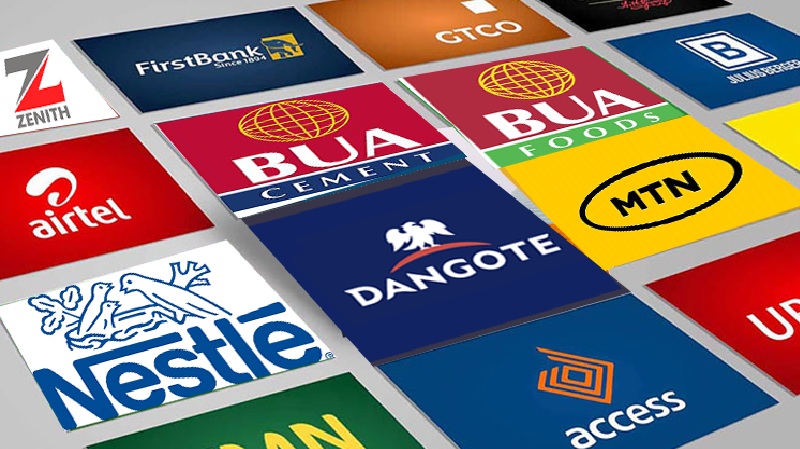
What works in Nigeria? You must be BIG. And in the market, we have empirical validation of that construct that size matters in Nigeria: “A Nairametrics analysis of five market heavyweights—MTN Nigeria, Dangote Cement, Seplat Energy, Nestlé Nigeria, and BUA Cement—shows combined net cash flow from operating activities hitting N2.922 trillion in the first half of 2025. That’s a staggering 140% jump from the same period last year, and 14% more than their entire 2024 full-year total. Their combined bottom line has swung from a N403 billion loss a year ago to a profit of N1.21 trillion, underscoring a dramatic reversal in fortunes.”

Now, if we need size to unlock alpha in the private sector, do you think Nigeria needs to have only six governors? Lol. He has gone there again. But seriously, I do not see any rapid transformation in Nigeria from the state level considering how small the states are.

Aliko Dangote’s yearly dividend is more than the budget of most Nigerian states. And Nigeria’s national budget is a little above the healthcare budget of South Africa!

Nigerian Blue Chip Giants Ride Naira Stability to Cash Flow Boom

Nigerian Blue Chip Giants Ride Naira Stability to Cash Flow Boom

0

After two years of whiplash from currency swings, surging finance costs, and record foreign exchange losses, Nigeria’s biggest corporations are finally catching their breath.

In 2025, a more stable naira has not only halted the FX hemorrhage—it has flipped the script, delivering gains that are fattening profits and transforming cash positions across corporate Nigeria.

For investors, the headline profits now flashing on corporate results sheets tell only half the story. The real pulse of a business—its ability to generate cash from daily operations—is beating faster than at any time in recent memory. This surge in operating cash flow is funding expansion, cutting debt, and positioning firms for generous shareholder payouts.

A NairaMetrics analysis of five market heavyweights—MTN Nigeria, Dangote Cement, Seplat Energy, Nestlé Nigeria, and BUA Cement—shows combined net cash flow from operating activities hitting N2.922 trillion in the first half of 2025. That’s a staggering 140% jump from the same period last year, and 14% more than their entire 2024 full-year total. Their combined bottom line has swung from a N403 billion loss a year ago to a profit of N1.21 trillion, underscoring a dramatic reversal in fortunes.

MTN Nigeria: Cash First, Profits Second

In the ICT space, MTN Nigeria turned in a robust N956 billion in operating cash flow, well above its N415 billion profit for the period. Revenue growth and effective pricing strategies helped deliver profits of N622 billion in H1 2025, a sharp turnaround from 2024’s FX-driven losses.

The company has slashed its negative equity from N458 billion at year-end to N42.51 billion by June. Analysts say the telco is now primed to resume dividend payments this year, with an operating cash flow per share yield of 9.8% boosting its appeal to income-focused investors.

Dangote Cement Was Consistent

Dangote Cement continues to deliver consistency. Its N874 billion in operating cash flow—more than double last year’s figure—was supported by solid profits of N521 billion, lower inventories, and reduced prepayments. The liquidity gives Africa’s largest cement maker greater flexibility to fund plant expansions, pay down debt, and maintain dividends.

Seplat Energy: Accounting Profit Understates the Story

Seplat’s headline net income of N42 billion in H1 2025 might look modest, weighed down by taxes. But beneath the surface, the company’s cash engine is roaring, with N755 billion in operating cash flow driven by strong pre-tax earnings and a massive N518.9 billion depreciation and amortization charge.

CEO Roger Brown says the cash cushion allows Seplat to keep its dividend streak alive while paying off an extra $100 million in debt this year. With a 24% operating cash flow yield—well above its 4.55% dividend yield—Seplat is stockpiling capacity for reinvestment and deleveraging.

Nestlé Nigeria Made A Quiet but Remarkable Turnaround

For Nestlé, the swing is remarkable. From a N177 billion loss in H1 2024 to a N50.57 billion profit this year, the real headline is its N187.6 billion in positive operating cash flow, up from a negative N27.65 billion last year. With a 13% operating cash flow yield, the FMCG giant is rebuilding liquidity, giving it options for future dividends, debt reduction, or market expansion, even without immediate payouts.

BUA Cement: Profit-Rich, Cash-Light

BUA Cement’s N150 billion in operating cash flow more than doubled from last year, but still lagged behind its N181 billion profit. This suggests that while the cement producer’s accounting profits are strong—thanks to a pre-tax profit surge of 435%—its cash conversion is being weighed down by higher working capital needs or slower customer payments.

The Macroeconomic Shift

What unites these companies is not just the naira’s newfound stability but a broader macroeconomic shift. The Central Bank’s tighter FX controls, a cooler inflationary environment, and price adjustments across sectors have restored breathing space for corporate balance sheets. The shift from headline profit growth to strong, recurring cash flow signals a phase where Nigerian blue chips are once again on the front foot—better able to self-finance growth and withstand shocks.

For investors, 2025 may mark a turning point. Sustained operating cash flow strengthens intrinsic value, attracts fresh capital, and can drive share price gains. Analysts believe the second half of the year will test whether this cash surge is a one-off windfall or the foundation of a longer cycle of stability. However, the tills for now are ringing louder than they have in years, and in corporate Nigeria, that sound is the clearest sign of resilience.

Trump Mulls New Tariffs on China Over Russian Oil Purchases, Vance Says

0

US Vice-President J.D. Vance said on Sunday that President Donald Trump is “thinking” about imposing new tariffs on imports from China in retaliation for Beijing’s continued purchases of Russian oil — a move that could inject fresh tension into already delicate US-China trade talks.

Speaking in a Fox News interview, Vance was pressed on whether Trump might take the same approach he did against India last week, when the president slapped a punitive 25 percent tariff on Indian imports after New Delhi ignored repeated warnings to halt Russian oil purchases.

“The president said he’s thinking about it, but he hasn’t made any firm decisions,” Vance said. “Obviously, the China issue’s a little bit more complicated because [in] our relationship with China, it just, it affects a lot of other things that have nothing to do with the Russian situation.

“So the president’s reviewing his options and, of course, is going to make that decision when he decides.”

Trump, who campaigned on a vow to end Russia’s war against Ukraine “on day one” of his presidency, has sought to increase pressure on Russian President Vladimir Putin to halt the conflict. More than six months into his term, however, those efforts — which have included targeted sanctions and trade penalties on countries aiding Moscow — have yielded little measurable change in the battlefield situation.

When asked for a response to Vance’s remarks, Beijing’s embassy in Washington defended its trade with Moscow.

“The international community, including China, has conducted normal cooperation with Russia within the framework of international law,” said Liu Pengyu, the embassy’s spokesman.

Trump’s move against India last week triggered diplomatic pushback from Beijing and Moscow, both of which publicly stood by New Delhi. Officials from China and Russia argued that India, as a sovereign nation, has the right to pursue and protect its trade interests with any country, so long as such dealings are within the bounds of international law. Their coordinated statements underscored a growing pattern of economic and geopolitical alignment among the three nations in the face of US pressure.

Possible Trade Fallout with Beijing

The prospect of imposing tariffs on China over its Russian oil purchases is raising concern among economists and business leaders, given that Washington and Beijing are already in sensitive negotiations on technology exports, supply chain security, and market access. Analysts warn that any escalation could derail ongoing talks and revive the tit-for-tat tariff battles that marked Trump’s first attempt, when hundreds of billions of dollars in goods were caught in a trade war.

China remains a dominant force in global manufacturing and an indispensable link in US supply chains, from consumer electronics to electric vehicle components. Fresh tariffs could drive up costs for American consumers, disrupt industrial production, and prompt retaliatory measures from Beijing, potentially targeting US agricultural exports and advanced manufacturing sectors.

For Beijing, a tariff escalation would not only represent an economic challenge but could also harden its strategic pivot toward alternative markets, deepening ties with Russia, India, the Middle East, and African nations. For Washington, the decision risks becoming a political flashpoint at home, with domestic industries split between those seeking protection from Chinese imports and those fearing the loss of market access in China.

If enacted, the China tariffs could become the most consequential trade move of Trump’s second term to date, with the world’s largest economies taking the heat from many angles.

OpenAI’s Sam Altman Questions Relevance of ‘AGI’ as Rapid AI Progress Blurs Boundaries

0

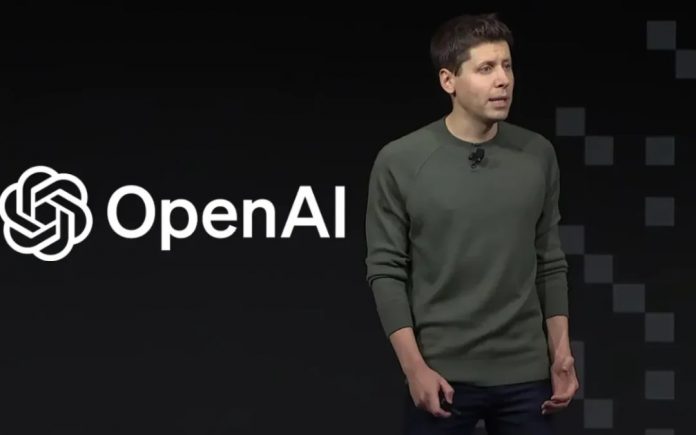
OpenAI CEO Sam Altman says the term artificial general intelligence — long viewed as the holy grail of artificial intelligence research — is losing relevance as breakthroughs in the field make it increasingly difficult to define what AGI actually means.

Speaking to CNBC’s Squawk Box last week following the release of OpenAI’s latest large language model, GPT-5, Altman argued that the label “AGI” has become too vague to serve as a meaningful milestone.

“I think it’s not a super useful term,” Altman said when asked whether GPT-5 marks a step closer to human-level AI. He noted that the concept has been defined in multiple ways over the years, from the broad notion of AI that can perform any intellectual task a human can, to narrower interpretations such as AI that can handle “a significant amount of the work in the world.” The challenge, he pointed out, is that the very definition of “work” evolves over time.

“I think the point of all of this is it doesn’t really matter and it’s just this continuing exponential of model capability that we’ll rely on for more and more things,” Altman said.

A shifting North Star

For much of the past decade, AGI has served as both a technical goal and a fundraising rallying cry for AI startups. The concept has drawn billions in investment, including the tens of billions of dollars that have propelled OpenAI’s valuation to $300 billion, with reports suggesting a planned secondary share sale could push that figure to $500 billion.

Nick Patience, vice president and AI practice lead at The Futurum Group, told CNBC that while AGI works well as an “inspirational North Star,” the term’s lack of precision can distort the conversation.

“It drives funding and captures the public imagination, but its vague, sci-fi definition often creates a fog of hype that obscures the real, tangible progress we’re making in more specialized AI,” Patience said.

GPT-5 and the incremental debate

OpenAI last week released GPT-5, describing it as “smarter, faster, and a lot more useful,” particularly for writing, coding, and health care support. The system is available to all ChatGPT users, including those on the free tier.

However, the launch drew mixed reactions. Some online critics described GPT-5 as an incremental upgrade from GPT-4o rather than a revolution.

“By all accounts it’s incremental, not revolutionary,” said Wendy Hall, professor of computer science at the University of Southampton. She added that AI companies “should be forced to declare how they measure up to globally agreed metrics” to prevent overblown marketing claims, warning that “it’s the Wild West for snake oil salesmen at the moment.”

Altman himself conceded that GPT-5 does not meet his personal definition of AGI, as the system cannot yet continuously learn without human retraining. While OpenAI still positions AGI as its ultimate goal, Altman said the company now prefers to discuss “different levels” of intelligence rather than using the binary question of whether is it AGI or not? framing, which he believes has become “too coarse as we get closer.”

The distraction argument

The debate over AGI’s meaning comes as AI firms face growing scrutiny over how they present their technological progress. Some experts believe that chasing the AGI label has become more of a fundraising strategy than a practical benchmark.

Patience told CNBC that while AGI remains a compelling vision, it may now be more of a distraction than a useful guidepost.

“There’s so much exciting real-world stuff happening, I feel AGI is a bit of a distraction, promoted by those that need to keep raising astonishing amounts of funding,” he said. “It’s more useful to talk about specific capabilities than this nebulous concept of ‘general’ intelligence.”

Altman, for his part, predicts that AI will deliver breakthrough achievements — such as solving complex mathematical theorems and driving scientific discovery — within the next two years. Whether or not such milestones meet any one definition of AGI, he suggested, the more important measure will be how AI systems continue to integrate into daily life and reshape industries.