DD
MM
YYYY

PAGES

DD
MM
YYYY

spot_img

PAGES

Home Blog Page 7428

Securing energy grid gets boost as Kaspersky unveils CyberSecurity for Energy

0

Malicious attacks on industrial systems – including industrial control systems (ICS) and supervisory control and data acquisition systems (SCADA) – have increased significantly in recent years. As the Stuxnet and BlackEnergy attacks have shown, one infected USB drive or single spear-phishing email is all it takes for attackers to bridge the air gap and penetrate an isolated network.

Traditional security is no longer enough to protect industrial environments from cyber threats. As threats targeting critical infrastructure increase, choosing the right advisor and technology partner to secure your systems has never been more important.

https://youtu.be/UKnrEoqiI50

Kaspersky Lab has announced the global availability of Kaspersky Industrial CyberSecurity for Energy, a vertical advanced package for energy enterprises, based on Kaspersky Lab’s suite for protection of industrial infrastructure.

Modern electrical power grids are complex networks, with integrated automation and control functions. However, because they communicate through open protocols, they do not have sufficient built-in cybersecurity functions to combat the increasingly sophisticated range of security threats they face.

The Report

Kaspersky Lab’s recent report on industrial cybersecurity found that 92% of externally available industrial control system (ICS) devices use open and insecure Internet connection protocols. Since 2010 the number of ICS-component vulnerabilities has also increased by a factor of 10, making these devices an easy and lucrative target for cybercriminals. The challenge for energy companies is clear, with Ernst & Young’s most recent Global Information Security Survey revealing that 42% of power and utilities companies say it’s unlikely they would be able to detect a sophisticated attack.

Kaspersky Industrial CyberSecurity (KICS) for Energy is dedicated to helping energy companies secure every layer of their industrial infrastructure, without impacting on the operational continuity and consistency of technological processes. Kaspersky Lab’s solution protects SCADA level control centers and Substation Automation Systems on every level: upper level of automation including Servers, HMI, Gateways, Engineering workstations. Secondary automation equipment: Protection relays, Bay Controllers, Merging units, RTU and other substation bus and process bus IED and overall network infrastructure.

The Key Solution Benefit

The solution provides a variety of advanced technologies to protect industrial nodes (including servers, HMI, Gateways and Engineering workstations) and network infrastructure. The latter offers network monitoring and integrity checking with the capability of deep application protocol inspection (including IEC 60870-5-104, IEC 61850, and other standards and protocols for electric power infrastructures).

“Electrical power equipment automation, control and protection are no longer handled by closed systems and, as things stand, detecting a potential threat is extremely difficult, both technically and organisationally,” said Andrey Suvorov, Head of Critical Infrastructure Protection, Kaspersky Lab. “That’s why energy enterprises need to bolster their defences to combat increasingly prevalent cyberattacks and avoid the nightmare scenario of complete loss of service and the impact that would have on citizens and society in general.”

Alexander Golubev, Chief IT Security Officer at Electrical Distribution Network Northwest Federal District, Rosseti, commented: “Being one of the major operators of electric grids in Russia, it is very important for our company to ensure uninterrupted operations, including those caused by cyberattacks on our IT infrastructure. A large number of our subsidiaries has been using Kaspersky Lab’s solutions for a long time, as they allow them to effectively detect and block all types of cybersecurity threats in a timely manner. As a result of this positive experience, we are evaluating the option to extend cooperation to the field of industrial security. The test deployment of Kaspersky Industrial CyberSecurity for Energy on one of our substations has become the first important step in this direction”.

Training

You can get solid top grade training on cybersecurity at First Atlantic Cybersecurity Institute.
V-Exchange sues Etisalat Nigeria for $5 million copyright infringement

0

It is not looking good for Etisalat these days.

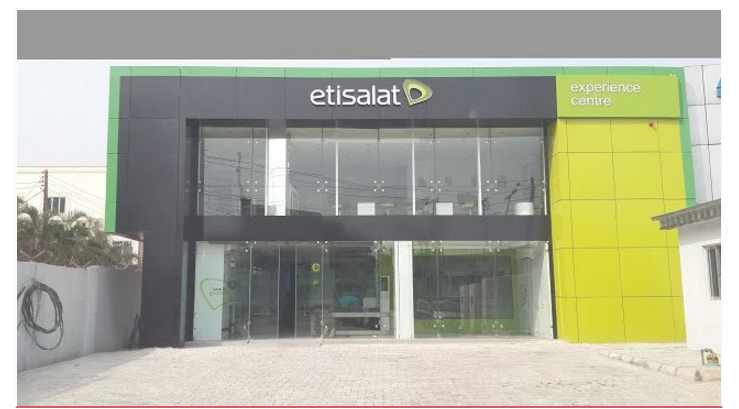
According to The Guardian, mobile fintech firm, V-Exchange Limited, is suing Etisalat Nigeria for N2 billion for alleged copyright infringement. V-Exchange specialises in providing instant finance solutions to individuals and corporate entities, and the story is they offered to partner with Etisalat to launch an instant loan service. According to them, Etisalat one-upped them by launching a similar service – KwikCash – without permission or due credit. Hmm.

The V-Exchange co-founder said he was however shocked when it heard that Etisalat had gone ahead to launch the instant loan service without his approval.Also speaking at the media briefing, the Chief Executive Officer, V-Exchange, Mrs Kemi Ayinde, noted that well-wishers had called to congratulate her on the successful launch of the product not knowing that her firm was not involved with the launch.

Etisalat denies the allegations.

This new product from Kenya shows why Kenya is unrivaled in Africa’s digital innovation

0

The sale of the mobile-based M-Akiba Treasury bond starts on Thursday, ending a one-and-a-half-year wait for small retail investors to invest in government debt. This also shows that Kenya has no rival in digital innovation in Africa. You can learn more about this product here.

M-Akiba, whose proceeds are earmarked for infrastructure development, will pay investors tax free interest of 10 per cent, setting the stage for competition between the government, banks and saccos for cash deposits.

The prospectus for the Sh5 billion three year bond — which is being issued by the Central Depository & Settlement Corporation on behalf of Treasury — says that the initial tranche is for Sh150 million.

Mobile Bond

The minimum amount per investor has been set at Sh3,000 and additional amounts in multiples of Sh100.

The bond is open for registered mobile users on the Safaricom and Airtel networks, with interest paid every six months through the same platforms. It will be on sale between Thursday and April 10, and will thereafter be listed on the stock exchange.

“The bond will be listed on the Nairobi Securities Exchange and will be traded on the secondary market via mobile phones commencing April 11,” reads the prospectus.

If successful, the sale of the bond will likely shake up the financial services, where cash depositors holding small sums have been keeping their money in low interest earning accounts in banks or in their mobile money wallets.

These investors have previously been locked out of lending to the government due to high minimum purchase amounts of Sh100,000 and Sh50,000 on Treasury Bills and Bonds respectively.

Economic Impacts

The success of this bond is likely to see the government raise the amount it targets in future M-Akiba issues, making the mobile bond an influencing factor in pricing of deposits among different players in the money markets.

Under the law, banks offer a minimum of seven per cent for deposit earning accounts, although they also have the option of offering customers transaction accounts that do not pay interest.

Small savers are also forced to put their money in illiquid options such as chamas where they have to wait for months on end before being paid a lump sum, mostly without interest.

The mobile bond will also allow the State to lower its cost of debt, which is an issue of concern at a time when the public debt to GDP ratio had hit 50 per cent.

The prevailing rates on a five year bond on the yield curve stand at about 13 per cent, with the most recent infrastructure bond issued last month fetching a rate of 13.55 per cent in the primary sale.

Rounding Up

M-Akiba has been in the works since October 2015, with its launch being postponed multiple times as the Treasury worked out modalities of trading it on the secondary market at the Nairobi Securities Exchange. Now it is here and this is the future of Africa’s digital innovation.


Making IoT work for Africa’s oil and gas companies

0

The global oil and gas industry is undergoing a period of unprecedented change and disruption. Falling crude oil prices have put immense strain on the entire oil value chain, while the increasing availability and affordability of renewable energy sources means oil & gas is no longer the de facto choice for energy generation.

An African perspective on oil & gas

In Africa, where the oil and gas industry drives the economic engine of several of its largest economies, the need for innovation in the oil and gas value chain is critical to its continued growth and success. By the end of 2013, Africa was estimated to have 228 billion barrels of oil-equivalent, with oil making up 56% of this and gas accounting for the remaining 44%, according to EY.

The US was until recently the largest buyer of African crude oil, but exports dropped from a high of 1.8m barrels a day in 2005 to only 274,000 in 2015. There is hope that the new administration’s policy changes could herald an era of renewed oil exports to the North American market.

According to PwC, one of the key areas oil and gas companies should focus on if they are to weather the storm is in exploiting new technology to innovate, minimise costs and extract further value from existing infrastructure. And of all the emerging technologies, IoT presents the greatest benefit to the oil and gas sector.

The Internet of Oil & Gas

The oil and gas industry has long been at the forefront of automation and technological disruption. However, IoT is poised to completely revolutionise the industry, from extraction to operations to customer engagement. Connected devices open opportunities for oil and gas companies to improve safety, increase efficiency and ensure visibility across the value chain.

A Morgan Stanley report estimates that there’s a global market of $100bn for autonomous vehicles in the trucking and logistics industry. With only a 50% penetration of IoT, the global manufacturing industry can see a potential cost saving of $500bn. In fact, IDC estimates that IoT revenue in Africa and the Middle East will reach $114bn by 2020.

Oil and gas companies have taken note of the potential of IoT and are investing vast sums into IoT to achieve improved uptime, ensure predictive maintenance, reduce the cost of compliance, and transform business practices. Asset uptime and maintenance has emerged as the key initial driver of interest in IoT: an ARC strategy report found that 60% of respondents named reduced asset downtime as the catalyst for their interest in IoT.

Fleet management stands to benefit greatly from IoT: construction contractor Essar Projects uses GPS and RFID systems to monitor equipment movement, fuel levels and consumption, achieving a 5% saving on maintenance and a 10% saving on fuel costs. The ability to use sensors to track equipment performance and proactively manage maintenance is helping oil and gas companies to ensure optimum equipment uptime.

Making IoT work for oil and gas companies

As sensors and connected devices continue to permeate every aspect of the oil and gas value chain, companies will start generating unprecedented volumes of data. SAP solutions powered by the SAP HANA platform enables companies to extract valuable insights from this data. Oil and gas companies can get real-time information from multiple locations, including information on location awareness, project status, environmental factors and safety. Environment, health and safety management professionals can mine employee data – including social media – to identify key risks to operations, while public information that forms part of the big data lake can be used to determine public sentiment on oil and gas operations.

Caution must be taken in terms of data security, as recent malware examples have shown control systems can be attractive targets for intruders wishing to harm or interrupt production. It is equally important that the correct technology partner is chosen: IoT brings together data from hardware, sensors, devices, apps, telematics and connectivity to the cloud. The software vendors that connect and process all this data need to have the depth of experience to reshape business processes to allow oil and gas companies to fully enjoy the benefits of IoT.

However, the real value of IoT for the oil and gas industry lies in connecting operational infrastructure to broader business software. In-memory computing combines IoT data with business transactional data in a single shared database, in real time. This allows oil and gas companies to gain real-time insight into key operations and asset performance indicators, equipping business leaders with better decision-making capability and opening the door to streamlined business processes and entirely new business models.

For oil and gas companies ready to transform their operations through IoT, the benefits are unquestionable. Choosing the correct technology partner that has the depth of industry experience and the robust cloud-based in-memory platform needed to bring the benefits of IoT to life is essential to their success.


by Pedro Guerreiro, Managing Director: West Africa at SAP Africa. He distributed it originally with title “Industrial IoT set to shake up African oil & gas sector”

Nigerian bonds are proving hugely popular with investors, The Economist reports

0

The Economist reports that Nigeria is benefiting from pent-up demand for African sovereign debt.despite some external factors which have affected the country.

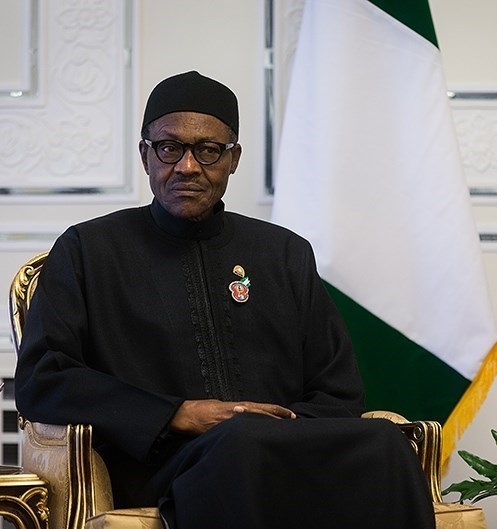
Nigeria;s economy shrank by 1.5% in 2016, its first annual contraction in 25 years. The president, Muhammadu Buhari (pictured, left), recently spent six weeks seeking medical treatment in London. And the country continues to be roiled by Boko Haram jihadists in the north-east and by unrelated militants’ attacks on oil facilities in the Niger delta. Yet investors don’t seem to mind: last month Nigeria issued a 15-year, $1bn eurobond—a bond in a currency other than that of the country issuing it—that was eight times oversubscribed. A second issuance is expected, possibly this month. It will probably be met with similar enthusiasm. What makes investing in Nigeria so attractive?

Nigeria is benefiting from pent-up demand for African sovereign debt. Emerging markets started last year on a very bad footing: depressed currencies, looming interest-rate increases and uncertainty over British and American votes put investors off risky trades. African sovereign bonds suffered more than most. Yields—which move inversely to prices—peaked in February. They dropped gradually throughout the year, but too slowly for many nations to borrow at affordable rates: only three sub-Saharan governments—South Africa, Mozambique and Ghana—sold dollar-denominated debt in 2016. Yet with interest rates in the developed world still low, asset managers remain hungry for returns. Credit funds focused on emerging markets received nearly $10bn in the first two months of this year, almost double the amount pulled out of them in the same period last year, according to EPFR Global, a research firm.

More specific factors have also put Nigeria on investors’ radars. In early February, the country’s finance, budget and central-bank chiefs toured the world’s financial capitals to provide an update on their agenda for reform. A more detailed plan was published earlier this month. After two years of denial, the government admitted that the economy needs deep adjustments. Investors are cheered by efforts to reduce opportunities for sleaze, such as the introduction of biometric records in the civil service and the merger of multiple treasury accounts into a single kitty, which Nigera started attempting to implement in late 2015. They also liked measures to end wasteful fuel subsidies, improve tax collection and increase VAT. Such pledges make it more likely that the World Bank and the African Development Bank will agree to lend Nigeria a combined $3.5bn to support its 2017 budget.

It is not a one-way bet. External factors cloud Nigeria’s prospects: further rises in American interest rates, following last week’s increase, would strengthen the dollar and make debt repayment more expensive. Fortunately, Nigeria remains one of Africa’s least indebted nations. Should Yemi Osinbajo, the technocratic vice-president (pictured, right) who ran the show while Mr Buhari was unwell, retain authority to drive policy changes, investors will probably keep on giving Nigeria the benefit of the doubt.

(Source)