DD
MM
YYYY

PAGES

DD
MM
YYYY

spot_img

PAGES

Home Blog Page 7439

Africa’s disruptive opportunities on “legacy systems” for agile technology entreprenuers

0

Africa has the potential to develop a new development model, with the continent’s demographic development, its rapid urbanization, and technology change being the three major drivers:

Africa is the continent with the fastest growing population in the world. Today’s 1.2 billion people will grow to 1.7 billion in 2030 and 2.5billion in 2050. Africa will account for 25% of the global population in 2050, of which the majority will be at working ages (15-64 years) – a huge potential to reap the “demographic dividend”. Today, 50% of Africans are below the age of 18.5 years and 19% between 15 and 24 years of age, making Africa the most youthful continent.

Today, the share of urban residents has increased to 40%; this trend is likely to continue to a level of 56% in 2050. While a lot of challenges are associated with the speed of urbanization, it has the potential to create favorable conditions for spurring economic development.

Urban centers can create new economic opportunities and drive service-led growth. Urban areas enable aggregation economies through facilitating a wider range of shared services and infrastructure, greater matching of resources, as well as knowledge sharing, cross-fertilization and innovation.

The absence of established ‘legacy systems’ creates a potential to build new industries and systems “bottom-up” by leveraging technology. The technology boom across the continent has been attracting the attention of investors, innovators, and corporates. With the spread of digital technologies, Africa is getting increasingly connected. Mobile penetration currently stands at 73% across Sub-Saharan Africa, while around 19.3% of Africans use the internet.

These figures will increase rapidly in the next few years. The absence of ‘legacy systems’ allows the African continent to position itself as a “breeding ground” for digital innovation. The recent announcement of bringing Senegal’s currency on a Blockchain shows how the continent can “leapfrog” development.

For agile entrepreneurs, the presence of these legacy systems is an opportunity. They can redesign the economic architecture of the continent with new tech solutions that will leapfrog whatever that is available today, at better cost and higher efficiency.


What African founders can learn from SNAP IPO roadshow presentation on fundraising

0

This week Snap Inc, creator of mobile messaging platform Snapchat, saw an impressive trading debut on the New York Stock Exchange, outperforming the former milestone debuts of Facebook, Alibaba and Google

SNAP is a success and the investors have warned up.

In the first ever US IPO with no voting rights, Snapchat’s stock price has soared on the first two days of trading taking the market cap to $31b—$20b more than its competitor, Twitter.

So what can African founders learn from the IPO roadshow presentation of a self-proclaimed “camera company”?

That it’s really just all about the lost art of storytelling. Before ever diving into the impressive user engagement statistics (158m users, 2.5b snaps, avg. 30 minutes spent per day), Evan Spiegel takes a step back to reframe Snapchat as the answer to the very human desire to express oneself and feel closer to others, giving texture to why the product is so transformational and addictive.

The presentation is heavy on visuals over text, full of a cast of characters, and supporting data is easily consumable with one powerful soundbite per slide.

For SNAP, it was the persuasive narrative that was the difference between a 26-year old getting a $24bn valuation rather than a fall-on-your-face debut for a company that is still losing $514m a year.

While a massive IPO might not be the next stop for most Africa entrepreneurs, the Snapchat roadshow could be the perfect playbook for the next funding round.

The key is not just the statistics, but story. You just have to be a good story teller to make progress in your fundraising. It is an aspirational process which one must learn to tap into.

African Challenges to African Development

0

The parlous story of African economic and social development since independence best expressed in the failure to achieve the autonomous capacity for self-actuated development and in particular to create conditions of national and continental modern mass production and prosperity is well known and need not be repeated. It is enough to re-state that Africa’s development failure was because of the leaderships’ choice to retain, maintain and expand the inherited exocentric colonial system of development incapacitation, primary commodity export, import dependency and poverty generation.

The progressive efforts of some African states and leaders to change the system and create self-reliant economies were stymied by the leaderships’ ideological inadequacies and dependency, the balance of payment crises of the late 1970s and 1980s and the subsequent economic crises and decline. This provided the avenue for Western multilateral imperialist agencies  the World Bank and the IMF – to successfully infiltrate into Africa, re-colonize African states and convert them into neo-colonial out-posts of the so-called neo-liberal consensus. This framework embodied in the Structural Adjustment Programmes (SAP) with its destructives conditionalities: currency devaluation, trade liberalization, subsidy removal, deregulation and privatization, re-directed the African states to focus on expanded raw materials production and exports and to abandon industrialization and development capacitation.

The application of these anti-development SAP dogmas in the 1980s and 1990s ushered in two decades of deepening indebtedness, serious economic crises, de-industrialization, socio-economic decline, deepening impoverishment and political repression. On the other hand, the period also saw the upsurge of popular democratisation struggles, civil rights campaigns, the restoration democracy, and the establishment of electoral democracy and the decline of military interventions in African politics. In the economic sphere, there were innovative dependency-reducing responses. This was because among businesses there was an increased re-orientation toward local sourcing of well-known agricultural and mineral endowments to expand production. This led to the emergence of new economic sectors and especially the expansion of cottage, small and medium scale consumer goods industries which were operationally autonomous due to the increased utilization of local resources for production and self-development.

In addition there was relative political stability and policy and institutional the support for businesses through the creation of enabling environments for attracting investments.

It was partly because of these new domestic conditions and the economic self-activation, and the partly because of return of better commodity prices in the first decade of the 21st century that the Western media fabricated and propagated the new view of “Africa Rising”. This became a very popular and re-assuring slogan among some African leaders, politicians and intelligentsia.

However, it was an insecure condition because a “Rising Africa” whose upsurge is generated by increased external demand for primary commodities is essentially insecure. It does not represent genuine African development that is based on expansive domestic production and prosperity generation. It merely reinforces African dependency on primary commodity export and its dependence on the importation of manufactured goods. It is evaporating with the speed with which it was proclaimed.

But there was a more consequential development story of this period that ushered in what this author describes as the Affirmative African Narrative phase of development. This is the progressive assumption by African businesses of the leadership role in promoting national and pan-African development. This new trend of African self-development is captured by the new concept of “Africans Investing in Africa” This is the process by which African industrial, service, and commercial enterprises began to make large-scale investments in many different African countries. The investments involve for example the expansion of Banks, telecommunication companies, trading companies and so on. Examples of these include Nigerians Banks like UBA, Zenith, Access, First Bank; South African banks like Standard Bank and Moroccan Banks; Telecommunication companies such as MTN of South Africa, ECONET of Zimbabwe and GLOBACOM of Nigeria. Others are Shoprite, Coca cola and South African Breweries.

While Africans investing in Africa is becoming common and commendable, it is important to emphasize that NOT ALL African investments in Africa are of equal economic importance or strategic development value. For example, African investments like Shoprite and similar companies which merely establish commercial or trading enterprises that do not add value to African economies are no different from traditional non-African FDI companies that are established to create captive markets for products from their home countries and thereby maximally exploit Africa.

On the other hand, African companies that make investments that are decisive and transformational are those that deliberately promote and advance African development capacitation, through local resource exploitation, mass industrialization, large scale industrial, agricultural and mineral production, and beneficiation for internal use.

In terms of investment for development capacitation through local resource utilization and valorization, the vanguard African company is the Dangote Group. In order to ensure that Africa achieves self-sufficiency in the critically important infrastructure development requirement – CEMENT – Dangote embarked on a pan-African investment strategy to establish integrated plants, or grinding plants or cement terminals in African countries according to their resource endowments. The Group’s ultimate objective is become the ascendant cement manufacturing company in Africa. There is no question that the Dangotean strategy of development capacitation through local resource exploitation, mass industrial production and domestic prosperity-generation is what Africa requires to become the self-actuated mover of its own development and to create a secure development upsurge and continental prosperity that does not depend on the vagaries of external demand for primary commodities.

This Dangotean transformational mission and project is now been threatened by what seems like the unwillingness of African countries to respect and maintain carefully crafted legal investment agreements as sacrosanct documents and binding commitments. Within the past year the Group has faced major challenges as a result of the failure of some African states to keep their sides of the bargain or agreements concluded with Dangote Group. This happened late last year in Tanzania when the government seemed to renege on some elements within the agreements reached with the Dangote Group to give it concessions and incentives for the massive investments of over $500 million dollars that the Group made in the construction of the monumental cement plant in Mtwara, Tanzania. This Dangote Cement plant with its 3 million metric tonnes per annum capacity is the largest cement plant in Eastern Africa. In addition to the cement plant, other associated Dangote development projects include the construction of a coal power plant and a jetty. While these are primarily beneficial to the Groups business, they also represent important investments and permanent additions to Tanzania’s power and sea transport sectors.

Together these projects have generated significant direct employment opportunities and as they mature and attain full production capacity the multiplier effects in various sub-sectors would be expansive and extensive, thereby creating prosperity and income in the community as well as revenues for the local, regional and national the governments. But due to the problems Dangote had to temporarily shut down the plant; and after negotiations and assurances that restored the original terms, the plant resumed production. This Dangotean Tanzanian experience of government infidelity to the sanctity of agreements can only create profound doubts among business people on the readiness of African states and leaders to move Africa forward.

But the Group’s challenges in Africa are not over. Just recently, in Ethiopia, the regional government of Oromo Regional State where Dangote’s new over $400 million dollar, 2.5 million metric tonnes per annum cement plant is located came up with new conditions that are bound to disrupt the operations of the Dangote plant. In what it claimed is an attempt to provide employment for jobless Oromo youth it decided to withdraw all mining licences and agreements already concluded with Dangote and similar other companies with mining concessions. In its place the regional government claimed that it would create youth owned companies that would now supply the minerals required by the cement and other plants.

This action of the Oromo regional government in illegally annulling legally approved mining agreements with the Dangote Group and other companies raise major questions on the genuine preparedness of African states, politicians, and bureaucrats to foster Africa’s self-development through Africans investing in Africa. Without question the action of these governments represents major challenges to Africans assumption of responsibility for their development and the emergent Affirmative Africa Narrative. In fact at its core, these anti-investment actions are a repudiation of the long-standing aspirations of Pan-Africanism and its advocates, and the practical commitment of the continental organizations like the former Organization of African Union (OAU) and the current African Union (AU) to promote African-led development through investments, intra-African trade and exchange, as instruments for creating secure African development and domestic prosperity-generation.

This is a good example of how some African leaderships’ represent serious obstacles to African development. Quite clearly any aspiration for Africa’s take off through self-actuated development as represented by the transformational efforts of Dangote and similar committed pan-African economic revolutionaries is weakened by such leadership unfaithfulness, irresponsibility and lack of serious commitments to African investors.

Despite these set-backs, it is important for African states and the continental and regional economic groups to reaffirm their commitment to African-led transformational industrial development as the basis for Africa’s capacitation for self-actuated development. In this light, it is imperative for the AU and its various economic agencies to design Continental Investment Protection Agreements that would commit African states to respect and uphold already approved agreements and avoid arbitrary nullifications of legally binding instruments. An additional guarantor is for each African state to negotiate investment protection treaties with each other. In fact this is especially indicated for countries such as Nigeria where investors are increasingly embarking on Pan-African development investments.

Finally, pan-African transformational investors like Dangote should remain committed and not be discouraged by these clearly disruptive actions of hapless, backward and anti-African development leaders. The Dangotes’ of Africa as continental transformational vanguards should remain firmly committed to their chosen paths of legal profit making and simultaneous contribution to Africa’s transformation, economic development, prosperity-generation, psychological liberation, and the restoration of Africans dignity and equality with others in the world. These are worthwhile and enduring ideals and challenges that transformational revolutionaries and societal game-changers are bound to encounter and overcome so as to create new worlds.

By Ehiedu Iweriebor – a Professor and former Chair of the Department of Africana and Puerto Rican/Latino Studies, Hunter College, City University of New York, USA.

Why OTT Blocking Related Policy will turn out to be Achilles Heel for Nigeria’s Telecom Regulator

0

The policy division within the Nigerian Communications Commission (NCC) has released an overview of the provision of Over the Top (OTT) services days after a telco made public its intention to block voice and video calls on WhatsApp, Facebook and Skype.

The report touches on how access to 3G and 4G networks, which offer mobile broadband and high-speed IP data networks, has further encouraged the uptake and growth of new modes of communication such as OTT services.

This, in turn, enables the provision of services such as live streaming and voice over internet protocol (VoIP). However, telcos in Nigeria claim such services eat into the revenue they generate through international calls because of the country’s large expatriate and diaspora population.

Also, the services are prepaid, unlike say in  U.S., where customers sign up for monthly services which make it materially irrelevant on the services they use as they are contracted to pay monthly. Telcos in U.S. may not face the same challenges on OTT as in Nigeria because of their pricing mechanism which may not be easily adopted in Nigeria owing to poor credit system infrastructure. It remains a challenge to evaluate credit worthiness of people, in Nigeria, and without a central credit rating system, monthly plan may not be optimal for telcos.

The report notes that while VoIP or internet telephony is cheap and offers many features previously unavailable with telephones, the innovation comes at a price for regulators as the “nature of the technology creates unique (and previously unheard of) regulatory obstacles” as well as being susceptible to security glitches.

However, rather than kick against the OTT services, the report makes recommends to the NCC on how to address OTT-related issues, and states there is a need for telcos “to innovate and explore more efficient business models that would enable them to compete favourably with OTT service providers.”

One of such models could require network providers to take advantage of the IP technology in the design of their upgrades, it says, adding that the NCC should conduct a stakeholders’ consultative forum on OTTs to determine if regulation is required for such services.

It also recommends that the NCC review its guidelines on the provision of International Gateway and Voice over Internet Service, and ensure that it does not stifle innovation since internet penetration is still evolving, access speeds are still low and there is limited coverage of high-speed broadband in Nigeria.

Though the regulation of VoIP services remains a topical issue globally, particularly as it is seen to be a threat to the continuous existence of telcos and their operations, traditional network operators are arguing that they do not have an incentive to continue to maintain or upgrade their platforms upon which most OTT services are hosted unless there is a revenue flow to them.

Nigeria has the largest mobile market in Africa in terms of subscriptions with over 150 million mobile subscriptions at end-2Q16 up from about 148 million a year earlier, according to Ovum in its Africa Market Outlook 2016.

Telcos can offer pre-paid monthly plan to Nigerians and this problem will be solved. However, in a relatively poor country, there are few people who can afford to pay one month ahead. So, this piecemeal of N200 or buy any amount when you want remains a tested business model for telcos that works. Bu where they can collect that payment ahead, this problem of OTT will be solved, provided the users do not turn personal phones into business centers where everyone in a community will depend on one phone line.

If Nigerian telecom regulator does not manage this well, it could be the Achilles heel. First, telcos will struggle and some will fail owing to lack of revenue. Second, if they adhere to what telcos want, consumers will see lesser innovation. They have to find a middle ground to balance innovation and sustainability of the industry.

Case Studies Of The Leapfrogging Disruptive Impacts Of Emerging Technologies In Africa

0

Emerging technologies have started to disrupt whole industries and in doing so are demonstrating their role as amplifiers for solution development. Robotics are improving farm productivity in Indonesia and delivering innovative vertical farming solutions in Japan.

Virtual Reality, AI and the IoT are changing the healthcare sector across the US and Europe with simulated surgical training, real-time diagnosis and prevention while drone technology in Africa is helping overcome last mile distribution challenges. In Estonia, Blockchain is already being used to create digital identities.

While in advanced economies emerging technology use cases aim for reformative or incremental change, their application can be truly disruptive in Africa where leapfrogging is possible in the absence of legacy systems. Robotic surgical systems and AI are supporting doctors in developed countries.

In African countries, where lack of qualified doctors is a fundamental bottleneck, connected robotic systems and AI can reduce the dependence on healthcare professionals. With the Urology Hospital in South Africa taking the first step in introducing robotic surgery, we are already witnessing this transition.

Emerging technologies and their role as impact amplifiers change our outlook on how the African continent will overcome some of the biggest development hurdles. Just as the mobile phone has demonstrated how one device has the ability to leapfrog development stages, we predict that emerging technologies have the potential to catalyze exponential transformation through making quality products and services available at affordable prices and through channels that are close to low income customer.

At a high level, emerging technologies with high impact potential are characterized by their abilities to deliver real time data at speed, hence providing deep insights for decision making. This allows for customization of solutions. The growing importance of the individual spurs innovations for democratizing access to products and services. Through a combination of forces, emerging technologies can disrupt whole industries and solution systems. Each lever, valuable in its own right, sets the stage for the next level.

Speed

Increasing connectivity and the uptake of emerging technologies are driving up the speed at which products and services are delivered, leading to the growth of the “on demand” economy and the “uberization of everything”. Emerging technologies allow collecting, analyzing and sharing of huge amounts of real time and longitudinal data. This trend will be accelerated by the rapid increase in the number of connected devices, estimated to reach 25 billion by 2020. Better real-time information enabled through IoT sensors and connected devices will drive efficiency by reaching similar impacts with fewer resources or greater impacts with same resources. Likewise, through real time access of information, emerging technologies will allow faster monitoring of humans, machines and ‘things’ and drive a shift from human-to-human to machine-to-machine and eventually “everything-to-everything” communication. This has implications across sectors as the ability to exponentially increase the speed of data access will create new kinds of marketplaces and platforms.

Case Studies

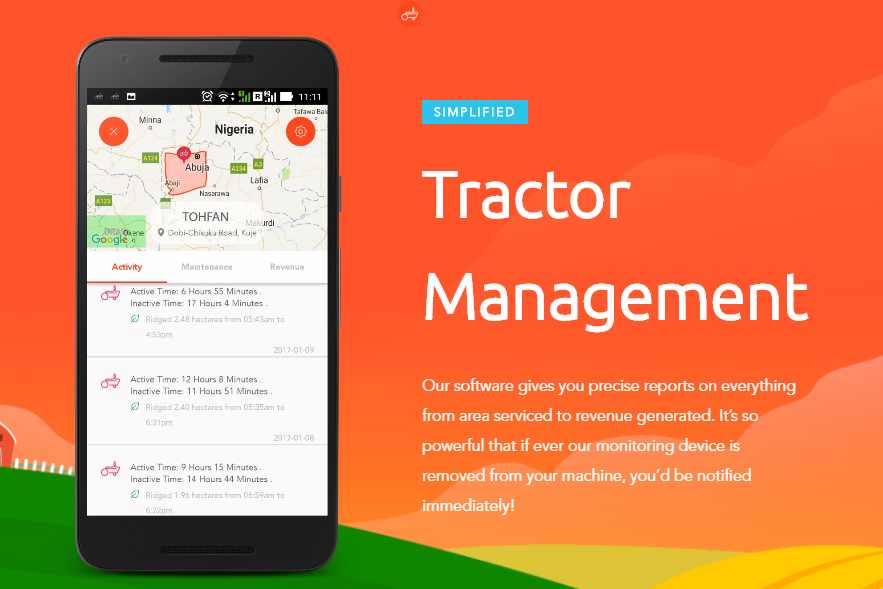
  • Nigeria-based Hello Tractor leverages IoT to provide farmers with the opportunity to rent a tractor on demand.
  • Learnmine connects students and tutors for facilitating ‘on demand’ education.
  • Kenya-based Able Wireless is an on-demand wireless streaming service provider that provides coaching equipment and solves the local connectivity challenge.

Deep Insights

Related to the capability of providing real time and longitudinal data is the ability of emerging technologies to generate deep insights that help decision-making, prediction, optimization and control. Sensor technology and IoT allow monitoring of products, processes, conditions, operations and the external environment. More importantly, these technologies use the data to judge a product’s performance, track the operating features of a product and understand the usage and lifecycle of a product. This ability to gather data and generate deep insights has implications for product design and development, market segmentation, marketing, and after-sales services. It allows not only better prediction and judgement, but also action and outcomes. Similarly, emerging technologies provide the ability to control via algorithms and commands that allow remote management. This has implications for the way we look at problem solving in emerging market contexts. In agriculture, for example, while sensor technologies enable real-time monitoring of soil data, they also facilitate more targeted interventions and drive efficiency and effectiveness when it comes to use of agricultural inputs. With this capability, emerging technologies shift the framing of the problem from productivity to prediction.

Case Examples:
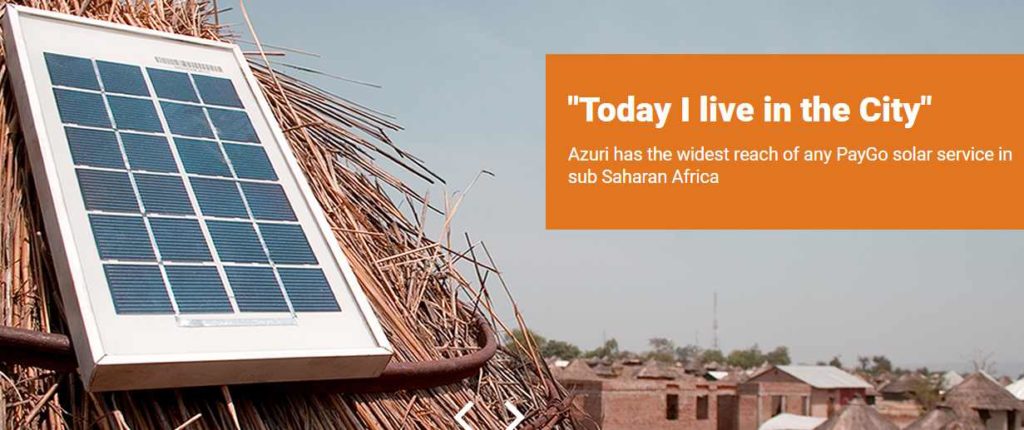
  • While solar home systems are typically adversely affected by cloudy daytime conditions, Kenya-based Azuri uses an AI-based power management system that learns customer’s typical power usage pattern and adjusts the brightness of lights to meet their requirements.
  • Air Shephard uses drones with the aim to stop elephant and rhino poaching. It also uses predictive analytics to identify poachers.
  • Illuminum Greenhouse uses solar panels and sensor technology to create a controlled environment to grow and monitor crops. Sensors collect data on temperature, humidity and soil moisture and send this to farmers via text messages, allowing them to monitor and regulate their greenhouses without having to be on the farm.

Customization

The ability to provide real time and longitudinal data and insights based on such data enables emerging technologies to chalk out new avenues for customization of solutions that were economically unviable earlier and which potentially disrupt product design, development and marketing. With emerging technology advances and increase in machine intelligence, prediction will become cheaper and more accurate allowing for more targeted solutions for the individual. Intelligent software, IoT platforms, AI and other cognitive technologies have the abilities to understand user behaviors, to interpret needs, and even to make decisions on their behalf. They also enable alternate forms of risk management. These capabilities have implications for product design. For example, in the financial services sector, the ability to generate deep insights allows financial institutions to develop alternate forms of risk assessment and manage uncertainty, and thereby create more customized products and solutions.

Case Examples:
  • 4GCapital leverages Blockchain technology to provide very short term loans for informal market traders to grow their businesses and support them with advisory and training services.
  • UjuziKilimo uses a sensor-based analytical system to measure soil characteristics to help farmers understand soil quality. Information is collected by using soil sensors, which is sent to a central database for analysis. Farmers receive a text message with tips on managing the soil and personalized advice on preferred crop breeds, pest control, current market value of crops, tools required and where to find them.
  • South Africa-based Obami provides customized education through a platform solution that facilitates communication between learners, teachers, parents, and educational administrators. The platform seeks to combine social networking tools with a virtual learning environment.


Democratization

Speed, deep insights and customization lead do decentralized solutions and “democratization of everything”— furthering the spotlight on the individual and the community. Real time monitoring, improved predictive and decision making capabilities and customization of production and solutions along with the possibility of removing intermediaries, boosts democratization and autonomy. While examples like crowdfunding are more established, the potential of emerging technologies to democratize basic services goes far beyond financial inclusion. More sophisticated “smart” solutions are able to learn about their environment, self-diagnose needs, and adapt to customer preferences. Blockchain-enabled peer-to-peer marketplaces, for example, can democratize access to basic services like energy or water. Decentralized, autonomous products are able to communicate with other devices and systems, creating potentially exponential democratizing effects.

Case Examples:
  • Followmyvote aims to change the way people vote, becoming the world’s first secure open-source online voting software based on Blockchain technology
  • Experfy, through its IoT application, gathers vast volumes of data about water quality which can then be integrated with geographic and population data representations. Analysis of this data through data visualization and scenario simulation tools enhances monitoring of water quality by generating a single, reliable, and actionable geospatial view of water resources and management systems in real-time. In the future such insights can be fed back into communities to provide them greater control over management of their water resources.

System Change

Emerging technologies can converge to have potentially disruptive effect on industry structures and established solution systems. System change happens in two ways. Firstly, emerging technologies through the series of capabilities discussed earlier, change the way products and solutions are developed from design, production and marketing to customer engagement phases. Secondly, emerging technologies have a disruptive impact on existing industries by prompting new market players to challenge existing ‘rules of the game’ by cutting intermediaries and capture greater value through broader product definitions. As such, emerging technologies and their capabilities may lead to new types of substitutes, new business models and new product systems that are radically different from traditional ones and more importantly aim at overcoming fundamental shortcomings associated with the latter.

Case Examples:
  • Lo3 Energy is piloting the first ever micro-grid project using Blockchain technology in New York. Its TransActive Grid aims to facilitate energy distribution via a peer-to-peer energy trading model leveraging convergence of AI, IoT, and Blockchain, The innovation can potentially replace the conventional power grid as the primary source of energy for households.