DD
MM
YYYY

PAGES

DD
MM
YYYY

spot_img

PAGES

Home Blog Page 7446

Why OTT Blocking Related Policy will turn out to be Achilles Heel for Nigeria’s Telecom Regulator

0

The policy division within the Nigerian Communications Commission (NCC) has released an overview of the provision of Over the Top (OTT) services days after a telco made public its intention to block voice and video calls on WhatsApp, Facebook and Skype.

The report touches on how access to 3G and 4G networks, which offer mobile broadband and high-speed IP data networks, has further encouraged the uptake and growth of new modes of communication such as OTT services.

This, in turn, enables the provision of services such as live streaming and voice over internet protocol (VoIP). However, telcos in Nigeria claim such services eat into the revenue they generate through international calls because of the country’s large expatriate and diaspora population.

Also, the services are prepaid, unlike say in  U.S., where customers sign up for monthly services which make it materially irrelevant on the services they use as they are contracted to pay monthly. Telcos in U.S. may not face the same challenges on OTT as in Nigeria because of their pricing mechanism which may not be easily adopted in Nigeria owing to poor credit system infrastructure. It remains a challenge to evaluate credit worthiness of people, in Nigeria, and without a central credit rating system, monthly plan may not be optimal for telcos.

The report notes that while VoIP or internet telephony is cheap and offers many features previously unavailable with telephones, the innovation comes at a price for regulators as the “nature of the technology creates unique (and previously unheard of) regulatory obstacles” as well as being susceptible to security glitches.

However, rather than kick against the OTT services, the report makes recommends to the NCC on how to address OTT-related issues, and states there is a need for telcos “to innovate and explore more efficient business models that would enable them to compete favourably with OTT service providers.”

One of such models could require network providers to take advantage of the IP technology in the design of their upgrades, it says, adding that the NCC should conduct a stakeholders’ consultative forum on OTTs to determine if regulation is required for such services.

It also recommends that the NCC review its guidelines on the provision of International Gateway and Voice over Internet Service, and ensure that it does not stifle innovation since internet penetration is still evolving, access speeds are still low and there is limited coverage of high-speed broadband in Nigeria.

Though the regulation of VoIP services remains a topical issue globally, particularly as it is seen to be a threat to the continuous existence of telcos and their operations, traditional network operators are arguing that they do not have an incentive to continue to maintain or upgrade their platforms upon which most OTT services are hosted unless there is a revenue flow to them.

Nigeria has the largest mobile market in Africa in terms of subscriptions with over 150 million mobile subscriptions at end-2Q16 up from about 148 million a year earlier, according to Ovum in its Africa Market Outlook 2016.

Telcos can offer pre-paid monthly plan to Nigerians and this problem will be solved. However, in a relatively poor country, there are few people who can afford to pay one month ahead. So, this piecemeal of N200 or buy any amount when you want remains a tested business model for telcos that works. Bu where they can collect that payment ahead, this problem of OTT will be solved, provided the users do not turn personal phones into business centers where everyone in a community will depend on one phone line.

If Nigerian telecom regulator does not manage this well, it could be the Achilles heel. First, telcos will struggle and some will fail owing to lack of revenue. Second, if they adhere to what telcos want, consumers will see lesser innovation. They have to find a middle ground to balance innovation and sustainability of the industry.

Case Studies Of The Leapfrogging Disruptive Impacts Of Emerging Technologies In Africa

0

Emerging technologies have started to disrupt whole industries and in doing so are demonstrating their role as amplifiers for solution development. Robotics are improving farm productivity in Indonesia and delivering innovative vertical farming solutions in Japan.

Virtual Reality, AI and the IoT are changing the healthcare sector across the US and Europe with simulated surgical training, real-time diagnosis and prevention while drone technology in Africa is helping overcome last mile distribution challenges. In Estonia, Blockchain is already being used to create digital identities.

While in advanced economies emerging technology use cases aim for reformative or incremental change, their application can be truly disruptive in Africa where leapfrogging is possible in the absence of legacy systems. Robotic surgical systems and AI are supporting doctors in developed countries.

In African countries, where lack of qualified doctors is a fundamental bottleneck, connected robotic systems and AI can reduce the dependence on healthcare professionals. With the Urology Hospital in South Africa taking the first step in introducing robotic surgery, we are already witnessing this transition.

Emerging technologies and their role as impact amplifiers change our outlook on how the African continent will overcome some of the biggest development hurdles. Just as the mobile phone has demonstrated how one device has the ability to leapfrog development stages, we predict that emerging technologies have the potential to catalyze exponential transformation through making quality products and services available at affordable prices and through channels that are close to low income customer.

At a high level, emerging technologies with high impact potential are characterized by their abilities to deliver real time data at speed, hence providing deep insights for decision making. This allows for customization of solutions. The growing importance of the individual spurs innovations for democratizing access to products and services. Through a combination of forces, emerging technologies can disrupt whole industries and solution systems. Each lever, valuable in its own right, sets the stage for the next level.

Speed

Increasing connectivity and the uptake of emerging technologies are driving up the speed at which products and services are delivered, leading to the growth of the “on demand” economy and the “uberization of everything”. Emerging technologies allow collecting, analyzing and sharing of huge amounts of real time and longitudinal data. This trend will be accelerated by the rapid increase in the number of connected devices, estimated to reach 25 billion by 2020. Better real-time information enabled through IoT sensors and connected devices will drive efficiency by reaching similar impacts with fewer resources or greater impacts with same resources. Likewise, through real time access of information, emerging technologies will allow faster monitoring of humans, machines and ‘things’ and drive a shift from human-to-human to machine-to-machine and eventually “everything-to-everything” communication. This has implications across sectors as the ability to exponentially increase the speed of data access will create new kinds of marketplaces and platforms.

Case Studies

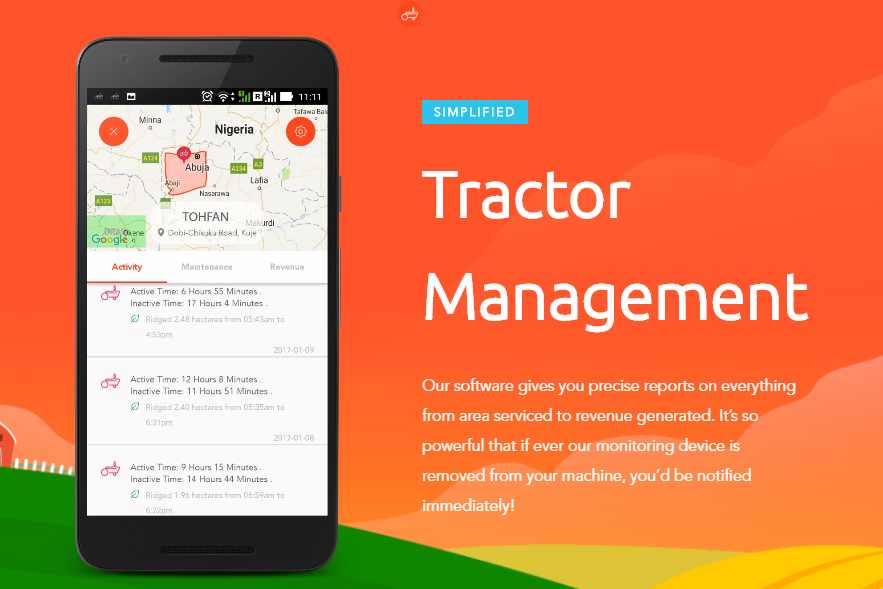
  • Nigeria-based Hello Tractor leverages IoT to provide farmers with the opportunity to rent a tractor on demand.
  • Learnmine connects students and tutors for facilitating ‘on demand’ education.
  • Kenya-based Able Wireless is an on-demand wireless streaming service provider that provides coaching equipment and solves the local connectivity challenge.

Deep Insights

Related to the capability of providing real time and longitudinal data is the ability of emerging technologies to generate deep insights that help decision-making, prediction, optimization and control. Sensor technology and IoT allow monitoring of products, processes, conditions, operations and the external environment. More importantly, these technologies use the data to judge a product’s performance, track the operating features of a product and understand the usage and lifecycle of a product. This ability to gather data and generate deep insights has implications for product design and development, market segmentation, marketing, and after-sales services. It allows not only better prediction and judgement, but also action and outcomes. Similarly, emerging technologies provide the ability to control via algorithms and commands that allow remote management. This has implications for the way we look at problem solving in emerging market contexts. In agriculture, for example, while sensor technologies enable real-time monitoring of soil data, they also facilitate more targeted interventions and drive efficiency and effectiveness when it comes to use of agricultural inputs. With this capability, emerging technologies shift the framing of the problem from productivity to prediction.

Case Examples:
  • While solar home systems are typically adversely affected by cloudy daytime conditions, Kenya-based Azuri uses an AI-based power management system that learns customer’s typical power usage pattern and adjusts the brightness of lights to meet their requirements.
  • Air Shephard uses drones with the aim to stop elephant and rhino poaching. It also uses predictive analytics to identify poachers.
  • Illuminum Greenhouse uses solar panels and sensor technology to create a controlled environment to grow and monitor crops. Sensors collect data on temperature, humidity and soil moisture and send this to farmers via text messages, allowing them to monitor and regulate their greenhouses without having to be on the farm.

Customization

The ability to provide real time and longitudinal data and insights based on such data enables emerging technologies to chalk out new avenues for customization of solutions that were economically unviable earlier and which potentially disrupt product design, development and marketing. With emerging technology advances and increase in machine intelligence, prediction will become cheaper and more accurate allowing for more targeted solutions for the individual. Intelligent software, IoT platforms, AI and other cognitive technologies have the abilities to understand user behaviors, to interpret needs, and even to make decisions on their behalf. They also enable alternate forms of risk management. These capabilities have implications for product design. For example, in the financial services sector, the ability to generate deep insights allows financial institutions to develop alternate forms of risk assessment and manage uncertainty, and thereby create more customized products and solutions.

Case Examples:
  • 4GCapital leverages Blockchain technology to provide very short term loans for informal market traders to grow their businesses and support them with advisory and training services.
  • UjuziKilimo uses a sensor-based analytical system to measure soil characteristics to help farmers understand soil quality. Information is collected by using soil sensors, which is sent to a central database for analysis. Farmers receive a text message with tips on managing the soil and personalized advice on preferred crop breeds, pest control, current market value of crops, tools required and where to find them.
  • South Africa-based Obami provides customized education through a platform solution that facilitates communication between learners, teachers, parents, and educational administrators. The platform seeks to combine social networking tools with a virtual learning environment.


Democratization

Speed, deep insights and customization lead do decentralized solutions and “democratization of everything”— furthering the spotlight on the individual and the community. Real time monitoring, improved predictive and decision making capabilities and customization of production and solutions along with the possibility of removing intermediaries, boosts democratization and autonomy. While examples like crowdfunding are more established, the potential of emerging technologies to democratize basic services goes far beyond financial inclusion. More sophisticated “smart” solutions are able to learn about their environment, self-diagnose needs, and adapt to customer preferences. Blockchain-enabled peer-to-peer marketplaces, for example, can democratize access to basic services like energy or water. Decentralized, autonomous products are able to communicate with other devices and systems, creating potentially exponential democratizing effects.

Case Examples:
  • Followmyvote aims to change the way people vote, becoming the world’s first secure open-source online voting software based on Blockchain technology
  • Experfy, through its IoT application, gathers vast volumes of data about water quality which can then be integrated with geographic and population data representations. Analysis of this data through data visualization and scenario simulation tools enhances monitoring of water quality by generating a single, reliable, and actionable geospatial view of water resources and management systems in real-time. In the future such insights can be fed back into communities to provide them greater control over management of their water resources.

System Change

Emerging technologies can converge to have potentially disruptive effect on industry structures and established solution systems. System change happens in two ways. Firstly, emerging technologies through the series of capabilities discussed earlier, change the way products and solutions are developed from design, production and marketing to customer engagement phases. Secondly, emerging technologies have a disruptive impact on existing industries by prompting new market players to challenge existing ‘rules of the game’ by cutting intermediaries and capture greater value through broader product definitions. As such, emerging technologies and their capabilities may lead to new types of substitutes, new business models and new product systems that are radically different from traditional ones and more importantly aim at overcoming fundamental shortcomings associated with the latter.

Case Examples:
  • Lo3 Energy is piloting the first ever micro-grid project using Blockchain technology in New York. Its TransActive Grid aims to facilitate energy distribution via a peer-to-peer energy trading model leveraging convergence of AI, IoT, and Blockchain, The innovation can potentially replace the conventional power grid as the primary source of energy for households.

Lessons from Konga, Chipmaker AMD and the Stupidity of the Fail-Fast Mantra in Building Startups

0

A stupid mantra in the world of tech startups is the Fail-Fast mantra. It begins with thinking on the constructs that it makes no sense to waste efforts when things are not working out, very fast. So, you either scale very fast or you just exit and die as a company. Nothing in between; there is no need to be patient as the future can bring opportunities which may not be available today.

It does happen, often, in venture backed companies as once the metrics are not looking well, they will cease to inject more capital. Just like that you have to fold if you cannot find more alternative capital. To avoid that trap, the startup must ensure it is constantly executing and firing on all cylinders so that it can attract more funding. Otherwise, it has to fail and make way. There is nothing wrong with that, if that execution can happen, very fast.

Many consulting companies like EY had noted that  Fail-Fast could drive innovation in startups when used as a business innovation process. Of course, a whole company can be seen as a complex process, and that means EY thinks that fail-fast applies to a whole organization, by extension.

The success of many digital startups originates from innovation, game-changing business models or a customer experience that significantly disrupts the traditional business models. The “fail fast” culture of startups and their speed of innovation give them sustainable competitive advantages against the traditional businesses that struggle to adopt a similar pace of innovation.

More organizations are now adopting the “fail fast” experimental delivery approach for customer experience using techniques like A/B testing on their websites, mobile applications or social media. This change has helped organizations to reduce the time-to-market of enhancement on customer experience.

But there is another way of looking at this. One, Konga, an e-commerce pioneer in Nigeria, had seen turbulent moments with its numbers. A simple strategy would have been to close the firm, long ago. But the owners did not choose that path. However, over the last few months, the company seems to have figured out some new ways to stay in business. It recently raised new capital and if not mildly profitable, is on the way of being profitable. What is happening here is a company that struggled for years to break more than 200,000 active users but persisted, nevertheless, and could be seeing the light at the end of the tunnel. It refused to fail-fast.

Another, at international level, is AMD, a global chipmaker and a competitor to Intel. What is happening with AMD is huge and inspirational. In such, underdogs everywhere should find inspiration in the quiet redemption of Advanced Micro Devices, the semiconductor industry doormat for years that has made a massive comeback against longtime foe Intel. Who can believe that AMD will share the phrase “unprecedented performance” in the same press release?

This week at the Game Developers Conference, Fallout and Elder Scrolls publisher Bethesda announced a “long-term strategic partnership” with chip-maker AMD. Bethesda said fans can expected to see “unprecedented performance” from new technologies as a result of the partnership.

A press release from AMD explains that the partnership is for multiple games. Bethesda and AMD will “collaborate to develop and accelerate the implementation of new technologies, including the full potential of low-level APIs, such as Vulkan, and the computing and graphics power of AMD Ryzen CPUs, Radeon GPUs, and AMD server solutions across existing Bethesda franchises,” the release says.

In the technology world you can be down for years without being out. But that is if you can find a way to hang around. AMD has been hanging around for more than a decade and right now it is going through a great moment. Its new chip Ryzen is huge and could change the market dynamics.

Using the fail-fast mantra, AMD will not be here, for any reason. Its stock has moved from less than $3 to move than $15.

This is a huge lesson, the fail-fast has become an excuse not to try harder. It has become a way to just give up fast. It makes it easy to demonstrate no patience and find what works. It is a very bad thinking for startups especially in Africa where finding and executing a winning strategy takes time, owing to the non-homogeneity of the markets and lack of data to drive pre-market strategy. Most times you learn on the fly, refining your business, because pre-market assumptions are way-off.

Do not fail-fast. It pays to not give up easily!

Understanding the Dark Web – Insights from INTERPOL

0

The Kaspersky Lab has published its annual Mobile Virusology report which among others highlighted the evolution of mobile banking Trojans. To prepare this work, specialist officers from INTERPOL’s Global Complex for Innovation have contributed an analysis of mobile malware on the Dark Web to the report.

According to specialist officers from INTERPOL’s Global Complex for Innovation, who have also contributed to the report, the Dark Web remains an attractive medium for conducting illicit businesses and activities. Given its robust anonymity, low prices and client-oriented strategy, the Dark Web provides a means for criminal actors to communicate and engage in commercial transactions, buying and selling various products and services, including mobile malware kits.

Mobile malware is offered for sale as software packages (e.g. remote access Trojans – RATs), individual solutions and sophisticated tools, like those developed by professional firms or, on a smaller scale, as part of a ‘Bot as a Service’ model.

Mobile malware is also a ‘subject of interest’ on vendor shops, forums and social media.

With the changing dynamics of malware and the cybersecurity ecosystem, citizens and enterprises must ensure they are well informed about the risks of digital platforms and computing systems when they are not well protected. Trade secrets, confidential data and personal information are at risks because the world of dark web hosts all kinds of people that show their arts in the white web.

Make a real efforts to understand the dangers of digital platforms and commit to do all necessary to stay safe.

What to Do About Mobile Malware Advertising Trojans which Exploit Super-User Rights

0

Trojans are everywhere in the mobile ecosystem and it is not getting any better. 2016 saw a near-threefold rise in mobile malware detections compared to 2015 – with a total of 8.5 million malicious installations identified. This means that, in the space of just one year, a volume equivalent to 50% of all the malware detected in the previous 11 years (15.77 million in 2004 – 2015) was released.

Leading the way were mobile advertising Trojans which now make up 16 of the top 20 malicious programmes, up from 12 in 2015, according to the findings of Kaspersky Lab annual Mobile Virusology report, which also highlights the evolution of mobile banking Trojans.

These Trojans are capable of seizing rooting rights, allowing the malware to not only aggressively display ads on the infected device, often making it impossible to use, but also to secretly install other applications. These Trojans can also buy apps on Google Play. In many cases, the Trojans were able to exploit previously patched vulnerabilities because the user had not installed the latest update.

Further, this malware simultaneously installs its modules in the system directory, which makes the treatment of the infected device very difficult. Some advertising Trojans are even able to infect the recovery image, making it impossible to solve the problem by restoring the device to factory settings.

Representatives of this class of malicious software have been repeatedly found in the official Google Play app store, for example, masquerading as a guide for Pokemon GO. In this case, the app was downloaded over 500,000 times, and is detected as a Trojan(dot)AndroidOS(dot)Ztorg(dot)ad.

The Dark Web delusion

According to specialist officers from INTERPOL’s Global Complex for Innovation, who have also contributed to the report, the Dark Web remains an attractive medium for conducting illicit businesses and activities. Given its robust anonymity, low prices and client-oriented strategy, the Dark Web provides a means for criminal actors to communicate and engage in commercial transactions, buying and selling various products and services, including mobile malware kits. Mobile malware is offered for sale as software packages (e.g. remote access Trojans – RATs), individual solutions and sophisticated tools, like those developed by professional firms or, on a smaller scale, as part of a ‘Bot as a Service’ model. Mobile malware is also a ‘subject of interest’ on vendor shops, forums and social media.

What You Can Do?

Besides the obvious one of installing effective anti-virus systems in your computing devices, you need to learn to understand your other options. Cybersecurity, especially at enterprise level, has components of policy, management, technology and intelligence. Facyber has created a top-quality platform to make that knowledge transfer possible in Africa and beyond. You can take advantage of the affordable programs to deepen your capabilities today.