
DD
MM
YYYY

PAGES

DD
MM
YYYY

spot_img

PAGES

Home Blog Page 7470

THE KADUNA DECLARATION – Full Text of Northern Youth Declaration Asking Igbos To Leave Northern Nigeria

1

Below is the text of the declaration:

THE KADUNA DECLARATION BEING A JOINT POSITION PAPER ISSUED BY THE AREWA CITIZENS ACTION FOR CHANGE, AREWA YOUTH CONSULTATIVE FORUM, AREWA YOUTH DEVELOPMENT FOUNDATION, AREWA STUDENTS FORUM AND NORTHERN EMANCIPATION NETWORK ON THE IGBO PERSISTENCE FOR SECESSION  

June 06, 2017

PREAMBLE

The persistence for the actualization of Biafra by the unruly Igbo of South-Eastern Nigeria has lately assumed another alarming twist which involved the forceful lockdown of activities and denial of other people’s right to free movement in the South-East by the rebel Indigenous People of Biafra (IPOB) and its overt and covert sponsors.  

This latest action and similar confrontational conducts which amount to a brutal encroachment on the rights of those termed as non-indigenous people residing and doing lawful businesses in those areas illegally demarcated and defined as Biafra by the Igbo, are downright unacceptable and shall no longer be tolerated.  

OBSERVATIONS

Concerned by this persistent Igbo threat to national integration, the above-namedPan-northern groups met with several others and reviewed the current position of the North and jointly came up with the following observations: 

1. IGBO PROVOCATION

a. The Igbo people of the South-East, without remorse for the carnage they wrought on the nation in the 1960s, are today boldly reliving those sinister intentions connoted by the Biafran agitation that led to the very first bloody insurrection in Nigeria’s history. 

b.  Emboldened by the apparent indifference of the Nigerian authorities, the Igbo secessionist tendency is widening in scope and action at every stage, with adverse effects on the law-abiding people of other regions residing in or passing through the East, while the Igbo leaders and elders by their utterances and direct action or inaction appear to support and encourage it.

c.  This is happening irrespective of the undisputable fact that:

i.  The cruel Igbos have done and are doing more damage to our collective nationhood than any other ethnic group; being responsible for the first violent interference with democracy in Nigeria resulting in a prolonged counter-productive chain of military dictatorship.

ii. The Igbos similarly orchestrated the first, and so far, the only civil war in Nigeria that consumed millions of lives and sowed the seed of the current mutual suspicion and distrust.

iii.  The Igbos are also responsible for Nigeria’s cultural and moral degeneracy with their notorious involvement in all kinds of crimes, including international networking for drug and human trafficking, violent robberies and kidnappings, high-profile prostitution and advanced financial fraud.

iv.  At the peak of the devastating Boko Haram violence in some parts of the North, available records show that the Igbo people have variously been apprehended while attempting to convey catches of dangerous arms and ammunition to the troubled regions.

v.  There are today sufficient reasons to suspect that some Igbos masquerade as Fulani herdsmen to commit violent atrocities across the country in order to cause and spread ethnic disaffection. 

vi.  It is also on record that since the inception of the current democratic dispensation, the Igbos have shown and maintained open contempt and resentment for the collective decision expressed by majority of Nigerians at various stages via generally acceptable democratic processes.

2.  DOCILE NORTHERN RESPONSE

a. While these provocative acts of aggression persist and grow in dimension with each new move, leaders of the North whose people are at the receiving end of the threats, appear helplessly unperturbed.

b. Rather than endorsing a concise framework for pre-emptive action to protect and safeguard the interest of the North and its people, leaders of the region at every stage tend to seek the cover of a flimsy and long-discarded excuse of having fought in the 60s to keep Nigeria united.

c.  Without pursuing a resolute action-plan, these northern leaders have adopted and have been dragging its people into a pitifully pacifist position in order tosustain an elusive national cohesion that has long been ridiculed by the Igbos. 

OUR STAND

1.  From today, June 6, 2017, when this proclamation is signed, the North, a critical player in the Nigerian project, hereby declares that it will no longer be disposed to coexisting with the Igbos and shall take definite steps to end the partnership by pulling out of the current federal arrangement.

2. This conclusion is necessitated by the realization that it since ceased to be comfortable or safe to continue sharing the same country with the ungrateful, uncultured Igbos who have exhibited reckless disrespect for the other federating units and stained the integrity of the entire nation with their insatiable criminal obsessions. 

3.  Rather than certain sections holding the whole country to ransom at every stage, each should be allowed to go its own way as we categorically proclaim today that the North is fed up with being the same country with this pack of acrimonious Igbo partners.

4.  The North hereby openly calls on the authorities and other national and international stakeholders to acknowledge this declaration by taking steps to facilitate the final dissolution of this hopeless union that has never been convenient to any of the parties.

PRELUDE TO FINAL SEPARATION 

1.  RECOVERY AND CONTROL OF LANDED PROPERTY

As a first step, since the Igbo have clearly abused the unreciprocated hospitality that gave them unrestricted access to, and ownership of landed properties all over the North, our first major move shall be to reclaim, assume and assert sole ownership and control of these landed resources currently owned, rented or in any way enjoyed by the ingrate Igbos in any part of Northern Nigeria. 

Consequently, officials of the signatory groups to this declaration, are already mandated to commence immediate inventory of all properties, spaces or activity in the north currently occupied by the Igbos for forfeiture at the expiration of the ultimatum contained in this declaration. 

In specific terms, the groups are directed to compile and forward an up-to-date data of all locations occupied by any Igbo in any part of Northern Nigeria including schools, markets, shops, workshops, residences and every other activity spaces. 


 2.  RELOCATION NOTICE

Secondly, with the effective date of this declaration, which is today, Tuesday, June 06, 2017, all Igbos currently residing in any part of Northern Nigeria are hereby served notice to relocate within three months and all northerners residing in the East are advised likewise.


3. ENFORCEMENT 

All northern civil society and pressure groups are by this declaration mandated to mobilize for sustained, coordinated campaigns at their respective State Government Houses, State Houses of Assembly, Local Government Council Secretariats, and Traditional Palaces to mount pressure for steps to be taken to ensure enforcement of the directives contained herein. 


CONCLUSION

In conclusion, we are hereby placing the Nigerian authorities and the entire nation on notice that as from the 1st October 2017, we shall commence the implementation of visible actions to prove to the whole world that we are no longer part of any federal union that should do with the Igbos.

From that date, effective, peaceful and safe mop-up of all the remnants of the stubborn Igbos that neglect to heed this quit notice shall commence to finally eject them from every part of the North.

And finally, all authorities, individuals or groups are hereby advised against attempting to undermine this declaration by insisting on this union with the Igbos who have thus far proved to be an unnecessary baggage carried too far and for too long.

Why Jaiz Bank Plc Is Performing Poorly In The Nigerian Stock Exchange

0

In this videocast, I discuss Jaiz Bank Plc which operates in Nigeria with headquarters in Abuja. Jaiz Bank Plc, is a non interest bank in Nigeria and the first non-interest bank established in the country. Largely, the bank is not performing well, recording the least performing stock in the Nigerian Stock Exchange big league in May. Also, I explain that its problem is not execution-related but rather business model-anchored. Nigeria does not have the systems and processes to support a non-interest bank, yet, and as a pioneer in non-interest banking, Jaiz Bank will have to build most of those systems itself.


Fasmicro Group Chairman Ndubuisi Ekekwe Speaks At The European Commission, Belgium

0

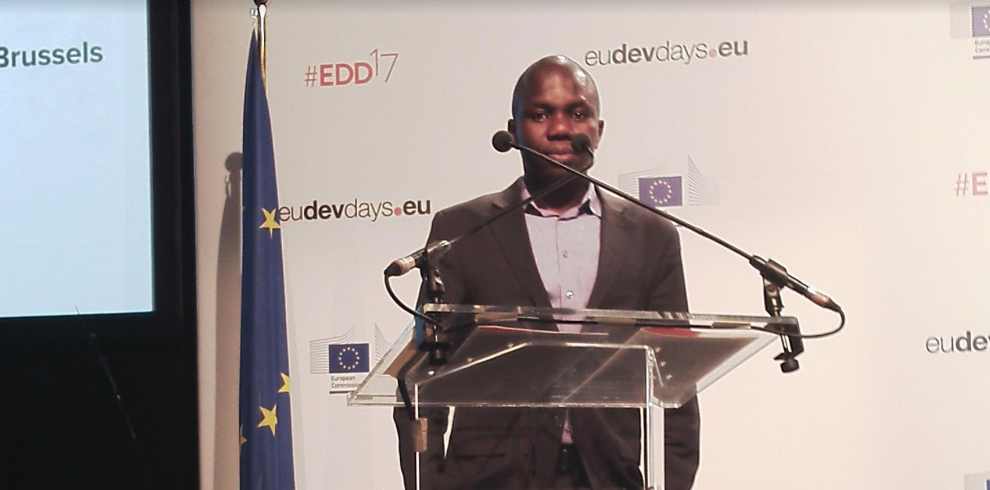
Fasmicro Group Founder and Chairman, Dr Ndubuisi Ekekwe, speaks at the European Commission, Brussels, Belgium. We will bring a full break down of his talk LATER.

He is making a case for a stronger Africa-European business partnership that is based on mutual respect.


Uniquely African: How Homegrown Innovation Is Solving Many Of Africa’s Most Pressing Challenges

0

By now, I am convinced that you have heard of M-Pesa, the popular and often-cited mobile banking system that has become Africa’s innovation calling card. But do you know about the Ushahidi crowdsourcing app, also from M-Pesa’s birthplace, Kenya? Built to digitally map demographic events, it is used across the world. Today Ushahidi, which means ‘evidence’ in Swahili, is a technology company with presence in more than 20 countries. The list of African innovations, born from the need to solve specific challenges, is very impressive.

For a number of years, Africa’s rise made headlines across the globe. A bruised world economy looked for new spaces of vitality, and the African continent was the ideal candidate. Registering an average GDP growth of over 5 percent, Africa appeared to be the next big thing on the global stage. The word ‘Renaissance’ was soon appended to the narrative.

Yet those predictions have not quite come to fruition and many skeptics have taken a more bearish view to Africa’s prospects. On the one hand, these cynics are right: Africa is not developing as they had expected. But this is always the drawback of an outside perspective; oversimplifying events and placing foreign templates on a fast-evolving landscape.

The fact is that Africa is innovating for itself and these innovations are delivered by the incredible number of countries, people and economies who call it home.

Local innovators play a unique role in the emergence of new technologies. Whereas many markets marginally improve on existing ideas, African nations tackle far more present, challenging and transformational problems. This creates a pedigree for resilience, performance and positive outcomes.

The Pan-African innovation scene is growing at rapid speed. According to research presented by the World Economic Forum, there are roughly 200 African innovation hubs, 3,500 new tech-related ventures, and $1 billion spent in venture capital. In 2016, startup investments were up 17 percent from the previous year.

Similarly, new technologies are gaining traction across the keystone continent. Nigerian businesses are among the fastest adopters of Cloud in the world. In Ethiopia, the Tulane Health Project modernises healthcare services through connectivity and cloud technologies. In Cameroon, the site 1 Task 1 Job is building a thriving self-employment culture; and in Rwanda, the improvement of government e-services and technology policies are enabling entrepreneurs to register a business online in a matter of minutes.

The fear of ‘digital colonisation’ by overseas technology firms is also being met head-on. Several rideshare services, most recently the Africa Ride in South Africa, are taking on Uber. Netflix, the entertainment streaming giant, is being challenged by homegrown companies such as Showmax and iROKOtv. Music lovers in Nigeria can set aside iTunes and try Musiccloud instead.

Even the challenge of food security is being addressed with the recent launch of SAP’s Rural Sourcing Management Solution. A homegrown system that helps small scale farmers manage their value chains at hands-on levels, which larger competitors with traditional systems are struggling to match.

Yet innovation does not happen whimsically. As mentioned earlier, there are a large and growing number of innovation hubs and projects across the continent. SAP launched the Africa Co-Innovation Lab in 2016, which has already seen great success.

It is expected that by 2050, Africa will contribute over $29 trillion to global GDP, up from $2.4 trillion today. This is not the story of a basket case relying on international intervention, nor that of a follower looking to copy other continents. The calls for an African Renaissance are getting an answer: the mother continent is doing it for itself in a uniquely African way.

By Brett Parker, Managing Director – SAP Africa

Juliet Nwanguma To Drive Growth for PayU in Nigeria’s $600M Online Payment Market

0

PayU has rolled out strategies to intensify efforts to connect businesses to Nigeria’s online payment market. Annual online payments in Nigeria is estimated to surpass N200 billion this year from N167 billion in 2016.

Country Manager of PayU Nigeria, Ms Juliet Nwanguma,  says, “In order to pursue PayU’s aggressive expansion in the online payment market in Nigeria, we have identified businesses that can benefit from our  global expertise across 16 markets where we offer over 250 payment options.”

With over 2.3 billion users world-wide, PayU is confident it can help businesses grow their market share and help them to achieve their business objectives.

Data recently released by the Nigeria Interbank Settlement System (NIBSS) showed that 5.5 million transactions worth N46.7 billion were generated through online sales in the first quarter of 2017. This is an increase in the quarterly average of 3.5 million transactions worth N33 billion in 2016. This 58% growth is a clear indication of the increased confidence and preference for online sales amongst Nigerians.

The double digit growth, according to Nwanguma, is far below the potential of the market for online payments in Nigeria.

Nwanguma noted that in a country of over 180 million people, consisting of 61 million active bank customers and where e-payment transactions are worth N56 trillion in a year, the potential for online payments in Nigeria is huge and waiting to be tapped.

She disclosed that the mission of PayU is to leverage on Nigeria’s 97 million active internet users to popularise and increase online payments in Nigeria.

“At PayU, we believe that with the deployment of appropriate strategies and products which are designed to encourage more businesses to adopt online payment, the market in Nigeria can record triple digit growth in both volume and value of online payments. This is the driving philosophy of PayU’s operations in Nigeria” she said.

Since last year when we entered the Nigerian market, we have used our globally tested products such as tokenisation, recurring payments for subscription services and single click payments for faster checkout. Our range of services according to different business categories especially the PayU Easy service allows start-ups to start selling online instantly without the need of a bank account or trading history. ”

“PayU has succeeded in successfully assisting small, medium and large organisations with their online payments. In particular, the robust and flexible features of PayU Plus and PayU Enterprise have assisted merchants to grow and expand their online payment business.”

PayU offers merchants safe, secure, online shopping.  Their products are   PCI DSS Level 1 compliant which mean they are required to meet extremely stringent security criteria. All card details are secured by secure socket layer (SSL) and transfer layer security (TLS) encryption and reinforced through various encryption processes in order to provide protection for all payment information.   They also are 3D secure enabled which gives consumers added security when shopping online.

The increased preference for online payments among Nigerians offers new opportunity for businesses to increase patronage and grow revenue.

The global expertise of PayU, combined with its easy-to-use and secure online products provide the channel to leverage on this opportunity and achieve business objectives.