DD
MM
YYYY

PAGES

DD
MM
YYYY

spot_img

PAGES

Home Blog Page 7478

How to Build a Comprehensive Nigeria Soil Map

2

Nigeria needs a comprehensive soil map to help drive agriculture in the 21st century. This will help farmers in planning and developing strategies by understanding the soil fertility distributions across the country.

Zenvus has the capability to assist local, state and federal governments to  build soil map at any level. With Zenvus Fusion, we will collect 10,000 data points per ward with the location selections widely spread so that the ward is evenly represented. That data will be used to build the soil map for that ward. By building many wards, we will develop the map for a local government area and then a state. With the states done, we can have the whole of the country available for farmers.

Zenvus uses proprietary electronics and software to build this map, taking into considerations topography from Google maps, and other indicators. The data from the electronics are analysed to help determine the nutritional content of the soil. The components in the soil will guide the soil design.

Zenvus Fusion has a mission to also use the soil map to determine the best five crops any ward can grow more profitably. Many things are taken into considerations when determining and modeling which crops make the cut.

Zenvus has in-built GPS, compass and the software incorporates field mapping, grid mapping, GPS based topography, yield maps, and other indicators to achieve a more precise field map. The software also considers soil conditions at different depths, and applies these conditions to the sensor located at those depths. With these factors along with the market prices of the crops, Zenvus Fusion will tell a farmer the best crop to grow in the ward or location.

We welcome interests from interested parties.

info@zenvus.com

How an Investor’s Behavioral Traits Might Completely Derail Your Pitch – Part II

0

This post continues the discussion about how behavioral psychology might affect a pitch. You can get caught up by reading part I. My goal with this series is to offer some advice on how entrepreneurs pitching to early stage investors might prepare to mitigate the problems that might arise due to the behavioral traits of investors.

The next set of errors I will discuss arise from investors’ inherent limitations in processing information that is complex and ambiguous.1

Cognitive Errors – Information Processing:

  1. Anchoring Bias: This occurs when a prospective investor tends to use some experience from his past as an “anchor”, and then draws a direct parallel between that anchor and your startup. This anchor can become a strong frame of reference that dominates the remainder of the discussion and might become the single factor that determines the investor’s ultimate decision.2
    • Case: Steve is pitching Disruptive Technology Startup (DTS) to a well respected early stage investor. Steve is excited, and is really hopeful that the investor will say ‘yes’ because Steve believes that this investor will add a lot of value as an investor and as an advisor to DTS as it searches for a profitable, repeatable, and scalable business model. This investor has conceived and built a handful of startups in the past and Steve believes that the investor’s experience as an operator will be invaluable. During the pitch the investor quickly focuses on one aspect of the product DTS is bringing to market. He thinks that the absence of a specific feature is a fatal flaw in the product design, and he uses his experience from one of the startups he co-founded in the past as justification for his opinion. Steve disagrees with that assertion. Steve has studied the topic thoroughly. He and his co-founders have discovered that the feature in question is not considered critical or even important by the customers that are adopting the DTS product now and paying for it. Their product roadmap proposes adding that feature about 18 months from when they get funded. They are raising a series A round of financing that will allow them to start aggressively acquiring the enterprise customers that they have built the product for. So far they have built up a relatively large customer base with little marketing, public relations, or sales efforts. Steve never gets through his presentation, because the investor keeps going back to that feature. At the end of 90 minutes Steve leaves the meeting feeling frustrated because he did not get to discuss any topics that he felt were important for the investor to understand. He’s almost certain DTS will not get a positive response from this investor. He is right. Two days later the investor emails Steve to say he has decided to pass because of the issue he identified.
    • Mitigation: This is a tough one. If I were in Steve’s shoes I would not debate this investor’s opinions  about this specific feature too strongly during the first pitch. I would listen to their reasoning. Then I would ask that they table those opinions so that I can go through the rest of the pitch. After that, I would request a follow up meeting focused specifically on the objections the investor raised – presumably DTS has valid reasons for choosing the approach it chose. The second meeting will be devoted to “un-anchoring” the investor and hopefully getting them to see things as Steve and the rest of the team at DTS sees them. It may also be necessary to send some written documentation and some operational data that the investor can study independently in order to determine for himself that DTS should not be compared too closely to his past. This approach assumes that the investor is open-minded and willing to admit that he could be mistaken. If the investor is adamant, then may be Steve should move on. This investor may not be a good match for DTS.
  2. Framing Bias: This occurs when an investor interprets information about your startup in different ways depending on how the information is presented, or depending on who presents the information. In other words the same information presented in different ways or presented by different people leads the same investor to opposite conclusions about your startup depending on how, or by by whom, the information is presented.
    • Case: Hannah is an early stage investor. She has an engineering background, and  is meeting Alice, a co-founder of Super Disruptive Technology Startup (SDTS). Alice has a co-founder, Janice, who is SDTS’ CTO. Alice does not bring Janice with her to the meeting with Hannah. Alice leaves the meeting thinking that it went very well, and tells Janice she feels they will get an investment from Hannah. She is dismayed when Hannah decides to pass because she ‘did not feel confident about the technical side . . . ‘ Alice does not have a technical background. She studied philosophy for her first degree, and then she studied for a master’s degree in marketing, strategy, and management.
    • Mitigation: In this case Janice should have attended the meeting with Alice. Given Hannah’s background, they should have foreseen that she might be more interested in the technical aspects of SDTS than the typical investor. It is likely that Hannah did not feel convinced by Alice’s efforts to discuss the technical innovation behind SDTS. She may have interpreted the same information delivered by Janice more favorably than she interpreted it coming from Alice. Alice and Janice should both attend meetings with any investor that might make a large investment in the SDTS financing round, or who they want to win over because of the potential investor’s industry network or expertise.

There are other information processing errors worth studying; the availability bias and the gambler’s fallacy come to mind. Wikipedia’s entry on cognitive biases is here. Wikipedia also has a much more extensive list of cognitive biases here. If you have the time, you should invest in a copy of Daniel Kahneman’s3 Thinking, Fast and Slow.

In the next post on this topic I will discuss a number of emotional biases that an investor might exhibit during your pitch.


  1. I am focusing on those errors described in the CFA Institute’s Level III curriculum. There may be others not discussed here that are nevertheless worth studying and understanding. ?
  2. My favorite example is the story Andrew Chen tells of his thoughts about Facebook after meeting the team in 2006. You should read it: Why I doubted Facebook could build a billion dollar business, and what I learned from being horribly wrong?
  3. If you purchase it through this link I will receive a small portion of the sales proceeds from Amazon to help me maintain this blog. ?

Map your farm boundary with Zenvus Boundary feature; no need for a surveyor

0

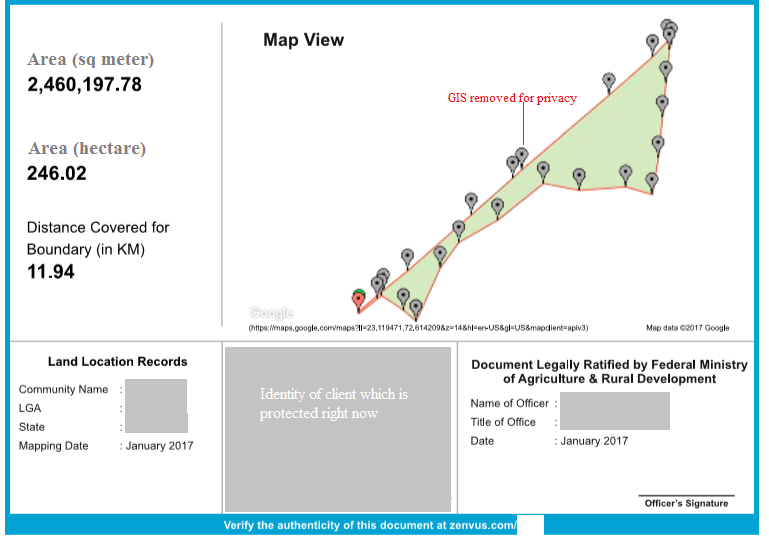
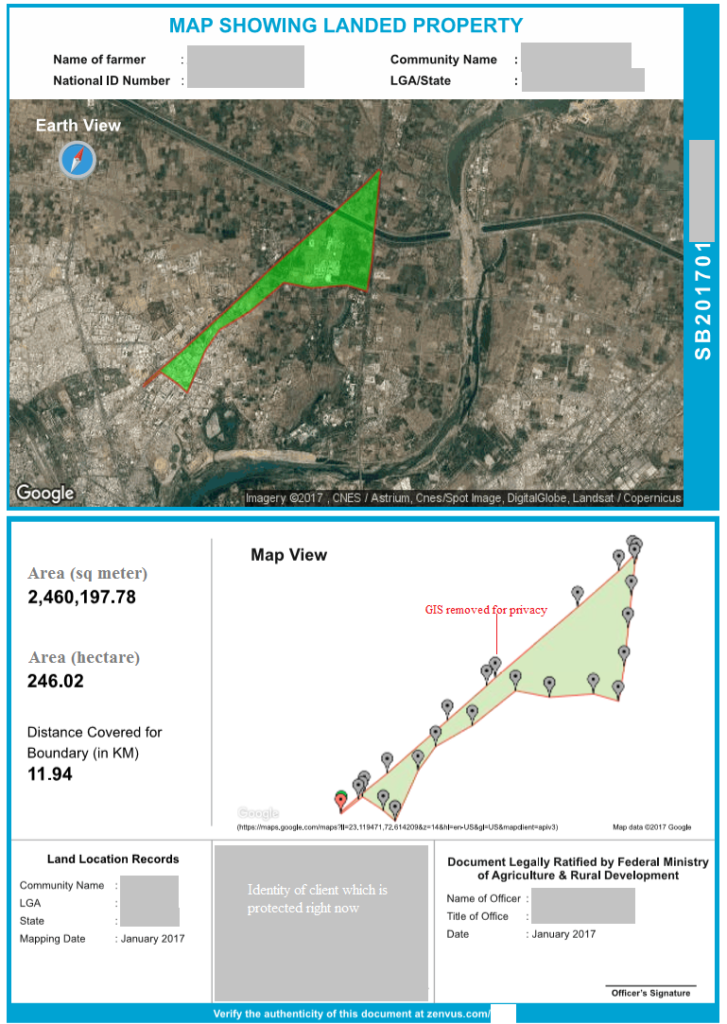
With Zenvus Boundary feature, farmers can simply map the boundaries of their farms. All they need is to put Zenvus in the Farm Boundary mode, walk round their farms, and exit the boundary scan mode. The next step is to go to their Zenvus profiles to print a PDF of their farm maps. They can take the report to their cooperative to approve before the government ratifies.

With this, the farmer will have a land title which can be used for loans. This is financial inclusion at its best.

Zenvus is an intelligent solution for farms that uses proprietary electronic sensors to collect soil data like moisture, nutrients, temperature, pH etc. It subsequently sends the data to a cloud server via GSM, satellite or Wifi. Algorithms in the server analyze the data and advice farmers on what, how and when to farm. As the crops grow, the system deploys hyper- spectral cameras to build crop normalized difference vegetative index which is helpful in detecting drought stress, pests and diseases on crops. The data generated is aggregated, anonymized and made available via subscription for agro-lending, agro-insurance, commodity trading to banks, insurers and investors. Zenvus also has a mapping feature which can help a farmer map the farm boundary with ease.

Overview, structure and tools in Nigeria’s leading cybersecurity & digital forensics training firm

0

Introduction

With the advent of dangerous malicious codes like Flame and Stuxnet, it has become evident that nations or institutions can electronically wage wars against enemies or competitors. As the risks of traditional wars abate, Internet has since evolved as the 21st century battleground where malware, not rockets, can be used to launch attacks on national infrastructure like power, telecoms, capital market and financial institutions. Also, through espionage and hacking, organized crimes by nations, corporate institutions and individuals can steal vital intellectual properties (IPs) that drive innovations in any economy. When a country or organization loses its competitive advantage, its competitive capability will be weakened. Our training programs are designed to equip learners with 21st century cybersecurity skills that will help them advance their careers while protecting their organizations.

Program Summary

ICT is facilitating the process of socio-economic development. It has offered new ways of exchanging information, and transacting businesses, efficiently and cheaply. It has also changed the dynamic natures of financial, entertainment and communication industries and provided better means of using the human and institutional capabilities of the country in both the public and private sectors. Increasingly, ICT is rapidly moving nations towards knowledge-based economic structures and information societies, comprising networks of individuals, firms and nations that are linked electronically and in interdependent relationships. As economic systems go digital, the risks posed by unsecured weakest links in financial systems at host, intermediary and client levels will become prominent.

Through digital combats in Estonia and Ukraine, it has been established that cyber-threats are not games of choice. As internet penetration continues to advance globally, so are the perils that come with the increased degree of digital connectivity – Cyber crime. However, most organizations lack both proper security plans and trained in-house staff to counter or quickly recover from cyber attacks.

The goal of Fasmicro Institute cybersecurity programs are to:

•    Develop business and government leaders with competence to create and manage effective cybersecurity practices.
•    Understand and solve the evolving cybersecurity risks, equipping learners with cutting-edge skills in a fledgling industry even as nations/firms move into electronic societies with associated digital risks.
•    Prepare learners to master ways to Prepare, Detect, Defend, Defeat, and Harden their critical information infrastructure.

Outcomes / Objectives

At the conclusion of our programs. learners will will strengthen their capacities in some of these areas:
•    Understand the strategic importance of cybersecurity
•    Include cybersecurity assessment as a management system
•    Develop cybersecurity strategy
•    Appreciate the current policies and legal structure within data security management
•    Understand relevant technical components (forensics, intrusion, detection, etc) within digital security
•    Develop appropriate technology-based and human-based controls to protect information systems from cyber-intrusion
•    Assess the primary cyber-threats to an organization’s mission-critical information systems
•    Assess the vulnerabilities of an organization’s hardware and software systems,
•    Analyze the vulnerabilities of organization’s use of the Internet to cyber-intrusion
•    Develop appropriate technology-based and human-based controls to protect an organization’s mission-critical information systems from cyber-intrusion
•    Formulate strategies to protect an organization’s mission-critical information systems from cyber-intrusion
•    Develop management capabilities on cybersecurity and cyberspace
•    Understand standards, frameworks and institutions harmonizing global cybersecurity management

Participants

The most common titles or institutions of participants include:

IT Security Manager, Risk, Compliance & Control Manager, Head – IT, Head – Operations & Strategy, Business Development Director, Product Manager, Regional Director, Head of Brand Management, Business Director, Professors, lecturers, VP of Strategic Projects, Managing Director/CEO, IT Architects and Administrators, Mobile Developers, Students/ NYSC, Government & Intelligence Agencies, Military and Law Enforcements, Others

Syllabus

o    The Vulnerabilities of ICT Systems
o    Designing Robust Systems
o    The State of Cybersecurity
o    National Cashless Initiative – The CyberSecurity Blueprint
o    National Identity Management  and Cybersecurity
o    The Vulnerabilities of Enterprise Networks and the Internet
o    Infrastructure of information systems
o    Secure Networks and systems
o    Elements for Preventing Cyber Intrusions
o    Cybersecurity Fundamentals Managers
o    Essentials of Establishing a Secure Organization
o    Guarding Against Intrusions in Systems and Networks
o    Operating System Security
o    Global Network Security (Internet, GIS, BYOD, etc)
o    Secure Networks and systems & Global Network Security (Internet, GIS, BYOD, etc)
o    Elements for Preventing Cyber Intrusions & Guarding Against Intrusions in Systems and Networks
o    The Cybersecurity Roadmap
o    Infrastructure of information systems
Labs, Labs, Labs

Cybersecurity Equipment and Tools

Depending on the programs, we provide some of these practical tools for our learners:

  • Virtual Lab Environment: A virtual lab environment employs the concept of virtualization and allows one to use a single physical computer for hosting multiple virtual systems, each running a potentially different operating system
  • Computer Forensics Tools: Computer forensic tools are used for digital image acquisition, analysis, reporting, recovery and investigation of material found in digital devices
  • Malware Analysis Tools: Malware analysis tools are used to disassemble, debug and analyze compiled malicious executables. This is a key tool in reverse engineering and facilitates malware analysis. While analysis relies primarily on the expertise of skilled and trained personnel, these tools enable the process to be accomplished much easier.
  • Live Memory Forensics Tools: Memory forensics tools are used to acquire and/or analyze a computer’s volatile memory (RAM).
  • Network Forensics Tools: Network forensic tools provide real-time network forensics and automated threat analysis solutions.
  • Expert Witness Testimony: To provide expert witness testimony, one must be able to provide a visual presentation of associations and linkages that may exist for any person, location or thing under investigation.
  • Up-to-Date Threat intelligence: Serve as the operational focal point for up-to-date threat information sharing through a Virtual Collaborative Information Sharing Environment for eligible subscribers.


Take Action

Program Description:  The Facyber Cybersecurity  Training is anchored around four key pillars of cybersecurity policy, management, technology and digital forensics and structured across Certificate, Diploma and Nanodegree programs. This implies that they cover all the core needs of any learner, organization or state institution. While learners like corporate lawyers may require training on policy, some like IT engineers may need technical skills. Others like business leaders will find the management module useful. It has something for everyone including CEOs and Boards.

We do hope you will encourage your colleagues to take these competitively priced programs. You can also take them. To register, visit mobile-friendly facyber.com and register. Then make the payment. Facyber supports many payment options including Paypal, credit & debit cards, and bank transfer. The fees are as follows:

  • Certificate Program (Online 12 weeks, $200 )
  • Diploma Program (Online 12 weeks, $600)
  • Nanodegree Program (Live 1 week, $1600)

Curriculum:  The programs curricula are very detailed; click here (PDF) for  details.

A sample curriculum is provided for Certificate in Cybersecurity Policy. Certificate in Cybersecurity Policy deals with the policy analysis and implementation aspects of cybersecurity. It presents theory and topical issues, at government and enterprise levels, with both technical and managerial components in the fields of information systems security. The program helps learners develop skills on the policy, ethical, and legal issues associated with cybersecurity and information security. The program covers the following over 12 weeks

Week 1 – Structure of Information Systems
Week 2 – Information Systems & Networks Vulnerabilities
Week 3 – Foundations of Cybersecurity
Week 4 – SMAC & BYOD Security
Week 5 – Preventing Cyber Intrusions
Week 6 – Evaluating Emerging Cybersecurity Technologies

Week 7 – Ethics in Information Technology
Week 8 – Security Policy Analysis
Week 9 – Security Policy Implementation
Week 10 –Global Cybersecurity Policy & Law
Week 11 – Enterprise Cybersecurity Policy
Week 12 –Exam

Certificate of Completion: At the end of a successful program, a learner will receive a certificate that looks thus.

Fore more, contact Audrey Kumar, Director, Learning Innovation | info@facyber.com

Storage efficiency is vital to the success of alternative energy

0

There are many benefits  from alternative energy sources.  Some of these benefits are unlimited availability, zero emission and others. Unfortunately, the efficiency of these systems are not robust and costs remain high, making these sources unaffordable without government subsidies.

According to Bloomberg,  photovoltaic solar cells and offshore wind farms can provide power at about $160 a megawatt hour. That’s far costlier than coal-fired plants, which deliver power at about $70 a megawatt hour.  Though this price difference is narrowing, it will take years before the alternative energy sources can compete on price.

Besides efficiency and cost, the zigzag supply of alternative energy sources in terms of reliability is troubling. Recently in Germany,  sunny days generate so much alternative energy that utilities pay industrial customers to take it away.  Nature distorts budgets and that is problem. Indeed,  we need a way to store these energies so that we can appropriately manage them, as Businessweek noted.

The most elegant solution would be to improve grid-level storage of solar and wind power, so yesterday’s sunshine can continue to yield power during today’s storms. Achieving next-generation storage will take years. False starts will abound.

Partial breakthroughs will need to be freely shared. Such long-horizon projects are anathema to the private sector, but well-suited to government support. The U.S. Energy Dept. took a step in the right direction last month when it issued a slew of $3 million or smaller grants to labs exploring projects as varied as molten batteries, nanomaterials, high-temperature salts, and compressed vapor.

So for the world to see the effective penetration of alternative energy sources like wind, solar, there is need to invest and develop solid storage mechanism that will help collect excess power and use them when natural phenomenon makes them less available.  As we work to get cost, efficiency better, there is need to not forget storage. Anything less, this technology will not have mass penetration as quickly as we would have expected.