
DD
MM
YYYY

PAGES

DD
MM
YYYY

spot_img

PAGES

Home Blog Page 7483

Why Nigeria is still a poor country

0

Nigerians always think we are rich as a country because we have men who can spend more than they earn only to move back to villages in coming years when the money finishes. They live on visibility and do not like to build things. That is why corruption is high in Nigeria. The mantra is quick money and money now.

Most people think wealth is created in Aso Rock and government houses in our state capitals. They do not understand that entrepreneurs occupy a vital state in any country if they hope to prosper.They serve as the spark plug in the economy’s engine, activating and stimulating all economic activities. The economic success of advanced economies is the result of encouraging and rewarding the entrepreneurial instinct.

A society is prosperous only to the degree to which it rewards and encourages entrepreneurial activities because it is the entrepreneurs and their activities that are the critical determinant of the level of success, prosperity, growth and opportunities in any economy.

Countries go to great lengths to promote entrepreneurs because they realize that the best way to tell the story of their business environment competitiveness is by using the entrepreneurs themselves to tell the story.

In October 2011, at a meeting of the President’s Council on Jobs and Competitiveness, the office of US Citizenship and Immigration Services (USCIS) announced a plan to bring a tactical team of business experts from the private sector into the federal government to help streamline the process for letting foreign entrepreneurs into the United States to help ignite a new wave of economic growth.

The Chilean government also put in place a strategy to encourage entrepreneurs irrespective of country of origin. Thus, they came up with a programme where anyone with a compelling start-up idea, gets a $40,000 grant from the Chilean government to move to the country and establish the business. The Chilean embassy will grant the person a one-year visa within days. When you arrive in Chile, you will have free offices, fast Wi-Fi and other necessary infrastructure needed to move an enterprise forward.

Compare that to Nigeria where the leadership rarely acts as if businessmen men are opposition parties.We do not care because we do not have the mindset to build things. We like to enjoy quick success and that is why we are corrupt as a nation. Entrepreneurship means building things over time and it demands commitment and dedication which Nigeria does not have.

Why Apple has the best camera technology in mobile device business, 3D CMOS imager for iPhone 8

0

Over the years, Apple has differentiated itself by the strength of its camera innovation both in the software and hardware. According to people knowledgeable on how the company operates, Apple employs more than 800 people who are entirely dedicated to working on the iPhone’s camera and improving it.

To make its cameras the best, Apple simulates light levels at varying degrees, from the really bad cases of poor indoor lighting, to even the most picturesque of sunsets. Apple camera has more than 200 individual parts and it was built using CMOS technology.

By testing the camera and compensating for any issue using hardware and software, iPhone ensures it remains industry-leading.

It has been rumored that iPhone 8 camera will use a 3D CMOS imager technology in its design. That will surely help in future evolution towards augmented reality with iPhone and general Apple products.

Check this iPhone transfer freeware to transfer photos/music/videos/apps from old iPhone to new iPhone 8.

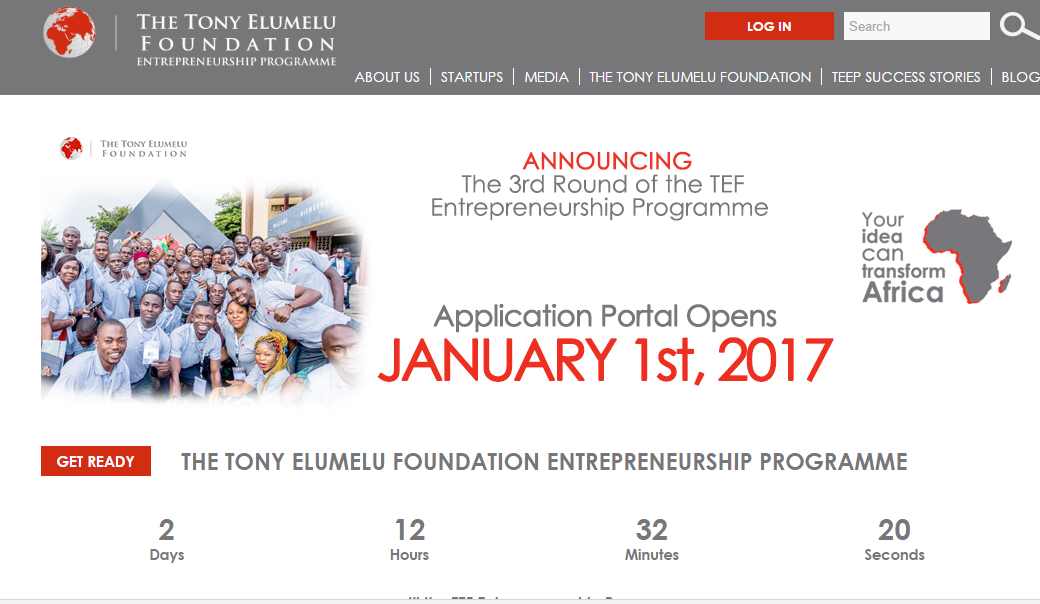
Tony Elumelu Entrepreneurship Programme (TEEP) Enters Season III; Apply Jan 1 2017

0

After the successful launch of the Tony Elumelu Entrepreneurship Programme in Season I and the extraordinary execution in Season II, the program is ready for the third year, #TEEP2017 which will kick start Jan 1 2017.

Tell your friends and family their ideas can transform Africa by sending them the links below:

  1. Get ready to Start the #TEEP2017 application here.

Application begins Jan 1 2017 but you can get ready now.

ReThinking Security Management

0

By Rick Rogers, Area Manager for East & West Africa at Check Point Software Technologies

“You never change things by fighting the existing reality. To change something, build a new model that makes the existing model obsolete.”

R. Buckminster Fuller said those words decades ago, but they still ring true in present times, especially when it comes to the progression and innovation in technology. Here at Check Point, we do a lot of thinking about future trends and potential threats, as well as innovating and building solutions to combat these cybersecurity challenges.

To be as effective as possible, threat defences need to be observed and managed in real time to give as much time to respond as possible. Robust security management is a solution that includes the installation of high-tech systems designed to protect an organisation’s data, networks and devices, while providing real-time visibility into security risk.

This includes the development, documentation, and implementation of policies and procedures for protecting these assets. Unfortunately, the response to potential threats tends to be point product or the reactive construction of new policies and rules, which only serve as a Band-Aid, at best. This is largely because a unified security program – based on integrated technology – is often not being used.

Start Solving Real Problems

The security industry does not need more point products to duct-tape solutions together and hope for the best. Companies need real solutions – ones that can integrate their system and give them visibility into the security risk of the environment. A powerful security management platform gives your company a strategic and tactical advantage by enabling the management of potential threats, without inhibiting business innovation.

With that said, there are four primary ways in which you can help secure your company’s environment:

  1. Conquer with Consolidation

Security complexity can be conquered through consolidation – bringing all security protections and functions under one umbrella. By consolidating security on a single platform, companies gain more control over their security, get better insight into their security posture and can respond more quickly to shut down threats to their entire environment.

  1. Unified Policy Management

Ultimately, when policies are misconfigured, the organisation is not able to protect and gain visibility into the increasing number of business segments. This puts the entire organisation at risk. The key to strong security architecture that can overcome the most difficult cybersecurity challenges can only be delivered by using a security management solution that delivers unparalleled operational efficiency.

  1. Integrated Threat Management

You cannot monitor or protect devices you don’t know about. Security challenges are increased when there is a lack of proper visibility for incident detection and response. This is precisely the reason why a single, visual dashboard is so important for event analysis, and threat monitoring and mitigation, to ensure full-spectrum visibility into threats across the entire perimeter and beyond.

  1. Automated Operations

By automating operations, security teams have the confidence to integrate ticketing, network management or cloud orchestration systems, knowing that they can limit exactly what integrated systems have access to and what they are capable of doing.

Consolidate and Optimise

As evasion techniques evolve and become more intelligent, so must the technology to keep your business secure. A robust security management platform allows your company to be proactive in its approach to security, rather than reactive.

To provide security professionals with a comprehensive resource on security management, we’ve developed a whitepaper that provides you with solutions to tackle the most complex environments.

We invite you to rethink your current security posture, and enable strong protections for the organisation. Everything from technology, people, policy, operations and management must be considered in a new light, with a fresh mindset.


How African can move from always planning to constantly executing: from Think Tank to Do Tank

0

Most major corporations struggle with developing a business strategy that works. Fifty percent of business leaders don’t believe they have a winning strategy to begin with and almost all report missing major opportunities in the market. About two-thirds of business executives say that their company’s capabilities don’t support the way they create value in the market. And 80% of senior executives say that their overall strategy is not well understood – even within their own company. These problems are not caused by external forces. They are the outcome of the way most companies are managed. These are some of the findings of ongoing global research on senior executives carried out by Strategy&, PwC’s strategy consulting capability.

Jorge Camarate, Strategy& Partner, says: “Worldwide and across the African continent we are seeing companies battle with how to develop strategies that keep them competitive in an increasingly complex global marketplace. All too often companies don’t think about strategy and execution together.

“We have a number of business leaders who understand this problem, but very few who know how to overcome this.”

There are few companies that are able to successfully close the gap between their strategy and their execution. Those companies that are successful – referred to as ‘coherent’ companies – are the ones that are able to bridge this strategy-to-execution gap by applying the unique capabilities that distinguish them from their peers.

Coherent companies usually have the ability to align their value proposition with their distinctive capabilities and their portfolio of products and services. These elements shape a company’s identity, culture and approach to managing resources.

Traditionally, firms formulate a strategy by looking for growth opportunities in the market. For large enterprises, such an approach would include expansion into Africa. However, attempts to build businesses in Africa frequently result in value destruction. A recent study conducted by Strategy& on M&A activity in Africa, shows that of the business expansions into Africa, as many as 66% resulted in negative shareholder returns. The study also shows that deals with no capability alignment (32% of the total number) significantly underperform compared to those that a have a clear capability alignment.

The results of the study suggest that there is a need for a new growth strategy that builds on and enhances companies’ existing capabilities. This will create more shareholder value than purely seeking out markets based on their intrinsic attractiveness.

It is critical that companies expanding into Africa should focus on their own capabilities. They need to align their efforts in order to successfully execute their strategy with what they are best at. One of the key success factors is that it takes unconventional leadership to foster the behavior required of coherent companies. In other words, organisations need to bridge the gap between strategy and execution. Our independent research of multinationals that have expanded across the African continent demonstrates how the effective execution of a winning strategy is what sets successful companies apart.

In the process, we see the following acts of unconventional leadership as being of fundamental importance:

  1. Commit to an identity: A true identity expresses what a company does best and why it matters. Choosing and developing an identity requires some reflection, where your company can go in the market- what products and services you can offer and to whom – is a function of who you are and what you do well. Companies should only compete in those markets where they believe their identity and distinctive capabilities will give them the edge over their competitors.
  2. Translate the strategic into the everyday: In order to achieve its targeted identity, an organisation must create a blueprint of its capabilities. It must integrate diverse processes and technologies while preserving the strategic value of the enterprise.
  3. Put culture to work: An organisation’s culture is multidimensional, complex and influential. Most business leaders understand the power of a company’s culture – but it’s not always clear how to harness that culture. A company’s culture should reinforce the distinctive capabilities and strengths that differentiate it from the competition. Africa poses some challenges when it comes to culture, as labour markets usually lack people with the necessary technical skills and relevant industry experience. Consequently, companies have to develop their own talent. Since relying heavily on expatriates is not financially sustainable or positively viewed by African governments, finding local human capital is essential.
  4. Cut costs to grow stronger: Coherent companies tend to invest heavily in activities that support their identity and distinctive capabilities. They will need to regard costs as an investment and focus on investing in those areas that are necessary for executing strategy. In middleincome African countries with strong institutions, aspirational customers demand premium products and services – but these need to be delivered at a lower cost point.
  5. Shape the future: Coherent companies acknowledge that their value proposition is never fully achieved and their capabilities system should always be open for further progression.

Although the African continent offers much potential for investors, it also carries a number of risks and challenges. “It takes a coherent company to successfully and sustainably close the gap between strategy and execution in Africa. Conventional leadership practices of seeking growth at all costs have resulted in many unsuccessful attempts at penetrating this market.

“Coherent companies, on the other hand, improve the likelihood of successful expansion and strategy execution in one of the fastest-growing regions in the world,” concludes Camarate.

[PwC Newsletter as Five components to move from strategy to execution in Africa]