DD
MM
YYYY

PAGES

DD
MM
YYYY

spot_img

PAGES

Home Blog Page 7513

Five key shifts Transforming the Entertainment and Media sector in Nigeria

0

The following are the five dimensions of the entertainment and media landscape, according to PwC analysts: demography, competition, consumption, geography, and business models. Simultaneous and interrelated, these five shifts influence and play off one another. They should serve as a serious call to action for both industry incumbents and new entrants to seek out growth opportunities in markets worldwide.

Shift 1. Demography: Youth will be served

Our analysis of national entertainment and media markets globally reveals an almost perfect correlation between the relative size of the under-35 population and growth in entertainment and media spending—confirming that younger consumers are now the primary drivers of global growth. Our analysis of total entertainment and media revenue growth in the world’s 10 youngest and 10 oldest markets in demographic terms reveals that, on average, entertainment and media spending in the 10 youngest markets is growing three times as rapidly as in the 10 oldest markets.

Shift 2. Competition: Content is still king

In a world where Netflix can launch in 130 new countries in a single day, it’s easy to assume that content is becoming more globally homogeneous. But the reality is that content is being redefined by forces of globalisation and localisation simultaneously—and that while much of the industry is growing more global, content tastes and cultures remain steadfastly local.

Shift 3. Consumption: The joy of bundles

The ability for consumers to design and curate their own media diet has been one of the most powerful trends to emerge in the industry. But the bundle is far from dead, with video and cable incumbents—which were initially slow off the mark—now fighting back by offering their content on an integrated omnichannel basis, on TV, laptop, tablet, and smartphone. As take-up of these new-style bundles grows, we believe the bulk of digital OTT mass-market services will gradually be reabsorbed into aggregated offerings that will echo the traditional analogue-style bundle, but that will be more flexibly priced and available on a full range of devices. When this happens, the competitive battle may move up a notch, as cable, technology, and telecom players fight over gaining access to distribution.

Shift 4. Geography: Growth Markets

Generally, entertainment and media companies had one set of expectations about developed markets (slow growth, low regulation, easier to access) and another about developing markets (rapid growth, high regulation, harder to access). But the dynamics are shifting rapidly as disruption pushes markets to develop in different ways, meaning “opportunity” economies—even within the same region—can display significantly varied growth patterns.

Shift 5. Business models: Transforming with trust

Today’s entertainment and media market includes technology companies racing to become hybrid content companies, and traditional publishers evolving the other way to emerge as hybrid technology companies. This underlines how the growth of technology and digitisation is acting as a centrifugal force—breaking up existing relationships; pushing large, generalist entities to give way to smaller specialists; and allowing smaller, nimble competitors to beat out incumbents. For incumbent advertising agencies, this opens up an opportunity to reorient themselves to become invaluable to markets, by bringing together programmatic capabilities, analytics, data aggregation, and native content to create the new “super” agency.

Entertainment and Media Sector of Nigeria to grow 11% CAGR from current $3.8 billion over 5 years

0

The Internet, video games, television, and filmed entertainment segments of sub-Saharan Africa’s entertainment and media industry are projected to continue to grow in the following years but the publishing industry is having to work very hard to make any headway, according to PwC’s  Entertainment and media outlook: 2016 – 2020 report (South Africa – Nigeria – Kenya)released today. Despite a relative slower growth projection for the industry, the Outlook forecasts that South Africa’s entertainment and media industry is expected to grow from R125.7 billion in 2015 to R173.3 billion in 2020, at a compound annual growth rate (CAGR) of 6.6%.

Digital spend is expected to drive the overall growth. South Africa’s Internet access market will rise from R39.4 billion in 2015 to R68.5 billion in 2020, as broadband – both fixed and mobile – becomes an essential utility.

The Outlook presents annual historical data for 2011 – 2015 and provides annual forecasts for 2016 – 2020 in 11 entertainment and media segments for South Africa, Nigeria, and Kenya: the Internet, television, filmed entertainment, video games, business-to-business publishing, recorded music, newspaper publishing, recorded music, magazine publishing, book publishing, out-of-home-advertising and radio.

South Africa has the largest TV market in Africa and continues to grow strongly, with pay-TV subscription revenues expected to expand by a 5.0% CAGR to reach R25.2 billion in 2020. The video game market is also performing well and revenue is forecast to grow at a CAGR of 5.6% to reach R3.7 billion in 2020, up from R2.8 billion in 2015. Social/casual gaming revenue overtook traditional game revenue for the first time in 2015 and is expected to be the key growth area over the next five years, exceeding R2 billion by 2020.

Alongside video providers, the B2B market will be a strong source of revenue for South Africa’s entertainment and media industry over the next five years. The amount of data that businesses are using for decision-making is increasing, and the tools used to access the information are increasingly cloud-based with more and more users gaining access via mobile handsets. The market is forecast to grow at a 4% CAGR to reach just under R11.6 billion in 2020.

By contrast, the newspaper market in South Africa is expected to be R1 billion smaller than in 2015. In 2015 total newspaper revenue was worth R9.1 billion, but this figure will drop to R8.1 billion in 2020.  Circulation figures are also forecast to start declining, as price rises are unable to compensate for the declining numbers of copies sold.

By the same note, South Africa’s consumer’s magazine market is also forecast to see a decline in later years. A growing number of South Africans are accessing magazine content and websites via their smart devices, but the boom in smartphone and tablet ownership will be the biggest driver for digital magazine revenue growth over the forecast period.

Although physical music continues on its downward trajectory, it is streaming revenue that will be responsible for keeping recorded music revenue from large falls. Digital music streaming revenue is forecast to rise from R74 million in 2015 to R437 million in 2020.

The report shows that South Africa’s total entertainment and media advertising revenue is expected to rise from R43.4 billion in 2015 to R53 billion in 2020, a CAGR of 4.1%, with only newspaper advertising revenue forecast to take a downward turn. TV advertising continues to dominate the market, but Internet advertising is combining scale with a great pace of expansion, and will become the second-largest contributor to revenue by 2020.

Nigeria

Nigeria has one of the fastest-growing markets in the entertainment and media industry. In 2015 it saw 15.7% growth to reach US$3.8 billion, and with all segments forecast to rise over the forecast period, an 11% CAGR is anticipated. Internet advertising will see the fastest growth over the forecast period, and will come predominantly in formats designed for mobiles, in keeping with the prevailing method of Internet access in the country. TV advertising is also benefitting from strong economic growth and an emerging middle class with a higher disposable income.

Kenya

Kenya’s total entertainment and media industry was worth US$2.2 billion in 2015 and is expected to be worth US$3.3 billion by 2020. Internet access again will be the main contributor, if not as dominant in Kenya as in Nigeria, accounting for 43% of the total market in 2020.

Full Member list of President Obama’s Advisory Council on Doing Business in Africa

0

Jay Ireland, President & CEO of GE Africa was named as chair of the second President’s Advisory Council on Doing Business in Africa (PAC-DBIA) by U.S. Secretary of Commerce Penny Pritzker. PAC-DBIA members – representing small, medium, and large companies from a variety of industry sectors – advise the President, through the Secretary of Commerce, on ways to strengthen commercial engagement between the United States and Africa.

The appointments are announced in conjunction with the second U.S.-Africa Business Forum. This historic event connects hundreds of American and African chief executive officers and business leaders, along with African heads of state, to discuss overall economic growth and to stimulate additional trade and investment between the United States and Africa.

The varied, diverse, and accomplished appointees of the 2016-2018 President’s Advisory Council on Doing Business in Africa include:

  •          Jay Ireland, President and CEO, GE Africa* (Chair)
  •          Laura Lane, President of Global Public Affairs, UPS (Vice Chair)
  •          Walé Adeosun, Founder and Chief Investment Officer, Kuramo Capital Management*
  •          Mimi Alemayehou, Managing Director, Black Rhino Group; and Executive Advisor and Chair, Blackstone Africa Infrastructure LP
  •          Kimberly Brown, CEO, Amethyst Technologies
  •          Takreem El-Tohamy, General Manager of Middle East and Africa, IBM
  •          Peter Grauer, Chairman, Bloomberg LP*
  •          Diane Hoskins, Co-CEO, Gensler
  •          Denise Johnson, President, Caterpillar Resource Industries
  •          Kusum Kavia, President, Combustion Associates, Inc.
  •          Barbara Keating, President, Computer Frontiers, Inc.
  •          Bill Killeen, President and CEO, Acrow Bridge
  •          Tom Klein, President and CEO, Sabre
  •          Jack Leslie, Chairman, Weber Shandwick
  •          Edward Mathias, Managing Director, Carlyle Group*
  •          Ross McLean, President of Sub-Saharan Africa, Dow Chemical Company
  •          Jehiel Oliver, Founder and CEO, Hello Tractor
  •          Andrew Patterson, President for Africa, Bechtel
  •          Martin Richenhagen, Chairman, President, and CEO, AGCO*
  •          Fred Sisson, CEO, Synnove Energy
  •          Andrew Torre, President of Sub-Saharan Africa, Visa
  •          Dow Wilson, President and CEO, Varian Medical Systems*
  •          Rahama Wright, Founder and Chief Executive Director, Shea Yeleen*

*Denotes reappointed PAC-DBIA member

As part of his commitment to deepen engagement between the United States and Africa, President Obama signed an Executive Order (E.O.) at the 2014 U.S.-Africa Business Forum to establish PAC-DBIA. The PAC-DBIA has provided information, analysis, and recommendations on U.S.-Africa trade and investment priorities. Such priorities include job creation in both the United States and Africa, developing sustainable commercial partnerships, building entrepreneur capacity, and keeping the private sector engaged in developing policies and strategies on investment in Africa. Highlights of the previous PAC-DBIA’s recommendations include launching the institutional investor roadshow with several African countries and convening an East Africa cold chain symposium.

U.S. merchandise exports to sub-Saharan Africa increased 19 percent from 2009 to 2015, reaching more than $18 billion last year. Total U.S. exports of goods and services to the continent of Africa reached $42 billion in 2015, representing total growth of 17 percent in the same period. In addition, between 2009 and 2015, U.S. goods exports to five sub-Saharan African countries – Ethiopia, Togo, Mauritania, Burkina Faso, and South Sudan – and U.S. goods exports to an additional five countries have increased more than 50 percent – Mali, Swaziland, Sierra Leone, Democratic Republic of the Congo, and Benin.


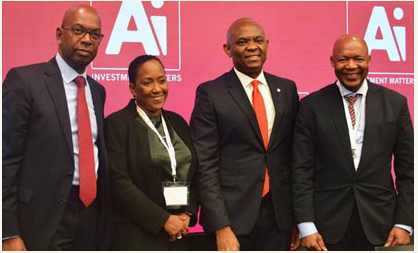
Ai “Person of The Year”, Tony Elumelu, is the most important African alive

0

In New York, the legend from Nigeria keeps winning. He is Africa Investor “Person of the Year”. Thank you TOE for your service to Nigeria and Africa in general. We love you.

This is from Vanguard:

He first acknowledged the staff and management of Transcorp Power, the biggest producer of thermal energy in Nigeria, providing about 18 per cent of national output: “In accepting this award, I want to dedicate it to Transcorp Power staff who remain committed to realizing our dream of improving access to electricity in Nigeria and making our vision of a well-lit, fully powered Nigeria come true,” he said.

Transcorp Power has supported U.S. President Obama’s Power Africa initiative with a $2.5billion commitment. He thanked the broader coalition of investors in the African power sector, as he urged other institutional investors to consider long-term opportunities on the continent. “I also dedicate this to all stakeholders working hard to improve access to power in Africa. I call on others to please join us in this journey to powering Africa out of poverty,” he added.

As the economies of African regional powerhouses like Democratic Republic of Congo, Mozambique, Uganda, Nigeria and Angola struggle due to excessive exposure to commodities’ prices caused by limited diversification, Elumelu proffered a sustainable solution to reduce Africa’s historical external vulnerability.

“Africa has been faced with this same challenge, in my view, for far too long. I choose to look at the recent episodes of economic contraction across the continent as opportunities to diversify our economies and invest in building critical infrastructure, especially in power, to reduce our susceptibility to commodity shocks and break out of the perpetual boom-bust cycles,” he advised.

He emphasized that to ensure a different type of growth trajectory for Africa – one that does not rely exclusively on the export of primary commodities – there must be reliable, accessible, affordable power to support industrialization. “Industrialization must occur on a massive scale for our countries to be powered out of chronic dependency on commodities. We must power Africa’s next phase of development, by targeting and prioritizing growth of our manufacturing, industries and services.
And power is the fulcrum that will make this happen,” he said.

Elumelu revealed that while there is an abundance of private capital available to be deployed to develop the African power sector, government must play its part in attracting these investments. He explained, “While there is huge private capital – local and global – seeking investment destinations, as we know, global private capital goes to where it is most welcome.
Therefore, the challenge before African governments should be how to ensure they create the environment that will attract and retain these investments in our continent.” To the foreign investors gathered at the forum, he advised, “Though there are challenges in investing in Africa, these challenges can be overcome by investing in Africa through partnerships with qualified local partners who possess the right knowledge, requisite capital and technical know how.”

Speaking further, Elumelu urged private and public sector stakeholders to work together in what he describes as “Shared Purpose”. “It is critical for the public and private sectors to work together in “SHARED PURPOSE”, which is a key tenet of Africapitalism – the economic philosophy I espouse which calls for the private sector to play a key role in Africa’s social and economic development by investing in strategic sectors for both economic profit and social prosperity.”

Elumelu, who is also co-chair of the African Energy Leaders Group (AELG), a community of African energy leaders including Presidents and leading corporates, concluded his remarks by examining the role of power in creating opportunities for Africa’s jobless youth. “In the 21st century, the level of poverty we have in Africa and the dire youth unemployment, to a large extent, can be solved by improving access to power, and by extension other infrastructure deficiencies and deficits. Even though we are making progress, there is still a lot to be done. We need faster progress.”

Frontier Digital Ventures invests $1.2M in Nigerian startupToLet.com.ng

0

Frontier Digital Ventures, a venture capital firm with interests in African companies has just invested $1.2 million in ToLet.com.ng according to Techpoint.

ToLet.com.ng is a leading property portal in oil-rich Nigeria, Africa’s largest population, standing at a staggering 175 million property-hungry Nigerians. Launched in 2013 by four Nigerians, Fikayo Ogundipe, Dapo Eludire, Sulaiman Balogun and Oluwaseyi Ayeni, coming from diverse backgrounds ranging from start-ups to law. In a market that is seeing rapid urbanisation, ToLet.com.ng has successfully pivoted to capture the ever growing property rentals market through enhancing their marketplace with curated agents and listings, effectively acting as an online rentals agency portal. In a country where there is an abundance of unlocalised foreign classifieds platforms, online scams and a lack of trust, ToLet.com.ng generates immense value through providing high-quality, trusted, and vetted content for the millions of Nigerians looking to move to the big city!

Tolet.com.ng was seeded by Spark capital.