DD
MM
YYYY

PAGES

DD
MM
YYYY

spot_img

PAGES

Home Blog Page 7534

What Africa can learn as IBM redesigns Dubai’s business grid with blockchain and Watson

0

IBM has a history of elevating the game of technology, finding ways to transmute itself as a pioneer and an established reliable innovator. It continues to invest in emerging fields, filing patents like it is collecting high school prizes. IBM inventors received a record 8,088 patents in 2016 representing a diverse range of inventions.

Besides the Watson, the IBM supercomputer, one of the most important units in IBM today is the IBM Blockchain business. IBM is not in this business for the largely mundane thing of moving money from one region of the world to the other using Bitcoin. Certainly, it is not interested in the gyration of the price of the cryptocurrency.

Watson is an IBM supercomputer that combines artificial intelligence (AI) and sophisticated analytical software for optimal performance as a “question answering” machine. The supercomputer is named for IBM’s founder, Thomas J. Watson.

IBM cares about the technology which underpins Bitcoin – the blockchain. Blockchain is one of the most important technologies which have been invented in the last few decades.

A blockchain is a distributed database that maintains a continuously growing list of ordered records called blocks. Each block contains a timestamp and a link to a previous block. By design, blockchains are inherently resistant to modification of the data — once recorded, the data in a block cannot be altered retroactively. Through the use of a peer-to-peer network and a distributed timestamping server, a blockchain database is managed autonomously. Blockchains are “an open, distributed ledger that can record transactions between two parties efficiently and in a verifiable and permanent way. The ledger itself can also be programmed to trigger transactions automatically

Forget the hype, on its face value, the technology can accomplish many things not just in the long-term, but right now. It can help to transform cities and governments – making them more agile and cheaper to run.
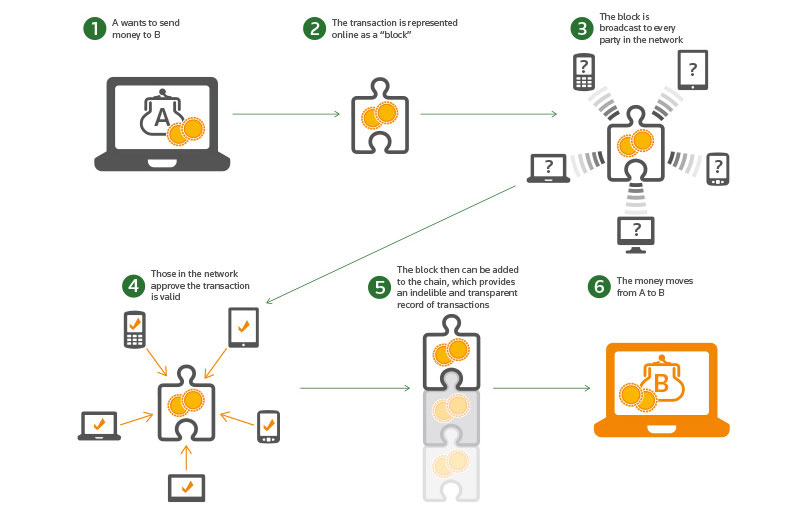
How blockchain transaction works

Wiring the New Business Grid: The Blockchain Grid

IBM has built a fusion between IBM Watson and IBM Blockchain. IBM Blockchain provides the private blockchain infrastructure of distributed peers that replicates the device data and validates the transaction through secure contracts. Watson IoT Platform translates existing device data, from one or more device types, into the format needed by the blockchain contract APIs. Through this, IBM offers a set of customized service engagements allowing clients to experiment and innovate with the IBM Watson IoT Platform and blockchain technologies.

What is happening here is profound because IBM has brought hardware, via IoT, into its blockchain business. With its experience in hardware building servers, computers and intelligent systems, IBM is one of the few companies that can bring blockchain technology into the mainstream of citizens and governments.

Most others will remain at the software level, but IBM will use blockchain to bring intelligence to what GE has called the Industrial Internet.

The Industrial Internet is the integration and linking of big data, analytical tools and wireless networks with physical and industrial equipment, or otherwise applying meta-level networking functions, to distributed systems.

With this integration of Watson and Blockchain, IBM can build a new grid that will run the world – the blockchain grid. This is going to be as important as the electricity grid and will permeate any level in our lives and governments. It is the new world order that will shape any industrial as we know it in the 21st century.
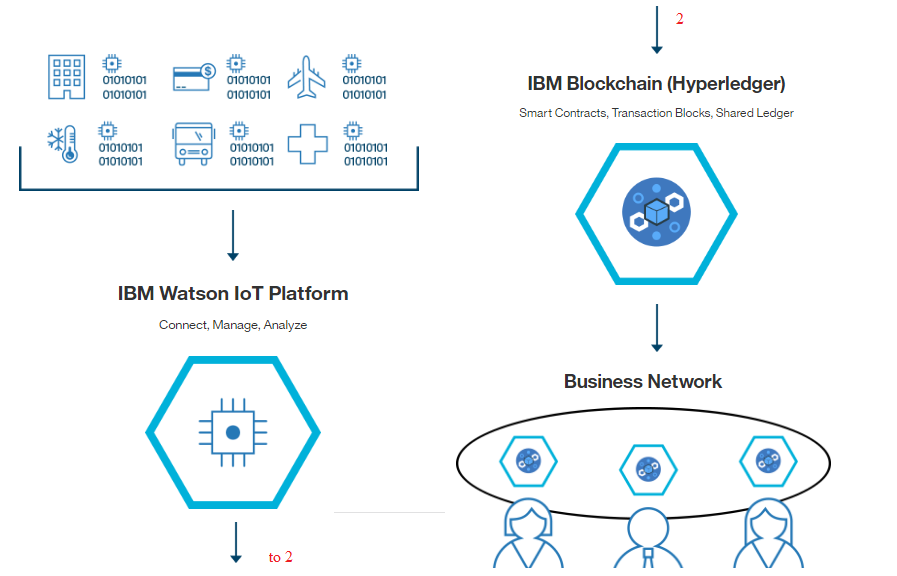
IBM Blockchain


Making a Redesign and Disruption

Blockchain will redesign commerce and industry. That will bring disruption across industrial sectors.

The blockchain technology has the potential of disrupting industries such as financial services, remaking business practices such as accounting and auditing, and enabling new business models. For agile firms, to avoid disruptive surprises or missed opportunities, strategists, planners and decision makers across industries and business functions should investigate applications of the technology.

The key attributes of the technology are the following:

  1. Security – hacking is impossible given the ledger is distributed across thousands of computers, reducing server maintenance requirements and improving security for banks.
  2. Transparency – the sender and recipient of each transactions are recorded and all transactions are publicly available for inspection.
  3. Privacy – users are anonymous and can move money around instantly and securely. This allows banks to save time and reduces costs on international transactions.
  4. Risk – currently, if a bank’s system goes down, users are unable to perform transactions. Using the blockchain technology, the bank’s system would continue as normal.

The Dubai Experiment

IBM is partnering with Dubai to advance the nation’s blockchain strategy.

IBM is collaborating with Dubai Customs, Dubai Trade and its IT provider DUTECH, to explore the use of blockchain for a trade finance and logistics solution for the import and re-export process of goods in and out of Dubai. Using Hyperledger Fabric and IBM Cloud, the blockchain solution transmits shipment data allowing key stakeholders to receive real-time information about the state of goods and the status of the shipment. Taking the example of a shipment of fruit, stakeholders involved in the process will receive timely updates as the fruit is exported from India to Dubai by sea, and then manufactured into juice in Dubai, and then exported as juice from Dubai to Spain by air.

We do think that this project will extend from Customs to Central Bank and anything you can imagine in the near future. Essentially, Dubai, as a nation, can live within the IBM technologies. IBM is using IBM Cloud for this and that will help it attain any level of integration it needs to build a very seamless product.

As you read further that press release, you can see where this is going

Additionally, as part of the solution, IBM is also working with du, a UAE-based telecommunications service provider that is conveying data from internet of things (IoT); Emirates NBD Bank, the letter of credit issuing bank; Banco Santander, the letter of credit responding bank; Aramex, the freight forwarder; and a leading Airline, as the airway carrier.

IBM is working with telecoms, working with the banks and other strategic partners. When IBM finishes, one will expect that some of these partners will cut-off existing relationships if IBM experiments work. With that, IBM will become the engine that runs the bank, the freight forwarder, the airline and more. Practically, IBM can build a new financial and business grid within its IBM Watson-Blockchain portfolio.

As has been noted, the “potential applications of blockchain are limitless, ranging from storing client identities to handling cross-border payments, clearing and settling bond or equity trades to smart contracts that are self-executing, such as a credit derivative that pays out automatically if a company goes bust or a bond that regularly pays interest to the holder.”

Implications for Africa

Africa has a lot to gain from technology. Most systems are broken and technology can provide real impacts. At both firm and government levels, Africa needs affordable technologies that work. That is why cloud computing will be a winner in the continent. Blockchain falls into that league also.

Globally, IBM is rapidly expanding its blockchain capabilities and actively working with companies to understand what it takes to make blockchain ready for business. Financial services, supply chains, IoT, risk management, digital rights management and healthcare are some of the areas that are poised for dramatic change using blockchain networks.

Technically, there is no sector in Africa that IBM Blockchain business cannot affect. We do think that this is going to be the real smart city initiatives without the expensive feasibility studies. Blockchain will make this a piecemeal process which will later converge into one hub. IBM is ahead and we do think once the Dubai experiment is over, forwarding thinking nations like Kenya and South Africa will sign-up IBM for help.

For countries and their institutions, struggling to modernize their outdated legacy systems in the face of increased pressure from decreasing foreign earnings, digital challengers and cyber criminals, blockchain represents an opportunity to rethink much of what they do and redesign business processes.

Nigeria and Angola will benefit significantly here as they streamline businesses in the period of uncertainties fueled by diminishing value of commodities.

It is not just for the big banks, the blockchain applications can make transportation, corruption fighting and management of social benefits better. For the financial services sector blockchain offers the opportunity to overhaul existing banking infrastructure, speed settlements and streamline stock exchanges. Thus, the shared public ledger has the potential to radically simplify banking by reducing costs, improving product offerings and increasing speed for banks.

The promise of an integrated African bigger stock exchange will happen faster under blockchain technology. African exchanges are still analogue. The promise of making them fully digital and integrated is catalytic to unlock more value.

Rounding Up

Blockchain will cause a major disruption in the business ecosystems as we know it today. Expect banking, insurance and all major industrial sectors to change.If IBM succeeds in Dubai, we will begin a new phase in human civilization that will redesign everything we know.  The interesting thing about IBM is that it is not just selling blockchain, it is bringing blockchain with the intelligence of Watson.

We have to welcome this and understand the new reality of global redesign. Buy hey, African entrepreneurs must respond to the possibilities and opportunities, fast.


(Sources: Reuters, IBM, Deloitte, Wikipedia)

The Top Fintech Startups of 2017 for African Entrepreneurs to Take Note

0

The world of fintech is universal. Do not think because you are in Burundi that your competitors have to be localized in your country. No, finance is a global business and you have to understand the big players, locally and internationally, to architect the right strategy.

They are the ones that will determine how you will perform because this is a game of dog eats dog. If they sign-up the customer, that customer is gone. There will be winners and losers.

The old Paypal is still alive. IBM Blockchain is emerging. But here we have focused on startups leaving the old guards out of it. But that does not mean the old guards are not relevant. They are. Why? If IBM succeeds in making Dubail a Blockchain nation, most of the startups we have listed below will die because IBM will morph them as it expands globally. What is happening in Dubai now is an existential threat and a disruption at a scale you may not imagine. Dubai may not need banks in the future and IBM Blockchain will become the financial grid.

Here are the fintech players after we explain what we mean by fintech in this piece.

Fintech is a portmanteau of financial technology that describes an emerging financial services sector in the 21st century. Originally, the term applied to technology applied to the back-end of established consumer and trade financial institutions. Since the end of the first decade of the 21st century, the term has expanded to include any technological innovation in the financial sector, including innovations in financial literacy and education, retail banking, investment and even crypto-currencies like bitcoin.

  1. Activehours develops a smartphone-based application that enables hourly workers to get paid early when they need it. It works on both Android and iOS smartphones and is recommended for hourly employees with an electronic timecard system at work and a direct deposit. .
  2. Lemonade Insurance Company is a licensed insurance carrier, offering homeowners and renters insurance powered by artificial intelligence and behavioral economics. By replacing brokers and bureaucracy with bots and machine learning, Lemonade promises zero paperwork and instant everything. And as a Certified B-Corp, where underwriting profits go to nonprofits, Lemonade is remaking insurance as a social good, rather than a necessary evil.
  3. Flutterwave provides technology, infrastructure and services to enable global merchants, payment service providers and Pan African banks accept and process payments on any channel (Web, Mobile, ATM & POS). We help businesses in africa go global by smoothening the exchange of funds in 150+ currencies.
  4. Addepar  – Cloud-based software allows wealth managers to track and analyze all of a client’s holdings and automates bringing new ones on board.
  5.  Affirm  Makes instant point-of-sale loans for online purchases at annual interest rates of 10% to 30%. Some merchants subsidize 0% loans. To help Millennial customers build credit histories, it recently started reporting loan-repayment history to credit bureaus.
  6. AlphaSense  Contextualized algorithms give investors the ability to search across millions of documents with a few clicks, dramatically reducing research times.
  7. Paystack lets businesses accept payments via credit card, debit card, money transfer and mobile money on their websites or mobile apps.
  8. Aztec Exchange Finances receivables for developing-world suppliers based on strength of their U.S. corporate buyers.
  9.  Betterment  Robo-advisor manages ETF portfolios to fit investors’ goals and risk tolerance, for a sliding fee, usually 0.25% of assets a year. Recently launched managed 401(k) product.
  10.  Cadre   Invitation-only platform that cuts out middlemen and lowers fees for high-net-worth and institutional buyers of shares of commercial and multifamily properties.
  11. C2FO  Fairway Uses algorithms and bids to match retailers and manfacturers sitting on extra cash with suppliers ready to accept discounts for payment within 48 hours.
  12. Chain Blockchain infrastructure provider. Helped develop first-ever blockchain-based product with a financial services incumbent, Nasdaq Linq, for trading shares in private companies. Visa is using Chain’s blockchain infrastructure for B2B Connect, an international payments system for business set to launch in 2017.
  13.  CircleUp  Crowdfunding site connects entrepreneurs behind new consumer products with potential distributors and financial backers. Recently launched a new “Classifier” tool that uses 90,000 data points to help investors evaluate a company.
  14.  Coinbase A rare cryptocurrency firm that is fully compliant with government regulations and has top-notch -security, Coinbase operates both a professional trading platform, Global Digital Asset Exchange, and a retail operation that maintains cryptocurrency -“wallets” for 4.7 million customers from 33 countries, who use these accounts to spend (or simply hold) bitcoin and “ether,” another digital currency.
  15.  Credit Karma Offers consumers free credit scores and monitoring plus recommendations for credit cards and loans, providing streamlined applications for them. Site will soon add access to mortgage comparison and Goldman Sachs’ new consumer-lending platform.
  16.  Dataminr  Uses machine learning to sift through Twitter and other public data to identify, and send alerts on, market-moving events.
  17.  Digital Reasoning Originally sold machine-learning software to the U.S. Army so it could scan text communications in Afghanistan for intelligence and threats to troops. Now Digital Reasoning’s Synthesys technology is used by top financial firms to screen their employees’ e-mail, instant messages and phone conversations for signs of insider trading and other misconduct.
  18.  DV01 New  Allows investors to track performance of peer-to-peer loans from nine originators, down to the loan level, in a matter of clicks.
  19.  Earnest   Has made more than $1 billion in personal loans and student loans, thanks to novel underwriting (it crunches up to 100,000 data points) and a feature allowing users to set repayment schedules to match their budgets.
  20.  EarnUp Service links to customers’ bank accounts and tracks income and expenses, making micropayments toward debt whenever the customer can -afford it. EarnUp figures it will save users an average of $22,000 in interest over the life of a mortgage and $4,000 on student loans. Company changed its name from APAsave after research conducted with famed behavioral economist Dan Ariely found that people prefer “earning” to “saving.” The product is free to borrowers; loan servicers pay EarnUp, since it cuts their cost of dealing with late and missed payments.
  21. Ellevest   Second-generation robo-advisor site designed for, and largely by, women. For a 0.5% of assets annual fee (twice what Betterment typically charges), clients get personalized portfolios of ETFs, with automatic contributions, rebalancing and asset allocation based on goals. Elegantly simple site design excludes traditional risk-tolerance questionnaires, which Ellevest argues don’t provide useful results.
  22.  Fundbox  San Francisco Helps small businesses deal with cash-flow problems created by the typical 90-day terms by linking to their Quickbooks or Freshbooks accounts and providing advances of up to $100,000 against invoices of their choosing.
  23.  Fundera Helps small-business owners compare and apply for everything from term loans to business credit cards.
  24.  Funding  Circle International marketplace small-business lender automates much of the application process, but unlike some competitors, still relies on humans to make final underwriting decision. About 25% of its new loans are made to U.S. borrowers, at rates of 5.5% to 28%.
  25.  Fundrise  While most real estate crowdfunding sites require clients to be wealthier “accredited” investors, Fundrise exploits a 2015 SEC rule to form “eReits” available to anyone ready to plunk down $1,000. So far, 10,000-plus investors have put $99 million into five eReits.
  26.  Gusto  Cloud-based software helps smaller businesses, most with under 100 employees, administer payroll and payroll taxes, health insurance and 401(k) plans.
  27. IEX Stock-trading venue uses 38 miles of cable, coiled up in a box, to create “speed bump” that levels playing field between high-frequency traders and other investors.
  28.  Kabbage  Automated lending platform offers lines of credit for small businesses–at a stiff price. Daily underwriting means line limits and rates can change monthly. Platform now being licensed to banks, too.
  29.  Kensho Uses huge historic database and machine learning to analyze how a specific event–from a natural disaster to an election result–might affect markets, presenting results in an easy-to-digest knowledge graph.
  30.  Klarna Allows shoppers (mostly in Europe) to check out at 65,000 merchants with just an e-mail and address and pay after delivery–pay within a grace period and it’s interest-free.
  31.  Metromile Offers novel pricing that combines a low, flat monthly fee with a charge per mile driven, tracked by a device plugged into a car’s diagnostic system. Metromile says this saves city dwellers, retirees and others who drive little an average of $500 a year. After acquiring a traditional insurer, the company is now underwriting and processing claims in house and plotting expansion -beyond its current seven states.
  32.  Motif Investing Allows individual investors to design, share and buy baskets (Motifs) of up to 30 stocks for $9.95 a transaction. In nod to robo-craze, recently launched auto-investment service Motif Blue.
  33. Numer.ai Next-generation hedge fund runs online competition in which anonymous data scientists (using encrypted data sets) create machine-learning models to predict stock market moves. Hedge fund uses top models, paying winners in bitcoin.
  34.  Orchard Platform Aims to create secondary marketplace for peer-to-peer loans; already validates performance data from the sector’s biggest originators.
  35.  Personal Capital  A “robo-hybrid” advisor offering 10,000 paying customers a combination of computerized portfolio management and human financial advice (available by phone, e-mail and video) for 0.89% of assets a year on the first $1 million, with a minimum investment of $25,000. For larger taxable accounts it creates portfolios of individual stocks that mimic an index fund, thus maximizing tax-loss harvesting opportunities. Personal Capital has a pipeline of prospects: 1.2 million people use its free tools to track investment returns on $270 billion in wealth.
  36. Plaid Its tools connect other firms to users’ bank-account information, making it possible to transfer funds, track spending and detect fraud.
  37.  Point  Liquidity provider for homeowners. Invests in their equity, sharing in profit (or loss) when house is sold. Sells the equity to institutional investors looking for real estate exposure.
  38.  Qapital App helps Millennial users curb spending and squirrel away an average of $160 a month with personal triggers, e.g., transfers $5 to savings after every “guilty pleasure” charge for GrubHub or Uber.
  39.  Quantopian  Crowdsourced quantitative-investing platform. DIY quants create investing algorithms using site’s data and research. Best performers are licensed for a 10% cut of profits.
  40.  Ripple Aims to establish a global financial-settlements network, with cross-border payments available instantly, built on a digital-currency platform.
  41.  Riskalyze  Software helps financial advisors analyze clients’ risk exposure and construct suitable portfolios; also offers a new robo-platform for advisors who prefer to leave asset allocation to the computers.
  42.  Robinhood Mobile app offering free basic stock trading, or $10 a month “Gold” service with margin loans, extended trading hours and quicker access to stock-sale proceeds.
  43.  Signifyd  For under 1% up to 4% of an online merchant’s sales, Signifyd and its algorithms take over fraud protection, assuming liability for any bogus charges that slip through.
  44.  SoFi  SoFi (short for Social Finance) started as a student-loan refinancer. Now also offering jumbo mortgages, robo-investing and a service that enables employers to help pay workers’ student debt.
  45.  Stripe  Its plug-ins make taking online payments easier.
  46.  Symphony  For $15 a month per user this “Bloomberg killer” provides a secure environment for messaging, apps and video-conferencing, as well as connection to Selerity Context, Money.Net, FactSet, Dow Jones and other apps.
  47.  Tala  Microlender and mobile app that crunches 10,000 data points gleaned from an applicant’s smartphone, including purchases, Web searches and social media use, to approve $10 to $500 loans for developing-world borrowers who lack credit scores.
  48.  TransferWise  Peer-to-peer app for moving money around the world has software that matches unrelated customers’ orders to limit how much currency actually crosses borders. Aims to undercut bank charges by 80%.
  49. TrueAccord  Employs machine-learning algorithms to collect bad debts using texts, e-mails and fewer but friendlier phone calls than traditional collection agencies.
  50.  Trumid  Alternative electronic-trading platform enables bond trading at a fraction of the cost of traditional banks, while allowing users to negotiate trades anonymously.
  51.  Xapo  Stores Bitcoin on offline servers for wealthy Western investors; processes mobile bitcoin transactions for consumers in developing world.
  52. Xignite  Supplier of real-time market data.
  53.  ZestFinance  Uses big data–100,000 signals, many unconventional–to underwrite loans to borrowers with thin credit histories or low credit scores.

(Sources: Crunchbase, Forbes, Fortune, Tekedia)


What is Power Line Communication technology?

0

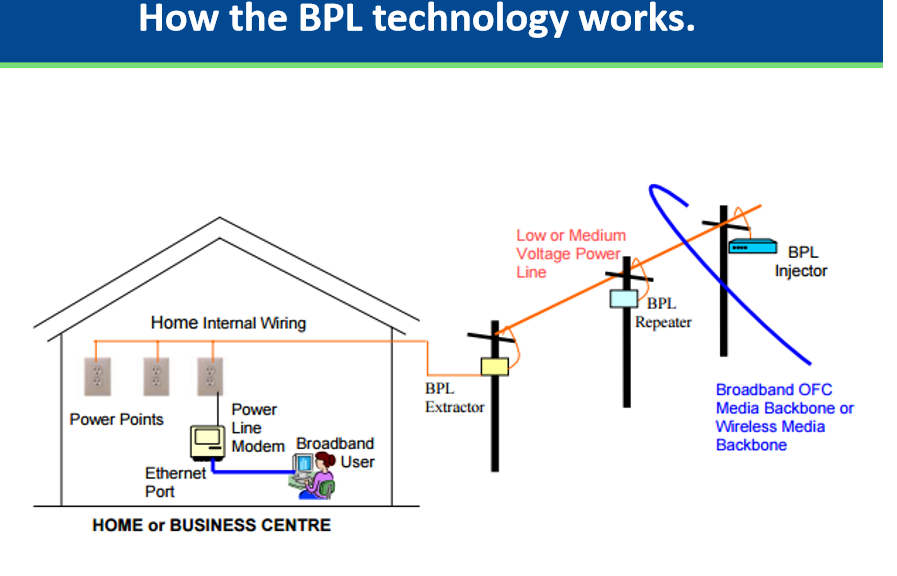
BPL stands for Broadband over Power Lines. It is an alternative means of providing high-speed Internet access, Voice over Internet Protocol (VoIP), and other broadband services to homes and businesses by using the existing medium voltage (MV) and low voltage (LV) power lines. It is also know as Internet over power line (IPL), Power Line Communication (PLC), or Power Line Telecommunication (PLT).

Right now, we enjoy many technological advances on the internet, but this is not experienced for everyone. The BPL technology is blissful for those peoples who are living in rural areas where proper internet connection is still a dream. In rural areas, we can not get internet connection easily or to extend the internet connection is costly.

Broadband over power lines (BPL) is the answer as it allows data to be transmitted over utility power lines. Just imagine internet data is running on those power lines caring power as well. This is quite possible with the help of BPL technology.

If we can provide internet through BPL technology, in every ruler area or right now the areas where the internet connection is not possible, then the people can get education easily, people can learn from anywhere, people will be connected with world more optimally.

BPL allows access via our home wall socket. We have got a wall socket that provides power to our home electric appliances including TV, Fridge, AC, Lights, Fan etc. and the same socket can enable to use the internet as well from the same power line. BPL is a new technology with the huge potential in future.

The cost of a LAN cable and building a necessary infrastructure to provide DSL or cable in ruler area is still quite high, but if broadband could be served through power lines. This means there would be no need to build a new infrastructure as the electricity system can be used for broadband internet connection.


How the BPL technology works?

  •  Power lines must be in every area where we have to provide internet service.
  •  Internet Service Provider (ISP) setup it’s BPL system at power station.
  •  The BPL system inject the internet data in power line through multiplexer system and transmit with the power in power line.
  •  BPL technology need repeaters to amplify the data signal, so repeater are installed approximately every 1000 to 2500 ft. 5) The Internet data travel through power line from the sub-stations. The internet data distribute from the sub-station to the home are and office area with power.
  •  BPL extractors are located at each low voltage distribution transformer feeding a group of homes.
  •  The last mile is the final step that carries data into the subscriber’s home or office. In the various approaches to last-mile solutions for BPL, some companies carry the signal in with the electricity on the power line, while others put wireless links on the poles and send the data wirelessly into homes.

Advantages

  • Wide, spread and extensive infrastructure that is already available in remote areas in terms of electrical cables allow easy access to internet with relatively very little equipment investment, particularly in areas where limitations in terms of having a cable or DSL connections are experienced by service providers.
  • Maintenance costs of BPL are also extremely low.
  • Installation time is very less and rural penetration is relatively easy.
  • BPL is a good solution for Home Networking than other available solutions as no other infrastructures is required.
  • Access BPL systems have the potential in increasing the availability of broadband services to homes and businesses

Difficulties

  • Standardisation – due to absence of international standards with physical characteristics of electricity.
  • The amount of bandwidth that a BPL system can provide compared to cable and wireless is in question.
  • Inherently very noisy due to high energy that they carry.
  • Turning on or off every time of any electrical device introduces a click into the line which causes disruption.
  • Compatibility and Interference problems with other users of the radio spectrum.
  • Signal attenuation, boosting and repeater design.
  • Coordination among Telecom & Power service providers. Security issues in adoption of Internet Services.
  • Step down Transformers blocking high frequencies.

Case Deployments in Africa

  • Egypt: The Engineering Office for Integrated Projects (EOIP) has deployed PLC technology widely in Alexandria, Fayed, and Tanta. Based on a locally developed system, the company provides AMR for electricity utilities. Currently, the company has about 70,000 subscribers.
  • South Africa: Goal Technology Solutions (GTS) trialled the technology and is offering service in the suburbs of Pretoria, and plans to extend it to other areas. The tests were done with Mitsubishi equipment using a DS2 chipset, and the company claims a maximum throughput of 90 Mbit/s although initially only “512 Kbits/s ADSL equivalent speeds” are available. Now it uses DefiDev’s equipment, and according to GTS’s website, it will expand available bandwidth up to 5-20 Mbit/s.

Three key forces driving digital transformation of Africa’s telco industry

0

Despite on-going economic challenges and some tricky regulatory issues, Africa is fast approaching the 1bn mobile subscriptions landmark. The continued rollout of 3G and 4G networks, as well as an influx of low-cost smartphones, is changing the face of the African telecoms market by making the latest mobile innovations accessible and available to African citizens. In light of the continent’s often underdeveloped broadband infrastructure, this is particularly significant as it finally brings African citizens into the global mobile fold, where anyone from business leaders and diplomats to smallholder farmers and school children can access the internet and increase their knowledge and economic opportunities.

Africa has also often played a leadership role in mobile innovation: its mobile money products – such as Mpesa – are among the most successful of any around the world, and the continent often finds innovative ways to work around its infrastructural challenges by finding new uses for feature phone tech such as USSD and SMS.

However, Africa is undergoing a process of broad and sweeping digital transformation which, in the telco industry, is being driven by three key forces:

1. OTT services putting pressure on telcos’ traditional revenue streams
Globally, more than 1.8bn people use OTT mobile services, which is why Ovum predicts a $293.4bn loss in the telco industry due to OTT VoIP services. In fact, Ovum predicts that by 2020 there will be 2.7bn OTT VoIP users, which will upend the entire traditional telco industry as providers seek new ways to increase revenue. Telcos have already begun to incorporate OTT services as part of value-add packages to consumers. Of such telco-OTT partnerships, a quarter involve video content, 22% offer music services and a further 19% offer social media to consumers at reduced rates.

2. Consumer demand for online videos forcing data costs down
According to recent stats, 62% of mobile users consume online video content. In 2014 already, 50% of all YouTube traffic came from mobile devices, and analysts estimate that video will account for 70% of all mobile traffic by 2021. The continued growth of data consumption – fuelled in part by the demand for online video content – is creating robust revenue growth for operators. An Ovum report estimates that mobile data in Africa will grow from $6.40bn in 2015 to more than $27bn in 2021. As revenue from traditional voice services continue to be disrupted by OTT players, and consumers increasingly shift consumption habits to more data-intensive media such as video, operators will need to be in a position to innovate quickly and accurately or risk losing customers (and revenue).

3. Hyper connectivity – machine-to-machine and IoT devices creating opportunity for new revenue streams
Despite strong mobile revenue growth predicted for Africa over the coming years – from $55.55bn in 2015 to a predicted $69.67bn in 2021 – it is the emergence of the Internet of Things that will make the biggest impact on the African telco industry. The World Economic Forum estimates there will be more than 50bn connected devices by 2020, creating what McKinsey estimates to be a $6.2tn industry by 2025. As a company we have also made a strategic decision to take advantage of the opportunities on offer around IoT: in September, SAP announced it will invest $2.2-billion in IoT by 2020. Telco operators have a natural advantage in Africa as their infrastructure is often quite advanced, potentially making it easier for IoT devices to be connected to a single network with big data capabilities.

Telcos will need to navigate these forces if they are to create the new revenue streams they need to replace traditional voice income streams. The emergence of big data is likely to be the single biggest tool in telcos’ attempts in this regard, with a recent Ovum report identifying it as the top strategic investment among African telcos in the next 18 months. Building on that through real-time analytics that allow for better decision-making, and enabling a deeper level of personalization that opens the door to new digital service offerings would give telcos the opportunity to transform their business models.

With a continent-wide mobile penetration rate of over 83%, Africa is well-poised to take advantage of the immense socio-economic and technology benefits promised by connected IoT devices. For example, telcos could merge data from commuters’ phones with smart sensors to determine traffic patterns and provide accurate insights to city planners in an effort to improve cities’ integrated transport plans. Up-to-date weather information could be merged with agricultural sensors to provide African farmers with critical insights that can boost crop productivity and minimize risks to crops.

Telcos’ advanced infrastructure and data-processing capabilities can bring these benefits to life: by delivering personalized and accurate information to mobile users, telcos are uniquely poised to discover new opportunities for value-added digital services that bring true benefit to the end-user while creating entirely new revenue streams for the telcos themselves.

To thrive on the African continent, telcos need to find innovative new partnerships with OTT partners, video providers, and others to drive monetised traffic on their networks. Simultaneously, there is an urgent need for telcos to modernise their networks and IT infrastructure to ensure they are capturing all revenue opportunities, such as releasing new digital services including connected cars, home automation, and more.

by Mariam Abdullahi, Telco Industry Lead at SAP Africa. Was originally written as “The building blocks of a new mobile revolution: strategic focus areas for Africa’s telcos in 2017”

Jobberman publishes Top 100 Companies to Work for the Year 2016 in Nigeria

0

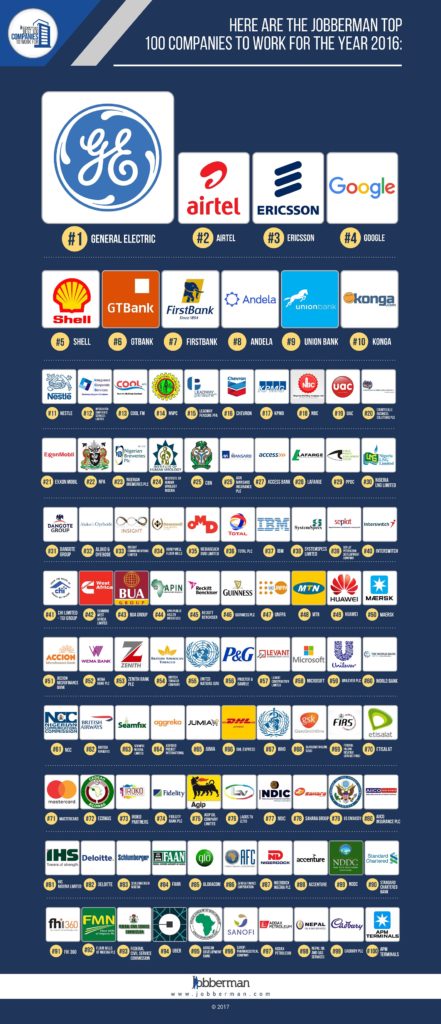
The 3rd Annual Jobberman Best 100 Companies To Work For focused on identifying, recognising and celebrating top employers in Nigeria, as rated by employees and professionals. The ranking also provides insight to job seekers on companies they should have their eyes on, for employment and career growth, as well as providing opportunities for business prospecting.

GE is the best company to work for in Nigeria followed b Airtel, Ericsson and Google, according to Jobberman.

  1. General Electric
  2. Airtel
  3. Ericsson
  4. Google
  5. Shell
  6. Guaranty Trust bank
  7. First Bank
  8. Andela
  9. Union Bank of Nigeria
  10. Konga
  11. Nestle Nigeria PLC
  12. Integrated Corporate Services Limited (ICSL)
  13. Cool FM Lagos
  14. Nigerian National Petroleum Corporation (NNPC)
  15. Leadway Pensure PFA Limited
  16. Chevron
  17. KPMG
  18. Nigerian Bottling company Limited
  19. UAC PLC
  20. Courteville Business Solutions PLC
  21. Exxon Mobil PLC
  22. Nigerian Port Authority (NPA)
  23. Nigerian Breweries PLC
  24. Institute of Human Virology Nigeria
  25. Central Bank of Nigeria
  26. AXA  Mansard Insurance PLC
  27. Access Bank PLC
  28. Lafarge Cement WAPCO PLC
  29. Public and Private Development Centre Limited (PPDC)
  30. Nigeria LNG Limited
  31. Dangote Group
  32. Aluko & Oyebode
  33. Insight Communications Limited
  34. Honeywell Flour Mills PLC
  35. MediaReach OMD Limited
  36. Total PLC
  37. IBM
  38. SystemSpecs Limited
  39. Seplat Petroleum Development Company PLC
  40. Interswitch
  41. CHI Limited – TGI Group
  42. Cummins West Africa Limited
  43. BUA Group
  44. APIN Public Health Initiatives
  45. Reckitt Benckiser
  46. Guinness PLC
  47. UNFPA
  48. MTN
  49. Huawei
  50. Maersk
  51. Accion Microfinance Bank
  52. Wema Bank PLC
  53. Zenith Bank PLC
  54. British Tobacco Company
  55. United Nations (UN)
  56. Procter & Gamble
  57. Levant Construction Limited
  58. Microsoft
  59. Unilever PLC
  60. World Bank
  61. Nigerian Communications Commission (NCC)
  62. British Airways
  63. Seamfix Nigeria Limited
  64. Aggreko Project International
  65. Jumia
  66. DHL Express
  67. World Health Organisation (WHO)
  68. GlaxoSmithKline (GSK)
  69. Federal Inland Revenue Service (FIRS)
  70. Etisalat
  71. Mastercard
  72. ECOWAS
  73. iROKO Partners
  74. Fidelity bank PLC
  75. Agip Oil Company Limited
  76. Lagos TV (LTV)
  77. Nigerian Deposit Insurance Corporation (NDIC)
  78. Sahara Group
  79. US Embassy
  80. AIICO Insurance PLC
  81. IHS Nigeria Limited
  82. Deloitte
  83. Schlumberger Nigeria
  84. Federal Airports Authority of Nigeria (FAAN)
  85. Globacom
  86. Africa Finance Corporation
  87. Nigerdock Nigeria PLC
  88. Accenture
  89. Niger Delta Development Commission (NDDC)
  90. Standard Chartered Bank
  91. FHI 360
  92. Flour Mills of Nigeria PLC
  93. Federal Civil Service Commission
  94. Uber
  95. African Development Bank
  96. Sanofi Pharmaceutical company
  97. Addax Petroleum
  98. Nepal Oil and Gas Services Ltd
  99. Cadbury PLC
  100. APM Terminals