DD
MM
YYYY

PAGES

DD
MM
YYYY

spot_img

PAGES

Home Blog Page 7617

Huawei Technologies Signs $118m Contract With Etisalat Nigeria

3

Etisalat Nigeria has  signed $118 million dollar contract with Huawei Technologies Company Nigeria Limited and Huawei International Pte Limited for roll out of the the company’s nationwide network. This will surely expand Etisalat national coverage and upgrade its network infrastructure. The goal is to improve services and make the communication experience for the subscribers better. It will help enhance the reputation of Etisalat as a top-notch provider of excellent data and audio services.


Huawei has emerged as a leading global telecommunication solutions provider. It continues to challenge Cisco in the latter’s core business areas which among others include telecom network infrastructure, application, software, devices and professional services. Its products and solutions have been deployed in over 100 countries and have served 45 of the world’s top 50 telecom operators, as well as one third of the world’s population.


Speaking  with news men on the contract, Steven Evans, the CEO noted that it was all about QOS (quality of service) improvement to their beloved subscribers.


”This contract is for the complete Implementation of our Public Mobile Cellular Services which will drive the expansion of services as well roll-out our 3G network and also strengthen our network capability,” he said. “We choose to partner with Huawei because of their comprehensive experience in wireless and IP technologies and their expertise in telecom network infrastructure.”


His Huawei Technologies Nigeria, Hover Gao, managing director, stated that his company was very excited for the opportunity to serve  leading company like Etisalat.  “This partnership is part of our strategy to increase our growth and create a sustainable relationship in Nigeria,” he said.


Emerging Markets Telecommunication Services (EMTS), trading as Etisalat, is a Nigerian company duly incorporated under the laws of Nigeria in partnership with Mubadala Development Company and Etisalat of the United Arab Emirates. Incorporated in Nigeria as a private company, it acquired the Unified Access License from the Federal Government in January 2007. The license includes a mobile license and spectrum in the GSM 1800 and 900 MHz bands. Etisalat acquired a 40% stake in EMTS and is now the operator of the Unified Access License.
Apple Briefly Surpassed Exxon Mobil In Capitalization To Become The Most Valuable Global Firm

0
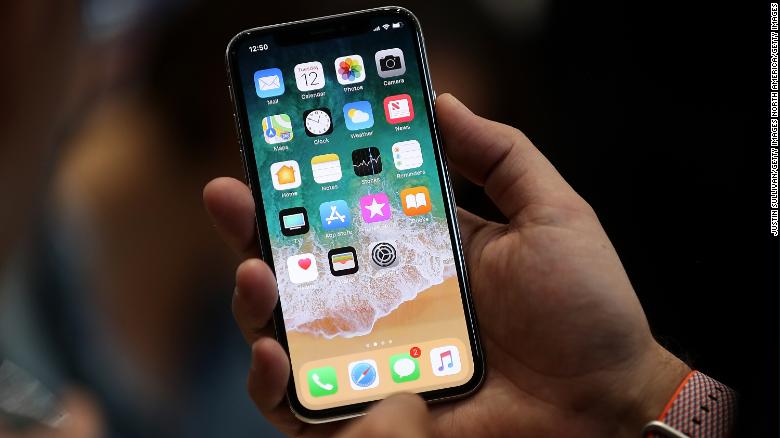
The crash in iPhone sales is changing Apple business model

In addition to the legal victory in Europe, Apple received more good news on Tuesday. The Cupertino, California, computer maker briefly surpassed Exxon Mobil in market capitalization to become the most valuable public company in the world. This is the first time in the history of markets for a technology company to be highest valued firm in the world. It is just a matter of time before Apple does this for a full day trade.

The lead changed hands several times Tuesday as Exxon Mobil recovered from early losses and Apple’s gains leveled off. By 3:00 p.m, Apple’s market capitalization was more than $5 billion larger than Exxon’s, according to Google Finance. As the closing bell approached, however, Exxon surged faster than Apple and retook the lead.

Apple became the world’s most valuable technology company when it passed Microsoft in April 2010. On Tuesday it became, at least for a few hours, the world’s most valuable public company in any field of business.

Lagos Automates Vehicle Particulars Check

1

Governor Babatunde Fashola of Lagos state has launched an electronic device to check whether vehicles have valid documents without engaging in manual stop and check of vehicles’ papers.

The device, Auto Inspector, is the first of its kind in Nigeria and will help to reduce traffic gridlock on Lagos’ highways occasioned by police stop and check of vehicles’ documents. With the device, stolen vehicles can also be easily identified as the device could tell the name of the owners of such vehicles as well as the history of such vehicles.

Launching the device at the Adeyemi Bero Auditorium, Alausa, Ikeja, Lagos, South West Nigeria, Fashola said Lagos had joined the league of selected cities in the developing world where traffic management and compliance with vehicle documentation regulations had been revolutionised with the introduction of high-tech device .“Traffic congestion experience on Lagos roads is some of the time compounded when traffic control and law enforcement officers stop motorists to check their vehicle particulars and determine their documentation status which hitherto was done manually. “This is avoidable stress and the same purpose of checking particulars and documentation of vehicles can be achieved through automation utilising technology without disturbing the flow of traffic,” he said.

According to him, the auto inspector service would enable traffic control and law enforcement officers to simply punch the registration number of a vehicle into a hand-held electronic device and instantly determine the vehicle and vehicle owner’s documentation status. Vehicles that will be screened by auto inspector are those registered in Lagos State (what about those not registered in Lagos?) which have their updated documentation data including vehicle license, driver’s license, hackney permit and road worthiness/MOT captured on the AUTOREG platform which is operated by the Motor Vehicle Administration’s technical partner, Courteville Investment Plc,” he said. Fashola added that the device would enhance compliance since motorists in contravention were easily identified as the device verifies the validity or otherwise of the vehicle documents instantly.

He stated that the device would lead to relative reduction in man-hours wasted in traffic during checks by law officers as well as help to eliminate corrupt practices by law enforcement agents as the status of any vehicle screened was simultaneously captured both by the hand-held device and operators manning the servers at the Automated Registration, AUTOREG control rooms. “It is also a huge boost to our crime prevention and control efforts due to instant data-capturing capabilities. It will also boost e-governance,” he said while advising motorists to update their vehicle documentations.

We can say this is a good development and a great way to control corrupt practices and reduce crime. But I think this should be an eye opener for FRSC and Police as one of the challenges of these project is that vehicle registered outside Lagos has no data with them…what about these ones? This should be a FRSC or police project (a National project).Another issue is entering the plate number is not well automated system. It is possible that the plate number is tagged such that the handheld device can read the car information just by getting close to the car enough. This would eliminate the delay in punching the vehicle details on the handheld device by officer. If Federal government can pick up this project, FRSC and police services would be improved.

This is also a clue for embedded system experts in Nigeria showing that numerous problems in our society are waiting for our creative solution. Leveraging on emerging technologies like RFID will help a lot.

Road To Knowledge Economy – What Africa Can Learn From Asian And EU Countries

0

Investment in technology was a catalyst to the  progress of most Asian nations including Japan, South Korea and now China.  They invested in microelectronics and got many U.S. companies to build billion dollar foundries there.

Asia is equally aware of the significance of embedded technologies for future economic growth and prosperity. Government-backed programs exist in Japan, Korea and China, each with its own flavor and emphasis . All these regional and national programs are driving towards the pervasive use of embedded devices in a multitude of applications across industries and large infrastructures, health and entertainment, fixed and mobile networks. Today, Asia continues to put resources in embedded systems with applications in many sectors.

As Asia was making progress, EU could not be outdone. The European industry projected to invest more than N22 billion per annum in embedded systems research and development by 2009 . This is almost double what it invested in 2003. Because of the importance of embedded systems technology for key industrial sectors (from industrial automation and medical equipment to automotive and avionics), the European Commission has devoted a specific part of its Information Society Technologies (IST) program to embedded systems research.

From 2003 to 2006 alone, it has invested ?140 million in collaborative projects between industry, academia and research centers (Kostas, 2006). These projects focus largely on systems design, safety- critical systems, embedded computing, middleware platforms, wireless sensor networks, and distributed and hybrid control systems. Embedded systems were also one of the six “pillars” of ICT research in the European Commission‘s proposals for the 7th Framework Programme, that started in 2007 .

In 2004, the Technology Platform ARTEMIS (Advanced Research and Technology for EMbedded Intelligence and Systems) was set up. ARTEMIS is an industry-led initiative to reinforce the EU’s position as a leading global player in the design, integration and supply of embedded systems.

The driving force behind ARTEMIS is the vision of a society where all systems, machines, and objects have become digital, communicating, self-managed resources. These transformations are possible through advances in embedded systems technologies and their large-scale deployment, not only in industry and services, but in all areas of human activity (Kostas, 2006). Such developments have a range of important consequences for society and the economy which include (Kostas, G., 2006):

(a)    Life in our society and its safety and security will depend increasingly on embedded systems.

(b)   The competitiveness of European industries, in almost all sectors, will rely on innovation capabilities in the area of embedded systems.

(c)    Given the dramatically increasing importance of embedded systems to productivity growth, these technologies will be critically important in redressing the present imbalance in productivity growth between Europe, the US and Asia.

Maintaining a leading position in embedded systems technology will require significant investment in research and development that is focused on specific joint priorities. Africa needs to learn from these countries and begin the push to invest resources in embedded area. Universities must as a matter of policy be funded and private companies could be supported to develop and grow this vital industry that can help improve innovation in other area.

Apple Wins A Significant Battle Against Samsung – Galaxy Tab 10.1 Off The Shelves In Europe

1


The lawyer that advised Samsung Electronics to take on Apple over the IP dispute might have lost his job already.  They would have settled long ago.  They lost the DRAM business which they have held for ages now with Apple. They also lost in the production of the A series microprocessor. A series chips are the microprocessors Apple designs internally which power most of their systems and products.


Now, Apple just added a big one. Apple won a huge victory on Tuesday in its campaign against Samsung Electronics over alleged intellectual-property infringements. The EU legal system has asked Samsung to stop the sell of Galaxy Tab 10.1 tablet in Europe.  The  injunction from Germany extends to 26 countries that belong to the European Union, excluding the Netherlands.  Apple has filed a separate suit to cover Netherlands which has a slightly different legal jurisprudence in this type of case.


Yet, it is important to note that this injunction can be reversed in hours, but now, it is in effect. An Apple spokeswoman confirmed that the company had received notice of the injunction ruling.


“It’s no coincidence that Samsung’s latest products look a lot like the iPhone and iPad, from the shape of the hardware to the user interface and even the packaging,” Apple has said. “This kind of blatant copying is wrong, and we need to protect Apple’s intellectual property when companies steal our ideas.”


Apple requested a similar injunction against Samsung in an Australia federal court a week ago. As a result, Samsung postponed the launch of its Galaxy Tab 10.1 there.


“A Samsung Galaxy Tab 10.1 for the Australian market will be released in the near future,” Samsung said in a statement. “Samsung will continue to actively defend and protect our intellectual property to ensure our continued innovation and growth in the mobile communication business.”


Apple is also pursuing its infringement claims in other countries, including in U.S. courts. Do not worry if you hope to buy Galaxy Tab 10.1 in Africa. There is no indication that Apple is pushing for injunction in any African court. It is not likely they will do that owing to the slow sales and smaller markets in most African nations. Also, it will be very expensive to do that. African Union has not formed into one business entity and that means Apple has to sue individually in each nation and that will be a colossal waste of resources for the small and fragmented markets. Yet, they can decide to try in South Africa and Nigeria. But so far, Tekedia does not have any knowledge of any suit in Africa from Apple in this regards.