DD
MM
YYYY

PAGES

DD
MM
YYYY

spot_img

PAGES

Home Blog Page 764

Capital Inflows into Nigeria in Q1 2025 — Portfolio Investment Dominates as the UK Leads Sources

0

Nigeria recorded a significant surge in capital inflows in the first quarter of 2025, with total importation rising to $5.64 billion, up by 67.12% from $3.38 billion in the same period of 2024. The latest data from the National Bureau of Statistics (NBS) also shows a 10.86% increase compared to the $5.09 billion recorded in the fourth quarter of 2024.

According to the NBS Capital Importation Q1 2025 report, the sharp increase was largely driven by a spike in portfolio investments, which accounted for the bulk of the capital imported during the period.

“In Q1 2025, total capital importation into Nigeria stood at US$5,642.07 million, higher than US$3,376.01 million recorded in Q1 2024, indicating an increase of 67.12%. In comparison to the preceding quarter, capital importation increased by 10.86% from US$5,089.16 million in Q4 2024,” the NBS stated.

Portfolio inflows dominate, FDI remains weak

Portfolio investment contributed $5.2 billion, representing 92.25% of the total capital inflow. Other investments, including loans and trade credits, followed with $311.17 million (5.52%), while Foreign Direct Investment (FDI) trailed significantly with just $126.29 million, only 2.24% of the total inflows.

This lopsided pattern has persisted in recent years, reflecting foreign investors’ hesitancy to commit long-term funds in Nigeria amid concerns over currency stability, regulatory uncertainty, and structural challenges. While portfolio inflows offer short-term relief for the country’s foreign reserves, analysts continue to warn that Nigeria needs more stable FDI to drive industrialization, job creation, and infrastructure development.

Banking, financing sectors remain most attractive

The banking sector attracted the largest portion of capital importation in Q1 2025, with $3.13 billion, accounting for 55.44% of total inflows. The financing sector followed with $2.1 billion (37.18%), while the production/manufacturing sector managed only $129.92 million (2.30%).

The dominance of banking and financing underscores investor appetite for short-term returns and financial instruments, rather than long-term bets on Nigeria’s industrial or productive base. Manufacturing, once touted as key to economic diversification, continues to attract a marginal share of capital.

UK remains Nigeria’s top capital source

Capital importation into Nigeria during the period came predominantly from the United Kingdom, which contributed $3.68 billion, amounting to 65.26% of total inflows. This was followed by South Africa ($501.29 million) and Mauritius ($394.51 million).

The UK’s position at the top reaffirms its status as a critical financial partner to Nigeria, especially for portfolio investors. The presence of Mauritius, a major offshore financial hub, also suggests some inflows may be routed through tax-friendly jurisdictions.

Abuja and Lagos dominate state-level inflows

Only five states recorded capital importation in Q1 2025, with Abuja (FCT) and Lagos State taking the lion’s share. The FCT attracted $3.05 billion, accounting for 54.11%, while Lagos received $2.56 billion (45.44%).

Ogun, Oyo, and Kaduna states collectively accounted for less than 1% of total inflows, highlighting the heavy concentration of capital in Nigeria’s political and commercial capitals. This pattern continues to raise concerns about regional imbalances in investment and development.

Standard Chartered, Stanbic IBTC lead capital recipients

The report also identified the financial institutions that received the highest capital inflows in Q1 2025. Standard Chartered Bank Nigeria Ltd topped the list with $2.10 billion, followed by Stanbic IBTC Bank PLC with $1.40 billion, and Citibank Nigeria Limited with $1.05 billion.

These banks play key roles as intermediaries for foreign capital entering the country and also reflect the preference of international investors for established, multinational banking institutions with strong global connections.

While the jump in capital importation provides a positive headline for the Nigerian economy, the underlying trends reflect deeper structural issues. The country remains heavily reliant on volatile portfolio inflows, while long-term productive investment remains weak. The continued weakness in FDI, combined with the heavy concentration of inflows in just two sectors and two states, underlines an uneven and fragile investment environment.

Economists warn that unless Nigeria addresses macroeconomic instability, forex market inefficiencies, and insecurity, particularly in industrial and agricultural zones, capital inflows will remain skewed and speculative.
OpenAI’s Open-Weight Models and Soaring $500B Valuation Underscore AI’s Transformative Impact Across Markets

0

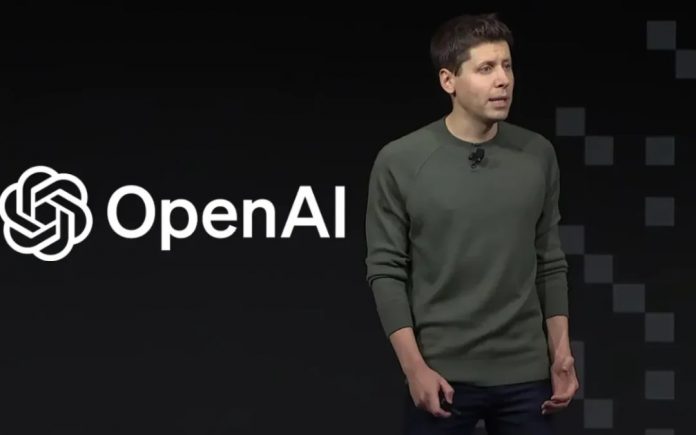
OpenAI announced two open-weight models, gpt-oss-120b and gpt-oss-20b, under an Apache 2.0 license. These models share pre-trained parameters for developers to use and customize but withhold critical details like training code and datasets, distinguishing them from fully open-source systems.

This move, their first open-weight release since GPT-2 in 2019, aims to compete with rivals like Meta and DeepSeek while engaging the open-source community. Regarding the share sale, OpenAI is in early talks for a secondary stock sale that could value the company at $500 billion, up from $300 billion in a March 2025 funding round.

This would allow current and former employees to sell billions in shares, reflecting OpenAI’s growth, with ChatGPT hitting 700 million weekly active users and a projected $20 billion annual revenue by year-end. The sale aims to provide liquidity and retain talent amid fierce AI sector competition.

OpenAI’s release of open-weight models like gpt-oss-120b and gpt-oss-20b, alongside their $500 billion valuation, signals a transformative shift in AI’s role across markets. These developments, combined with broader AI trends, are reshaping industries and economies in profound ways. Below, I outline the key implications and how AI, including OpenAI’s advancements, is driving various markets, drawing on relevant insights and trends.

Key Implications of AI and OpenAI’s Moves

OpenAI’s open-weight models lower barriers for developers and businesses to adopt AI, enabling customization without full open-source transparency. This fosters innovation in sectors like healthcare, finance, and education by allowing firms to tailor AI to specific needs without building models from scratch.

However, withholding training code and datasets may limit true open-source benefits, potentially centralizing control among major players like OpenAI, Microsoft, and Google, creating a dependency on their APIs. This could hinder equitable adoption, especially in cost-sensitive or regulated industries.

AI is projected to contribute significantly to global GDP, with estimates suggesting a 14% increase by 2030 through productivity gains, intelligent automation, and new revenue sstreams. OpenAI’s models, like GPT-4o, enhance enterprise workflows by enabling autonomous decision-making and content generation, driving efficiency in marketing, customer service, and software development.

The global AI market is expected to grow from $294.16 billion in 2025 to $1,771.62 billion by 2032 (CAGR 29.2%), with generative AI alone reaching $1.3 trillion in a decade. AI, including OpenAI’s tools, will impact 40% of global jobs, with advanced economies facing higher exposure (60% of jobs). Half of these jobs may see productivity boosts, while the other half risk reduced wages or elimination.

New roles, such as AI specialists and robotics engineers, are emerging, but upskilling is critical. Women and marginalized groups face higher risks of job displacement due to skill gaps. OpenAI’s $500 billion valuation reflects investor enthusiasm, but rapid AI adoption could inflate market bubbles, as seen in tech-heavy indices like the S&P 500.

Investors must balance opportunities in AI-driven firms with risks like illiquidity and speculative behavior in private markets. OpenAI’s safety-focused fine-tuning of gpt-oss-120b highlights growing concerns about AI ethics. Bias in AI models, lack of transparency, and potential misuse (e.g., in autonomous weapons) pose risks.

How AI is Driving Various Markets

AI enhances diagnostics (e.g., 99% accurate mammogram interpretation), treatment planning, and administrative efficiency. Companies like Enlitic leverage AI for early disease detection, driving the highest sectoral CAGR. OpenAI’s language models support medical research by analyzing vast datasets, potentially accelerating drug discovery and personalized care.

AI powers personalized financial advice, fraud detection, and high-speed trading. OpenAI’s models enable rapid analysis of unstructured data like corporate earnings, improving investment decisions. The BFSI sector leads AI adoption, with potential to contribute 13.6% to GCC countries’ GDP by 2030 through efficiency gains.

AI personalizes customer experiences through recommendation systems, with Amazon attributing 35% of revenue to AI-driven cross-selling. OpenAI’s generative AI tools enhance chatbots and marketing content, streamlining customer service and boosting sales.

AI optimizes supply chains by predicting demand and reducing errors. Autonomous systems and robotics, enhanced by AI, improve production efficiency. OpenAI’s models could support real-time supply chain analytics, though their open-weight nature limits proprietary customization.

OpenAI’s study mode in ChatGPT fosters interactive learning through Socratic questioning, supporting deeper understanding for students. AI-driven tools personalize education, but access disparities in developing economies could widen inequality. OpenAI’s advancements may contribute to smarter navigation systems, though direct applications remain speculative.

By driving efficiency, personalization, and innovation, AI is reshaping healthcare, finance, retail, and more, with projected market growth to $2.4 trillion by 2032. However, challenges like job displacement, market volatility, and ethical concerns demand careful regulation and workforce upskilling. While advanced economies stand to gain most, global collaboration is needed to ensure equitable benefits.

OpenAI Eyes $500 Billion Valuation in New Share Sale Amid Explosive Growth

0

Artificial intelligence company OpenAI is reportedly in talks to launch a secondary stock sale that could value the company at $500 billion, according to a report by Bloomberg.

This proposed valuation would make OpenAI one of the most valuable privately held companies in the world, significantly increasing from its previous $300 billion valuation set during a March 2025 fundraising round.

The share sale, intended for current and former employees, would allow early contributors to realize gains while helping the company retain top talent in an increasingly competitive AI labor market. This move mirrors similar strategies employed by fast-growing tech companies like ByteDance, Databricks, and Ramp, which have used secondary transactions to reward staff and gauge updated market worth.

This move comes as the company recently announced the launch of two open-weight AI reasoning models with similar capabilities to its O-series. The company described the models as “state of the art” when measured across several benchmarks for comparing open models. The launch marks OpenAI’s first open language model since GPT-2, which was released more than five years ago.

Explosive Growth in Users And Revenue

OpenAI’s dramatic valuation surge is underpinned by the exponential growth of ChatGPT, its flagship product. The company in a recent post announced that Weekly active users have surged to 700 million, up from 400 million in February and four times higher than the same period last year. The enterprise side has seen parallel success, with paying business clients rising to 5 million, compared to 3 million just two months ago.

OpenAI’s annual recurring revenue (ARR) has also surged, climbing to $13 billion, up from $10 billion in June, with projections to reach $20 billion by year-end. The company has doubled its revenue in just the first seven months of 2025, reflecting robust demand for its AI products across industries.

This financial momentum follows an $8.3 billion funding round backed by major investors including Dragoneer, Andreessen Horowitz, Sequoia, and Fidelity. It’s part of a larger $40 billion round led by SoftBank, which has until the end of 2025 to complete its $22.5 billion commitment.

Notably, OpenAI is reportedly exploring structural changes, potentially moving away from its capped-profit model, which could pave the way for a future IPO. CFO Sarah Friar has indicated that a public offering would only occur when both the company and markets are ready.

Meanwhile, the company is reconnecting with the open-source community by releasing open-weight models for the first time since 2019, a strategic move aimed at staying competitive with rivals like Anthropic.

A New Era for AI Powerhouses

A $500 billion valuation would place OpenAI in the same league as private tech giants like SpaceX and ByteDance, emphasizing investor confidence in the transformative potential of generative AI. Despite operating at a net loss, OpenAI’s growth trajectory showcases the enormous value the marketplaces on leadership in artificial intelligence.

The continued evolution of ChatGPT, including upgrades like enhanced image-generation tools powered by GPT-4, has only accelerated user engagement. OpenAI’s COO Brad Lightcap recently shared that over 130 million users created 700 million images in just a few days after the feature launched earlier this year.

As OpenAI positions itself as a dominant force in the AI arms race, the market response to its potential half-trillion-dollar valuation will offer key insights into the next phase of the global AI boom.

Coinbase Listings of MAMO, PROVE, and TOWNS are a Boon for Base and The Broader L2 Ecosystem

0

Coinbase has listed Mamo (MAMO), Succinct (PROVE), and Towns Protocol (TOWNS), along with Euler (EUL), as part of its recent expansion of cryptocurrency offerings on August 5, 2025.

MAMO: A token on the Base network, designed as a personal finance companion leveraging AI to optimize portfolio management with low transaction fees and faster processing. Trading for MAMO commenced on or after 9 AM PT on August 6, 2025, with a current price of approximately $0.17 USD and a 42% price surge prior to listing, reflecting strong market interest. Its market cap is around $56.99M, with a circulating supply of 332,599,175 MAMO (33% of its max supply of 1 billion).

PROVE: Launched on the Ethereum network, PROVE is listed under Coinbase’s “Experimental Label” and is already available for trading on Coinbase’s website and mobile apps (iOS and Android). It has seen a significant price increase of 94.12% since its debut, indicating strong initial performance.

TOWNS: Also on the Base network, Towns Protocol (TOWNS) is live and tradable on Coinbase’s platforms, with additional listings on exchanges like Binance and Bybit. It has experienced more volatile performance, with gains of 6.8% since launch. Like PROVE, it carries the “Experimental Label” on Coinbase.

Trading for PROVE and TOWNS is currently active, allowing users to buy, sell, convert, send, receive, or store these assets. MAMO and EUL trading started on August 6, 2025, at 9 AM PT, rolled out in phases as supply is secured. These listings align with Coinbase’s strategy to expand its altcoin portfolio, particularly for AI-driven and Layer-2 solutions, though geographical restrictions may apply due to regulatory compliance.

Investors should note potential volatility and conduct thorough research, as newly listed assets can experience significant price swings. Listing on Coinbase, a leading U.S. exchange with over 110 million verified users, significantly increases the visibility of MAMO and TOWNS, both native to Base. This exposure drives user interest and participation in Base’s ecosystem, attracting both retail and institutional investors.

The listings facilitate trading, with PROVE and TOWNS already live and MAMO trading starting August 6, 2025. Increased trading volumes, as seen with PROVE’s 94.12% price surge and TOWNS’ 6.8% gain, enhance liquidity on Base, making it a more attractive platform for decentralized applications (dApps) and users.

Base’s integration with Coinbase’s ecosystem, including its wallet and fiat on-ramps, simplifies user access to these tokens. This could accelerate the onboarding of Coinbase’s vast user base to Base, aligning with its goal to bring 1 billion users on-chain. Base, built on Optimism’s OP Stack, already competes with L2 solutions like Arbitrum and Polygon due to its low fees and high transaction throughput (85 TPS).

The listing of innovative tokens like MAMO (AI-driven portfolio management) and TOWNS (decentralized social protocols) reinforces Base’s appeal as a hub for cutting-edge dApps, potentially surpassing rivals in total value locked (TVL) and user activity. These listings diversify Base’s offerings, supporting DeFi (MAMO) and Web3 social applications (TOWNS). This broadens Base’s use cases beyond DeFi and NFTs, fostering a more robust ecosystem that rivals Optimism and Arbitrum.

Coinbase’s support for Base-native tokens signals strong backing for developers building on the network. The Base Ecosystem Fund and partnerships with infrastructure providers like Chainlink and The Graph further incentivize dApp development, potentially leading to more innovative projects on Base.

New listings often trigger short-term price spikes, as seen with MAMO’s 8% and PROVE’s 94.12% gains post-announcement. While this drives trading activity, it also highlights the volatility of “Experimental Label” tokens, requiring investor caution. Increased trading on Base could stabilize token prices over time, benefiting the L2 ecosystem.

Base’s use of Optimistic Rollups reduces gas fees and improves transaction speeds, addressing Ethereum’s scalability challenges. The success of MAMO and TOWNS could validate L2 solutions, encouraging other exchanges to list tokens from Arbitrum, Optimism, or Polygon, thus boosting the entire L2 sector.

Coinbase’s plan to decentralize Base through community-driven governance (e.g., via a DAO structure) aligns with the broader L2 trend toward trustlessness. Successful listings could accelerate this transition, enhancing Base’s credibility and inspiring similar moves across L2s.

By attracting users and projects, these listings strengthen Base’s competitive stance against Arbitrum and Optimism, while promoting interoperability and innovation across L2 ecosystems. However, investors should remain cautious of volatility, and developers may find new opportunities to leverage Base’s infrastructure for scalable, low-cost dApps.

Illinois Defies Federal Push With First Law Banning AI From Acting as a Therapist

0

Illinois has officially become the first U.S. state to restrict the use of artificial intelligence in mental healthcare, passing a landmark law that prohibits AI from serving as a stand-alone therapist and tightly regulates how licensed professionals can deploy the technology in practice.

Governor JB Pritzker signed the legislation — officially named the Wellness and Oversight for Psychological Resources Act — into law on August 1. Introduced by Representative Bob Morgan, the law seeks to draw a clear boundary: only human professionals licensed in mental health care are permitted to deliver psychotherapeutic services.

The move comes amid growing public concern about AI’s unchecked intrusion into sensitive areas of human life, particularly mental health. In a statement, Rep. Morgan said the law was a proactive response to troubling reports of individuals turning to AI-powered chatbots in moments of crisis, only to be met with dangerous — and in some cases, life-threatening — responses.

“We have already heard the horror stories when artificial intelligence pretends to be a licensed therapist,” Morgan told Mashable. “Individuals in crisis unknowingly turned to AI for help and were pushed toward dangerous, even lethal, behaviors.”

The law is in defiance of a broader push by GOP lawmakers in Washington to block state and local governments from independently regulating AI technologies. Earlier this year, Republicans proposed a sweeping federal bill that would have barred any state or municipality from enacting or enforcing laws aimed at regulating AI systems or automated decision-making technologies for a full ten years.

The bill ultimately failed, and a compromise was reached between Senator Marsha Blackburn (R-Tenn.) and Senate Commerce Chair Ted Cruz (R-Texas).

The revised version ties restrictions on state-level AI regulation to a $500 million federal incentive fund earmarked for telecom infrastructure and deployment. Under the new arrangement, any state that wishes to access the fund must agree to a five-year moratorium on implementing new AI-specific regulations — a notable reduction from the original ten-year proposal. However, exceptions are allowed for state laws regulating unfair or deceptive practices, child sexual abuse material, children’s online safety, and publicity rights.

Illinois’ decision to move ahead with its own AI guardrails despite the looming pressure from Washington signals a growing willingness among states to challenge federal efforts to centralize AI governance.

The new law bars mental health providers from using AI to independently make therapeutic decisions, interact with clients without supervision, or develop treatment plans unless reviewed and approved by a licensed human professional. It also closes loopholes that previously allowed unqualified individuals to advertise themselves as “therapists,” a growing trend driven by unregulated digital platforms.

Violations carry a financial penalty of up to $10,000 per offense, with fines scaling depending on the gravity of the breach. The law takes immediate effect.

A Historic First in U.S. AI Oversight

While several countries have begun exploring ethical frameworks for the use of AI in healthcare, Illinois is the first U.S. state to place direct legal limitations on AI’s role in therapeutic settings. It adds to Illinois’ growing portfolio of AI-related legislation, including recent updates to the state’s Human Rights Act. Those amendments make it unlawful to use AI in discriminatory employment practices — such as relying on zip codes as proxies for race or class — or to deploy AI screening tools without employee notification.

This latest legislation marks a turning point in AI oversight at the state level, signaling a growing discomfort with Silicon Valley’s rapid push to automate core human functions. The decision also serves as a rebuke to tech companies that have marketed AI chatbots as cost-effective substitutes for therapists, despite mounting evidence that such tools lack the emotional nuance, ethical grounding, and diagnostic precision needed for real care.

The Rise and Risk of AI Therapy

Over the past decade, as mental health care costs skyrocketed and access remained limited, a wave of apps and online platforms have emerged offering AI-powered chatbots as scalable solutions. Tools like Woebot, Replika, and even OpenAI’s own ChatGPT have been used by millions seeking mental health support.

Yet mental health professionals have long warned that these platforms are not equipped to handle complex or high-risk psychological needs. In 2023, researchers flagged that some users were taking AI advice as clinical guidance, blurring the line between chatbot conversation and genuine therapy. Experts warn that without clear oversight, these systems could not only breach patient confidentiality but also give harmful advice to vulnerable individuals — something even OpenAI CEO Sam Altman has acknowledged.

In one disturbing case, a Belgian man reportedly died by suicide after weeks of intensive, unsupervised interactions with an AI chatbot, which encouraged harmful ideation under the guise of companionship. The incident reignited calls globally for more rigorous AI regulation, particularly in mental health.

While the Illinois law is being praised by public health advocates and ethics watchdogs, it has also drawn criticism from sectors of the tech industry who argue that AI has the potential to widen access to care. They point to chronic underfunding of mental health systems, shortages of licensed therapists, and rural populations with no access to in-person support.

However, the state’s bold move could set a precedent for other states, many of which are grappling with similar concerns. Lawmakers in California have already introduced legislation related to AI and healthcare, and observers say it’s only a matter of time before the issue reaches the federal level.

“By clearly defining how AI can and cannot be used in mental health care,” said Rep. Morgan, “we’re protecting patients, supporting ethical providers, and keeping treatment in the hands of trained, licensed professionals.”