
DD
MM
YYYY

PAGES

DD
MM
YYYY

spot_img

PAGES

Home Blog Page 768

Bullish Aims for $4.2B Valuation in Second IPO Bid, Riding Wave of Trump-Era Crypto Policies

0

Crypto exchange Bullish has launched its initial public offering (IPO) roadshow, targeting a valuation of up to $4.23 billion, as digital asset firms regain investor confidence amid a policy renaissance under the Trump administration.

The company plans to raise as much as $629.3 million by offering 20.3 million shares priced between $28 and $31 each, according to a filing with the U.S. Securities and Exchange Commission on Monday.

The IPO marks Bullish’s second attempt to go public, following a scrapped $9 billion SPAC merger in 2022 that collapsed under the weight of regulatory uncertainty. Now, with a friendlier political environment, the firm appears better positioned to succeed. At the top of the proposed range, the valuation still comes in more than 50% below its 2021 peak, but analysts say that may be a calculated move to generate upward momentum.

“When an IPO begins marketing, the bankers would rather undershoot on valuation and then price up, rather than overshoot and price down,” said Matt Kennedy, senior strategist at Renaissance Capital.

Trump’s Pro-Crypto Posture Boosts Confidence

Bullish’s renewed push to list in the U.S. comes at a pivotal time for the broader crypto sector. President Donald Trump’s administration has made a series of high-profile moves to legitimize and support the cryptocurrency and blockchain ecosystem—a reversal from previous cycles marked by regulatory hostility.

Among the most consequential steps is the signing of the GENIUS Act earlier this year. The legislation establishes a national framework for the regulation of stablecoins, clarifies how digital assets should be classified, and encourages the development of blockchain infrastructure across various industries. The law has been praised for offering clarity to both issuers and investors, unlocking a wave of venture capital and IPO activity not seen since 2021.

In addition, the Trump administration has:

  • Appointed pro-crypto figures to key financial regulatory positions, including individuals sympathetic to decentralized finance (DeFi) and blockchain development.
  • Pressed federal agencies such as the SEC and CFTC to accelerate their coordination on crypto policy, reducing regulatory fragmentation.
  • Proposed tax reforms that would ease reporting requirements for small-scale crypto transactions, removing a barrier to consumer-level adoption.
  • Fast-tracked AI and blockchain R&D funding, with crypto infrastructure specifically cited as a national interest under a new federal innovation roadmap.

These moves have sharply contrasted with the regulatory gridlock and enforcement-first approach seen during prior administrations, sparking what many in the industry are calling a second crypto boom in the U.S.

Bullish Rides the Wave

Bullish is one of the latest firms seeking to ride this regulatory tailwind. Backed by billionaire Peter Thiel, the company operates a crypto trading platform aimed at institutions. It also owns CoinDesk, the prominent digital asset news outlet it acquired from Barry Silbert’s Digital Currency Group in 2023.

Its CEO, Thomas Farley, formerly presided over the New York Stock Exchange and brings deep Wall Street experience to the crypto arena. Bullish is aiming to list on the NYSE under the ticker BLSH, with J.P. Morgan, Jefferies, and Citigroup serving as lead underwriters.

According to its IPO filing, the company plans to convert a significant portion of its offering proceeds into USD-backed stablecoins through partnerships with one or more leading issuers. This echoes the recent strategy used by Circle Internet, a major stablecoin issuer that had a blockbuster IPO in June and is now trading more than 400% above its debut price.

Despite recent losses—Bullish posted a $349 million deficit for the quarter ending March 31, compared with a $105 million profit a year earlier—investors are focusing on long-term fundamentals. As Kennedy of Renaissance Capital noted, “Investors will focus on how efficient [Bullish is] and how profitable it is as a pure exchange, without the impact of quarterly price changes.”

A New Chapter for Crypto IPOs

Bullish’s public offering is the clearest sign yet that crypto firms are regaining access to U.S. capital markets, a privilege that looked increasingly unlikely just a few years ago. While digital asset prices remain volatile, regulatory clarity and executive-level backing from Washington are injecting fresh energy into the sector.

With Trump’s administration laying out what some call the most crypto-friendly policy landscape in U.S. history, companies like Bullish may now find the environment finally supportive enough to scale, list, and deliver on their original promises to investors.

If successful, Bullish’s IPO could serve as a bellwether for others waiting on the sidelines, marking the beginning of a renewed era of U.S.-anchored crypto finance.

Lyft Partners with Baidu to Launch Robotaxis Across Europe in Major Expansion Drive

0

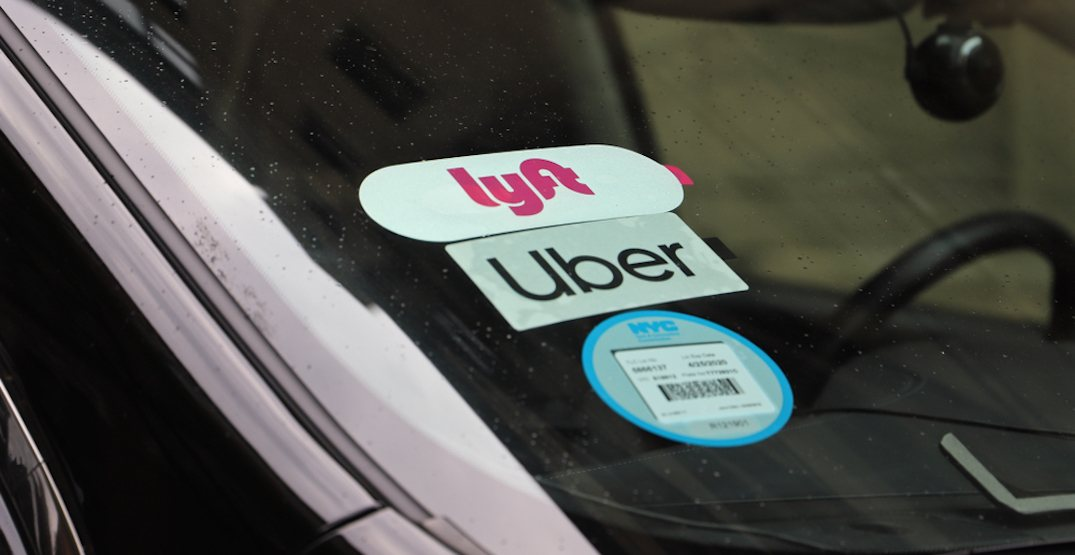
Lyft has announced a landmark partnership with Chinese tech giant Baidu to launch autonomous robotaxi services across Europe, beginning in 2026.

The collaboration marks Baidu’s first foray into the European self-driving taxi market and represents a significant leap for Lyft as it ventures outside its North American home turf.

The joint rollout will begin in Germany and the United Kingdom, contingent on regulatory approval, with Baidu’s electric RT6 robotaxis operating on Lyft’s mobility platform. The two companies plan to expand the service to thousands of vehicles across Europe in the years ahead.

Lyft’s expansion is backed by its recent $200 million acquisition of FreeNow, a European mobility app formerly co-owned by BMW and Mercedes-Benz. FreeNow has established operations in over 180 cities across nine European countries and boasts strong regulatory relationships. Lyft executives say this foundation will play a critical role in navigating Europe’s complex transportation oversight.

“What we’re excited about with FreeNow is they have a deep, long-lasting relationship with regulators, and we want to go and have those conversations about how we do this,” said Lyft Executive Vice President of Driver Experience, Jeremy Bird.

Under the partnership, Lyft will manage customer services and fleet logistics, while Baidu will supply its autonomous RT6 vehicles and technical expertise. The RT6, Baidu’s latest-generation robotaxi, is equipped with a detachable steering wheel and advanced sensors, making it well-suited for complex urban driving scenarios.

The move comes as the UK government accelerates its push to bring robotaxis to public roads, aiming to allow services with paying passengers as early as spring 2026. Germany has also taken steps to create a legislative and regulatory framework for self-driving cars, making both countries strategic entry points for autonomous mobility firms.

Baidu’s Apollo Go platform currently operates over 1,000 autonomous vehicles across 15 cities in China, having completed more than 11 million rides. While it has been experimenting with robotaxi pilots in parts of Asia and North America, the Lyft partnership represents Baidu’s first commercial push into the European market.

The timing is critical for Lyft, which has faced growing pressure to expand its autonomous capabilities amid competition from rival Uber. Uber has formed partnerships with companies like Waymo, Pony.ai, WeRide, and Momenta to prepare for robotaxi deployment in Europe, with its own services expected to launch around the same time in 2026.

In June, Uber and Waymo officially launched autonomous ride-hailing services in Atlanta, just as Tesla began testing its own low-cost driverless cars in Austin.

In July, Uber announced a sweeping new partnership with electric vehicle maker Lucid and self-driving tech startup Nuro to develop and deploy more than 20,000 robotaxis across the United States over the next six years.

Under the agreement, Uber will invest $300 million in Lucid, which will manufacture the electric robotaxis.

However, the race to establish a foothold in Europe’s emerging robotaxi sector is intensifying. Analysts say the Lyft-Baidu collaboration could be a powerful combination of operational scale and technical innovation. Baidu brings one of the most sophisticated autonomous driving stacks in the world, while Lyft leverages FreeNow’s market penetration and regulatory goodwill.

However, success will depend heavily on securing regulatory approvals and public trust, both of which remain hurdles in Europe’s tightly regulated transportation sector.

If successful, the Lyft-Baidu rollout could reshape how people in major European cities commute, giving the two companies a head start in what is shaping up to be the next frontier of urban mobility.

EU Suspends Counter-Tariffs After Trump Deal, But Uncertainty Remains Over Broader Trade Relationship

0

The European Union has agreed to suspend its retaliatory tariffs against the United States for six months, following a new agreement reached with U.S. President Donald Trump.

The move, confirmed by a European Commission spokesperson on Monday, is being seen as a temporary cooling of tensions in a trade war that has lingered for months, originating from the Trump administration’s aggressive tariff policies.

The two EU countermeasure packages being paused were designed to strike back against Trump’s tariffs on steel, aluminum, and a broader range of goods, including automobiles. While the Commission cited the deal as a sign of progress, the EU made clear that the suspension remains provisional, with key uncertainties still looming.

Among those uncertainties is the status of European spirits exports and automotive goods, which were left out of Trump’s executive order last week that imposed a sweeping 15% tariff on most EU imports. European officials say they expect more such orders from Washington in the coming days.

“The EU continues to work with the U.S. to finalize a Joint Statement, as agreed on 27 July,” the Commission said in a statement. “With these objectives in mind, the Commission will take the necessary steps to suspend by 6 months the EU’s countermeasures against the US, which were due to enter into force on 7 August.”

The current truce is the latest chapter in a tariff dispute that dates back to early 2018 when President Trump began invoking Section 232 of the 1962 Trade Expansion Act to justify tariffs on foreign steel and aluminum imports, claiming they threatened U.S. national security. The move triggered swift backlash from key American allies, particularly the European Union, which imposed retaliatory tariffs on iconic U.S. exports, such as Harley-Davidson motorcycles, bourbon whiskey, and denim jeans.

Trump, in his second term, has widened the scope of the tariffs, targeting European automobile exports — a critical sector for Germany and other EU economies, further straining relations. Brussels responded with a second wave of countermeasures, but these were set to take full effect on August 7 before the recent six-month suspension was announced.

The tit-for-tat dynamic strained economic ties and overshadowed broader cooperation between the EU and the U.S., including efforts to reform the World Trade Organization (WTO). European officials have consistently argued that Trump’s use of national security provisions to justify economic protectionism undermines multilateral rules.

A Calculated Pause — But No Final Resolution

While the suspension of tariffs is a diplomatic gesture aimed at creating room for negotiations, the EU’s concerns remain firmly in place. Trump’s executive order last week, which placed a flat 15% tariff on a wide swath of EU imports without exemptions for automobiles or parts, has renewed fears that the trade standoff is far from over. The order’s lack of carve-outs has left European manufacturers on edge, especially in the auto sector, which has lobbied hard for relief.

More broadly, Trump’s trade policy has redefined America’s posture toward allies and trading partners. Embracing economic nationalism, Trump has repeatedly framed tariffs as a tool to rebalance U.S. trade deficits and revive domestic industries. His administration also pulled out of the Transatlantic Trade and Investment Partnership (TTIP) talks, which were once envisioned as a cornerstone of U.S.-EU economic integration.

The EU, meanwhile, has tried to hold the line by defending the multilateral trading system and seeking to diversify its partnerships globally. However, with U.S. tariffs still in place — and more expected — European officials acknowledge that the path to a full resolution remains uncertain.

For now, industries on both sides of the Atlantic are struggling to cope with the uncertainties. Whether this six-month pause leads to a more stable trade framework or simply postpones another round of retaliation depends on how negotiations unfold — and on what additional executive orders President Trump may choose to issue in the weeks ahead.

Perplexity Accused of Stealth AI Crawling, Cloudflare Warns of “Undeclared Bots” Circumventing Website Blocks

0

Perplexity AI, the rising artificial intelligence search startup often touted as a challenger to Google, is once again under fire for allegedly harvesting content from websites without consent — this time drawing sharp criticism from Cloudflare, one of the largest web infrastructure providers in the world.

According to a report published by Cloudflare, Perplexity’s web crawlers have allegedly continued to access and scrape content from websites that have explicitly opted out of such activity via tools like robots.txt files or firewall rules. The company claims Perplexity’s bots “intentionally obfuscate their identity” and engage in stealth tactics to bypass restrictions, including by masking themselves as popular web browsers like Google Chrome on macOS.

“When we blocked access to our test domains via common methods, Perplexity’s crawlers responded by changing their user-agent and IP address to continue scraping,” Cloudflare said in the report.

Cloudflare further alleges that the AI firm is exploiting rotating IP addresses and altering Autonomous System Numbers (ASNs) — unique identifiers assigned to networks — to circumvent blocks and avoid detection. This stealth activity, according to Cloudflare, spanned across tens of thousands of websites and millions of requests daily.

This is not the first time Perplexity has been accused of bypassing digital boundaries. In mid-2023, the startup was caught indexing content from subscription-based and paywalled media outlets without permission. At the time, Perplexity CEO Aravind Srinivas deflected the criticism, blaming the issue on third-party scrapers operating on the company’s behalf. But now, with Cloudflare’s claims, scrutiny over the company’s data-gathering practices has only intensified.

In response to the latest report, Perplexity spokesperson Jesse Dwyer dismissed Cloudflare’s findings as a “publicity stunt.”  He told The Verge that the blog post contained “a lot of misunderstandings.” Still, the report has prompted Cloudflare to delist Perplexity as a “verified bot” and roll out additional protections that block its scrapers by default.

Cloudflare CEO Matthew Prince, a vocal critic of unregulated AI content harvesting, recently warned of what he described as an “existential threat” to content creators and publishers from AI companies. In June, Cloudflare launched new controls allowing websites to demand payment from AI firms for data access, effectively tightening the screws on those trying to extract information without consent.

“AI crawlers have been scraping content without limits. Our goal is to put the power back in the hands of creators while still helping AI companies innovate.

“This is about safeguarding the future of a free and vibrant Internet with a new model that works for everyone,” the CEO stated.

The escalating clash between AI startups and infrastructure firms like Cloudflare comes at a time when legal questions surrounding data scraping, copyright, and consent remain unresolved. The core tension revolves around the very fuel of modern AI systems: data. With large language models hungry for ever-expanding datasets to improve performance, some companies have been accused of cutting corners in how they obtain that information.

Perplexity, founded by Srinivas and backed by Jeff Bezos and Nvidia, has positioned itself as a real-time, citation-focused search engine designed to counterbalance the dominance of Google and Bing. But its reliance on web-sourced content — including journalism — has made it a target for media companies, which have grown increasingly wary of their work being used to train AI tools without compensation.

With more publishers adding AI-blocking rules to their sites and companies like Cloudflare rolling out enforcement tools, Perplexity and its peers face growing pressure to justify how they obtain the data powering their products — and whether their methods can survive legal and reputational scrutiny.

Implications of Trump Media & Technology Group (TMTG)’s Utility Token and Digital Wallet

0

Trump Media & Technology Group (TMTG) has disclosed plans to launch a Truth-branded utility token and digital wallet in a recent SEC filing, marking a significant step in its cryptocurrency strategy.

The token, part of a rewards program tied to the “Truth digital wallet,” will initially enable payments for Truth+ subscriptions, with potential expansion to other products and services within the Truth ecosystem. While not explicitly labeled a cryptocurrency, the filing suggests blockchain-based infrastructure.

The initiative, first hinted at in a shareholder letter, aligns with TMTG’s broader crypto push, including a $2 billion Bitcoin investment and filings for crypto ETFs under its Truth.Fi division. Despite reporting a $2.3 million positive operating cash flow, TMTG recorded a $20 million net loss for Q2, driven by legal fees and stock-based compensation.

CEO Devin Nunes frames these efforts as a safeguard against financial censorship. The token’s rollout, including the Patriot Package beta, may face regulatory scrutiny similar to past projects like Facebook’s Libra. The introduction of a utility token tied to a rewards program and digital wallet allows TMTG to create a decentralized monetization model for its Truth Social and Truth+ platforms.

By enabling users to pay for subscriptions and potentially other services with the token, TMTG incentivizes user engagement and loyalty within its ecosystem. This could shift revenue models away from traditional advertising, which relies heavily on third-party intermediaries, toward a more direct, user-driven economy.

This move aligns with the broader Web3 trend of integrating blockchain technology into digital platforms, creating ecosystems where users are rewarded for participation rather than being monetized through data exploitation (a hallmark of Big Tech platforms like Meta or Google). If successful, TMTG’s model could inspire other media platforms to adopt token-based systems.

This push for financial autonomy could redefine how media platforms operate in politically charged environments. By reducing reliance on traditional financial rails, TMTG could establish a censorship-resistant ecosystem, appealing to audiences who feel marginalized by mainstream platforms. This could set a precedent for other media companies to explore decentralized finance (DeFi) solutions.

The utility token is part of TMTG’s broader expansion into fintech through its Truth.Fi division, which includes plans for crypto-focused exchange-traded funds (ETFs) and other financial products. This integration of media and financial services creates a hybrid ecosystem where content consumption and financial transactions are intertwined, potentially streamlining user experiences and increasing platform stickiness.

While regulatory hurdles could slow TMTG’s plans, they also highlight the broader tension between centralized regulatory frameworks and decentralized technologies. A successful navigation of these challenges could embolden other media companies to push for clearer crypto regulations, fostering a more innovation-friendly environment. Conversely, political backlash could polarize the adoption of such technologies.

TMTG’s token announcement has already impacted related crypto assets, with the TRUMP meme coin dropping 3-11% following the news, indicating market sensitivity to TMTG’s crypto ventures. The company’s $5.5 billion market cap, despite low revenue, suggests that its valuation is driven more by brand and speculation than traditional financial metrics, which could amplify volatility as it rolls out new products.

The New Media Revolution

The use of utility tokens to reward user engagement and facilitate transactions could shift power dynamics in media, giving users a stake in the platform’s ecosystem. This aligns with the Web3 ethos of decentralization, where users are co-owners rather than products. If TMTG’s model proves successful, it could inspire a wave of tokenized media platforms, fundamentally altering how audiences interact with content creators and platforms.

By combining media, fintech, and blockchain, TMTG is positioning itself as a direct competitor to Big Tech platforms that rely on centralized control and ad-driven revenue. The Truth ecosystem’s focus on “patriotic” branding and decentralized finance could appeal to audiences disillusioned with mainstream tech, potentially carving out a niche that grows into a broader alternative media landscape.

While TMTG’s initiative has revolutionary potential, it’s not without risks. The company’s $20 million Q2 net loss, despite positive cash flow, underscores financial fragility, and its reliance on Trump’s brand could alienate non-aligned users. The crypto market’s volatility, coupled with regulatory uncertainty, poses significant hurdles, and past attempts at tokenized platforms (e.g., Libra) suggest that scaling such initiatives is challenging.

Moreover, the political dimension of TMTG’s strategy could limit its appeal to a niche audience, potentially capping its revolutionary impact unless it broadens its user base. TMTG’s utility token and digital wallet represent a bold step toward integrating blockchain technology into media, with the potential to redefine monetization, user engagement, and financial autonomy in the industry.