

DD
MM
YYYY

PAGES

DD
MM
YYYY

spot_img

PAGES

Home Blog Page 7691

How Africa Can Drive Technology Diffusion And Penetration

0

The following are the tools and techniques which will facilitate diffusion of technology in Africa as discussed in yesterday’s blog.

Internet Virtual Classroom (IVC)

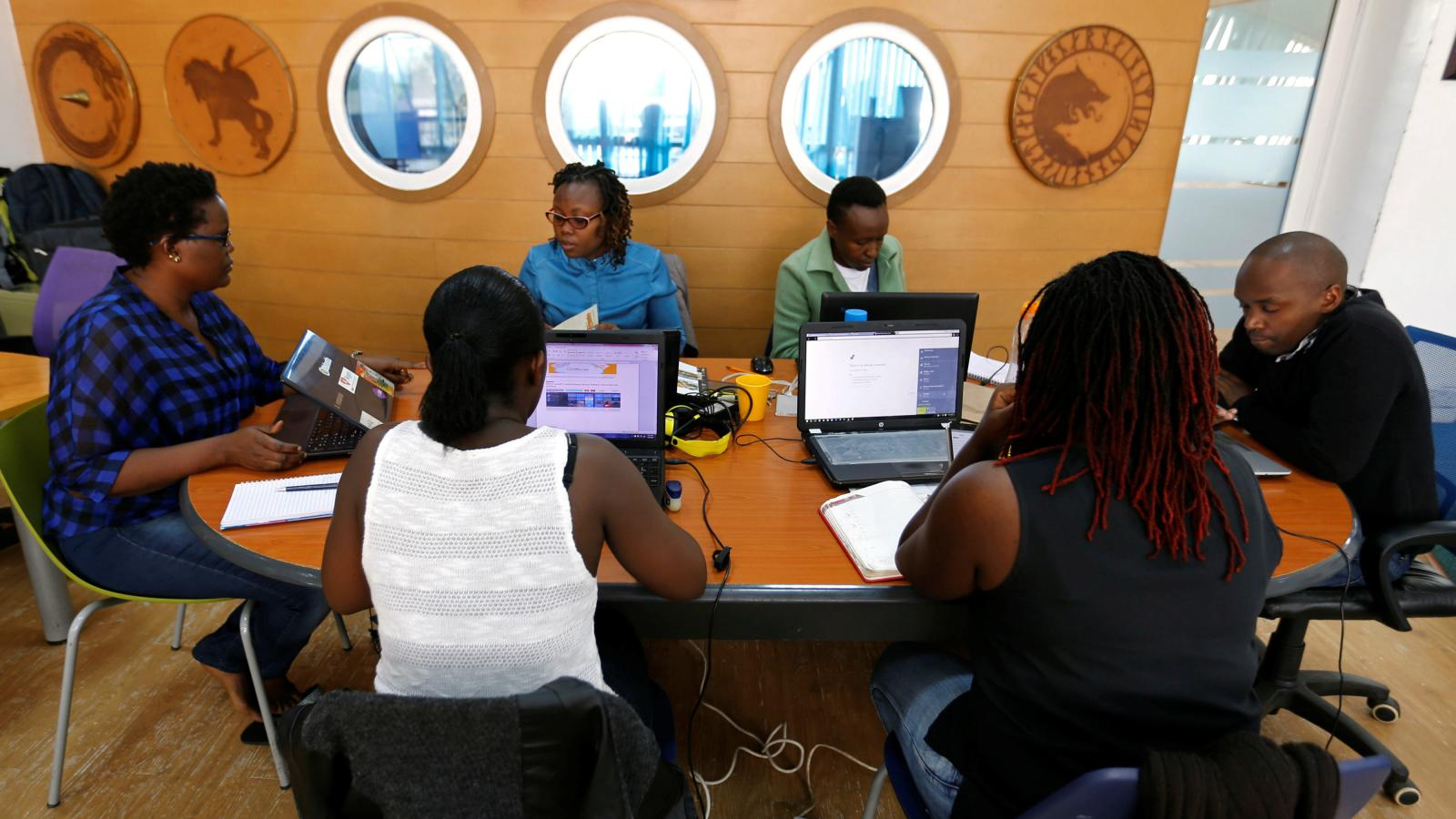
This is a ‘classroom’ on the Internet where instructors and students interact via computers. Besides lecture notes, VOIP (Voice over Internet Protocol) phone, live-chats and online-conferencing are vital components of this classroom resources. The motivation is to create a virtual traditional classroom on the web and educate students separated by physical distance from the instructors. Many European and US universities use IVC to coordinate their satellite campuses and distance education programs. It offers to Africa a framework through which they can tap the pool of their experts in Diaspora, which increasingly prefer to live in the developed nations.

Telepresence Technologies

The Telepresence technologies, like the ones offered by Cisco and Digital Video Enterprises, would become one of the most important ways to connect students and instructors in developed nations and Africa. With a high-speed technology that provides high bandwidth, these technologies can help leverage the skills of experts in developed nations to advance technical education in Africa. It also offers a good platform to link citizens of developing nations in Diasporas to make contributions in their native nations. These citizens can live in their adopted nations while assisting their native ones.  Telepresence refers to a set of technologies which allow a person to feel as if they were present, to give the appearance that they were present, or to have an effect, at a location other than their true location.

Telepresence offers some advantages in terms of virtual reality, which cannot be easily produced in IVC. Telepresence offers ‘live’ classroom despite the small latency and can be a very effective two-way communication between the experts in developed nation and students in Africa working in labs or classrooms. With it, direct supervision of experiments or homework is possible.

Multi-platform foundries

The availability of experts who can teach the students is not enough, the students must actually have to practically learn and design. Through this process, they will have improvements in skills, develop competence and can potentially graduate to establish small and medium enterprises which will help in the diffusion process. One way of realizing this practical exposure is to have a continental level fabrication service similar to MOSIS of USA, Europractice of Western Europe and CMC of Canada. With this progress, students will have the opportunity to design, fabricate and test their systems. This is one area African Union NEPAD can help to assist technical education in Africa. They can fund or subsidize these programs for African universities.

Enabling Environments for SME

Africa was able to diffuse information technology consumption through a business-center model where small and medium enterprises (SME) educated and trained clients for small fees. Governments must provide the enabling environments in the forms of electricity, telecommunication, and other infrastructures.

Open Design Academic Program

The big divide between the technical education in developing nations and developed ones will require a coordinated program to bridge it. We propose formation of Emerging Technology Academic Network in each African nation. This will offer the schools the platform to seek for discounts from CAD manufacturers, multi-platform foundries and efficiently share and collaborate on designkits and techfiles as the license owners provide them. This will become a hi-tech equivalent of open source software development, but within a national level. A coordinated continental program will only focus on fabrication, which is very expensive owing to the equipment requirement.

Education Package for Diffusion

Emerging technology is vast; accordingly, efforts must be made to develop the right format as African students are being engaged. There should be scholarships supported by NEPAD to send African students for trainings on these emerging technology areas.

In summary,  the 21st century is a knowledge century and knowledge will rule modern man. A bottom-up creative technology programs are necessary in Africa towards sustainable transformations into knowledge economy, especially with Africa’s plan for a common currency with potentials of delivering larger market. Due to the high-specialized skills and capital-intensive nature of many new technologies, good technical education is a prerequisite for sustainable adoption and diffusion of technology across Africa. New applications like IVC and Telepresence could be vital along with a coordinated and planned academic network designed and implemented at both national and continental levels.

There is need for more economic, social and industrial coordination in the continent. Africa must reform various sectors in accordance with industry trends. Education, especially technical education, must be supported. Efforts must be geared in adapting modern technology as they offer to stimulate the integration dynamics by delivering knowledge products which are homogenous and hence can mitigate impacts of trade shocks across regions.
The Miracle Of China Was A Well Executed Technology Policy. Africa Must Learn From Them.

0

The Chinese Government as a matter of policy rewards those who return to china with a new technology (David, 2009). This is a measure taken to develop the Chinese technology and hence enhance their economy. China’s central government, local governments, universities, research laboratories, and the marketplace all reward mainlanders who return to China with technology. In fact, technology helps generate today’s reverse migration, particularly among business entrepreneurs and scientists, as the rewards for bringing back technology are significant. This strategy has made China economy a threat to the US economy and many researcher are already speculating that China will soon be the no one economic giant in the world (Oded, 2005).


In the late 1980s, the Central government’s Torch Plan established New High Tech Development Zones in cities around China (David, 2009). By 1991, there were 27 such parks; by 1997, there were another 25 parks (David, 2009). These zones established incubators for returnees, which protect them from the vicissitudes of China’s bureaucracy and marketplace until their firms are ripe; but to receive special privileges, projects have to involve new technology and local Science and Technology. Bureau must certify that such projects included new technology.


The national real GDP of China has increased tremendously, giving an annual average real GDP growth rate of 9.8 percent in the past two decades (Kui-Wai, 2007). China experienced a double or close to double digit real GDP growth rate for the period of 1992 – 2004 (Kui-Wai, 2007). This growth is attributed to the development of the Chinese technology which has positively impacted the economy. In the context of the frontier production analysis, it is shown that productivity change or the growth of total factor productivity (TFP) is a composition of technical progress, technical efficiency change and scale of economy (Kumbhakar, 2000).


The export processing zones established in China in the 1980s initiated a complete transformation of China’s coastal regions. The export processing trade, supported by a strong manufacturing base established in the 1950s and complemented by technology imported since the 1980s, progressively became a catalyst for China’s economy (Barry, 2010).


Following in the footsteps of other Asian catch-up countries, China’s exports rapidly started moving up the value chain away from low-tech products. Between 1992 and 2005, China’s medium- to high-technology exports grew 22 per cent annually, while high-technology exports grew by 32 per cent (Barry, 2010). By 2008, 43 per cent of China’s exports were directly related to machinery, mechanical appliances and electrical equipment, and China now dominates the global markets for these and other types of machinery (Barry, 2010).


Huawei Electronics, one of the major companies responsible for the global emergence of Chinese technology and innovation, has consistently spent 10 percent of its revenue on R&D every year (Barry, 2010). The firm’s credentials as an innovator are beyond question, yet its greatest achievement is that it so effectively fused two often disparate elements: good quality at low prices.


Capital accumulation, labor growth and technology progress are major factors to long-term economic growth on modern economic growth theory. China’s economy keeps sustained, rapid, healthy development and wins remarkable achievements since they began to reform and open up (MA, 2008). In summary, advancing technological innovation, increasing total factor productivity and promoting industrial restructuring and optimization are the key factors for improving the quality of economic growth and ensuring economic sustainable development (MA, 2008).


Editor’s Note: This exclusive work will be published in a PDF next week with the references.

When The Oil Wells Dry Up – How Nigeria Could Look And Averting That

0

Over the past few decades, Nigeria has emerged as one of the key political leaders in Africa. Despite a long history of under-performance, driven primarily by leadership and visioning problems, it remains a key global strategic energy partner. It has crude oil and thus the capacity to influence the dynamics of global commerce and industry.


But when our oil reserve gets exhausted, we will witness dramatic national transformations with enormous consequences.


Oil has been the driving force of Nigeria’s economic wellbeing. Oil dominates our foreign earnings. The progress we made in agriculture before the dawn of petroleum has been left behind.


The challenge for Nigeria is not necessarily what happens now, but what happens when the oil wells dry up. In others words, what would be the position of Nigeria, politically and economically, when the country can no longer generate foreign exchange from the sale of oil.


Our nation remains governed in a political system of extreme stagnation and avalanche partisanship. A system that breeds venoms with capacity to destroy the heartbeat that keeps the nation moving forward. It has created a syndrome that continues to prevent the nation from utilizing the gains of oil sales to advance the citizens, the infrastructure and give Nigeria a needed clout in the global arena.


The nation has failed in many areas because our leaders are entangled in managing government processes and political pandering instead of being servant leaders, by serving the interests of the masses. Under this scenario, a look into the country’s future without oil will be challenging. At least, the nation will come to reality after many years of poor judgments and mismanagements which have caused deep pains on the citizens.


The first challenge will be cleaning the empty oil wells. It is unfortunate that the oil companies, who despite knowing the public health and the environmental impacts of gas flaring, continue to flare gas recklessly in Nigeria. We hope they will have the morality to clean those wells and restore them to pre-drilling ecological landscapes before they depart.


Within Africa, Nigeria’s influence will be tested. Since our nation has not developed any creative technology that will sustain the economy, some African nations may dominate us. South Africa could become like a hegemonic empire in Africa with extreme power. That nation continues to invest massively in education, giving Africa its best universities, and attracting the best African brains.


From banking to technology, South Africa will be unrivalled and could rule Africa. As the economies and political power of other African nations such as Ghana, Libya and Egypt grow; the capacity of Nigeria to define and influence in the African Union will shrink despite enormous opportunities for new Africa leadership to position the continent competitively.


When South Africa takes the central role in Africa, there will be broad impacts across the Economic Community of West African States (ECOWAS) region. A post-petroleum era will produce massive complications and fundamental dislocations in Nigeria’s capacity to influence the region as South Africa becomes more prosperous owing to a highly diversifying economy.


The Mandela nation is buying into more African markets, and its abilities to influence governments will become more pervasive and that will dwarf Nigeria’s influence.


Lack of oil to drive the economy will create tendencies for more educated Nigerians to move abroad with potential strangulation on the economy. The implication is that the central point of government will be transformed and Nigeria could emerge as a true federal system from its present quasi-federal structure.


While the Nigerian union will be continuously morphed to remain strong, the states will be expected to go back to fundamentals to develop ways to function because central funding will diminish. Without crude, assessing external (international) loan will be difficult and many Nigerian states will be challenged to be accountable and innovative with their resources. They will establish structures and institutions to create wealth and inter-states competitions will emerge. This will be followed by effective tax and revenue collection techniques.


From federal parliament to state assemblies, the political system will be revamped. The present system which is extremely expensive and supported by the largest of the crude oil will be replaced. Some states will become creative in representative system in order to save cost. I see a scenario where some states will sponsor representatives on part-time with the number of positions reduced by half. Yes, new politics will evolve and the democratic system will be seriously tested.


One cannot imagine what will happen to education in Nigeria if it cannot be funded properly with the enormous oil revenue. In the post-petroleum era, the present model of higher education in Nigeria will collapse and government will request schools to fund themselves with minimal central supports.
Schools will have to become very competitive and innovative to attract grants and revenues to survive and grow. Unfortunately, it must still overcome the present lost years of decay perpetuated by poor funding and outdated model.


What can be done? The nation still has time to prepare for the post-petroleum era. It has to invest in education. This is important as education remains one of the best ways to sustain any economy. It is an organic engine for national political and economic succession, as well as a catalyst for national prosperity.


The country must also take the Millennium Developmental Goals (MDGs) seriously, while shifting its focus away from oil gradually to knowledge driven industries.

Sidmach Technologies Powers e-registration Solution For Nigeria’s Joint Admissions Matriculation Board (JAMB)

1

Sidmach Technologies has developed an e-registration platform for Nigeria’s Joint Admissions Matriculation Board (JAMB) towards efficient record keeping and elimination of the trauma associated with manual registration, as well as prevalent exam malpractices resulting from poor monitoring. The system is poised to help candidates register for the Unified Tertiary Matriculation Examination (UTME) online.

The technology was developed upon Microsoft Visual Studio.Net and the SQL Server 2008 platforms and captures names, school choices and centers. It also has an interface for the biometrics of the students.


With this move, JAMB is moving to the e-platform. It does mean that they can now deliver updates to the students email and SMS as well as  provide brochure online. Besides, the system has a help desk that enables the candidates to easily complete the forms.


Speaking to newsmen on the new technology, Mr. Mike Olajide, Managing Director Sidmach Technologies noted that,


“The implementation of the project began with the capturing and validation of information, for the 1.49 million candidates who sat for the 2011 UTME.


The captured information was stored in a Microsoft SQL Server database which ensured trusted, productive, and intelligent data platform that provided excellent encryption which guarded against tampering, adding that that the project included the provision of 3,200 Fingerprint Scanners and HP mini laptops running Microsoft Windows 7 for the verification and attendance marking of candidates for the UTME. The Verification system was also developed using Microsoft tools.


While commending Sidmach Technologies on the successful implementation of this project, Adefolu Majekodunmi Channel, Services Director, Microsoft Nigeria said, “We are pleased with the progress being made by our partners in ensuring technology penetration in the country.


Microsoft will continue to give support through resource solutions especially for public sector capacity building.”


For Prof. Dibu Ojerinde, Registrar/CEO of JAMB, was very happy for the outcome as he said

“If registration was done by someone different from the actual candidate for the examination, the data capturing machine would reject the candidate on the examination day because of the biometric difference.”


The innovation is simplicity for the JAMB proces with reduction of fraud and exam malpractices.


Sidmach
Sidmach is a firm of ICT Consultants, System Developers and System Integrators providing ICT services to customers cutting across the public and private sectors of the economy including the Nigerian government, Business communities etc. The company was incorporated by a group of qualified and highly experienced Nigerians who are committed to providing quality, professional, customised and timely service to clients. We have to our professional credit successfully executed several projects of high-level importance in Nigeria.

Africa Does Not Need Technology Creation. They Need Adoption And Adaptation

0

Technology diffusion will facilitate the transformation of African economies into knowledge economies. It has the potentials to spur growth as well as facilitate the integration through homogeneity of products.

Diffusion has few pathways, especially for those technologies which have been developed already and matured or maturing. In the case of nanotechnology and microelectronics, the most dominant of these creative technologies, there are zero incentives for any nation to begin a process of trying to develop it by itself.

The technology is already developed and matured in some economies. The best paradigm is to adopt and henceforth work towards its diffusion in the economy. One way that is prominent within the technology transfer circle is foreign direct investment (FDI) where multinational companies build factories or plants in the target nations.

While this is usually possible in many industries owing to the supply of local labor force, it is challenging to use this pathway in the highly specialized and sophisticated technology like nanotechnology and microelectronics.

The major challenge is finding the pool of labor that can sustain the new firms as they establish and grow in their new bases. In other words, for any success for sustainability, there is a need for an organic pipeline of workers, which usually requires a solid educational system.

So central to emerging technology adoption and subsequent diffusion is availability of local knowledge workers. Without these workers, no diffusion could be possible especially in the real case of technology creation. Efficient bottom-up creative technology diffusion must coincide with solid education. Schools, at tertiary levels, involving universities and polytechnics must play central roles.

The most difficult challenge for technology diffusion, especially the hi-tech ones in Africa is lack of trained professionals who can actually educate the students. Overcoming this challenge could come through the use of emerging technologies to support the few experts presently practicing in these nations.

African Union can work with African Development Bank to strengthen education programs across the continent in the following ways (next post update).