DD
MM
YYYY

PAGES

DD
MM
YYYY

spot_img

PAGES

Home Blog Page 77

SEC Subpoenas Goldman Sachs, JPMorgan and Other Banks in Fund Investigation

0
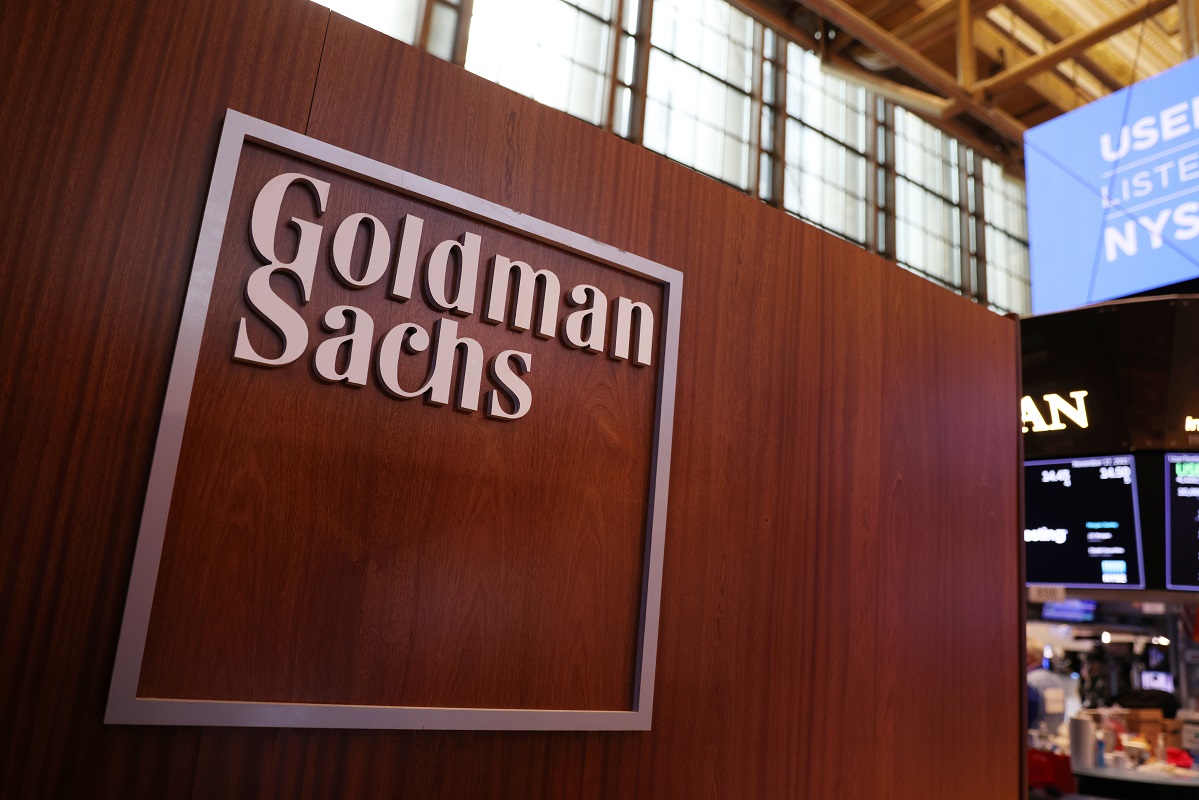
The logo for Goldman Sachs is seen on the trading floor at the New York Stock Exchange (NYSE) in New York City, New York, U.S., November 17, 2021. REUTERS/Andrew Kelly/Files

The collapse of a high-profile AI hedge fund has opened another chapter, and this time the spotlight is turning toward Wall Street’s largest financial institutions.

The U.S. Securities and Exchange Commission has subpoenaed major banks over their dealings with Situational Awareness, seeking information about the fund’s trading activity, leverage and communications with lenders.

The inquiry follows the fund’s near-collapse during July’s brutal selloff in AI-related stocks. Situational Awareness rose like a comet across the financial sky.

Founded by former OpenAI researcher Leopold Aschenbrenner, the fund built an aggressive reputation around concentrated bets on the artificial-intelligence revolution. At its peak, it reportedly commanded tens of billions of dollars, with leverage amplifying both its gains and its vulnerability.

But markets can be unforgiving when conviction meets gravity. When AI stocks tumbled in July, the fund’s concentrated positions became a storm rather than a shelter. Margin calls arrived, forcing Situational Awareness to liquidate positions under pressure.

Reports indicate that the fund lost roughly 67% of its portfolio value, while the forced unwinding of positions accelerated the damage. Now, the SEC wants to understand what happened behind the curtain.

Subpoenas were reportedly sent to Goldman Sachs, JPMorgan Chase, Citigroup and Bank of America. Regulators are seeking information about when trades were executed, how the fund communicated with lenders and how borrowed capital was used. The banks were also instructed to preserve relevant records.

The significance extends beyond one hedge fund. Leverage is financial oxygen: it allows investors to move more capital than they possess, magnifying opportunity when markets rise and magnifying destruction when markets fall.

A highly leveraged strategy can appear brilliant during a bull market because borrowed money makes returns look extraordinary. But when prices reverse, leverage becomes a tightening rope.

That is why the SEC’s interest matters. The regulator is not simply examining whether Situational Awareness made a bad investment.

It is examining the machinery surrounding those investments—the relationships between the fund and its lenders, the timing of trades, the margin process and the flow of information during the crisis. Importantly, an SEC inquiry does not establish wrongdoing, and no enforcement action has been announced.

The episode also reveals how deeply interconnected modern markets have become. When one institution is forced to liquidate billions of dollars in concentrated positions, the consequences can travel through prime brokers, counterparties, market makers and other investors.

A single distressed portfolio can become a stone thrown into a much larger financial pond. Citadel stepped in to purchase much of Situational Awareness’s public-equity portfolio, helping prevent an even more disorderly liquidation.

There is a quiet lesson beneath the noise. Artificial intelligence may be rewriting the future of technology, but financial markets remain governed by an older law: risk does not disappear simply because the story is compelling. Innovation can create enormous fortunes.

Yet leverage can transform those fortunes into fragile towers. The SEC’s subpoenas therefore represent more than a regulatory footnote. They are a search for the hidden architecture behind a spectacular fall.

As investigators follow the paper trail, Wall Street is once again being reminded that beneath every dazzling market narrative lies a question that never grows old: how much risk was hiding behind the dream?


Appeals Court Rules Nevada Can Regulate Kalshi, Deepening Legal Fight Over Prediction Markets

0

A U.S. federal appeals court has ruled that Kalshi cannot stop Nevada’s gaming regulators from overseeing its prediction markets platform, dealing a significant blow to the company.

The ruling also intensified a growing legal battle over whether prediction markets are financial products regulated by Washington or a form of sports gambling controlled by individual states.

In a unanimous 3-0 decision on Friday, the 9th U.S. Circuit Court of Appeals in San Francisco said Kalshi was unlikely to succeed in arguing that the federal Commodity Exchange Act overrides Nevada’s authority to require a state gaming license for contracts that allow users to wager on the outcomes of sporting events.

The ruling represents one of the biggest legal setbacks yet for the rapidly expanding prediction markets industry. It sharply increases the chances that the U.S. Supreme Court will eventually decide who has regulatory authority over the sector.

The decision also creates a direct split among federal appeals courts. In April, the 3rd U.S. Circuit Court of Appeals ruled that New Jersey could not regulate Kalshi’s platform, concluding that federal commodities law likely preempts state action. The conflicting rulings mean identical products are now subject to different legal standards depending on the jurisdiction.

The dispute sits at the center of a broader fight over prediction markets, which have grown rapidly since the 2024 U.S. presidential election after platforms such as Kalshi and Polymarket gained attention for more accurately forecasting Donald Trump’s victory than many traditional opinion polls.

While prediction markets originally focused on elections and economic indicators, they have expanded into sports, weather, entertainment, and financial events, blurring the line between regulated financial contracts and traditional betting markets.

Kalshi argued that its contracts are federally regulated derivatives, known as swaps, under the Commodity Exchange Act and the Dodd-Frank financial reforms. The company says that places oversight exclusively with the Commodity Futures Trading Commission (CFTC), preventing states from applying their own gambling laws.

The 9th Circuit rejected that argument.

Circuit Judge Ryan Nelson wrote that Kalshi’s sports-event contracts possess the defining characteristics of sports betting, describing them as “a quintessential form of gambling” rather than financial derivatives.

He also pointed to Kalshi’s own marketing, noting that the company had advertised itself as “the first app for legal sports betting” across all 50 U.S. states.

“It is difficult, then, to conclude that Congress intended to upend its decades of careful regulation of gambling based on broad definitions of the words used in a Wall Street Reform Bill,” Nelson wrote.

“The CFTC is not a national gambling regulator,” he added. “No one suggested it was until over a decade after the law was passed.”

The ruling bolsters the argument made by Nevada regulators and a growing number of state attorneys general that sports betting has historically fallen under state police powers, even when technology companies package wagers as financial contracts.

“The court confirmed what has been clear since the beginning — that states regulate sports betting, and the CFTC has nothing to do with it,” said Nicole Saharsky, a lawyer representing the Nevada Gaming Control Board.

Arizona Attorney General Kris Mayes, who filed criminal charges against Kalshi earlier this year alleging it operated an illegal gambling business, welcomed the ruling.

“Calling a sports bet a ‘swap’ doesn’t make it one,” Mayes said. “Financial reform legislation was never intended to strip states of their traditional police power over gambling.”

The case exposes a widening regulatory conflict across the United States.

The CFTC, under President Donald Trump’s administration, has asserted exclusive authority over prediction markets and has challenged enforcement actions by regulators in nine states, including New York. But several states have continued pursuing Kalshi through courts and administrative actions.

Nevada, Massachusetts, Michigan and Washington have all obtained court orders limiting Kalshi’s operations within their borders, while New Jersey is weighing whether to appeal the separate 3rd Circuit ruling before a September deadline.

That patchwork of decisions creates significant uncertainty for prediction market operators attempting to offer nationwide contracts.

The legal stakes extend well beyond Kalshi.

Platforms including Polymarket, Coinbase, Gemini Titan and other prediction market operators have expanded offerings tied to sports, elections, inflation, interest rates and cultural events. A Supreme Court ruling in favor of states could force companies to obtain gaming licenses across multiple jurisdictions or withdraw sports contracts from certain markets.

A ruling in favor of Kalshi and the CFTC, by contrast, could dramatically reshape the U.S. sports betting industry by allowing federally regulated prediction markets to compete directly with state-licensed sportsbooks.

The appeals court upheld a November 2025 decision by U.S. District Judge Andrew Gordon, who dissolved an earlier injunction that had temporarily allowed Kalshi to continue offering sports-event contracts in Nevada.

However, the judges sent part of the case back to Gordon for further review. While his earlier ruling focused on sports contracts, Kalshi’s election-event contracts were not fully addressed. Judge Nelson said those contracts appear to be illegal under Nevada law, although they represent a much smaller portion of Kalshi’s business.

The case will now return to the district court for further proceedings on that issue.

The decision is likely to become a defining moment for the prediction markets industry because it shifts the debate from whether the products are innovative financial instruments to whether they are fundamentally gambling products subject to long-established state regulation.

With federal appeals courts now divided, pressure is mounting for the Supreme Court to provide a nationwide interpretation of the Commodity Exchange Act, Dodd-Frank, and the respective powers of the CFTC and state gaming regulators.

Claude Opens the Laboratory Door to Scientists

0

There are moments in technology when a product announcement feels less like a business decision and more like the opening of a door. Anthropic’s decision to make its Claude Team plan available to scientists, with 10,000 free standard seats, carries that feeling.

It is not merely an invitation to use another artificial intelligence system. It is a signal that the laboratory of the future may increasingly have silicon sitting beside the scientist, not as a replacement for human curiosity, but as an amplifier of it.

Science has always been a conversation between questions and tools. The telescope expanded the reach of the astronomer’s eye. The microscope revealed worlds hidden inside worlds. Computers transformed equations from painstaking calculations into living simulations.

Now artificial intelligence is becoming another instrument in that lineage—one capable of reading vast bodies of literature, organizing information, writing and debugging code, exploring hypotheses and helping researchers navigate problems that might otherwise consume months of intellectual labor.

Claude’s expansion toward scientists reflects this changing landscape. By opening 10,000 free standard seats through its Team plan, Anthropic is lowering one of the barriers between researchers and advanced AI.

For scientists working with limited institutional budgets, independent teams, or emerging research programs, access can matter as much as capability. A powerful model locked behind cost remains a distant machine. A powerful model placed into the hands of researchers becomes a potential laboratory assistant.

The significance is therefore larger than the number 10,000. Each seat represents a potential researcher asking a difficult question. It could belong to a biologist attempting to interpret a complicated dataset.

A physicist wrestling with an unfamiliar mathematical framework, a climate scientist processing mountains of evidence, or a computer scientist testing a new algorithm.

Somewhere among those users may be an idea that changes an entire field. Yet the promise of AI in science should not be confused with scientific certainty. Claude can help researchers move faster, but speed is not the same as truth.

Artificial intelligence can generate elegant explanations while still making factual mistakes. It can suggest plausible code that contains subtle errors. It can summarize research without fully understanding the experimental context. Science demands something machines alone cannot provide: skepticism.

The scientist must remain the final judge. That relationship may ultimately define the AI-powered laboratory. The model proposes; the researcher interrogates. The machine searches; the human verifies. Claude can help illuminate a path, but the scientist must still determine whether that path leads toward discovery or into a beautifully constructed illusion.

This is why Anthropic’s decision feels important. The future of scientific AI will not be built simply by creating larger models. It will be built by putting those models into environments where rigorous thinkers can challenge them, test them and turn their capabilities into reproducible knowledge.

Ten thousand free seats may therefore be viewed as ten thousand doors opening simultaneously. Behind each door is a different discipline, a different question, a different human imagination. Some experiments will fail.

Some answers will be discarded. Some hypotheses will collapse under scrutiny. But a few may survive the fire of evidence and become something greater.

Technology has always changed science by changing what scientists are able to ask.

Artificial intelligence may change it again by changing how quickly those questions can be explored. And if Claude becomes part of that process, its greatest achievement will not be measured by how many prompts it answers.

It will be measured by how many human minds it helps push beyond the boundaries of what they previously thought possible.

Bored Ape Yacht Club and Evernorth Highlight Crypto’s Shift From Culture to Finance

0

The crypto world has always lived between two realities: the physical and the digital, the culture of belonging and the machinery of capital. This week, those two worlds move closer together.

On one side stands Bored Ape Yacht Club, preparing to open early access to ApeFest merchandise on August 31. On the other stands Evernorth, an XRP-focused treasury company that has cleared a major U.S. Securities and Exchange Commission hurdle on its path toward a Nasdaq debut under the ticker XRPN.

The developments tell a broader story about how crypto is becoming both culture and institution. For Bored Ape Yacht Club, merchandise is more than fabric, logos and collectibles. It is an extension of a digital identity.

ApeFest has long represented the physical gathering place for a community born largely on-chain, transforming NFT ownership into something that can be worn, displayed and experienced in the real world.

This year’s ApeFest is scheduled for October 17 in Charleston, South Carolina, and its official terms identify merchandise as part of the event’s broader ecosystem.

The early-access merchandise window opens August 31 and runs through September 4, giving the community an opportunity to secure selected ApeFest items before the main event.

The move is symbolic in its simplicity: an internet-native community continues to build physical rituals around digital ownership. The ape that once existed as a JPEG now has a wardrobe, a festival and a gathering place.

But while BAYC is turning blockchain culture into tangible objects, Evernorth is attempting the opposite transformation: turning a crypto-native asset into a structure familiar to traditional investors.

The SEC has declared Evernorth’s Form S-4 registration statement effective, clearing an important procedural barrier for its proposed merger with Armada Acquisition Corp. II. The next major milestone is a shareholder vote scheduled for September 30.

If the transaction receives approval and closes, the combined company is expected to trade on Nasdaq under the ticker XRPN.  That distinction matters. SEC effectiveness is not the same as final approval of the merger or a guarantee that the Nasdaq listing will occur.

It simply allows the transaction to advance toward the shareholder vote and closing process. Evernorth’s ambition is larger than simply placing XRP on a corporate balance sheet. The company describes itself as a digital asset treasury designed to provide public-market investors with exposure to XRP through a regulated corporate structure.

Its backers include Ripple, Pantera Capital, Kraken, SBI Group, Arrington Capital and GSR.  Its strategy also differs from a simple buy-and-hold model. Evernorth intends to deploy capital across the XRP economy and pursue strategies designed to increase XRP backing per share over time.

That creates a new bridge between traditional equity markets and crypto treasury management. Yet the bridge carries risk. Crypto treasury companies can trade at premiums or discounts to the value of their underlying digital assets, potentially complicating capital raising and shareholder expectations.

Still, the symbolism is powerful. BAYC is bringing blockchain culture into the physical world, while Evernorth is carrying XRP deeper into conventional finance. One is selling the feeling of belonging. The other is packaging digital scarcity for public markets.

And somewhere between the ApeFest hoodie and the XRPN ticker, crypto continues its long journey from an internet experiment into an increasingly tangible economic civilization.

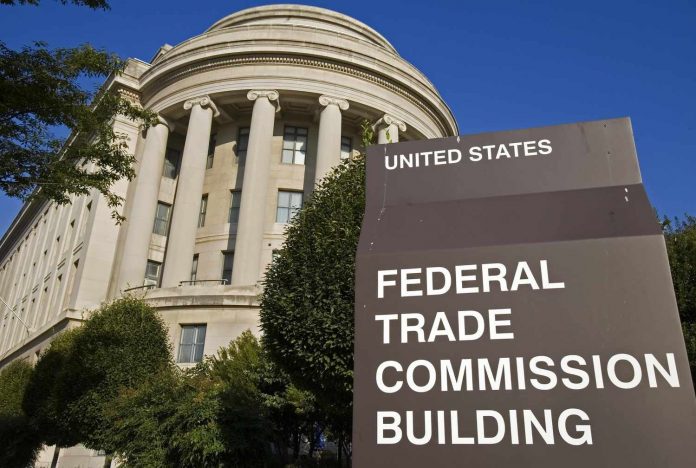
FTC Nears Potential Lawsuit Against YouTube Over User Account Suspensions, Bloomberg Reports

0

The U.S. Federal Trade Commission is in the final stages of an investigation into whether Alphabet’s YouTube violated consumer protection laws through its handling of user account suspensions and content moderation, potentially setting up another major regulatory challenge for the Google-owned video platform.

The FTC has been examining YouTube since last year and is preparing a potential lawsuit, Bloomberg reported on Thursday, citing people familiar with the matter. The investigation is focused on whether YouTube’s enforcement of its own user policies may have misled consumers or violated federal consumer protection rules.

According to the report, regulators are examining whether YouTube removed or demoted content in ways that were inconsistent with the policies presented to users. The agency is also investigating whether people could have been induced to sign up for the platform believing certain types of content were permitted, only to have their posts removed or their accounts suspended later.

The potential case is expected to go beyond individual moderation decisions. The FTC appears to be examining whether YouTube’s representations about how its platform operates were sufficiently clear and whether the company’s enforcement practices matched those representations.

YouTube has previously faced intense scrutiny over decisions to suspend prominent accounts and remove content. Following the January 6, 2021, attack on the U.S. Capitol, YouTube suspended the account of then-President Donald Trump. The platform reinstated his account in 2023.

The company has also removed content it determined violated its policies on COVID-19 and vaccine misinformation, placing YouTube at the center of the broader political and legal debate over how large technology platforms regulate speech.

If the FTC ultimately files a complaint, Alphabet could seek to resolve the matter through a settlement or contest the allegations in federal court. A lawsuit would also potentially force YouTube to defend the consistency and transparency of its content moderation policies, rather than simply individual enforcement decisions.

FTC spokesman Joe Simonson did not confirm or deny the investigation. Responding to questions about the report, he said that “leaks will never stop or slow a single law-enforcement investigation or litigation at the FTC,” according to Bloomberg, adding that such leaks would be referred to authorities for investigation.

The investigation also comes against the backdrop of a broader shift in the FTC’s approach to major technology platforms under Republican Chair Andrew Ferguson.

Ferguson has previously expressed interest in examining whether social media companies violated their own policies or coordinated in ways that affected political speech. He has argued that major platforms restricted or removed content concerning issues including COVID-19’s origins, mask mandates, vaccine safety, transgender issues and the integrity of the 2020 election.

That position could give the YouTube investigation broader significance if the agency ultimately focuses on how the platform applies its policies to politically sensitive content.

For Alphabet, the potential case adds another layer of regulatory risk to a company already facing scrutiny across several parts of its business. YouTube is one of Google’s most important consumer platforms, with its enormous user base and advertising business making its content moderation policies commercially significant as well as politically contentious.

The core issue for regulators will be whether YouTube has sufficient discretion under its terms of service to remove content and suspend accounts, or whether the way those rules are communicated and enforced could constitute deceptive or unfair conduct under consumer protection law.

A lawsuit would therefore have implications beyond YouTube. If regulators establish that a major platform can face consumer protection liability for allegedly inconsistent enforcement of its stated policies, other social media and online services could face pressure to provide greater clarity around moderation rules, enforcement procedures and account appeals.

Alphabet shares were little changed in after-hours trading on Thursday after ending the regular session 0.4% lower.

The FTC has not publicly announced charges against YouTube, and the reported investigation does not establish that the company violated any law. The agency could still decide against filing a lawsuit, or the matter could be resolved without an admission of wrongdoing.