DD
MM
YYYY

PAGES

DD
MM
YYYY

spot_img

PAGES

Home Blog Page 774

Palantir Blows Past $1bn Revenue Mark as AI Demand and Trump-Era Contracts Power Growth

0

Palantir Technologies surged past Wall Street’s expectations in the second quarter of 2025, posting $1 billion in revenue for the first time — a milestone that analysts had not anticipated until late in the year.

The strong performance, propelled by soaring demand for artificial intelligence software and an influx of U.S. government contracts, sent shares up over 4% on Monday and helped push the company’s market capitalization beyond $379 billion, making it one of the 10 most valuable tech firms in the U.S.

The Denver-based company reported adjusted earnings per share of 16 cents, beating the 14 cents that analysts projected. Revenue climbed 48% year-on-year to exactly $1.00 billion, outpacing estimates by $60 million.

“We’re planning to grow our revenue … while decreasing our number of people,” CEO Alex Karp told CNBC, describing the company’s direction as a “crazy, efficient revolution.” Karp said the goal is to reach 10 times the current revenue with just 3,600 employees, compared to the current headcount of 4,100. He stopped short of saying whether job cuts were imminent.

Palantir’s results were driven by a sharp rise in U.S. government and commercial spending. U.S. revenues jumped 68% to $733 million, while U.S. commercial business nearly doubled to $306 million. The company said it closed 66 deals worth at least $5 million and 42 deals worth $10 million or more during the quarter. Total contract value rose 140% to $2.27 billion.

The company credited part of its momentum to President Donald Trump’s push for greater government efficiency, which involved slashing contracts and cutting staff across federal agencies. Those changes, Palantir said, opened up a new lane for its government-facing services, particularly as agencies turn to automation and artificial intelligence to streamline operations. Revenues from U.S. government agencies rose 53% to $426 million.

Palantir also raised its full-year guidance. It now expects revenue between $4.142 billion and $4.150 billion, significantly up from its earlier range of $3.89 billion to $3.90 billion. For the third quarter alone, the company is projecting revenue between $1.083 billion and $1.087 billion, again beating analysts’ expectations of $983 million.

Operating income and free cash flow guidance were both lifted as well, signaling strong internal confidence in the company’s near-term profitability.

In a letter to shareholders, Karp described Palantir’s recent climb as “a reflection of the remarkable confluence of the arrival of language models, the chips necessary to power them, and our software infrastructure.” The company has become a standout beneficiary in the AI race, especially amid broader corporate and governmental adoption of large language models and real-time data analytics.

Palantir’s net income more than doubled to $326.7 million, or 13 cents a share, compared to $134.1 million, or 6 cents a share, in the same quarter a year earlier.

Investors have piled into Palantir stock this year on the back of its AI tools and defense contracts. Shares have more than doubled, and the company now commands a valuation higher than tech mainstays like Salesforce, IBM, and Cisco. However, that momentum has come with a steep price tag: shares trade at 276 times forward earnings — a premium exceeded only by Tesla among the top 20 most valuable companies in the U.S.

With market expectations reset and political momentum behind government tech upgrades, Palantir is positioning itself not just as a dominant AI company, but one shaping the backbone of digital governance in Trump’s second term.

Google Cuts AI Data Center Power Use to Ease U.S. Grid Strain, Underlining How Energy Struggles Could Undermine AI Expansion

0

As the artificial intelligence revolution accelerates, the United States is confronting a growing crisis: not in innovation, but in energy.

Google has reached agreements with Indiana Michigan Power and the Tennessee Valley Authority to scale back data center electricity use during peak periods, underscoring a deepening problem: America’s grid is buckling under the pressure of AI’s rapid expansion.

The deals mark the first time Google has formally committed to curbing power use tied directly to machine learning workloads—arguably the backbone of today’s AI systems. It’s a response to rising concerns that Big Tech’s AI arms race is outpacing the nation’s energy capacity, and the decision signals that even giants like Google now see flexibility, not just speed, as crucial to AI infrastructure.

“We’re participating in demand-response programs to temporarily reduce our electricity usage during grid stress,” the company said. The move, it added, could accelerate data center integration, reduce the need for new power infrastructure, and support grid stability.

According to Reuters, the programs involving AI activity in data centers are generally new, and details of the commercial arrangements between Google and the utilities were not clear.

While demand-response agreements apply only to a small portion of demand on the grid, the arrangements might become more common as the U.S. electricity supply tightens.

However, the broader implication is that the U.S. power grid, once taken for granted, is emerging as a major bottleneck in the race to dominate AI. Utilities nationwide are overwhelmed with energy requests from data center developers, with demand now eclipsing total available electricity in some areas. That’s raising fears of blackouts, surging bills for ordinary consumers, and in some regions, an outright halt to new power hook-ups.

The development also highlights the strategic gap between the United States and China in the global AI competition. While the U.S. leads in foundational AI models and venture capital, China has invested heavily in energy infrastructure and modernization, giving it a significant edge in sustaining large-scale AI operations. Chinese data centers, often integrated with state-backed renewable energy and supported by aggressive industrial policy, are less constrained by the energy limitations increasingly plaguing American tech hubs.

So far, Washington has struggled to find a cohesive solution to the emerging crisis. Despite a growing consensus that AI innovation must be coupled with sustainable energy investment, the U.S. remains stuck in a policy bind. President Donald Trump’s energy policies—which weakened clean energy mandates and prioritized fossil fuel production—have left the country’s clean tech sector underfunded and underdeveloped.

While Trump continues to enjoy strong support from the energy industry, his opposition to climate-related investment is seen by many as undercutting America’s long-term AI competitiveness.

Solar energy has been touted as a potential answer to the U.S. energy shortfalls. Advocates say it offers the scalability needed to power the future of AI—if only the political will and investment can catch up.

Elon Musk, founder of xAI and long-time solar champion, emphasized the untapped potential of solar-based energy.

“Earth already receives about the same energy from the Sun in an hour than humanity consumes in a year,” Musk said recently. “Solar panels just need to catch a tiny amount of it to power our entire civilization!”

But scaling solar and building the battery storage and transmission to match requires a long-term commitment that the U.S. has so far struggled to maintain. Without a nationwide overhaul of energy priorities, industry insiders warn that AI growth could hit a ceiling far sooner than expected, not because of innovation limits, but because the power simply isn’t there.

Engineering Firms In Germany Are Facing Declining Orders Due To Tariffs Uncertainties

0

German engineering firms are facing a decline in orders, largely driven by tariff-related uncertainties, particularly with the United States. In June 2025, engineering orders dropped 5% year-over-year, with both domestic and foreign demand falling by the same percentage.

This was attributed to trade tensions, notably a 15% U.S. tariff on EU goods, which has created planning challenges for firms. The VDMA, a key engineering industry group, noted that while eurozone demand surged 16%, it was offset by a 13% drop from non-eurozone countries. Over the April-June quarter, orders fell 2%, primarily due to the U.S.-EU tariff dispute.

Firms like WIWA, which exports components to the U.S., are grappling with increased costs from a 20% tariff on European goods, forcing tough choices between absorbing costs or scaling back operations. The broader context shows Germany’s machinery exports to the U.S., worth €27.4 billion in 2024, are critical, with 60% of firms expecting significant impacts.

Some, like Deutz, plan to pass these costs to U.S. customers, potentially raising prices and risking market share. Meanwhile, EU countermeasures and negotiations aim to mitigate the damage, but clarity remains elusive, and fears of a deeper trade war loom.

The German auto market has experienced a rally in 2025, with the DAX index climbing 21% from its April 7 low, driven partly by a temporary 90-day pause on reciprocal U.S. tariffs announced on April 9, 2025. This relief led to significant gains in auto stocks, with Mercedes-Benz, Volkswagen, and BMW seeing nearly 20% surges, reversing earlier losses.

However, persistent tariff concerns pose significant implications for this rally and the broader German automotive industry, which accounts for 17% of Germany’s total exports and is a cornerstone of its export-oriented economy. The 25% U.S. tariffs on cars and auto parts, implemented in April 2025, significantly raise costs for German automakers, who exported €21.8 billion worth of vehicles to the U.S. in 2024.

These tariffs, applied to vehicles and parts from the EU, Mexico, and Canada, force companies like Volkswagen, BMW, and Mercedes-Benz to either absorb costs or pass them on to U.S. consumers, potentially increasing vehicle prices by $4,000 to $15,000 depending on the model. This could dampen U.S. demand, which is critical as 24% of Germany’s extra-EU automotive exports go to the U.S. Higher prices risk squeezing consumers out of the market.

German car exports to the U.S. dropped 13% in April and 25% in May 2025, with only 64,300 vehicles shipped over these months. This decline, driven by tariffs, threatens the sustainability of the market rally, as the U.S. is the second-largest export market for German automakers like Volkswagen (379,000 vehicles sold in 2024).

Production shifts to the U.S. are constrained by limited spare capacity—Volkswagen’s Chattanooga plant can only add 20,000 vehicles annually, and BMW and Mercedes face similar limits. Redirecting exports to other markets like China or the EU is challenging due to differing consumer preferences, logistical barriers, and rising competition, potentially leading to a 4% production drop in Germany.

The globalized nature of automotive supply chains exacerbates tariff impacts. German automakers rely on parts from Mexico, Canada, and the EU, and tariffs on components like engines and transmissions (e.g., BMW shipping engines from Germany to South Carolina) increase production costs. Smaller Tier 2 and Tier 3 suppliers may struggle to absorb these costs, risking insolvencies and further disrupting supply chains.

The DAX’s rally reflects optimism from the tariff pause, but ongoing uncertainty keeps markets volatile. After the initial tariff announcement, Volkswagen, BMW, and Mercedes stocks lost 6-8% in five days, and despite recent gains, shares fell over 3% after a July 2025 U.S.-EU trade agreement reduced tariffs to 15%. The German auto industry, already in crisis with Volkswagen closing factories and cutting jobs, faces further strain.

The Kiel Institute estimates a 4% production drop could exacerbate unemployment, while the IW predicts a €200 billion economic loss over four years, equivalent to a 1.5% GDP drop. Some automakers are exploring production shifts to the U.S., but building new plants takes years and faces labor shortages. Luxury brands like Porsche, heavily reliant on U.S. sales (40% of its market), may fare better due to customers’ willingness to absorb price hikes, but mass-market brands like Volkswagen face tougher choices.

Diversifying to markets like China is an option, but slow reaction times mean short-term losses are likely, potentially capping the rally’s momentum. The EU is considering countermeasures, including a 25% tariff on U.S. auto imports, which could hurt German firms like BMW and Mercedes that produce in the U.S. for export. A broader trade war, especially if Trump imposes threatened 30% tariffs on the EU, could segment global auto markets.

While the tariff pause has fueled a German auto market rally, the underlying tariff concerns create a fragile outlook. Higher costs, reduced exports, supply chain disruptions, and potential trade wars threaten to undermine gains, with economic losses and job cuts adding pressure.

Bürgergeld’s Comprehensive Coverage Far Exceeds Poland’s, But Cost-Cutting Pressures Could Push Germany Toward A Leaner Model

Meanwhile, German Economy Minister Katherina Reiche is pushing for reforms to the Bürgergeld, Germany’s basic income support scheme, due to rising costs. In 2024, the state paid €46.9 billion to 5.5 million recipients, up €4 billion from the previous year, partly due to inflation adjustments in 2023 and 2024.

Reiche, a member of the Christian Democrats (CDU), emphasizes that work must be more financially rewarding than staying unemployed, stating, “Those who go to work must feel that they have more in their pockets at the end of the day than those who do not.”

The governing coalition, including the Social Democrats (SPD), agrees on the need for reform. SPD’s Dirk Wiese supports stricter sanctions for system abuse and highlights the need for a higher minimum wage and better collective bargaining, noting many recipients work but still need income supplements. The coalition is also debating cuts of €1-2 billion to Bürgergeld and other benefits, with proposed sanctions for missing job center appointments.

Cutting €1-2 billion from Bürgergeld aims to ease fiscal pressure, as costs rose to €46.9 billion in 2024. This could free up funds for other priorities, like infrastructure or tax relief, but risks reducing support for vulnerable populations. Stricter sanctions and a focus on making work more financially rewarding than benefits aim to boost employment. However, if low-wage jobs remain unattractive, the reforms may not significantly reduce dependency, especially for the 40% of recipients who work but still require supplements.

Without addressing low wages or collective bargaining, as highlighted by SPD’s Dirk Wiese, reforms may fail to incentivize work. Raising the minimum wage could offset benefit cuts but risks increasing labor costs for businesses, potentially impacting small enterprises. Critics like SPD’s Dagmar Schmidt argue that cuts could exacerbate poverty, especially for those unable to find stable, well-paying jobs. Reduced benefits may strain low-income households, particularly amid rising living costs.

Stricter sanctions for missing job center appointments could alienate recipients, fostering perceptions of unfairness if job opportunities or training programs are inadequate. This risks social unrest or distrust in institutions. Without investment in upskilling, reforms may push recipients into low-skill, low-pay jobs, limiting long-term economic mobility.

The CDU-SPD coalition shows agreement on reform needs but differs on execution. The SPD’s push for higher wages and collective bargaining contrasts with CDU’s focus on cost-cutting, potentially straining coalition dynamics. Reforms could boost support among voters prioritizing fiscal discipline but alienate those who view Bürgergeld as a social safety net. Opposition parties may capitalize on public discontent if cuts are seen as punitive.

With Germany’s economic challenges, including stagnant growth, reforms perceived as unfair could fuel support for populist parties like AfD, especially if unemployment rises. Nordic countries combine generous welfare benefits with active labor market policies (ALMPs). Denmark’s “flexicurity” model offers high unemployment benefits (up to 90% of previous income for two years) but requires job training and active job-seeking. –

Strong emphasis on upskilling, job placement, and flexibility for employers to hire/fire, balanced by robust social safety nets. Denmark’s success in low unemployment (4.8% in 2024) suggests Germany could pair Bürgergeld cuts with increased investment in training and job placement. However, Nordic models require high taxes, which may face resistance in Germany’s current fiscal climate.

Bürgergeld’s flat-rate payments (€563/month for a single person in 2024) are less generous than Denmark’s income-based benefits, but Germany’s proposed sanctions mirror Nordic enforcement of job-seeking rules. Welfare systems in Spain and Italy are less comprehensive, with lower coverage and benefits. Spain’s Minimum Vital Income supports 700,000 household (2024), far fewer than Bürgergeld’s 5.5 million recipients.

Italy’s Reddito di Cittadinanza was scaled back in 2023 due to costs and fraud concerns. Means-tested benefits with regional variations, often criticized for bureaucratic inefficiencies and limited job integration programs. Italy’s experience with scaling back benefits highlights risks of social backlash and limited impact on employment if job creation lags. Germany could avoid this by ensuring reforms include robust job support, unlike Spain’s underfunded ALMPs.

Bürgergeld’s broader coverage and centralized administration are more efficient than Southern Europe’s fragmented systems, but Germany risks similar criticism if cuts disproportionately affect vulnerable groups. The UK’s Universal Credit integrates multiple benefits, serving 6.7 million people in 2024. Payments are modest (£368/month for a single person over 25), with strict conditionality (e.g., 35-hour weekly job search requirements).

Emphasis on reducing dependency through sanctions and in-work benefits, but criticized for increasing poverty due to low payment levels. The UK’s focus on in-work benefits aligns with Reiche’s goal of making work pay, but Universal Credit’s punitive sanctions have led to destitution for some. Germany could adopt tapered benefit reductions to ease transitions to work without harsh penalties.

Bürgergeld’s higher payment levels and focus on dignity contrast with Universal Credit’s austerity-driven approach, but proposed sanctions risk converging toward the UK’s stricter model. Poland’s welfare system is minimal, with unemployment benefits covering only 15% of the unemployed (2024), lasting 6-12 months at low rates (€350/month initially). Social assistance focuses on family benefits.

Low spending (0.5% of GDP vs. Germany’s 1.3%) and reliance on economic growth to reduce poverty, with limited ALMPs. Poland’s lean system keeps costs down but leaves gaps in coverage, unsuitable for Germany’s larger, more diverse population. Germany’s reforms should avoid Eastern Europe’s underinvestment in social support to maintain social stability.

Bullish Aims for $4.2B Valuation in Second IPO Bid, Riding Wave of Trump-Era Crypto Policies

0

Crypto exchange Bullish has launched its initial public offering (IPO) roadshow, targeting a valuation of up to $4.23 billion, as digital asset firms regain investor confidence amid a policy renaissance under the Trump administration.

The company plans to raise as much as $629.3 million by offering 20.3 million shares priced between $28 and $31 each, according to a filing with the U.S. Securities and Exchange Commission on Monday.

The IPO marks Bullish’s second attempt to go public, following a scrapped $9 billion SPAC merger in 2022 that collapsed under the weight of regulatory uncertainty. Now, with a friendlier political environment, the firm appears better positioned to succeed. At the top of the proposed range, the valuation still comes in more than 50% below its 2021 peak, but analysts say that may be a calculated move to generate upward momentum.

“When an IPO begins marketing, the bankers would rather undershoot on valuation and then price up, rather than overshoot and price down,” said Matt Kennedy, senior strategist at Renaissance Capital.

Trump’s Pro-Crypto Posture Boosts Confidence

Bullish’s renewed push to list in the U.S. comes at a pivotal time for the broader crypto sector. President Donald Trump’s administration has made a series of high-profile moves to legitimize and support the cryptocurrency and blockchain ecosystem—a reversal from previous cycles marked by regulatory hostility.

Among the most consequential steps is the signing of the GENIUS Act earlier this year. The legislation establishes a national framework for the regulation of stablecoins, clarifies how digital assets should be classified, and encourages the development of blockchain infrastructure across various industries. The law has been praised for offering clarity to both issuers and investors, unlocking a wave of venture capital and IPO activity not seen since 2021.

In addition, the Trump administration has:

  • Appointed pro-crypto figures to key financial regulatory positions, including individuals sympathetic to decentralized finance (DeFi) and blockchain development.
  • Pressed federal agencies such as the SEC and CFTC to accelerate their coordination on crypto policy, reducing regulatory fragmentation.
  • Proposed tax reforms that would ease reporting requirements for small-scale crypto transactions, removing a barrier to consumer-level adoption.
  • Fast-tracked AI and blockchain R&D funding, with crypto infrastructure specifically cited as a national interest under a new federal innovation roadmap.

These moves have sharply contrasted with the regulatory gridlock and enforcement-first approach seen during prior administrations, sparking what many in the industry are calling a second crypto boom in the U.S.

Bullish Rides the Wave

Bullish is one of the latest firms seeking to ride this regulatory tailwind. Backed by billionaire Peter Thiel, the company operates a crypto trading platform aimed at institutions. It also owns CoinDesk, the prominent digital asset news outlet it acquired from Barry Silbert’s Digital Currency Group in 2023.

Its CEO, Thomas Farley, formerly presided over the New York Stock Exchange and brings deep Wall Street experience to the crypto arena. Bullish is aiming to list on the NYSE under the ticker BLSH, with J.P. Morgan, Jefferies, and Citigroup serving as lead underwriters.

According to its IPO filing, the company plans to convert a significant portion of its offering proceeds into USD-backed stablecoins through partnerships with one or more leading issuers. This echoes the recent strategy used by Circle Internet, a major stablecoin issuer that had a blockbuster IPO in June and is now trading more than 400% above its debut price.

Despite recent losses—Bullish posted a $349 million deficit for the quarter ending March 31, compared with a $105 million profit a year earlier—investors are focusing on long-term fundamentals. As Kennedy of Renaissance Capital noted, “Investors will focus on how efficient [Bullish is] and how profitable it is as a pure exchange, without the impact of quarterly price changes.”

A New Chapter for Crypto IPOs

Bullish’s public offering is the clearest sign yet that crypto firms are regaining access to U.S. capital markets, a privilege that looked increasingly unlikely just a few years ago. While digital asset prices remain volatile, regulatory clarity and executive-level backing from Washington are injecting fresh energy into the sector.

With Trump’s administration laying out what some call the most crypto-friendly policy landscape in U.S. history, companies like Bullish may now find the environment finally supportive enough to scale, list, and deliver on their original promises to investors.

If successful, Bullish’s IPO could serve as a bellwether for others waiting on the sidelines, marking the beginning of a renewed era of U.S.-anchored crypto finance.

Lyft Partners with Baidu to Launch Robotaxis Across Europe in Major Expansion Drive

0

Lyft has announced a landmark partnership with Chinese tech giant Baidu to launch autonomous robotaxi services across Europe, beginning in 2026.

The collaboration marks Baidu’s first foray into the European self-driving taxi market and represents a significant leap for Lyft as it ventures outside its North American home turf.

The joint rollout will begin in Germany and the United Kingdom, contingent on regulatory approval, with Baidu’s electric RT6 robotaxis operating on Lyft’s mobility platform. The two companies plan to expand the service to thousands of vehicles across Europe in the years ahead.

Lyft’s expansion is backed by its recent $200 million acquisition of FreeNow, a European mobility app formerly co-owned by BMW and Mercedes-Benz. FreeNow has established operations in over 180 cities across nine European countries and boasts strong regulatory relationships. Lyft executives say this foundation will play a critical role in navigating Europe’s complex transportation oversight.

“What we’re excited about with FreeNow is they have a deep, long-lasting relationship with regulators, and we want to go and have those conversations about how we do this,” said Lyft Executive Vice President of Driver Experience, Jeremy Bird.

Under the partnership, Lyft will manage customer services and fleet logistics, while Baidu will supply its autonomous RT6 vehicles and technical expertise. The RT6, Baidu’s latest-generation robotaxi, is equipped with a detachable steering wheel and advanced sensors, making it well-suited for complex urban driving scenarios.

The move comes as the UK government accelerates its push to bring robotaxis to public roads, aiming to allow services with paying passengers as early as spring 2026. Germany has also taken steps to create a legislative and regulatory framework for self-driving cars, making both countries strategic entry points for autonomous mobility firms.

Baidu’s Apollo Go platform currently operates over 1,000 autonomous vehicles across 15 cities in China, having completed more than 11 million rides. While it has been experimenting with robotaxi pilots in parts of Asia and North America, the Lyft partnership represents Baidu’s first commercial push into the European market.

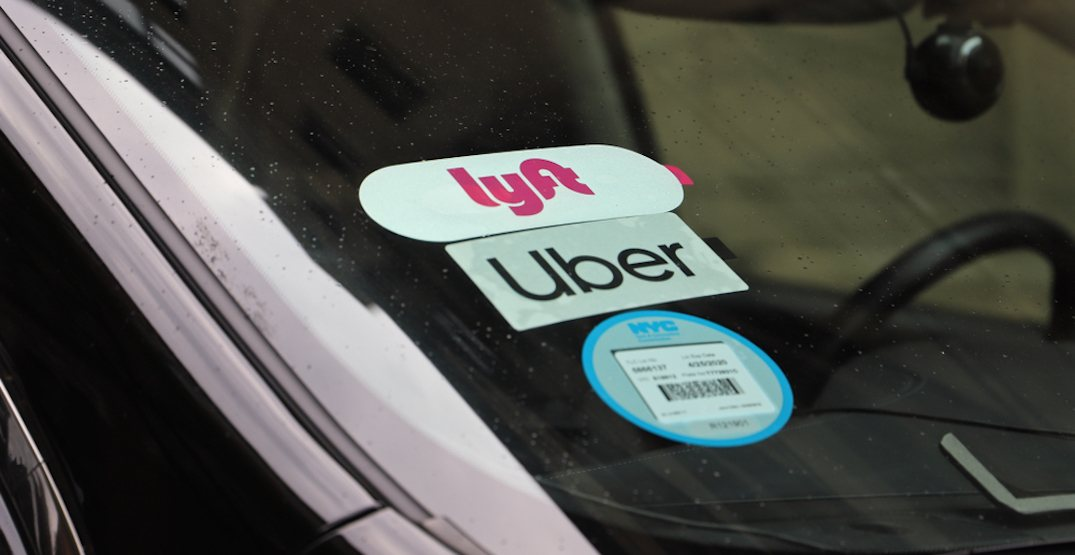
The timing is critical for Lyft, which has faced growing pressure to expand its autonomous capabilities amid competition from rival Uber. Uber has formed partnerships with companies like Waymo, Pony.ai, WeRide, and Momenta to prepare for robotaxi deployment in Europe, with its own services expected to launch around the same time in 2026.

In June, Uber and Waymo officially launched autonomous ride-hailing services in Atlanta, just as Tesla began testing its own low-cost driverless cars in Austin.

In July, Uber announced a sweeping new partnership with electric vehicle maker Lucid and self-driving tech startup Nuro to develop and deploy more than 20,000 robotaxis across the United States over the next six years.

Under the agreement, Uber will invest $300 million in Lucid, which will manufacture the electric robotaxis.

However, the race to establish a foothold in Europe’s emerging robotaxi sector is intensifying. Analysts say the Lyft-Baidu collaboration could be a powerful combination of operational scale and technical innovation. Baidu brings one of the most sophisticated autonomous driving stacks in the world, while Lyft leverages FreeNow’s market penetration and regulatory goodwill.

However, success will depend heavily on securing regulatory approvals and public trust, both of which remain hurdles in Europe’s tightly regulated transportation sector.

If successful, the Lyft-Baidu rollout could reshape how people in major European cities commute, giving the two companies a head start in what is shaping up to be the next frontier of urban mobility.