DD
MM
YYYY

PAGES

DD
MM
YYYY

spot_img

PAGES

Home Blog Page 774

The Crypto Wallet That Pays You Back: Inside Cold Wallet’s $5.65M Presale, 680M Tokens Sale & 3,700% Upside!

0

Cold Wallet is not just another name in crypto. It is a full-stack shift in how users engage with Web3. While most wallets still focus on design upgrades, Cold Wallet is building real features that matter.

Its reward system pays users instantly for swaps, gas, and movement. The 150-stage presale structure adds predictability, while the $270 million Plus Wallet acquisition brings scale from the start.

With crypto momentum returning in 2025, Cold Wallet ($CWT) is quickly moving from underrated to unmissable. For those seeking the best crypto to buy in 2025, this project is stepping into the spotlight fast.

150 Presale Stages, $0.00942 Price: Cold Wallet Aims for 3,700% ROI

Cold Wallet’s presale is a calculated sprint, not a guessing game. With 150 total stages and a launch target of $0.3517, the math speaks clearly. Stage 16 is now live at just $0.00942, and with each stage jump, the price edges closer to the final benchmark. That sets up a 3,700% ROI for early buyers, but only if they act before the next wave pushes it higher.

Momentum is already building fast. Over $5.65 million has been raised and 680 million tokens are gone. Cold Wallet’s structure removes uncertainty and replaces it with predictability. The rules are set, the prices are public, and the rewards are scaled. Each new price stage reduces the window for entry, locking in stronger returns for those already in.

Gas, Swaps, Rewards: Cold Wallet Makes Every Move Count

Cold Wallet flips the script on traditional wallets. Every time a user makes a transaction, pays a gas fee, or swaps tokens, they earn CWT back instantly. With cashback rates ranging from 10% to 100% based on holdings, users are rewarded just for staying active. No staking, no waiting, and no hidden requirements.

This is not a superficial perk. It is a permanent feature of the core experience. Wallet actions turn into daily earnings without effort. For those exploring the best crypto to buy in 2025, Cold Wallet’s utility delivers unmatched daily value with zero complexity.

From Acquisition to Action: 2 Million Users Already Onboarded

Cold Wallet is not just building from the ground up. It already has a head start. The recent $270 million acquisition of Plus Wallet brought in more than 2 million users who are now being seamlessly integrated into the Cold Wallet platform.

These users gain access to the CWT ecosystem immediately, including real-time cashback and presale benefits. This level of user base at such an early phase is rare. For anyone searching for the best crypto to buy in 2025, Cold Wallet’s scale and built-in momentum set it apart from typical early-stage launches.

Referral Engine Pays in USDT and Presale-Linked CWT Bonuses

Cold Wallet’s referral system turns word of mouth into active revenue. Anyone referring new users during the token presale receives instant USDT payouts and bonus CWT allocations tied to the live presale price. The rewards arrive without delay, offering immediate upside for those spreading the word.

This mechanism builds a network effect while rewarding participation. As the price moves toward the next level of $0.00998, each referral is more valuable. With over $5.65 million raised and 680 million tokens sold, Cold Wallet’s design rewards both users and promoters alike, making it one of the best crypto plays for 2025.
Key Points

Plenty of projects talk big, but Cold Wallet delivers where it counts. With over $5.65 million raised and 680 million tokens already sold, its Stage 16 presale price of $0.00942 offers a clear path toward a $0.3517 launch. That means early participants are staring at a 3,700% ROI, and the window is closing fast.

Its $270 million Plus Wallet acquisition adds 2 million users, and the wallet’s built-in cashback of up to 100% makes it usable from day one. For anyone hunting the best crypto to buy in 2025, Cold Wallet is the one to move on before the next stage hits.


Explore Cold Wallet Now:

Presale: https://purchase.coldwallet.com/

Website: https://coldwallet.com/

X: https://x.com/coldwalletapp

Telegram: https://t.me/ColdWalletAppOfficial
Starlink Launches in Somalia, Ushering in A New Era of Connectivity

0

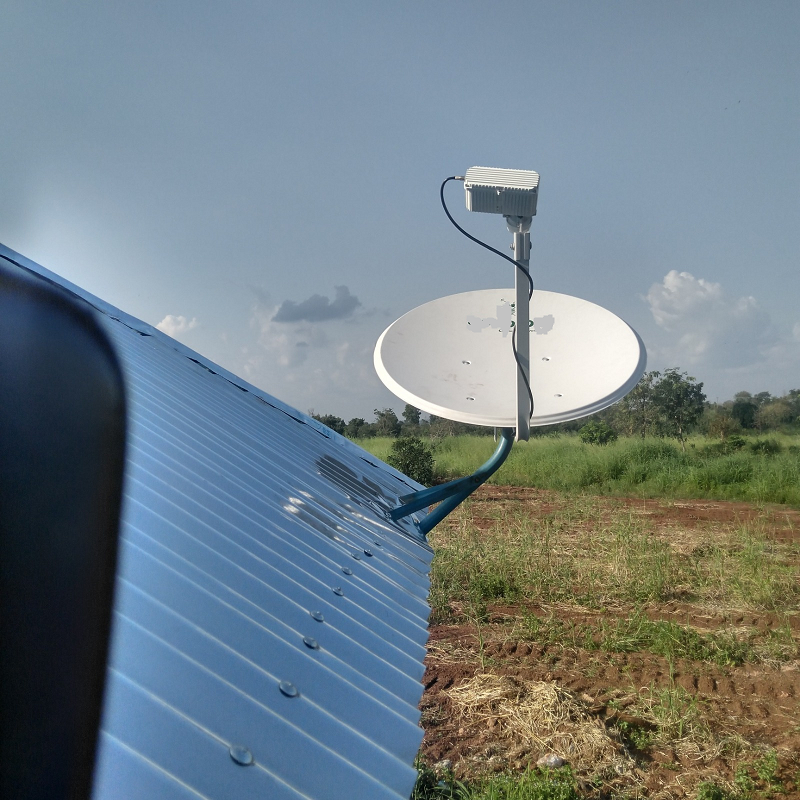
Elon Musk-owned satellite internet Starlink has officially launched operations in Somalia, ushering in a new era of connectivity in one of the most underserved nations.

The service now available in the Eastern African country marks a transformative moment for digital access in remote and rural communities.

Announcing the expansion to Somalia, the company wrote on X,

“Starlink’s high-speed, low-latency internet is now available in Somalia!”

This rollout comes after the National Communications Authority (NCA) of Somalia in April 2025, officially granted operational license approval for Starlink to launch its services. The announcement was made during a formal ceremony in Mogadishu, attended by representatives from Starlink and government officials.

Speaking at the launch event, Mustafa Yasin Sheik, Director General of the NCA, stated,

“Starlink’s entry into Somalia represents a significant milestone in our efforts to bridge the digital divide in our country, this partnership will especially benefit individuals and institutions in rural areas, where internet access has been extremely limited”.

The Minister of Communications and Technology, H.E. Mohamed Mo’allim, who also attended the event, expressed the government’s support.

He said,

“We welcome Starlink’s entry to Somalia. This initiative aligns with our vision to deliver affordable and accessible internet services to all Somalis, regardless of where they live.”

Starlink to Enhance Internet Connectivity in Somalia

The introduction of Starlink is expected to enhance internet coverage and significantly improve digital inclusion nationwide. Major cities like Mogadishu, Hargeisa, and Bosaso are now connected as are rural and coastal regions.

Internet connectivity in Somalia has seen significant progress in recent years, driven largely by private sector investment and innovative policies, but challenges remain, particularly in rural areas and due to ongoing security issues.

As of January 2023, Somalia had approximately 1.76 million internet users, representing an internet penetration rate of about 9.8% of the population (17.87 million). Decades of conflict have left fixed-line infrastructure underdeveloped, with mobile networks filling the gap. Rural areas often lack coverage, relying on expensive satellite links or travel to urban centers.

Starlink’s entry has been welcomed for enhancing connectivity in remote areas. The satellite internet holds significant potential to address the country’s internet connectivity challenges, particularly in underserved and remote areas.

Notably, Starlink’s low-Earth orbit (LEO) satellite network bypasses the need for extensive ground infrastructure, delivering high-speed (100–200 Mbps) and low-latency (20–40 ms) internet to remote and conflict-affected areas. This enables connectivity in regions where traditional providers like Hormuud Telecom struggle to expand due to cost and security issues. For example, areas like Hargeisa, Bosaso, Galkayo, Berbera, and Garowe now have access to instant satellite internet

However, while it offers transformative opportunities, it does not fully solve the connectivity issues due to persistent barriers like affordability, security, and logistical challenges. Affordability remains the biggest barrier, with costs far exceeding what most Somalis can pay, potentially limiting its impact to wealthier or institutional users unless subsidies or community-based models are implemented.

Starlink’s ambition to revolutionize internet connectivity in Africa is a bold endeavor, leveraging its low-Earth orbit (LEO) satellite technology to deliver high-speed, low-latency internet to a continent where connectivity challenges such as low penetration rates, high costs, and infrastructure gaps persist.

With Starlink operational in 25 African countries as of August 2025, including Somalia, it is making significant strides toward this goal.

BlockDAG Offers Live Trading Access & $0.0016 Entry, While Pi Coin Focuses on Wallet Upgrades, Cardano Eyes $0.80

0

Finding meaningful value before a crypto launch is increasingly challenging. Cardano (ADA) is showing signs of recovery, hovering near key support levels with moderate upside in sight. Meanwhile, Pi Coin (PI) is gaining attention through recent wallet updates that aim to boost accessibility and usability. Both projects have made noteworthy progress, but neither currently puts real tools into the hands of users before public trading. BlockDAG (BDAG) stands out by taking a fundamentally different path.

By activating the code TRADEBDAG, buyers can explore a fully functional trading dashboard that connects directly with live presale activity. This platform allows users to experience trading conditions similar to post-launch, not in theory, but in practice. For anyone scanning crypto coins to watch, this kind of real-time access suggests deeper readiness beyond price predictions or interface upgrades.

TRADEBDAG Code Gives Buyers Live Experience Before Launch

Where most crypto presales depend on building anticipation, BlockDAG is offering a real-time experience. Using the access code TRADEBDAG, users unlock a live trading dashboard that simulates actual BDAG/USD trading. It includes real-time price charts, active order books, and simulated wallet balances that reflect user actions immediately, even before the coin lists on exchanges.

This is more than a visual demo. Buyers can watch market behavior unfold, experiment with strategies, and get a feel for price shifts and order placements. It becomes a hands-on training ground that also builds confidence ahead of the coin’s official debut.

The numbers support the momentum. BlockDAG has raised $363 million, distributed over 24.7 billion coins, and is currently priced at $0.0276 in batch 29. Those who joined at batch 1 have seen gains of 2,660% so far. However, a time-limited $0.0016 offer is now available, offering new buyers a chance to engage at an entry point rarely seen this late in a presale.

More than anything, BlockDAG’s approach moves beyond speculation. It transforms interest into action and provides users with a working model of the future platform. This clarity could be the edge buyers are looking for in a crowded field of projects.

Pi Coin (PI) Builds Access with Wallet Upgrades

The Pi Network has taken a step toward broader adoption through recent wallet updates designed to simplify buying and improve onboarding. One of the most notable additions is the new “BUY” button, now integrated with services like Banxa and Onramper, allowing users to purchase PI using Apple Pay, Google Pay, and debit cards.

These upgrades aim to remove friction for users entering the ecosystem, especially those less familiar with crypto. They also hint at future plans for multi-asset support, potentially transforming the Pi Wallet into a more versatile tool similar to major third-party wallets.

While Pi Coin still has yet to be listed on major exchanges, this evolution signals a push toward better user engagement and mainstream accessibility. It reflects a growing trend in Pi Coin crypto developments where usability is beginning to take center stage, even before full exchange rollout.

Cardano (ADA) Holds Key Support as Price Attempts to Rebound

Cardano has recently faced downward pressure, dropping from $0.83 to near $0.69 over a five-day period ending August 2. This marked six straight days of decline and pushed ADA to a key support zone. Since then, two days of positive momentum have helped ADA recover to approximately $0.73, suggesting a possible reversal.

Currently, ADA trades within a symmetrical triangle formation that stretches over multiple years. Analysts are watching closely, as a breakout above the $0.72 to $0.73 range could signal a move toward $0.75 and even $0.80. In a more bullish case, some models suggest ADA could touch $0.96 by the end of August if momentum builds and market sentiment turns favorable.

While ADA continues to show potential, the movement remains speculative. No new tools or ecosystem changes are giving users direct involvement during this phase, making the play largely price-dependent.

Why BlockDAG’s Model Is Gaining Ground Among Crypto Coins to Watch

While wallet improvements and price recoveries are important, they don’t always translate into user readiness. Pi Coin (PI) is expanding access, and Cardano (ADA) is building a possible recovery path. But neither offers users the ability to interact with live market conditions before public launch.

BlockDAG is changing that narrative. With its Trading Dashboard, accessible through the TRADEBDAG code, users gain hands-on control over how they engage with the coin before it hits exchanges. They can test trades, view live data, and actively participate in a simulated environment backed by actual presale activity.

For buyers focused on utility, not just upside, this model signals a shift. BlockDAG is building not just interest, but interaction. It transforms passive support into practical preparation and positions itself as one of the few crypto coins to watch that offers substance ahead of speculation.

Presale: https://purchase.blockdag.network

Website: https://blockdag.network

Telegram: https://t.me/blockDAGnetworkOfficial

Discord: https://discord.gg/Q7BxghMVyu

Tesla’s European Sales Crater as Chinese Rival BYD Soars

0

Tesla’s crisis in Europe has continued to deepen, with new data showing a dramatic plunge in car sales in key markets.

Figures published Tuesday by the U.K.’s Society of Motor Manufacturers and Traders (SMMT) revealed that Tesla’s new vehicle registrations fell nearly 60% year-on-year in July, slumping to just 987 units from 2,462 a year earlier.

In Germany, Europe’s largest economy, the collapse was just as steep—Tesla sold only 1,110 cars in July, down 55.1% from the same month in 2024. Between January and July, Tesla’s total sales in Germany dropped nearly 58% to just 10,000 units, according to data from the country’s road traffic agency, KBA.

In stark contrast, Chinese electric vehicle powerhouse BYD is rapidly expanding its foothold across Europe. In July alone, BYD sold 3,184 cars in the U.K., more than quadrupling its sales from the same month last year. In Germany, the company posted a staggering 390% year-on-year increase in sales, underlining its aggressive push into Europe’s competitive EV market.

The figures reinforce an unrelenting downward trajectory for Elon Musk’s automaker in Europe. Last month, data from the European Automobile Manufacturers Association showed that Tesla lost market share across the continent for the sixth consecutive month in June.

While Tesla has faced stiff price and product competition from BYD and other Chinese automakers, the U.S. company is also battling the consequences of its CEO’s political entanglements. Elon Musk’s increasingly vocal support for the Trump administration and his alignment with far-right political figures has caused significant reputational damage in liberal-leaning European markets. Analysts say that Musk’s polarizing rhetoric has alienated a substantial segment of Tesla’s traditional customer base, many of whom are environmentally conscious consumers who now view the brand with skepticism.

BYD, in turn, has been meticulous in capitalizing on this rift. The Chinese automaker is not only offering more affordable and competitively specced vehicles, but also building its brand on neutrality and accessibility. With no political baggage and a sharp focus on localized strategies, BYD is filling the vacuum Tesla once dominated.

Cybertruck has also turned from Tesla’s most anticipated model into one of its biggest disappointments. The vehicle’s production has been plagued by engineering flaws and quality control issues. Sales are collapsing. According to Cox Automotive, only 4,306 Cybertrucks were sold in the second quarter of 2025, a sharp 32% drop from Q1 and a staggering 50% decline year-over-year. Those figures are not just bad — they’re the worst Tesla has posted for any model over the course of a year.

Amid the freefall, Tesla has been exploring various avenues to reverse its fortunes. Musk recently announced plans to unveil a robotaxi on August 8, with hopes that autonomous vehicle technology might spark a new growth curve for the company.

Some analysts have bought into that hope.

Keith Fitz-Gerald, Chief Investment Officer at Fitz-Gerald Group, noted last month: “Betting against Elon Musk is like betting against Steve Jobs. Tesla could reach a $20 trillion valuation if it executes.”

Musk responded to the claim by saying: “Extreme execution is needed, but a $20 trillion valuation is possible.”

However, Musk has acknowledged that the company could face “a few rough quarters,” citing higher tariffs in Europe and the expiration of federal EV tax credits in the United States. But the scale of Tesla’s European collapse suggests the problem goes beyond regulatory or macroeconomic challenges.

Amazon’s Project Kuiper Secures Landmark Deal with Australia, Stepping Up Global Space Internet Race with Musk’s Starlink

0

Amazon has landed its first major customer for its satellite internet venture, Project Kuiper, in a landmark agreement with Australia’s state-owned National Broadband Network Company (NBN Co).

The deal will see Project Kuiper deliver satellite internet services to more than 300,000 homes and businesses in remote parts of Australia by mid-2026, a key step in Amazon’s challenge to SpaceX’s dominant Starlink service.

Under the partnership, Amazon’s yet-to-be-fully-deployed Project Kuiper will support NBN Co’s satellite infrastructure, offering much-needed internet access to Australians living in underserved rural and regional areas.

“Australia’s vast geography presents unique connectivity challenges that traditional infrastructure often can’t overcome,” said Joe Lathan, Project Kuiper’s country manager for Australia and New Zealand. “This partnership with NBN Co represents our commitment to solving these challenges through innovation and collaboration.”

While SpaceX’s Starlink has already established itself as a global leader in space-based internet—with over 8,000 satellites launched and commercial operations in more than 110 countries—Amazon is only at the early stages of deploying its Kuiper satellite constellation. So far, the company has launched just 78 satellites, with its next batch scheduled to go up on August 7. The full constellation is expected to comprise 3,236 satellites.

Although the NBN Co deal is the first announced major partnership for Project Kuiper, Amazon has said it plans to begin customer service by late 2025. Details on pricing and service areas have not yet been disclosed. Still, the agreement signals growing confidence in Amazon’s ambitions to become a major player in global broadband from space—a market that has rapidly accelerated as more governments and corporations invest in non-terrestrial connectivity solutions.

The move intensifies the race between Jeff Bezos and Elon Musk, two of the most powerful figures in space technology. Musk’s SpaceX, through its Starlink network, has surged ahead in building a global customer base, already reaching markets in Africa, Asia, the Americas, Europe, and Australia. Starlink’s early advantage stems from its aggressive launch schedule and integration with SpaceX’s Falcon 9 rocket, which allows for frequent and large-scale satellite deployments.

Bezos, on the other hand, is relying on his Blue Origin space company—along with other launch providers—to get Kuiper satellites into orbit. While delays in Kuiper’s rollout have slowed Amazon’s entry into the market, the deal with NBN Co marks a significant milestone, offering proof of government-level interest in Kuiper’s future capabilities.

For Australia, the agreement helps strengthen digital inclusion in far-flung regions where fiber and mobile connectivity remain impractical or unaffordable. For Amazon, it presents an opportunity to test and validate its satellite system on a national scale, while positioning Kuiper as a potential alternative to Starlink in future global partnerships.

As the world becomes increasingly reliant on low-earth orbit satellites to bridge connectivity gaps, the rivalry between Amazon and SpaceX is shaping into a defining battle in the next era of internet infrastructure—one fought not in data centers, but across the skies.

Though much remains unproven—especially around delivery timelines, performance benchmarks, and pricing—the deal significantly boosts Project Kuiper’s credibility. However, Amazon is expected to move quickly. SpaceX plans to increase its Starlink fleet and expand its services globally, including aviation and mobile partnerships, putting pressure on Bezos to deliver results soon.