DD
MM
YYYY

PAGES

DD
MM
YYYY

spot_img

PAGES

Home Blog Page 78

ChatGPT Indicates Ozak AI Could Reach $30 in a Multi-Year Arc, Turning Early Entries Into 214,000%+ Success Stories

0

Ozak AI ($OZ) is gaining rapid recognition as one of the most promising AI-powered crypto projects as new predictive models now including ChatGPT-based simulations indicate that the token could follow a multi-year trajectory toward the $30 range. Built on a fusion of artificial intelligence tools and decentralized physical infrastructure (DePIN), Ozak AI operates as a smart, scalable, cross-chain intelligence network designed to unlock long-term value. The project’s blend of automated analytics, decentralized compute, and token-driven growth positions it distinctively at the forefront of the next generation of AI crypto ecosystems.

Presale Momentum Builds as Early Pricing Enhances Future ROI Potential

The Phase-7 presale of Ozak AI continues to accelerate in strength, reflecting consistent demand from retail users and early-stage investors. With the token priced at $0.014, the project has now sold 1.10 billion $OZ, raising $5.85 million in funding. This momentum showcases strong confidence in Ozak AI’s fundamentals despite a cautious broader market environment.

Analysts note that early presale pricing provides a substantial entry advantage, especially when framed against the long-term listing target of $1.00 and a multi-year upward model projecting potential valuations as high as $30 by the late stages of the decade. For traders who recognize the exponential growth patterns that once propelled early ETH and SOL holders into life-changing ROI territories, Ozak AI now represents a similarly early-stage opportunity.

Core Technological Edge: AI Intelligence Layer Meets Decentralized Infrastructure

Ozak AI’s architecture is defined by its combination of AI-powered infrastructure and DePIN capabilities, allowing the network to process complex datasets, generate predictive analytics, and automate intelligence-driven workflows. This structure removes reliance on centralized servers, enabling Ozak AI to scale more efficiently as demand for on-chain AI grows across sectors such as trading, gaming, enterprise automation, and autonomous systems.

The project’s cross-chain compatibility ensures seamless interoperability across multiple blockchain ecosystems, strengthening its role as an adaptable intelligence layer. Token utility extends across staking, governance, and ecosystem-based rewards, allowing the community to participate meaningfully in growth while benefiting from long-term token appreciation. Reinforcing this foundation is the successful audit completed by @sherlockdefi, which reported zero outstanding issues and validated Ozak AI’s commitment to secure, transparent development.

Ecosystem Expansion Through High-Impact Partnerships and Global Visibility

A key driver of Ozak AI’s rising valuation models is its expanding network of strategic partnerships. The collaboration with Hive Intel (HIVE) significantly enhances data capabilities, giving Ozak AI access to rich, multi-chain insights from wallet behavior and NFT activity to DeFi flows and token metrics thereby improving the precision of its predictive systems.

The integration with Weblume extends Ozak AI’s utility into the development space by enabling creators to embed real-time AI-driven market signals directly into dashboards and decentralized applications without requiring deep technical expertise. This no-code compatibility accelerates adoption while transforming Ozak AI into a foundational layer for Web3 builders.

The partnership with Meganet, a rapidly growing decentralized bandwidth-sharing network with millions of active nodes, broadens Ozak AI’s computational bandwidth. The combination of Meganet’s distributed infrastructure and Ozak AI’s predictive agents supports high-speed analytics, efficient compute execution, and cost-effective data intelligence.

Why ChatGPT Models Predict a Multi-Year Rise Toward $30

The $30 projection does not arise from speculative marketing but from structural analysis. ChatGPT’s modeling incorporates multiple factors: early token pricing, presale velocity, infrastructure-based utility, partnership-driven expansion, and the macro trend of rising AI adoption. Unlike purely transactional tokens, Ozak AI is positioned as a scalable intelligence layer, allowing it to grow in parallel with the broader AI economy, an industry expected to expand exponentially through 2026–2029.

Historical comparisons offer context. Ethereum surged from cents to thousands of dollars as smart contracts became indispensable. Solana delivered extraordinary multiples as high-performance blockchain infrastructure gained adoption. Ozak AI operates in a similarly formative environment, but within the even larger trajectory of decentralized artificial intelligence. This is why the projected ROI curve potentially reaching 214,000%+ from current presale levels is drawing serious attention.

Conclusion

Ozak AI’s rising momentum, strengthened by rapid presale progress, powerful technical underpinnings, and expanding strategic alliances, positions it as a standout candidate for long-term exponential growth. ChatGPT’s projection of a potential ascent toward $30 underscores the belief that early adopters could see transformative gains throughout the coming years. As AI and DePIN ecosystems converge into the next major crypto sector, Ozak AI offers a rare combination of innovation, scalability, and value-creation potential. For those seeking an early entry into an AI-driven cycle that is only beginning to unfold, Ozak AI stands out as one of the most compelling opportunities available.


For more information about Ozak AI, visit the links below:

Website: https://ozak.ai/

Twitter/X: https://x.com/OzakAGI

Telegram: https://t.me/OzakAGI
 

Tekedia Capital Portfolio Startup, Conductor Quantum, Unveils Coda, A Natural Language Quantum Computing System

0

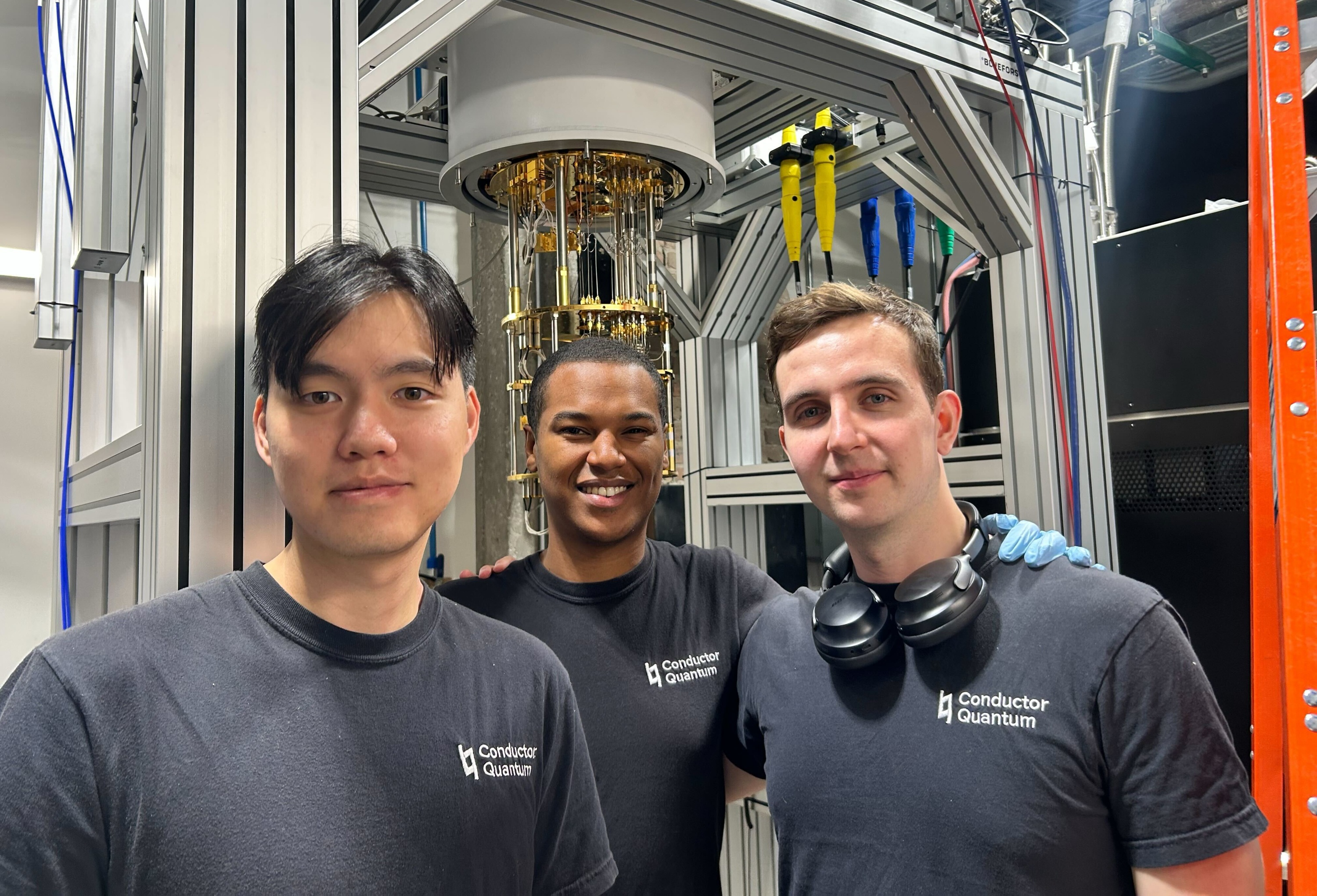
Tekedia Capital congratulates our portfolio company, Conductor Quantum, for unveiling Coda , a breakthrough natural-language quantum computing system built on a powerful thesis: quantum computing will never scale if every program must be written as a hand-crafted circuit. The future is simple: describe the problem in plain language, and let the quantum engine do the rest.

With Coda, you type your problem into a text box. Coda automatically builds the quantum circuit, verifies the code, and executes it on leading quantum hardware,  delivering performance up to 10x faster than current approaches.

From Conductor Quantum: “One of the first quantum computers on our platform is Rigetti’s 84-qubit quantum system. We also support simulations up to 34 qubits using NVIDIA cu-Quantum.”

Notably, the founder of Rigetti now leads Sygaldry Technologies, another Tekedia Capital portfolio company pioneering quantum-accelerated AI servers. The quantum future is converging, and Tekedia startups are helping architect that future.

Congratulations to the Conductor Quantum team for this remarkable innovation. Visit conductorquantum.com to try Coda and reach out if you need support. A new quantum era is unfolding.

OpenAI Turns to the Middle East for Record $50bn Funding as Costs Soar and Monetization Pressure Mounts

0

The speed at which OpenAI is returning to global capital markets is becoming as notable as the technology it builds, offering a window into the economics of the AI boom and the pressures facing even its leading players.

Barely weeks after finalizing a $40 billion investment led by SoftBank, OpenAI is now seeking another massive infusion of capital, this time from the Middle East. Chief executive Sam Altman has recently travelled to the United Arab Emirates, where he has been holding discussions with sovereign wealth funds as the company works to secure a new funding round that could exceed $50 billion, according to Bloomberg.

If completed, the raise would set a new record for private funding and lift OpenAI’s valuation to an estimated range of $750 billion to $830 billion.

People familiar with the talks say the company hopes to close the round by the end of the first quarter. OpenAI has also reportedly been in discussions with Amazon, underlining how strategic investors and hyperscalers are circling the company as artificial intelligence becomes core to cloud computing, enterprise software, and consumer services.

OpenAI’s models require vast amounts of computing power, energy, and long-term infrastructure investment. Sovereign wealth funds, particularly in the Gulf, have the balance sheets and time horizons to support projects measured in decades rather than quarters. For countries such as the UAE, backing OpenAI aligns with broader efforts to reposition their economies around advanced technology and data infrastructure.

This relationship is already taking shape. Abu Dhabi-based MGX, a state-backed technology investment firm, has previously invested in OpenAI. Separately, OpenAI is in the process of building a large data centre in the UAE, a move that would anchor part of its compute footprint in the region while reducing reliance on capacity-constrained markets elsewhere.

The facility is expected to support both model training and inference, two of the most expensive components of OpenAI’s operations.

The renewed fundraising push comes on the heels of an already unprecedented year for the company. OpenAI finalized the $40 billion SoftBank investment in February, with the final tranche delivered in late December, making it the largest private funding round on record at the time. In October, the company also raised $6.6 billion through a share sale. The cadence of these raises highlights how quickly capital is being consumed as the AI race accelerates.

Despite its dominant position, OpenAI remains unprofitable and is burning cash at what investors describe as an extraordinary rate. Training successive generations of large language models, expanding global infrastructure, subsidizing usage, and competing for scarce AI talent have combined to create cost structures unlike those of previous software companies. As rivals close the performance gap, the incentive to outspend competitors has only intensified.

Competition is notably pushing the drive. Google’s Gemini models have improved rapidly and are tightly integrated into the company’s search, productivity, and cloud businesses. Other players, including Anthropic and Meta, are pushing forward with their own models and ecosystems. As more capable alternatives emerge, OpenAI faces pressure to innovate faster while also defending its market position across consumer and enterprise segments.

That pressure is increasingly visible in OpenAI’s approach to monetization. The company is planning to run another commercial during this year’s Super Bowl, a rare move for a firm once defined by its research-first image. It is also reported to be preparing to offer advertising within ChatGPT, a step that would mark a significant strategic shift.

Altman has previously voiced discomfort with ads in AI products. At a 2024 Harvard University fireside chat, he said, “Ads plus AI is uniquely unsettling to me. When I think of GPT writing me a response, if I had to go figure out exactly how much was [a sponsor] paying … to influence what I’m being shown, I don’t think I would like that very much.”

The apparent move toward advertising underscores the tension between OpenAI’s stated ideals and the financial realities of operating at a global scale.

The search for new funding also raises broader questions about the sustainability of the AI business model. OpenAI’s valuation trajectory implies expectations not just of technological leadership, but of eventual dominance across multiple markets, from productivity software to search, education, and developer tools. Yet the path to profitability remains unclear, particularly as computing costs remain high and competition limits pricing power.

For Middle Eastern investors, the calculus appears different. Exposure to a foundational AI company offers strategic leverage and long-term upside, even if near-term returns are uncertain. For OpenAI, access to sovereign capital and regional infrastructure could prove decisive in maintaining its lead as AI development becomes more capital-intensive and geopolitically significant.

If the talks in the Gulf result in another record-breaking round, they will reinforce a defining feature of the current AI cycle: leadership in artificial intelligence is no longer determined solely by research breakthroughs, but by who can marshal the deepest pools of capital to turn those breakthroughs into global platforms.

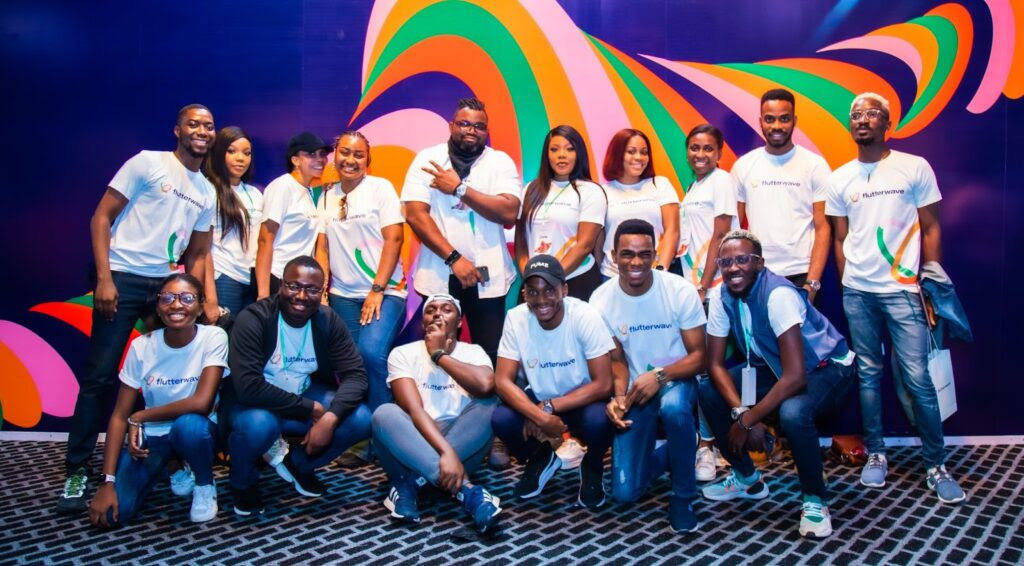
Flutterwave Unlocks Faster Global Payments For African Merchants, With Turnkey-Powered Stablecoin Infrastructure

0

Flutterwave, Africa’s leading payments technology company, has partnered with Turnkey, powered by the Nuvion platform, to power embedded stablecoin wallets for merchants across Africa. Turnkey provides secure, scalable, and programmable crypto infrastructure for embedded wallets and on-chain transaction automation.

Using Turnkey’s secure, verifiable wallet infrastructure, Flutterwave is enabling faster cross-border payments with USDC + USDT, bringing stablecoins closer to everyday financial rails. Also, this will enable businesses on Flutterwave to accept stablecoins as easily as cards, bank transfers, or mobile money, while supporting real-time settlement for global trade.

Speaking on the partnership, Nkem Abuah, Lead, GEPP ROW, Remittances & Stablecoin Partnerships, Flutterwave, said, “To accelerate business growth in Africa, we must make it safe, easy, and affordable for businesses to accept all forms of regulated payment methods, including stablecoin, from a global customer base.”

“By enabling stablecoin balances powered by Turnkey, we are ensuring that multinationals, African enterprises, and individuals using Flutterwave will have access to low-cost, faster, and always-on cross-border payments with stablecoins,” Nkem added.

Bryce Ferguson, CEO and co-founder of Turnkey, stated, “Flutterwave has shown the transformative potential of stablecoins in helping people start and grow businesses globally. We share Flutterwave’s belief that stablecoins offer an incredibly efficient way to accelerate payments and put more money directly into the hands of business owners rather than intermediaries. Through Turnkey’s embedded wallet infrastructure, we’re proud to power Flutterwave’s stablecoin payments and support their mission to empower the next generation of African innovators.”

Across Africa, importers need reliable rails that allow them to send money and have it delivered in real time so suppliers can confirm payment instantly and release goods without delay. Stablecoins make this possible. They enable African businesses to pay global suppliers faster, receive next-day value, accept stablecoin payments, and earn foreign-currency revenue with far less friction. Remittances are also being turbocharged, unlocking faster and more dependable inflows into African economies.

Through the integration of Turnkey, Flutterwave can scale stablecoin payments across Africa, giving merchants reliable access to secure settlements, while laying the groundwork for broader, future global expansion.

Notably, the partnership signals a broader shift in Africa’s payments landscape, where stablecoins are moving from the fringes of crypto adoption into practical, everyday financial infrastructure. As regulatory clarity around digital assets continues to evolve across key African markets, embedded stablecoin wallets could become a critical tool for merchants seeking faster settlements, reduced FX risk, and improved access to global liquidity.

The solution is currently being tested with a select group of merchants to ensure optimal performance. Following this phase, USDC and USDT balances will be made available alongside existing USD, NGN, and other currency balances to all Flutterwave customers who have completed the necessary KYC and onboarding processes.

Flutterwave joins a growing number of leading payments, DeFi, and trading companies, including Polymarket, Axiom, Alchemy, World, Moonshot, and more, using Turnkey’s verifiable blockchain infrastructure for embedded wallets, transaction automation, and provable security. Notably,

With this partnership, Flutterwave reinforces its commitment to building Africa’s largest, most secure infrastructure for next-generation digital payments, enabling businesses and consumers to transact stablecoins seamlessly, streamline cross-border payments, and unlock new financial opportunities across the continent.

As global demand for efficient, transparent payment rails grows, this collaboration lays the groundwork for Africa to not only adopt next-generation financial technologies but also to influence how stablecoins are integrated into mainstream payments worldwide.

Can Beginners Still Trade Crypto in 2026? A Practical Guide to Building Wealth

3

Key Takeaways

  • Institutional Stability: Bitcoin’s steady $100k-$140k range creates a safer, less volatile environment for new traders.
  • Strategic Growth: Simple strategies like DCA and AI indicators generate returns without needing expert skills.
  • Regulatory Safety: Clear frameworks like MiCA protect your assets and streamline tax compliance.
  • Low Barrier to Entry: You can start building wealth today with just $100 and a smartphone.

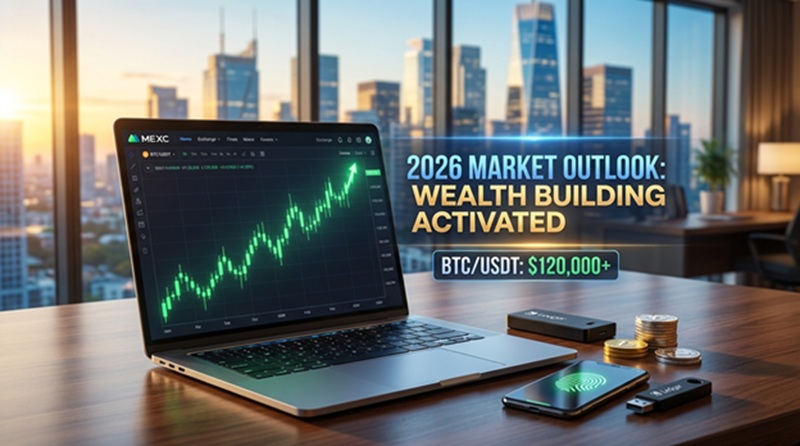
Yes, beginners can absolutely trade crypto in 2026 and build real wealth. With institutional adoption surging and tools more user-friendly than ever, you have clearer paths to success than ever before, we’re talking Bitcoin hovering around $120,000 and markets maturing fast.

Why Crypto Trading Remains Viable for Beginners in 2026

Crypto trading thrives for beginners in 2026 thanks to massive institutional inflows, regulatory clarity like the EU’s MiCA, and Bitcoin’s steady trading range of $100,000–$140,000. These factors make entry points more stable, accessible, and less chaotic than in previous cycles.

You might wonder if 2026 is too late to jump in, but let’s look at the hard facts. Bitcoin’s market share holds strong amid a maturing ecosystem, with spot ETFs driving steady capital, think billions in inflows that stabilize prices for everyone. We’ve seen institutional players like major banks integrate custody and lending, effectively turning crypto into a portfolio staple for the masses.

  • Institutional boost: Over the 2025 bull run, ETFs grew assets under management to hundreds of billions, creating smoother liquidity for you to trade without wild, unpredictable swings.
  • Tech upgrades: Layer-2 solutions have slashed transaction fees to mere pennies, letting you trade high-performance altcoins like Solana seamlessly.
  • Global access: Platforms now offer fiat on-ramps in 100+ countries, meaning you can start your journey with just $100.

This setup means you are entering a market primed for sustainable growth, not chaos.

Current State of the Crypto Market in 2026

In 2026, the total crypto market cap exceeds $5 trillion, fueled by the tokenization of real-world assets (RWAs), stablecoin dominance acting as “the internet’s dollar,” and sophisticated AI-driven tools that enhance trading efficiency for retail users.

Picture this: We have hit new highs post-2025, with Bitcoin consolidating as digital gold between $100,000 and $140,000 in base scenarios. Stablecoins now handle trillions in daily volume for global payments and settlements, making your trades faster and cheaper than traditional banking.

Key trends you can leverage right now:

  • RWA tokenization: Real estate and investment funds are going on-chain. Monitoring assets like the RXS crypto price helps you track these emerging yield opportunities of up to 8-10% APY.
  • DeFi maturity: Total Value Locked (TVL) tops $500 billion, with cross-chain bridges letting you farm rewards effortlessly.
  • AI integration: Smart bots analyze on-chain data in real-time, helping you spot trends before they explode.

These shifts make 2026 the perfect time for you to build wealth step-by-step.

Common Myths About Starting Crypto Trading as a Newbie

Myths like “it’s too late” crumble under the data, new All-Time Highs (ATHs) in 2026 and intuitive beginner tools like mobile apps prove that fresh opportunities abound for consistent wealth builders who ignore the noise.

We’ve all heard the naysayers, but here is the truth: Markets cycle every 4 years, and 2026 follows the post-halving pattern with fresh highs ahead. You don’t need to time the absolute top; simply dollar-cost averaging into BTC has yielded 200%+ returns over previous cycles.

  • Myth busted: “Only pros win”, Nope, 70% of retail traders profit with basic strategies like HODL (holding long-term).
  • Real edge: Free education on platforms teaches you in weeks what took us years to learn before.

You get in now, and you are positioned perfectly for the next leg up.

Essential Steps for Beginners to Start Trading Crypto in 2026

Get started by picking a top-tier exchange like MEXC, securing your account with 2FA and hardware wallets, and then funding it with as little as $100 for instant access to assets like BTC and ETH.

Let’s make this simple—you are just a few clicks away from your first trade. Platforms have evolved with intuitive apps that guide you through the process like a personal coach.

Choosing the Best Crypto Exchanges for Beginners 2026

MEXC stands out for beginners with ultra-low 0.02% fees, access to 2,000+ coins, and robust demo trading features, placing it far ahead of competitors like Coinbase, which suffer from higher costs and limited trading pairs.

Feature MEXC Binance Coinbase
Trading Fees 0.02% maker/taker 0.1% 0.5%+
Coin Variety 2,900+ 600+ 250+
Beginner Tools Demo account, tutorials Basic academy Simple app
Speed 1.4M tx/sec High Moderate
Fiat Support 50+ currencies 100+ Limited

MEXC’s low fees mean you keep more of your hard-earned profits, trade $1,000, pay just $0.20. Their mobile app ensures you can access the Bitcoin USDT exchange pair seamlessly to buy at $120,000.

Setting Up Your First Crypto Trading Account Securely

Download the MEXC app, complete the quick KYC process, enable 2FA immediately, and grab a Ledger wallet for long-term storage, you will be trading securely in under 10 minutes.

You start by signing up on MEXC, no hassle, just your email and ID. Then, follow these steps:

  1. Secure it: Biometrics and anti-phishing codes block 9% of threats.
  2. Wallet choice: Use MEXC’s built-in hot wallet for speed, and a Ledger for holdings over $1,000.
  3. First deposit: Link your bank or buy USDT instantly.

Boom, you’re live and ready to build that portfolio.

Risk Management Essentials for Crypto Trading Beginners

Never risk over 1% of your capital per trade, always set 5-10% stop-losses, and diversify your portfolio across 5-10 assets, such as BTC (50%), ETH (30%), and high-potential alts (20%).

Position sizing keeps you in the game, if you have a $10,000 account, your max risk per trade is $100. Modern tools auto-enforce this on MEXC, protecting your capital.

Top Crypto Trading Strategies for 2026 Wealth Building

DCA weekly into dips to catch 2026 bull runs, swing trade 20-50% moves using the MACD indicator, and HODL blue-chip assets, strategies that are currently beating generic buy-and-hold by 2x.

  • DCA magic: Invest $50/week in BTC; at a $120K average, you’re up big by year-end.
  • Swing trading: Buy ETH at support ($4,000), sell at resistance—repeat for 30% gains monthly.
  • HODL power: BTC holders since 2025 are already seeing 3x returns.

These strategies fit your schedule perfectly.

Conclusion

You are set to thrive trading crypto in 2026, grab MEXC, start your DCA strategy today, and watch your wealth compound. Dive into the communities, learn something new daily, and claim your slice of this $5T+ market. Your journey to financial freedom starts now.

Frequently Asked Questions (FAQ)

Can beginners really make money trading crypto in 2026?

Yes! With DCA strategies on MEXC, beginners are hitting 50%+ yearly returns amid BTC’s $120K stability and massive ETF inflows.

What is the minimum amount to start crypto trading for beginners?

Just $100! MEXC lets you buy BTC/ETH instantly, allowing you to scale up as you learn and your profits roll in.

Which cryptocurrencies should beginners trade in 2026?

Start with BTC, ETH, and SOL. These blue-chip assets drive 80% of the market gains, with BTC targeting $140K+.

How long does it take to build wealth trading crypto as a beginner?

Expect 6-12 months to reach proficiency, and 2-5 years to hit six figures. Consistent DCA compounds incredibly fast in bull cycles.