DD
MM
YYYY

PAGES

DD
MM
YYYY

spot_img

PAGES

Home Blog Page 798

BlockDAG Ramps Up with BEAT VESTING Extension, While ALGO Remains Flat at $0.14 & KAS Eyes $0.17

0

Algorand and Kaspa remain active in today’s crypto market. Algorand (ALGO) continues to gain attention for its focus on speed and sustainability, with growing use in DeFi and business networks. Kaspa (KAS), known for its blockDAG tech and real-time confirmation, is being used in fast-paced platforms. While both coins show strength, another project is drawing increasing focus: BlockDAG.

This time, the spotlight is on a new update. BlockDAG has extended its BEAT VESTING PASS until August 4, offering full access to BDAG coins at launch. This change follows strong public response and adds momentum to the project. With the GLOBAL LAUNCH release planned for August 11, BlockDAG (BDAG) continues to be a major name in the market.

This article compares the Algorand (ALGO) price outlook, current Kaspa (KAS) price today, and why BlockDAG’s presale presence places it among the top crypto to buy today.

Algorand (ALGO) Price Outlook Shows Signs of Gradual Recovery

The Algorand (ALGO) price outlook is showing cautious progress. The coin has held steady near the $0.14 level, with resistance sitting just above at $0.15. If the current trend continues, ALGO could push toward the $0.18 mark in the short term.

What makes Algorand different is its use of pure proof-of-stake, allowing quick and secure scaling. Its transaction time is under five seconds, and it is used in projects related to identity and supply chain solutions.

Even with the current market showing mixed signals, Algorand’s steady use and clear development path may support further stability. Compared to more volatile projects, it offers a grounded presence in the space.

Kaspa (KAS) Price Today Holds Near Key Support Level

Kaspa (KAS) price today is sitting close to $0.163, with the coin facing resistance around $0.17. After a recent pullback, KAS is now trying to move higher. If it crosses the next resistance, $0.19 may be the following target.

Kaspa uses a blockDAG system that enables high-speed performance with one block each second. It also supports real-time confirmation, which helps users and developers who rely on speed and low delay.

Unlike many Layer 1 chains that use block sequences, Kaspa’s model adds flexibility. Though it has seen minor drops, KAS is still viewed as a fast-moving project with technical strength. As the market shifts, its design could help it move forward with confidence.

Beat Vesting Deadline Extended as BlockDAG Activity Grows

BlockDAG continues to reshape the crypto presale space, and its latest update confirms that progress. After many community requests, the BEAT VESTING PASS has been extended until August 4. This update allows all participants to access 100% of their BDAG coins at launch without waiting.

So far, BlockDAG has collected $357 million during the presale, with 24.5 billion coins sold and more than 18,800 miners distributed. The price remains fixed at $0.0016, although Batch 29 is listed at $0.0276. This creates a window for a possible 3,025% return before the launch value reaches $0.05. With the GLOBAL LAUNCH release coming on August 11, this may be one of the last chances to enter at this stage.

A recent demo of the X1–X10 miners added momentum. It showed that users mining 20 BDAG per day with the X1 app can now increase output to 200 BDAG per day using the X10 setup. The X1 app has now passed 2.5 million users, showing growing adoption.

BlockDAG is also supporting over 300 active projects and 4,500 developers as it moves forward with its Infrastructure Phase. Along with the BEAT VESTING extension through August 4, these updates place BlockDAG among the top cryptos to buy today, offering daily output, full coin access, and strong network growth ahead of its GLOBAL LAUNCH release.
Final Say

Both Algorand and Kaspa bring useful features to the market. The Algorand (ALGO) price outlook points to a slow but steady climb, supported by adoption in enterprise settings. The Kaspa (KAS) price today shows it remains a strong asset, shaped by fast transaction speeds and a unique chain structure.

Even so, BlockDAG now stands in a category of its own. With $357 million raised, a short-term $0.0016 entry price, and the GLOBAL LAUNCH release near, BlockDAG brings together growth, speed, and direct delivery. The top crypto to buy today goes beyond long-term plans and shows real progress now. BlockDAG is doing just that.

Presale: https://purchase.blockdag.network

Website: https://blockdag.network

Telegram: https://t.me/blockDAGnetworkOfficial

Discord: https://discord.gg/Q7BxghMVyu

 

The NBA Top Shot Vending Machines Could Ignite NFT Culture In Japan By leveraging Cultural Affinity For Collectibles

0

NBA Top Shot collectibles, digital NFTs of basketball highlights, are now available through vending machines in Japan, launched on July 29, 2025. This initiative, a collaboration between Dapper Labs and Web3 marketing firm 24karat, uses AIICO smart vending machines placed in high-traffic areas like train stations and commercial centers from Hokkaido to Okinawa.

Priced at around $6.70 per pack, purchases are made via mobile devices by scanning a QR code, which creates a Flow blockchain wallet for users, requiring no prior crypto knowledge. The focus is on accessibility, with plans for future expansions including limited-edition collectibles, gamified experiences like stamp passports, and peer-to-peer trading. This marks a unique blend of digital and physical collecting, leveraging Japan’s vending machine culture.

The AIICO vending machines allow users to purchase NFTs via QR code scans, creating a Flow blockchain wallet automatically. This removes technical barriers like crypto wallets or blockchain knowledge, making NFTs accessible to a broader audience, including non-tech-savvy consumers.

By embedding NFT purchases in familiar vending machines, the initiative blends physical and digital experiences, aligning with Japan’s love for tangible collectibles like trading cards and gachapon (capsule toys). This could normalize NFTs as a modern equivalent of traditional collectibles.

Japan has over 4 million vending machines, a cultural staple for convenience and novelty. Placing NFTs in this context taps into an established consumer habit, potentially driving impulse purchases and casual engagement. Japan’s robust market for collectibles (e.g., Pokémon cards, anime merch) makes it fertile ground for NFTs as digital collectibles.

NBA Top Shot’s basketball highlights align with Japan’s growing interest in basketball, especially post-Tokyo Olympics and with stars like Rui Hachimura. Japan’s tech-forward and pop-culture-driven market could serve as a testing ground for global NFT adoption strategies. Success here may inspire similar initiatives in other regions.

Priced at ~$6.70 per pack, the low entry cost could attract a wide demographic, potentially boosting NFT market volume. If successful, this could encourage more brands to explore NFT vending machine models. Plans for stamp passports, limited-edition drops, and peer-to-peer trading could gamify the NFT experience, fostering community and repeat engagement. This aligns with Japan’s gaming culture, seen in mobile games and arcade loyalty programs.

Peer-to-peer trading could spark social interactions, similar to trading card communities, enhancing NFT appeal among younger audiences. Japan’s progressive stance on crypto (with regulated exchanges and clear tax guidelines) supports NFT adoption. However, vendors must ensure compliance with consumer protection laws, especially around digital asset transparency.

Public perception of NFTs as speculative or environmentally harmful (due to blockchain energy use) could pose hurdles, requiring clear communication about the eco-friendly Flow blockchain used by Top Shot. The vending machine model could demystify NFTs, shifting them from niche crypto circles to everyday consumer experiences. If successful, it may inspire other brands (e.g., anime, J-Pop, or gaming IPs) to launch similar initiatives, amplifying NFT visibility.

High-traffic locations like train stations ensure exposure to diverse demographics, potentially sparking curiosity and organic growth in NFT interest. Japan’s youth, already engaged with digital platforms like LINE and mobile gaming, are prime targets. The gamified elements (e.g., collecting rare moments, trading) could mirror the appeal of gacha games, driving NFT adoption among Gen Z and millennials.

Collaborations with local IPs (e.g., anime or J-League) could further ignite interest, embedding NFTs deeper into pop culture. Features like peer-to-peer trading and stamp passports could foster NFT communities, similar to Japan’s fan-driven subcultures (e.g., idol groups, card collectors). This could lead to dedicated NFT events, conventions, or online marketplaces, amplifying cultural impact.

The vending machine model could inspire hybrid retail experiences, combining NFTs with physical goods (e.g., QR codes on product packaging). This could redefine how brands engage Japanese consumers, blending e-commerce with physical retail. Success may encourage tech firms to integrate NFTs into other ubiquitous platforms, like mobile payment apps (e.g., Suica, PayPay), further embedding NFTs in daily life.

Japan’s cultural exports (anime, gaming, tech trends) often set global precedents. A thriving NFT culture here could influence markets in Asia, North America, and Europe, encouraging brands to adopt similar accessible, consumer-friendly NFT strategies. The model’s success could also attract international NFT projects to Japan, creating a vibrant ecosystem of digital collectibles.

Microsoft Becomes Second $4 Trillion Company as Cloud and AI Power Strong Q4 Results

0

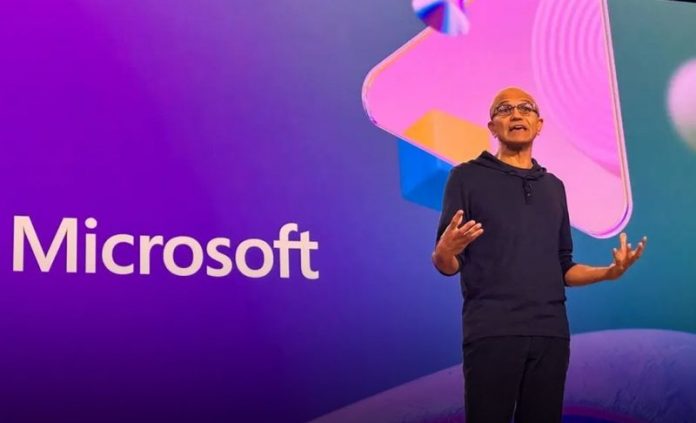
Tech giant Microsoft surged Thursday morning to become the world’s second company to hit a $4 trillion market capitalization in intraday trading, joining chipmaker Nvidia in the milestone club.

The rise followed a strong fiscal fourth-quarter earnings report, in which the company outperformed analyst expectations with 18% revenue growth, driven largely by its cloud computing and AI businesses.

Microsoft reported $76.4 billion in revenue for the quarter, with operating income of $34.3 billion (up 23%) and net income of $27.2 billion (up 24%). Diluted earnings per share came in at $3.65, up 24%.

CEO Satya Nadella credited the company’s growth to the adoption of AI-powered cloud solutions.

He said,

“Cloud and AI are the driving forces of business transformation across every industry and sector. We’re innovating across the tech stack to help customers adapt and grow in this new era, and this year, Azure surpassed $75 billion in revenue, up 34 percent, driven by growth across all workloads”.

Also speaking, Amy Hood, executive vice president and chief financial officer of Microsoft said,

We closed out the fiscal year with a strong quarter, highlighted by Microsoft Cloud revenue reaching $46.7 billion, up 27% (up 25% in constant currency) year-over-year”.

Key Segment Highlights

  • Productivity and Business Processes: $33.1B revenue, up 16%.
    • Microsoft 365 Commercial revenue rose 16%, with Commercial cloud revenue up 18%.
    • Microsoft 365 Consumer revenue jumped 21%, while LinkedIn revenue grew 9%.
    • Dynamics products and services revenue increased 18%, led by Dynamics 365 growth of 23%.
  • Intelligent Cloud: $29.9B revenue, up 26%.
    • Server products and cloud services revenue grew 27%, with Azure revenue soaring 39%.
  • More Personal Computing: $13.5B revenue, up 9%.
    • Windows OEM and Devices revenue rose 3%.
    • Xbox content and services revenue climbed 13%.
    • Search and news advertising revenue (ex-TAC) increased 21%.

Microsoft’s multibillion-dollar investment in OpenAI continues to pay off, integrating cutting-edge AI into its Office Suite and Azure offerings. This AI edge has helped Azure become the company’s top revenue driver, propelling Microsoft to the forefront of the generative AI race ahead of Google Cloud and Amazon Web Services.

The tech giant first reached a $1 trillion market valuation in April 2019, driven by strong cloud computing growth, particularly from Azure, and better-than-expected earnings. The stock surged about 4% to $130.66, briefly surpassing the $1 trillion mark, making Microsoft the third company after Apple and Amazon to achieve this milestone. This was fueled by a 41% increase in cloud revenue and robust performance across its business segments, with Windows, Office, and Azure each contributing significantly.

Compared to its big tech peers, Microsoft benefits from having an unmatched level of diversification in its business, ranging from enterprise software to cloud infrastructure to Windows to consumer products, including devices and social media through LinkedIn.

More recently, in January 2024, Microsoft hit $3 trillion valuation becoming the second company after Apple to reach this milestone. The surge was driven by strong AI investments, particularly its partnership with OpenAI, and robust growth in Azure cloud services, which saw a 50% revenue increase.

With the lastest $4 trillion valuation mark, the company’s stock has risen nearly 28% year-to-date, more than doubling in value since ChatGPT’s late-2022 debut.

Despite its significant growth, Microsoft is streamlining operations. Earlier this month, it announced plans to cut around 9,000 employees (about 4% of its workforce)—its largest reduction since 2023—after previously laying off 6,000 workers in May.

Looking ahead, Microsoft plans to spend over $30 billion in capital expenditures this quarter, up from $24.2 billion last quarter, as part of its massive $80 billion.

Wall Street Mounts Pressure on Apple To Get in the AI Race

0

Apple’s long-standing image as a tech trailblazer is now facing one of its most serious credibility tests in years. As generative artificial intelligence reshapes the future of computing, the Cupertino giant is under pressure to make a defining move—or risk being permanently left behind.

Analysts say Apple has failed to match the pace of its peers in building or acquiring advanced AI capabilities. While rivals like Microsoft and Google have poured tens of billions into AI research, cloud infrastructure, and landmark acquisitions, Apple has remained tight-lipped, offering only incremental updates to Siri and vague promises through its “Apple Intelligence” initiative.

“The incomplete AI strategy is still the biggest overhang, but we think Apple still has approximately 1.5 years to effect a compelling solution,” TD Cowen analyst Krish Sankar wrote in a note on Monday. He recommends buying the shares.

This silence has unnerved investors. The company’s stock has dropped more than 15% in 2025, making it the second-worst performer among the tech-heavy “Magnificent Seven,” outpaced only by Tesla. The anxiety has prompted growing calls from Wall Street for Apple to make a bold play, starting with a strategic acquisition of Perplexity AI, one of the fastest-rising competitors to OpenAI’s ChatGPT.

Perplexity, a startup known for its speed, accuracy, and a radically simple user interface, has emerged as a breakout player in the AI assistant space. Its ability to offer real-time answers backed by verifiable sources has attracted millions of users, some of whom have turned away from more established tools like ChatGPT, Gemini, and Claude.

Dan Ives, managing director at Wedbush Securities and one of Apple’s most vocal supporters, believes a Perplexity acquisition would be a transformative move. He has repeatedly called on Apple to make the leap.

“We believe Apple needs to acquire Perplexity for AI capabilities,” Ives said earlier this month. “A likely $30 billion range would be a no-brainer deal given the treadmill AI approach in Cupertino. Perplexity would be a game changer on the AI front and rival ChatGPT given the scale and scope of Apple’s ecosystem.”

Ives doubled down on Wednesday, just ahead of Apple’s quarterly earnings report, calling the company’s AI direction “invisible” and warning that its current posture is unsustainable:

“Heading into Apple’s earnings tomorrow, the elephant in the room continues to be Apple’s AI growth strategy, which right now is invisible, while the rest of the tech world is laser-focused on monetizing the biggest tech theme in 40 years—the AI Revolution,” he said.

“It’s becoming crystal clear that any innovation around AI at Apple is not coming from inside the walls of Apple Park. Importantly for the Street, we estimate the AI monetization strategy at Apple could be worth up to $75 per share—and time is ticking for Cook to figure this out.”

Apple’s AI Moves So Far: Too Little, Too Late?

Earlier this year, Apple unveiled its “Apple Intelligence” framework, promising smarter Siri capabilities, writing suggestions, and integration with apps like Mail and Notes. But the reaction was tepid, and perhaps more damaging was Apple’s own admission that the upgraded Siri won’t be fully ready until 2026. That means its most ambitious AI features will not appear in this year’s iPhone 16 lineup, leaving it with no blockbuster selling point.

This comes as Alphabet’s Gemini assistant is already embedded into Android 16, giving users an AI-powered experience with deep integrations across Google’s services—from Maps and Gmail to YouTube and Calendar. Microsoft’s Copilot and Meta’s Llama-based assistants have also found homes across devices and apps, from PCs to smart glasses.

Apple, in contrast, has remained stuck in its product cycle rhythm, focused on polishing hardware while failing to establish a compelling AI strategy. Even its most notable moves in the space, such as investing in AI startups and training foundation models behind closed doors, have yet to yield any widely adopted breakthrough.

The Threat from Outside—and Inside

The urgency isn’t just about catching up with Big Tech. Former Apple design chief Jony Ive, in partnership with OpenAI, is developing an entirely new AI-native consumer hardware product under a company called “IO,” acquired by Sam Altman’s team for $6.5 billion. That move is being viewed by many as the clearest threat to the smartphone’s dominance since its inception.

OpenAI’s rumored plans to disrupt Apple from the outside add fuel to investor anxiety. There’s speculation that Altman and Ive are aiming to build an AI-first device that renders traditional smartphones—like the iPhone—less relevant.

Meanwhile, some voices inside Apple have already acknowledged that the clock is ticking. Apple’s senior vice president of Services, Eddy Cue, told a court earlier this year that a world without iPhones in 10 years “may not be as crazy as it sounds.”

Melissa Otto, an analyst with Visible Alpha Research, notes that Apple’s AI additions to the iPhone last year failed to trigger the anticipated “supercycle” of upgrades. Many users only replaced older devices due to hardware issues, not new software features. According to data from Consumer Intelligence Research Partners, the majority of iPhone users in 2024 made purchases due to broken screens or battery problems, not because of excitement over AI.

All eyes now turn to Apple’s Q3 earnings call on Thursday, where the company is expected to post over $40 billion in iPhone revenue and about $26.8 billion in Services revenue. But analysts say financial performance won’t be enough. Investors are looking for a forward-looking AI narrative, a credible path that shows Apple can lead, not just follow.

Dan Ives and others believe Perplexity is the most obvious bet. Whether Tim Cook agrees—or continues to play the long game—could determine if Apple stays a leader or becomes a follower in the next era of computing.

Artificial Intelligence Integration Into Crypto Wallets Is An Emerging Web3 Trend

0

The concept of AI agents integrated with crypto wallets is an emerging trend in the Web3 and blockchain ecosystem. AI agents are autonomous software programs that use machine learning and natural language processing to perform tasks like trading, wallet management, or data analysis without constant human intervention. Several projects are exploring this intersection.

Crypto.com AI Agent SDK enables developers to integrate AI capabilities into Web3 projects, allowing AI agents to manage wallets, execute transactions, and interact with blockchains like Cronos using natural language commands.

Trust Wallet highlights AI agents that autonomously analyze data, execute trades, and manage wallets, enhancing efficiency in the crypto space. Armor Wallet uses a ChatGPT-style interface to simplify crypto trading with AI agents, allowing users to execute complex trades via plain English commands.

Coinbase’s Based Agent tool enables the creation of AI agents with crypto wallet functionality in minutes, supporting tasks like token swaps and staking. These examples suggest that integrating AI agents with crypto wallets is a growing area of innovation, focusing on automation, user accessibility, and decentralized finance (DeFi) applications.

Foobar announcing a project called CircuitAI, aligns with these trends, enabling AI agents to operate on top of any crypto wallet. Here’s how such a system might work, based on current industry patterns: CircuitAI could be designed to integrate with multiple wallet types (e.g., hot wallets, cold wallets, or hardware wallets) across various blockchains (Ethereum, Solana, Binance Smart Chain, etc.).

This would involve APIs or SDKs that allow AI agents to interact with wallet protocols, similar to Crypto.com’s SDK or Coinbase’s Based Agent. The AI agents could perform tasks like: Analyzing market trends and executing trades based on predefined criteria or real-time data, as seen with Laika AI’s trading bot.

Handling transactions, managing recurring payments, or rebalancing portfolios, as described in Trust Wallet’s AI agent capabilities. Monitoring wallet activity for suspicious behavior, similar to AnChain.AI’s fraud detection tools. Executing or auditing smart contracts autonomously, as supported by ChainGPT’s AI tools.

“AI turning wallets into smart assistants isn’t just a cool feature: it’s a big shift. We’re moving from apps that just hold your assets to tools that think ahead, spot risks, and save you time. That’s how the next wave of crypto adoption will happen,” explains Alex Lielacher, Founder & CEO of Web3 SEO agency, Rise Up Media.

Allowing AI agents to operate across multiple blockchains, as seen with platforms like MorpheusAI or Virtuals Protocol. Enabling users to interact with AI agents via simple text prompts, akin to Armor Wallet’s approach. Leveraging blockchain for secure, transparent agent operations, possibly using tokens to incentivize agent activity, as with Fetch.ai’s Agentic Economy.

AI-integrated wallets, especially hot wallets, are vulnerable to cyberattacks unless robust safeguards like spending limits or biometric authentication are implemented. AI agents analyzing user behavior or social media data could raise privacy concerns if not properly managed. AI agents may make incorrect decisions due to model limitations, requiring ongoing improvements in multi-step reasoning.

If Foobar’s CircuitAI enables AI agents to run on any crypto wallet, it could democratize access to advanced crypto tools, making DeFi and Web3 more user-friendly. By abstracting complex blockchain interactions, such a platform could onboard non-technical users, similar to Armor Wallet’s mission to “onboard the next billion users.” It could also foster innovation by allowing developers to build custom AI agents for specific use cases, from gaming to financial analytics, as seen with Injective’s Smart Agent Hub.