
DD
MM
YYYY

PAGES

DD
MM
YYYY

spot_img

PAGES

Home Blog Page 8

4 Best New Online Casinos You Need to Follow in 2026

0

The online casino industry is continually evolving. With more platforms popping up each day, new outlets are attempting to attract players with something beyond the established formula.

Do you want to see which newer names in online gaming are worth keeping an eye on? These are four platforms you need to follow in 2026.

1. Duel

A visit to duel.com will quickly show you no standard formula is being followed here. It’s bold. It’s brash. It’s wholly original – and that makes the casino stand out from the played out, polished presentation of traditional operators.

Duel is a protest against the norm, and it’s not afraid to drop a few f-bombs to get its point across.

A major part of its identity comes from its Duel Originals. As the name states, these are original games created by the casino. These mix up streamlined versions of classics like Blackjack with oddities such as Groomer’s Van and Beef. However, there’s one feature of these games that deserves all the headlines: 100% RTP.

With 100% RTP, that effectively removes the house edge from these originals. Zero edge gaming has never been implemented at this scale before, which gives Duel serious distinction from the rest. Then there are provably fair mechanics, which add another layer of transparency to the games.

Duel also makes community a big part of its identity. Live chat, real-time bets, and multiplayer games all allow members to interact with one another – both directly and indirectly. Add everything together, and it’s easy to see why Duel is #1 on this list.

2. Yeet

Yeet represents another new approach to the industry, particularly through its combination of casino content and social elements. It’s not just about exclusively reproducing traditional casino experiences. The platform blends its own originals alongside a more community-driven identity.

As the relationship between crypto gaming and online communities continues to develop, it makes Yeet an interesting platform to watch. Casinos are becoming more interactive environments – not just a collection of games – and Yeet is one of those leading that charge.

3. Winna

Winna opts for a more inclusive approach by combining casino gaming with sports betting. Its platform features thousands of casino games alongside a sportsbook covering more than 30 sports, giving users access to different forms of betting from one account.

It is also home to its own collection of original games, including Dice, Mines, and Keno. However, beyond the games themselves, Winna has invested heavily in community features like a general member chat and live betting feed. The latter includes dedicated high roller and sports sections, allowing users to follow activity taking place across the platform.

4. Thrill

Thrill is another newer crypto casino worth following, hence its inclusion on this list. Its own collection of originals provides much of its identity. The games include Limbo, Roulette, Plinko, and Slide, covering several of the quickplay formats that have become popular within crypto gaming.

The platform makes other players’ activity visible through real-time bets. An XP system adds another layer to the experience, which allows users to progress through levels while playing. Thrill underlines how newer casinos are attempting to make the overall experience more engaging than simply selecting a game from a large library.

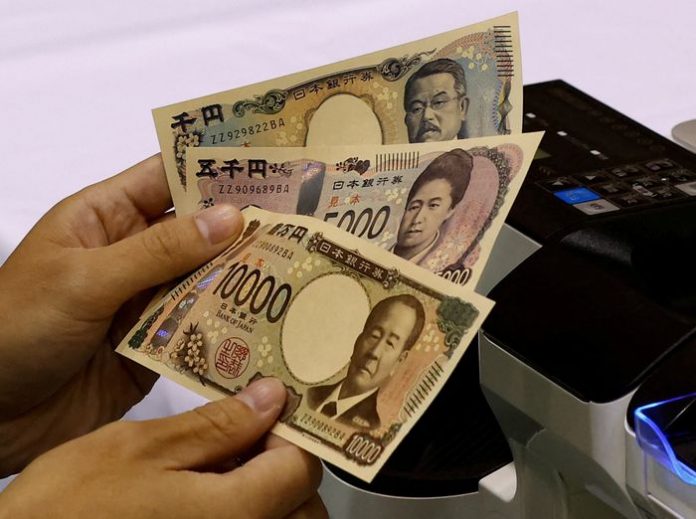
Dollar Hits Seven-Week High, Treasury Slumps After Fed Hike as Markets Brace for BOJ Decision

0

The dollar climbed to a seven-week high on Thursday after the Federal Reserve raised interest rates and signaled that another increase could follow, bolstering its commitment to bringing inflation back under control even as U.S. President Donald Trump continues to demand lower borrowing costs.

The dollar index, which tracks the greenback against a basket of major currencies, reached 100.36, its highest level since July 31, before paring gains to trade 0.16% lower at 100.13.

The move followed the Fed’s decision on Wednesday to raise its benchmark interest rate by 25 basis points to a target range of 3.75% to 4%. The increase was the central bank’s first since July 2023 and came after a series of stronger-than-expected inflation readings and a sharp rise in Treasury yields.

Fed Chair Kevin Warsh said inflation remained too high to justify leaving monetary policy unchanged.

“Inflation has been too high … for too long,” Warsh said at a news conference. “We must be confident that underlying inflation is moving to our objective clearly and at sufficient speed.”

The Fed’s updated projections also pointed to another increase this year. Sixteen of the 18 officials included in the dot plot expect at least one more hike, while four see the possibility of two additional increases.

That outlook has helped support the dollar by reinforcing expectations that U.S. interest rates will remain elevated for longer.

But a widening gap has emerged between policymakers’ projected path and financial markets’ expectations. While Fed officials currently project one additional increase in 2026 and no further hike in 2027, investors are pricing in more than one additional increase this year and roughly three more through the end of 2027.

The divergence leaves the dollar sensitive to incoming inflation and economic data, as well as to any further confrontation between the White House and the central bank.

“The greatest danger for the U.S. dollar lies in the U.S. president increasing pressure on the Fed again in the coming weeks, which could lead to renewed doubts about the Fed’s independence,” said Michael Pfister, a strategist at Commerzbank.

“However, the Fed itself did its best yesterday to dispel these doubts.”

Trump has repeatedly called for substantially lower interest rates. In a social media post, he said U.S. rates should be “1 per cent, or less,” arguing that the country is “the best credit in the world.”

He also criticized the Fed’s board on Wednesday, describing it as “very hostile” and “very political” and saying it was “doing the wrong thing.”

However, the market’s response is seen as an indication that the Fed’s latest decision has, at least temporarily, reinforced confidence that policymakers remain focused on inflation.

Oil Reversal Takes Pressure Off the Dollar

The dollar subsequently gave up some of its gains as oil prices extended their decline on reports that Saudi Arabia was offering additional crude cargoes through Oman, reducing fears of a prolonged supply disruption.

Energy prices have become an important driver of currency markets as the conflict in the Middle East threatens global oil supplies.

Higher oil prices generally support the dollar because the United States is less dependent on imported energy than many other major economies. A sustained energy shock can therefore put greater pressure on currencies such as the euro and yen, potentially increasing demand for dollar-denominated assets.

The latest decline in oil prices has weakened that support.

The move also followed comments from Trump that he hoped an end to the U.S.-Israeli war on Iran was near. A separate media report said he was expected to meet Gulf leaders on the sidelines of the United Nations General Assembly next week to discuss the conflict.

The euro rose 0.14% to $1.1481 after earlier falling to $1.1456, its lowest level in seven weeks. Sterling gained 0.10% to $1.3395 ahead of the Bank of England’s policy decision.

Meanwhile, Treasury yields edged lower after their recent surge.

The 10-year Treasury yield was down two basis points at 4.986%, while the 30-year yield fell one basis point to 5.333%. The two-year yield, which is particularly sensitive to expectations for monetary policy, declined one basis point to 4.715%.

The retreat came after the 10-year yield had reached its highest level since 2007 as investors adjusted to the prospect of higher U.S. rates.

Bob Edwards, chief investment officer at Edwards Asset Management, said the largest moves in the bond market may now have passed.

“There is now a good opportunity for investors after this big move to lock-in these elevated yields,” Edwards said.

He expects another Fed increase, if one occurs, to come at the December meeting rather than October, arguing that a rate decision immediately before the U.S. midterm elections could attract questions about the central bank’s political independence.

Yen and BOJ in Focus

The next major monetary-policy test for currency markets comes from Japan, where the Bank of Japan is expected to raise its policy rate on Friday to a level not seen in 31 years.

Investors are watching for signals from BOJ Governor Kazuo Ueda about how quickly the central bank intends to continue tightening monetary policy.

The dollar fell 0.41% against the yen to 155.68.

Japan’s policymakers are also monitoring currency movements closely. Chief Cabinet Secretary Minoru Kihara said Japan would continue working closely with the United States to maintain orderly yen movements.

The yen’s recent gains have been driven partly by growing expectations that the BOJ will continue raising rates. Speculative investors have shifted toward net-long yen positions, while Japanese retail investors have continued to hold short positions on expectations that the currency’s appreciation will not last.

Investors are also watching whether higher Japanese bond yields could encourage domestic institutions, including Japan’s Government Pension Investment Fund, to shift more money back into Japanese assets.

Such repatriation could affect global bond markets, particularly U.S. Treasuries, by reducing Japanese demand for overseas assets.

Mizuho expects Japan to continue normalizing monetary policy but at a slower pace than financial markets currently anticipate, with its policy rate reaching 1.75% by mid-2027.

The contrasting paths of the Fed and BOJ leave currency markets focused on the relative speed of monetary tightening. The Fed has resumed rate increases as inflation remains elevated, while Japan is moving further away from years of ultra-loose policy.

Japanese Executives Seek a Stronger, More Stable Yen as Currency Swings Disrupt Business Planning

0

Japanese corporate executives are calling for a stronger and more stable yen, even as some of their companies continue to benefit financially from a weaker currency.

Yoshinori Kanehana, chairman of Kawasaki Heavy Industries, said currency volatility has become the company’s biggest problem because unpredictable exchange rates make long-term investment decisions more difficult.

“When the yen fluctuates, we cannot make [a] strategy,” Kanehana told CNBC on the sidelines of the Gastech conference on Tuesday.

Kanehana said a yen at around 150 to the dollar could be strong enough to prompt Kawasaki to consider shifting some manufacturing currently carried out in the United States back to Japan. The company operates 27 production sites outside Japan, including in the U.S., and 17 in its home country, according to a company report published last year.

The statement underpins how the yen’s weakness, which has supported the overseas earnings of many Japanese companies, can also complicate decisions about where to locate production. A weaker currency can make Japanese exports more competitive and increase the yen value of overseas earnings, but a highly volatile exchange rate makes it harder for companies to determine future costs, investment returns and production economics.

For Kawasaki, the exchange rate can alter the relative attractiveness of manufacturing in Japan and overseas. Kanehana’s comments suggest that a stronger yen could narrow that gap sufficiently to make domestic production more attractive. Inpex President and CEO Takayuki Ueda went further, saying a yen at around 100 to the dollar would be an “appropriate” level for the Japanese economy.

Ueda’s view appears to ring a bell because nearly 90% of Inpex’s business is conducted outside Japan and largely in dollars. That gives the company a direct benefit when dollar-denominated profits are converted into a weaker yen.

Inpex said in its latest earnings report that revenue declined in the first half of the year as crude oil sales volumes fell. A 6.7% depreciation in the yen to 158.37 per dollar, however, helped offset part of the decline.

“But if we look at the Japanese economy as a whole, the current exchange rate is perhaps too weak,” Ueda told CNBC on the sidelines of the Gastech conference in Bangkok on Monday.

The comments come as the yen has strengthened sharply over the past two weeks but remains weak by longer-term historical standards. The currency was trading at around 156.3 per dollar on Thursday, compared with a 10-year average of about 123, based on Macrotrends data.

The differing preferences among Japanese corporate leaders also show how the impact of the yen varies across industries. Companies with large overseas revenues can benefit from a weak currency because foreign earnings translate into more yen. Manufacturers with substantial domestic operations, however, may face different considerations because exchange-rate movements affect the relative cost of producing in Japan versus other countries.

Takeshi Hashimoto, chairman of Mitsui O.S.K. Lines, the world’s largest tanker owner and operator, has also called for stability rather than a particular direction for the currency.

Hashimoto said he would be “comfortable” with the yen at between 150 and 155 per dollar. Mitsui O.S.K. Lines generates most of its revenue in dollars and therefore benefits from a weaker yen, but Hashimoto said the currency’s weakness had raised concerns about broader financial-market distortions.

“We had some concern that the [weak yen] would create a confused situation in the financial market,” he said.

Japanese companies have been building their budgets around a considerably weaker currency. Businesses surveyed by the Bank of Japan in July were using an average exchange-rate assumption of 152.51 yen per dollar for the second half of the year. That assumption could come under pressure if the yen continues to strengthen as markets anticipate a further tightening of monetary policy by the Bank of Japan.

Investors expect the BOJ to raise its policy rate by 25 basis points to 1.25% at its two-day meeting, which concludes on Friday. Such a move would further narrow the gap between Japanese and U.S. interest rates and could provide additional support for the yen, although the currency will also remain sensitive to developments in global markets and U.S. monetary policy.

“The stakes are extremely high” for the BOJ, Matthew Ryan, head of market strategy at Ebury, said in a note Monday.

He expects the central bank to raise rates and deliver sufficiently hawkish guidance to signal a quarterly pace of increases thereafter.

For Japanese companies, the policy challenge extends beyond whether the yen ultimately settles at 150, 130 or another level. The recent comments from Kawasaki, Inpex and Mitsui O.S.K. Lines point to a broader corporate concern: large and unpredictable currency movements can be harder to manage than a consistently strong or weak yen.

A weaker yen can boost the translated value of overseas earnings and support exporters, while a stronger yen can reduce imported costs and improve the economics of domestic production. But when the currency moves rapidly between those extremes, companies can struggle to establish reliable assumptions for investment, sourcing and manufacturing decisions.

That is considered essential for Japanese manufacturers with global supply chains. Kawasaki’s willingness to consider moving U.S. production back to Japan at a yen rate of 150 is believed to be an indication that exchange rates can influence not only reported earnings but also the physical location of industrial capacity.

Volleyball in Vietnam: The Clubs and Players Driving the Sport’s Growing Popularity

0

Vietnamese volleyball has transcended its image of being a sport of national teams only. Now, teams such as LP Bank Ninh Binh and VTV Binh Dien Long An are becoming participants in Asian competitions, and the name of player Nguyen Thi Bich Tuyen is becoming more and more popular abroad. In the domestic championship, young athletes are now getting chances to play together with experienced internationals.

At the same time, the bubble of interest around Vietnamese volleyball is growing, with Melbet Vietnam entering the bigger online sports audience, while local events remain the main competition for domestic athletes.

What the 2026 Season Reveals About Vietnam’s Progress

Understanding Vietnamese volleyball’s present status requires making a comparison. Vietnam’s men’s national team achieved a historic breakthrough by winning the second leg of the 2026 SEA V Cup, while the women’s team faced a more difficult regional campaign later in the summer. The distinction is also evident in squad composition: coaches have more experienced players at their disposal.

The national tournament is pivotal for this matter. 2026 season will witness the participation of clubs such as Biên Phòng MB, Th? Công Tân C?ng, Công an TP. H? Chí Minh, LP Bank Ninh Bình, Hà N?i, ?à N?ng, Sanest Khánh Hòa, and TP. H? Chí Minh in the national championship.

For the wider public, who are interested in national sports through such companies as Melbet Casino, the detailed club structure is even more important than individual tournaments. More competitive matches will allow the juniors to gain needed experience and allow senior players to face the pressure of a string of victories.

The 2026 calendar created more opportunities for Vietnamese clubs to compete against foreign opponents. The VTV9 Bình ?i?n International Women’s Volleyball Cup brought eight teams to Tây Ninh from May 15 to 23, including five Vietnamese clubs and three invited teams from China, Japan and South Korea.

This kind of competition could play an important role in the upcoming seasons, as Vietnam has some players who can turn the tide, and much depends on the level of reception, the depth of the bench, and the capacity to maintain the competitive spirit when playing against stronger teams from Asia.

Clubs Building a Stronger Competitive Scene

LP Bank Ninh Binh has become the most recognizable Vietnamese team on a global level. It had a milestone moment in 2024 when it reached the final of the continental club championship and went on to participate in the Club World Championship. This accomplishment is significant for Vietnamese volleyball players because they have begun to play against athletes from countries such as Japan and China that have already established themselves as the leaders of volleyball in Asia.

VTV Binh Dien Long An made another step in 2025 when the club reached the final of the first AVC Women’s Champions League and qualified for the Club World Championship. The aforementioned success proved that Vietnamese teams can compete for titles in Asia instead of just participating in Asian championships to gain experience.

Several teams remain particularly important to the domestic structure:

  • LP Bank Ninh Binh, built around the scoring ability of Nguyen Thi Bich Tuyen.
  • VTV Binh Dien Long An, traditionally one of the strongest women’s clubs in the country.
  • Duc Giang Chemical, another regular participant in major domestic and Asian competitions.
  • Information Command, one of the established forces in Vietnamese women’s volleyball.

The men’s competition has its own strong contenders. Biên Phòng MB, Th? Công Tân C?ng and Sanest Khánh Hòa remain important names, while the 2026 league also includes clubs from Hanoi, Da Nang and Ho Chi Minh City.

Bich Tuyen and the Players’ Changing Expectations

Nguyen Thi Bich Tuyen is the most notable attacking point for the Vietnamese team. Her height, power, and size give her the advantage of being a real threat from the opposite side. In 2025, when Vietnam won the first AVC Women’s Nations Cup, she was named MVP of the competition with 20 points in the final game against the Philippines, which ended with a score of 3 to 0.

Tran Thi Bich Thuy offers another attacking solution for the Vietnamese team as she plays in the center and uses her quick strikes and blocking rather than scoring like Bich Tuyen. Nguyen Khanh Dang has become one of the main defenders, playing libero. The current group is therefore not simply built around one star:

  • Nguyen Thi Bich Tuyen, opposite and primary point scorer.
  • Tran Thi Bich Thuy, middle blocker with a strong presence at the net.
  • Nguyen Khanh Dang, libero focused on reception and defence.
  • Nguyen Thi Uyen, outside hitter adding depth to the attack.
  • The 2026 Season Has Added Another Dimension

Vietnam’s men’s team produced one of the most important victories of the year. At the SEA V Cup in Jakarta on July 26, 2026, Vietnam managed to beat Thailand 3-2. More importantly, Thailand had initially defeated Vietnam in an earlier match.

The women’s team had a busy summer too. The 2026 SEA V Cup was played in two legs, with the first held in Hanoi from July 31 to August 2 and the second in Chiang Mai from August 7 to 9. Vietnam finished second in the first leg but fourth in the second, placing third in the combined standings, while Thailand won both legs.

Canadian Snooker and Why It Keeps Gaining Support Years after Cliff Thorburn’s World Championship Victory

0

Snooker is one of those sports that is known to have quite an extensive history in Canada, despite being perceived as something alien there for many. The victory of Cliff Thorburn in the World Championship in 1980 was what put Canadian snooker on the map. Over the years since then, various clubs and tournaments have helped keep the sport alive in Canada. To learn more about the origins and evolution of snooker in Canada, read this article.

Why Snooker Became So Popular in Canada

Canadian snooker clubs became popular in the 1970s as part of the British tradition carried by the country’s immigrants. Initially, Toronto and Vancouver were where the popularity of snooker peaked, with people competing in the local halls. The broadcast of international games via TV increased the popularity of the sport in the country.

Like any other Canadian sports entertainment trend, the development of snooker has been changing in the process. More and more Canadian fans not only watch professional tournaments but also explore snooker betting in Canada on reliable online platforms. Increased availability of such information helped them follow the latest rankings, tournaments, match statistics, etc., and grow their interest in the sport.

How Fans Keep Up with the Latest News about Snooker in Canada

Today, online platforms are one of the most common sources of news regarding snooker games. The well-known among local fans MelBet betting site, always includes snooker matches in their tournament lists. Thanks to such coverage, it is easier for fans to keep up with all developments in the field and get acquainted with the sport’s long history of competitions.

It should be noted that the availability of information does not mean that every fan makes any bets. There are many who prefer just to track the latest scores, player interviews, and tournament videos without placing any bets. In Canada, the appeal of snooker remains in the balance of entertainment options.

How Canadians Watch and Play Snooker Now

There are multiple ways to be involved with the game in Canada nowadays. From local clubs to online streaming services, people can watch and play snooker in various ways. The following list presents current venues where one can become engaged in the sport.

  • Local clubs – halls that host amateur leagues in Toronto, Vancouver, and Montreal.
  • TV broadcasts – sports networks that show major championships for viewers all over the country.
  • Streaming platforms – websites where one can watch live matches and replay past games.
  • Youth programs – coaching at some clubs for newbies who wish to learn more about snooker.

All those means are necessary to ensure snooker stays alive in Canada in different regions and among different generations of people.

The Impact of Cliff Thorburn on the Development of the Game

Cliff Thorburn’s achievements still serve as an example for many Canadian fans of snooker. His championship win in 1980 is still a landmark in the sport’s history. Many young players state that it was this man who encouraged them to try playing snooker in the first place.

Modern championships attract not only fans of the game but also curious newcomers. One can participate in local competitions to develop his or her skills even further. At the same time, snooker receives a lot of attention from streaming and TV media. All those factors help the game to stay relevant.

Quiet Sport that Continues to Attract Fans

It should be noted that snooker in Canada never had the same mass popularity as hockey or basketball. However, it managed to establish its own niche and attracted a dedicated audience after the win of Cliff Thorburn. All the means mentioned above play their role in keeping this tradition alive.