DD
MM
YYYY

PAGES

DD
MM
YYYY

spot_img

PAGES

Home Blog Page 80

India Quietly Orders Smartphone Makers to Preload Mandatory Cybersecurity App, Setting Up Clash With Apple and Privacy Groups

0

India’s telecom ministry has quietly issued a private directive instructing the world’s major smartphone makers to preload all new devices sold in the country with a government-operated cybersecurity app that cannot be deleted, according to a November 28 order reviewed by Reuters.

The move signals a new phase in New Delhi’s push to control digital fraud and clamp down on the runaway growth of cybercrime, but it also sets the stage for a confrontation with Apple and privacy advocates.

The directive requires companies, including Apple, Samsung, Xiaomi, Vivo, and Oppo, to install the Sanchar Saathi app on all new smartphones within 90 days. The instruction also extends to devices already in the distribution pipeline, which must receive the app through software updates. None of this has been publicly announced, and the order was circulated privately to select manufacturers.

Authorities argue that the measure is essential as the country faces a wave of digital scams, identity spoofing, and misuse of cloned IMEI numbers — the unique handset identifiers that allow police and telecom operators to cut off network access to stolen devices. Government officials say Sanchar Saathi has already helped recover more than 700,000 phones, including 50,000 in October, and has been instrumental in blocking millions of fraudulent connections.

India now has more than 1.2 billion telecom subscribers, giving the app a footprint that can shape one of the world’s largest mobile markets. The government says the tool is vital for policing duplicate IMEIs, tracing stolen devices, and preventing black market phone circulation.

The tension lies in how the app will be imposed. Users would not be allowed to delete or disable Sanchar Saathi under the ministry’s order, meaning every new device will ship with a permanent, non-removable state app — a decision that has alarmed privacy advocates. Mishi Choudhary, a prominent technology lawyer, called the order troubling because it takes away meaningful user choice.

India’s move mirrors regulatory shifts seen elsewhere. Russia recently required that its state-backed MAX messenger be pre-installed on new smartphones, a decision that drew criticism from digital rights groups who argued it strengthened government access to personal data. Similar concerns are now emerging in India, where the surveillance conversation already runs deep due to previous disputes over encryption, traceability, and data retention rules.

Apple sits at the center of the storm. While its share of India’s smartphone market is modest — about 4.5% of 735 million installed devices by mid-2025, according to Counterpoint Research — the company has historically resisted government demands to embed state apps into its operating system. Apple previously clashed with India’s telecom regulator over a government anti-spam app that it refused to allow onto iPhones until a compromise was reached.

Under Apple’s internal guidelines, no external app — whether government or third-party — is allowed to be preloaded on its devices before sale.

A source with direct knowledge of Apple’s policies confirmed that the company routinely turns down such government requests. Counterpoint analyst Tarun Pathak said Apple is likely to push for a negotiated alternative, such as displaying a prompt during setup that encourages users to download the app rather than forcing a permanent installation.

The Sanchar Saathi platform plays a central role in India’s anti-fraud framework. It connects to a national device registry and gives users the ability to block stolen phones, track their status across networks, and verify whether their SIM connections are genuine. Government data shows more than 5 million downloads and over 3.7 million blocked, stolen, or lost devices since the app’s January launch. Officials say the system has also been key to shutting down more than 30 million fraudulent mobile numbers tied to scams and identity theft.

India argues that the app strengthens national security and helps police trace criminal networks, but privacy advocates worry that the mandatory nature of the installation could expand state access to device-level data over time. The government insists the aim is to protect users, not monitor them, though the private manner in which the directive was issued is likely to intensify debate.

The next three months could determine how much sway global smartphone manufacturers still hold in one of their most important growth markets. Apple faces the biggest philosophical hurdle, given its longstanding stance on locked-down systems and user privacy. Android makers, who already pre-install a mix of Google, OEM, and partner apps, may find it less disruptive, but the non-removable requirement could still complicate device certification and regional software builds.

For now, the industry is waiting for the first round of closed-door talks between manufacturers and the ministry. With cybercrime rising fast and elections never far away in India, the government has a strong political incentive to push ahead.
HSBC Strikes Multi-Year Deal With France’s Mistral AI as Banks Intensify Race for Generative AI Advantage

0

HSBC has signed a multi-year agreement with French start-up Mistral AI to embed the company’s generative artificial intelligence tools across the bank, a move the lender says will accelerate automation, lift productivity, and strengthen the way it serves clients globally.

Announcing the pact on Monday, HSBC said it will deploy Mistral’s commercial generative models — including future upgrades — on a fully self-hosted basis. The setup allows the bank to combine its in-house engineering capabilities with Mistral’s model-building expertise, while keeping sensitive financial data inside HSBC’s own technology perimeter. The bank stressed that this approach preserves data sovereignty at a time when regulators are scrutinizing how financial institutions feed information into rapidly advancing AI systems.

Both sides will collaborate on tools aimed at financial analysis, multilingual translation, risk assessment, and personalized client communication. Executives say the models will reduce the time employees spend on complex, document-heavy work. Credit and financing teams, for example, will be able to analyze lengthy agreements and intricate deal structures in minutes rather than hours, speeding up internal turnaround times and giving frontline staff more room to focus on judgment-based tasks.

HSBC already runs hundreds of AI use cases worldwide, covering areas such as fraud detection, transaction monitoring, compliance reviews, cyber-risk modelling, and customer service automation. The bank believes the partnership with Mistral will sharpen its ability to push new AI features to market quickly, supporting a broader modernization push inside the organization.

The agreement arrives during a global arms race among banks experimenting with generative AI despite ongoing privacy and security concerns. Major lenders have been piloting tools that can streamline onboarding, draft loan documentation, analyze regulatory filings, and perform multilingual client servicing.

Many institutions have been cautious about using external AI models due to fears that confidential information could slip into third-party training sets. HSBC’s self-hosted deployment structure reflects a compromise increasingly adopted by large financial groups trying to harness advanced AI while controlling risk.

The bank said Mistral’s models will operate under HSBC’s existing responsible-AI governance program, which sets out transparency requirements, model-risk controls, human-oversight protocols, and data-protection rules. Executives argue that the governance framework will allow the bank to scale AI responsibly while responding to regulatory expectations in the UK, Europe, Hong Kong, and other key markets.

For Mistral, one of Europe’s most closely watched AI companies, the partnership offers a chance to test and refine its technology inside one of the world’s largest banking environments. The French start-up has been positioning itself as a homegrown alternative to U.S. AI giants, emphasizing privacy, efficiency, and enterprise-grade deployment options. Working with HSBC gives Mistral a high-profile financial-sector anchor client at a time when companies are seeking more specialized, secure AI models rather than public cloud-based systems.

HSBC’s decision also points to how sharply competition has escalated within the financial industry, with rivals racing to automate routine work and accelerate customer servicing. Banks face pressure to improve operational efficiency as cost inflation bites and regulatory requirements expand. Generative AI has become a central battleground as institutions try to cut processing times, reduce human error, and reinvent legacy internal workflows.

Despite the momentum, some analysts note that banks still need to navigate regulatory uncertainty, especially around explainability and accountability. Supervisors in the UK, EU, and Asia have been signaling that model-risk expectations will be heightened for generative AI systems because they can hallucinate, drift, or produce outputs difficult to audit. HSBC’s bet on self-hosting is part of a wider trend aimed at tightening control over these risks.

The partnership underlines how AI has become a defining strategic investment for major banks, not just a back-office experiment. HSBC says the goal is to bring AI deeper into high-stakes decision processes, financial-market analysis, and client interactions. With Mistral now in the fold, the bank expects a faster innovation cycle and more sophisticated products built on top of its AI architecture — another sign of how aggressively global lenders are trying to reinvent themselves in the generative-AI era.

China’s DeepSeek Challenges Global AI Lead with New V3.2 Models Rivaling GPT-5 and Gemini-3 Pro

0

Hangzhou-based startup DeepSeek has doubled down on its research momentum, unveiling two new versions of its experimental artificial-intelligence model, DeepSeek-V3.2 and DeepSeek-V3.2-Speciale.

The release signals that China’s influential AI labs are continuing to push the frontier of open-source systems, maintaining performance metrics competitive with Silicon Valley’s cutting-edge proprietary models like OpenAI’s GPT-5 and Google’s Gemini-3 Pro.

The launch comes shortly after the company’s experimental release in September, dubbed DeepSeek-V3.2-Exp. The new V3.2 models focus on deepening two key areas: integrated reasoning with tool use and specialized mathematical and logical problem-solving.

The standard DeepSeek-V3.2 model, now available on DeepSeek’s platforms and APIs, focuses on achieving a breakthrough in agentic capabilities—the ability of AI to act autonomously to achieve goals.

The core innovation is the new approach to combining human-like reasoning with practical execution. DeepSeek-V3.2 is the company’s “first model to integrate thinking directly into tool-use,” supporting the use of external resources like search engines, calculators, and code executors.

The model offers two distinct operational modes:

  1. Thinking Mode (accessible via the deepseek-reasoner model name): The model outputs a chain-of-thought (CoT) reasoning process before delivering the final answer, enhancing accuracy on complex tasks.
  2. Non-Thinking Mode (accessible via the deepseek-chat model name): Provides a fast, direct final response.

The startup claims that the new standard service matches the performance of OpenAI’s flagship GPT-5 across multiple reasoning benchmarks and achieves a seamless blend of logical inference with real-world tool execution.

The second release, DeepSeek-V3.2-Speciale, is a high-compute variant designed to “push the inference capabilities of open-source models to their limits.” This model focuses primarily on achieving maximum reasoning and long-thinking capabilities, particularly in academic and complex logical fields.

Benchmarking Giants: DeepSeek claims the V3.2-Speciale version matches the performance of Google’s latest Gemini-3 Pro and, in some benchmarks like the American Invitational Math Examination (AIME) and software development tasks (SWE Multilingual), it even surpasses GPT-5.

Gold-Medal Performance: The Speciale model demonstrated gold-medal level performance on standardized tests requiring complex problem-solving, such as the International Math Olympiad (IMO) and the International Olympiad on Informatics (IOI).

However, the pursuit of maximum reasoning comes with a caveat: the Speciale variant consumes significantly more tokens (e.g., 77,000 tokens for Codeforces problems, compared to Gemini’s 22,000) and is currently API-only, prioritizing depth over the cost-efficiency of the standard V3.2 model.

Technical Foundations and Market Impact

DeepSeek’s rapid innovation builds on three key technological breakthroughs mentioned in their technical report, DeepSeek-V3.2: Pushing the Frontier of Open Large Language Models:

  • DeepSeek Sparse Attention (DSA): This redesigned attention architecture optimizes computational costs and significantly speeds up processing for long inputs (up to 128,000 tokens) without sacrificing output quality.
  • Scalable Reinforcement Learning (RL) Framework: A massive scale-up in the post-training alignment phase to enhance overall capability.
  • Agentic Task Synthesis Pipeline: A new method for training AI agents by creating thousands of executable scenarios based on real-world problems (like GitHub issues).

This release, which follows the company’s breakthrough model in January 2025, solidifies DeepSeek’s role as a major disruptor in the global AI race, particularly in the open-source community, by offering frontier-level performance at competitive costs. Just last week, the company released DeepSeekMath-V2, an open model with strong theorem-proving capabilities, underscoring its relentless research pace.

Hong Kong Crypto-Linked Stocks Slide as China Vows to Renew Crackdown, Reopens Old Fault Lines Over Stablecoins

0

Hong Kong-listed stocks tied to cryptocurrency businesses sank sharply on Monday after China’s central bank signaled a renewed hard line on virtual assets and raised fresh concerns about stablecoins, unsettling a market that had been warming to digital finance through Hong Kong’s more permissive regime.

The sell-off began after the People’s Bank of China (PBOC) issued a weekend statement warning of a resurgence in crypto speculation and vowing to intensify crackdowns on illegal activities involving stablecoins. The announcement added new pressure on firms operating in Hong Kong’s tokenization and digital-asset ecosystem.

Liu Honglin, founder of Man Kun Law Firm, said the central bank’s language “has erased any ambiguity, speculation and illusions” around China’s stablecoin policies.

“Regulators have drawn a concrete red line on what used to be a vague borderline,” he said.

Yunfeng Financial Group, which has been expanding into cryptocurrency and tokenization, slumped more than 10% in early trading, positioning the stock for its worst day in two months. Bright Smart Securities and Commodities Group dropped roughly 7%, while digital-asset platform OSL Group lost more than 5%.

The renewed pressure came just as enthusiasm for virtual currencies had been swelling again across the border. Hong Kong’s passage of a stablecoin bill in May, which created a legal framework for fiat-backed cryptocurrencies, drew interest from mainland investors even though cryptocurrency trading has been banned in China since 2021. The excitement fed into a belief that Hong Kong’s regulated environment might function as a workaround or at least a testing ground for digital-asset experimentation.

That optimism collided head-on with the PBOC’s message. The statement, released after a meeting attended by 13 government agencies, singled out stablecoins for failing to meet strict requirements on customer identification and anti-money laundering controls. It was a signal that Beijing remains unwilling to tolerate any perceived loopholes that might reintroduce the speculative activity it has spent years suppressing.

Market unease deepened after the reminder that Chinese regulators have been quietly tightening around Hong Kong’s tokenization activities as well. In September, sources told Reuters that China’s securities watchdog had advised certain mainland brokerages to pause real-world-asset tokenization businesses in Hong Kong. Major firms had already begun retreating. Alibaba-backed Ant Group and e-commerce giant JD.com suspended plans to issue stablecoins in the city after the PBOC raised concerns about the rapid rise of privately controlled digital currencies, according to an October Financial Times report.

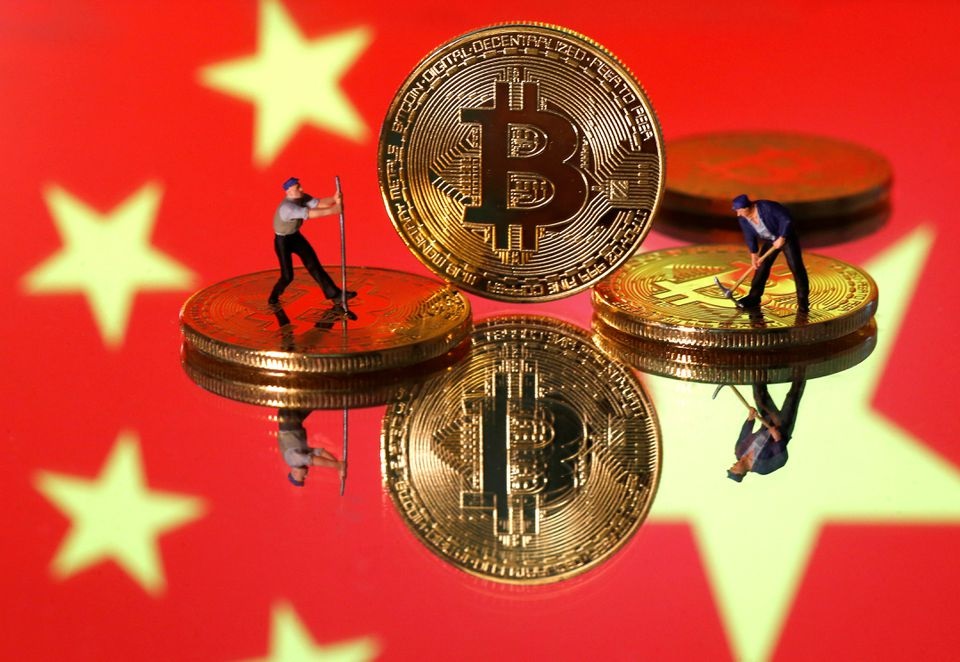
China’s latest move fits into a long and winding crackdown that began in 2013, when financial institutions were first barred from handling bitcoin-related transactions. By 2017, China shut down domestic crypto exchanges and banned initial coin offerings. The campaign intensified in 2021 when authorities declared all crypto transactions illegal and forced the country’s vast mining industry to shut down or relocate overseas. Each wave tightened the perimeter around digital assets, and the new statement suggests Beijing is now focused on closing whatever gaps have emerged through border-adjacent channels like Hong Kong.

Underlying this stance is the Chinese government’s push to cement the digital yuan as the only officially sanctioned digital currency. Stablecoins, which peg their value to fiat currencies and often operate within private-sector ecosystems, present an ideological and structural contrast.

The digital yuan offers state visibility over flows of money, programmable controls, and integration with China’s financial surveillance systems. Privately issued stablecoins do not. Chinese policymakers have repeatedly signaled that any digital currency competing with or complicating the deployment of the digital yuan is unwelcome.

This creates persistent regulatory tension between Hong Kong’s aim to establish itself as a global digital-asset hub and Beijing’s zero-tolerance approach to non-state cryptocurrencies. Hong Kong, under the “one country, two systems” model, has the autonomy to regulate its own financial markets. But the mainland’s sweeping ban on crypto leaves little room for ambiguity. Each time Hong Kong opens its regulatory door, Beijing effectively reasserts the limits.

With the PBOC’s latest warning, those limits have been underlined once again. The market reaction in Hong Kong on Monday reflected not just fears of immediate enforcement but a broader recognition that China’s crypto winter has not thawed—and that Hong Kong’s attempt to build a digital-asset industry may continue to face political and regulatory headwinds every step of the way.

Gold Extends Six-Week Rally on Rate-Cut Bets, Dollar Weakness; Silver Breaks Record as Investors Hedge

0

Gold pushed to a six-week high on Monday, lifted by swelling expectations of U.S. interest-rate cuts and a weakening dollar that reinforced demand for the metal.

Silver surged to its own record peak as traders piled into precious metals ahead of a heavy week for U.S. economic data that is expected to influence the Federal Reserve’s final policy signals of the year.

Spot gold inched up 0.1% to $4,233.83 per ounce at 11:15 a.m. ET (1615 GMT), its strongest level since October 21. U.S. gold futures for February delivery rose 0.3% to $4,266.60. The move reflects a wider shift in global markets as softer U.S. data and increasingly dovish remarks from Fed officials intensify bets that the central bank is preparing to pivot toward easing.

Silver jumped 3.1% to $58.09 after touching a fresh all-time high of $58.23 earlier. The metal has now climbed more than 100% this year, a surge driven by industrial demand linked to energy transition spending, tightening physical supply conditions, and sustained safe-haven flows.

The dollar’s slide to a two-week low added more fuel to the rally, making gold cheaper for overseas buyers.

“The underlying environment of expectations of further rate cuts, along with inflationary pressure still above the Fed target… is still the underlying support in gold and silver,” said David Meger, director of metals trading at High Ridge Futures.

Fed expectations shifted sharply after cautious economic indicators in recent weeks and dovish commentary from Governor Christopher Waller and New York Fed President John Williams. Markets now see an 87% chance of a rate cut in December, based on CME’s FedWatch tool, giving non-yielding assets like gold more room to climb.

Attention is now turning to a packed data calendar. Wednesday brings November’s ADP employment print, while Friday delivers the delayed September Personal Consumption Expenditures (PCE) Index — the Fed’s preferred inflation gauge. Fed Chair Jerome Powell will also speak later on Monday, and traders say any softening in tone could push rate-cut bets even higher.

There is also a political undercurrent running beneath the metals rally. While gold typically rises when rate-cut expectations grow, some analysts say the metal’s persistent strength this year also reflects investor caution about the economic environment under President Donald Trump as markets try to assess how the administration’s policy direction, personnel shifts, and fiscal posture may influence inflation, trade strategy, and interest-rate stability heading into 2026. The view is not universal, but it has become a recurring talking point among traders who note that investors often use precious metals as a hedge when political and economic navigation feels uncertain.

Speculation around the coming transition at the Fed is adding an additional layer. White House economic adviser Kevin Hassett said on Sunday that he would be willing to serve as the next Fed chair if selected. Treasury Secretary Scott Bessent indicated that a nominee could be named before Christmas, a development that has kept traders alert, given the potential policy implications of a more dovish successor.

Despite the steep rally, analysts say the broader trend still points upward. “We still view gold and silver in a strong sideways to higher uptrend,” Meger said.

Elsewhere in the complex, platinum fell 0.8% to $1,659.03 and palladium dropped 1.4% to $1,429.68 as the extraordinary rallies in gold and silver continued to dominate investor focus.