
DD
MM
YYYY

PAGES

DD
MM
YYYY

spot_img

PAGES

Home Blog Page 801

Palo Alto Networks to Acquire CyberArk in $25bn Bid to Dominate AI-Era Identity Security

0

Palo Alto Networks is set to acquire Israeli identity security firm CyberArk in a landmark deal valued at approximately $25 billion, signaling a strategic shift by the California-based cybersecurity giant to deepen its footprint in the fast-evolving identity protection space.

The move also underscores the heightened pace of consolidation in the cybersecurity industry, as companies scramble to fortify AI-era defenses.

The deal, expected to close during Palo Alto Networks’ fiscal year 2026, will see shareholders of CyberArk receive $45 per share, or 2.2005 shares of Palo Alto stock per CyberArk share. The offer represents a 26% premium over CyberArk’s closing share price on Friday. News of the acquisition, first hinted at in a Wall Street Journal report that sent CyberArk shares soaring 13%, now marks the latest megadeal in the red-hot cybersecurity M&A space.

Shares of Palo Alto Networks, however, took a hit, falling 7% on Wednesday after dropping 5% a day earlier, as investors digested the scale of the transaction. CyberArk’s stock, meanwhile, dipped slightly by 1%, following its initial rally earlier in the week.

Palo Alto Networks Chairman and CEO Nikesh Arora described the deal as both timely and essential, noting in an interview with CNBC’s Squawk on the Street that identity protection has reached an inflection point amid the rise of agentic AI systems.

“They are poised to go and disrupt this market and create the platform we need and also solve the upcoming problem with agentic AI,” Arora said. “From all those factors, we believe this is the right time to do something like this and be ready for the market in the next 12 to 18 months.”

Founded more than a decade ago and publicly listed since 2014, CyberArk is a pioneer in identity security—a branch of cybersecurity focused on protecting access credentials and privileges across cloud platforms, enterprise applications, and sensitive IT systems. Its software tools are critical to ensuring that only authorized personnel can access key infrastructure, a function made even more vital in an age where generative AI systems are rapidly being embedded into corporate networks. CyberArk competes with the likes of Okta and Microsoft in this sector.

With the acquisition, Palo Alto Networks aims to integrate identity security into its existing suite of cybersecurity solutions, a strategic leap that positions the company to offer comprehensive, AI-ready protection to clients. Arora believes Palo Alto’s global scale and enterprise reach will supercharge CyberArk’s platform, expanding its market presence far beyond its current capabilities.

This isn’t the first bold move by Palo Alto in the AI-driven cybersecurity race. In 2023, the company acquired Israeli startups Talon Cyber Security, Dig Security, and Zycada Networks, followed by the 2024 purchase of Protect AI to reinforce its AI toolkits. These acquisitions have helped Palo Alto build a powerful platform that addresses threats across cloud, data, and endpoint security domains, now intersecting more than ever with identity and access control.

Google’s $32 billion acquisition of cloud security startup Wiz in March—its biggest purchase to date—also sent shockwaves through the sector, emphasizing how big tech and cybersecurity players alike are pouring resources into shoring up digital defenses amid growing geopolitical and corporate threats.

Since taking over Palo Alto in 2018, Arora has aggressively expanded the company’s capabilities and grown its market value to around $120 billion. He says the CyberArk acquisition won’t be the last.

“I expect consolidation in the cybersecurity space to continue over the next five years,” Arora told CNBC. “Our job is to get this done, execute, deliver to the market and show our shareholders that we have the ability to execute these kinds of transactions, which I firmly believe we do.”

The integration of identity security into broader defense frameworks is no longer optional—it’s essential as businesses brace for more sophisticated AI-driven attacks and stricter compliance demands. With this acquisition, Palo Alto is making a $25 billion bet that it can lead the charge.
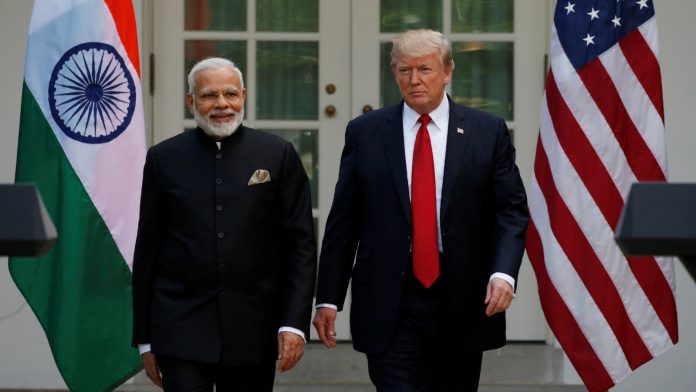

Trump Slaps India With 25% Tariff, Threatens Penalty Over Russia Ties and ‘Unfair’ Trade Practices

0

President Donald Trump announced Wednesday that India will face a 25% tariff on its exports to the United States starting August 1, along with an unspecified penalty over what he described as decades of unfair trade practices and its deepening ties with Russia.

The move marks another escalation in Trump’s sweeping tariff regime and could strain relations with one of Washington’s most strategic Asian partners.

The 25% tariff rate comes just weeks after Trump imposed a 26% levy on India during what he branded “Liberation Day.” While the latest figure is just one percent lower, it effectively revives the threat under a different banner.

“India will therefore be paying a tariff of 25%, plus a penalty for the above, starting on August first,” Trump wrote on Truth Social, insisting the measures are a response to both India’s protectionist policies and its purchase of Russian oil and military equipment.

“Remember, while India is our friend, we have, over the years, done relatively little business with them because their tariffs are far too high, among the highest in the world, and they have the most strenuous and obnoxious non-monetary trade barriers of any country,” Trump said, reiterating long-standing complaints about India’s import regime.

While India appeared to have dodged the 26% tariff earlier this year following high-level discussions and backchannel diplomacy, Trump’s latest move effectively brings that threat back to life, raising questions about the durability of any reprieve. Analysts say India now finds itself boxed in, facing growing pressure over its geopolitical balancing act and trade posture.

It’s not clear how India will handle the situation, especially as it continues to rely heavily on discounted Russian crude and legacy Russian military hardware amid its broader strategic autonomy doctrine.

The additional penalty Trump mentioned remains undefined, though observers speculate it could take the form of targeted duties on specific sectors, or even financial restrictions aimed at curbing energy trade with Moscow. Earlier this month, Trump threatened to impose secondary tariffs of up to 100% on countries buying Russian oil unless a ceasefire is reached in Ukraine—an unprecedented escalation that would hit major energy importers like India and China.

“India is Russia’s largest buyer of energy, along with China,” Trump added. “All things not good!”

The announcement also came with a warning about the United States’ trade deficit with India, which Trump described as “massive.” He has frequently justified his unilateral tariffs as necessary to reduce the deficit and protect American industry, despite broad skepticism from economists. Many of them have argued that higher tariffs ultimately raise costs for U.S. consumers, while failing to bring back low-skilled manufacturing jobs that have long since migrated to cheaper labor markets.

“Exporters won’t lower prices to offset tariffs. If Americans want to keep buying their products, they will have to pay the tariffs. If they don’t want to pay higher prices, exporters will just sell their products to consumers outside the U.S. who do not have to pay the tariffs,” Peter Schiff, chief economist at Euro Pacific, noted.

Earlier in the year, Trump declared America’s global trade deficit a national emergency, a move that gave him expanded legal authority to impose tariffs without congressional approval. It also signals how trade may continue to be a central pillar of Trump’s policy platform heading into the 2026 midterms, especially as he doubles down on economic nationalism.

India has not formally responded to the tariff decision, though New Delhi is likely weighing its options as it tries to preserve trade ties with Washington while continuing its pragmatic energy and defense partnerships with Russia. However, with no sign of Trump softening his tone, and the penalty still looming, the pressure on Prime Minister Narendra Modi’s government is likely to intensify in the coming weeks.

Cadbury Nigeria Swings to N14.5bn Profit in H1 2025, Marking Strong Recovery from Past Losses

0

Cadbury Nigeria Plc has delivered a major comeback in the second quarter of 2025, reporting a pre-tax profit of N5.9 billion, compared to a N3.4 billion loss in the same period last year.

This performance helped push the company’s half-year earnings to N14.5 billion, a sharp rebound from the N13.8 billion loss recorded in the first half of 2024.

The turnaround was driven by robust growth in sales and a significant reduction in finance costs. For Q2 2025 alone, revenue surged 44.25% to N40 billion from N27.7 billion a year earlier. This lifted total revenue for the first half to N77.2 billion, reflecting a 50.17% year-on-year increase. Domestic sales accounted for the bulk of this figure—N74 billion, or 95.8%—while exports contributed N3.2 billion.

Although the company’s cost of sales climbed by 30.96% to N30.3 billion in Q2, gross profit more than doubled to N9.7 billion from N4.5 billion in the same quarter last year. Operating profit also jumped to N6.5 billion from N1.9 billion in Q2 2024, despite a 38.53% rise in selling and distribution expenses, which hit N2.6 billion.

A critical factor supporting the company’s improved bottom line was a sharp drop in net finance costs. Interest on borrowings dropped drastically to N593.7 million, down from N5.3 billion in Q2 2024, helping to stabilize earnings.

Cadbury’s total assets rose 20.90% to N87.5 billion, and its retained losses improved to N27.1 billion as of June 2025, down from N37.2 billion at the end of December 2024. The company’s share price on the Nigerian Exchange stood at N70.95 as of July 29, 2025, reflecting a remarkable year-to-date gain of 230%.

This impressive showing signals a strong recovery from a turbulent recent past. In its full-year 2023 financial results, Cadbury reported a pre-tax loss of N27.63 billion, marking a dramatic 2,228% plunge from the N1.30 billion profit posted in 2022. This dismal outcome came despite a 46% increase in revenue to N80.38 billion, driven mainly by the performance of its refreshment beverages category, particularly Bournvita and 3-in-1 Hot Chocolate.

The loss in 2023 was largely the result of mounting economic headwinds, including the impact of the Naira devaluation in mid-2023. This monetary shift inflicted a heavy blow on Cadbury’s financials, as the company booked a massive N36.93 billion charge due to exchange rate differences. Additionally, finance costs rose significantly, with interest on borrowings spiking by 170% to N1.36 billion.

The 2023 performance highlighted the challenges multinational firms face in navigating Nigeria’s volatile macroeconomic landscape, especially those heavily reliant on imported raw materials or foreign-denominated obligations.

In response to the negative equity of N15.08 billion recorded in 2023, reflecting a 213% decrease from the previous year, Cadbury Nigeria proposed a strategic move to address its financial structure. The company converted its outstanding $7.7 million loan payable to its major shareholder, Cadbury Schweppes Overseas Limited, into equity.

Cadbury’s latest numbers, therefore, not only reflect a recovery in consumer demand and operational efficiency but also a stabilization in the macroeconomic factors that battered its earnings last year. If the current trend holds, the company may fully shake off the drag of past currency shocks and return to consistent profitability.

BitMine Crypto Strategy Combines Aggressive ETH Accumulation With BTC Mining, as DoubleZero Establishes 3M SOL Stake Pool

0

BitMine Immersion Technologies (BMNR), led by Chairman Tom Lee, announced a $1 billion stock repurchase program, approved by its board, to be executed through open market and negotiated transactions. The company holds $2.77 billion in crypto and cash, including 625,000 ETH valued at $2.35 billion and $401.4 million in unencumbered cash, with a net asset value per share of $22.76.

Despite the buyback announcement, BMNR shares were down 6% in premarket trading, trading at approximately $32.90, compared to the previous close of $35.11. This follows a 700% surge over the past 30 days, though the stock remains below its recent high of over $100. The buyback aligns with BitMine’s strategy to achieve “the alchemy of 5%” of ETH supply, with potential to repurchase shares when their price falls significantly below the net asset value.

Institutional buying reduces circulating ETH supply, potentially driving up prices due to scarcity, which could benefit retail traders holding ETH. Large institutional holders may reduce volatility over time, as they’re less likely to sell impulsively compared to retail traders, creating a more predictable market.

Institutional participation often attracts more market infrastructure (e.g., custody solutions, trading platforms), improving liquidity and making it easier for retail traders to enter/exit positions. Institutional involvement signals confidence in Ethereum, potentially boosting mainstream adoption and supporting long-term value for retail portfolios.

If institutions accumulate large positions, they could influence market dynamics, potentially manipulating prices or creating barriers for retail traders to compete. Increased demand from institutions could drive up gas fees or transaction costs on Ethereum’s network, impacting retail traders who rely on frequent or smaller transactions. A few institutions holding significant ETH could centralize influence, reducing the decentralized ethos of Ethereum and potentially exposing retail traders to decisions made by a handful of players.

Short-term price swings could occur if institutions execute large buybacks or liquidations, catching retail traders off-guard. BitMine’s $1B buyback and substantial ETH holdings (625,000 ETH, ~$2.35B) exemplify this institutional race. Their strategy to buy shares when prices fall below net asset value ($22.76 vs. $32.90 premarket) suggests confidence in ETH’s long-term value, which could stabilize sentiment. However, the 6% premarket drop in BMNR despite the buyback shows market reactions can be unpredictable, potentially impacting retail traders’ sentiment.

The institutional supply race could improve the market for retail traders by driving price appreciation, liquidity, and adoption, but risks like higher costs, volatility, and concentration remain. Retail traders should stay informed, diversify strategies, and monitor network costs to navigate this evolving landscape.

BitMine has aggressively expanded its Ethereum (ETH) holdings, aiming to acquire up to 5% of the total ETH supply. As of July 2025, they hold over 625,000 ETH, valued at approximately $2.35 billion, making them one of the largest corporate ETH holders globally. The company raised $250 million through a private placement in June 2025 to fund ETH acquisitions, followed by plans to raise an additional $2.5 billion to further expand their ETH treasury.

BitMine aims to increase ETH per share through: Reinvestment of cash flows. Capital market activities, leveraging market volatility for cost-efficient acquisitions. Staking yields, capitalizing on Ethereum’s proof-of-stake model to generate passive income.

BitMine collaborates with crypto-native firms like FalconX, Kraken, Galaxy Digital, BitGo, and Fidelity Digital to enhance its ETH treasury management and custody. The company positions itself as the “MicroStrategy of Ethereum,” aiming to mirror MicroStrategy’s Bitcoin accumulation model but with ETH’s yield-generating potential through staking and DeFi applications.

DoubleZero Establishes 3M SOL Stake Pool to Strengthen Solana Validator Network

JULY 30, 2025 – DoubleZero, a high-performance fiber network powering the next evolution of blockchain, has established a 3,000,000 SOL stake pool to accelerate validator growth and performance across the Solana ecosystem. The pool will be used to support early adopters on the DoubleZero testnet and lay the foundation for the broader decentralization of the DoubleZero mainnet-beta network, launching this fall.

Today validators co-locate in a few geographic regions–largely due to the limitations of the public internet. DoubleZero’s dedicated fiber network changes that, enabling reliable, low-latency performance in new parts of the world. The stake pool directly incentivizes validators operating in these emerging geographies, helping expand where validators can run profitably.

Profits from the stake pool will fund the continued expansion of DoubleZero’s network, connecting more regions globally and extending access to high-performance blockchain infrastructure. In this first phase of the DoubleZero Delegation Program, stake is delegated to Solana validators active on the DoubleZero testnet, which assist in testing and qualifying the network.

This stake will remain with eligible validators through the DoubleZero mainnet-beta launch, after which the next phase of the program begins. Phase two begins this fall with the launch of DoubleZero’s mainnet-beta. Following the launch, the stake pool will transition to supporting validator expansion in geographically underrepresented regions, with a formal application process and location-specific eligibility criteria.

Geographic decentralization and distribution expands market access globally, and increases fairness in distributed systems. It also strengthens the resilience of blockchain networks, improves global performance, and ensures no single region can dominate or disrupt the network, said Austin Federa, co-founder of DoubleZero. “This stake pool is the first step in that mission– supporting those participating today and preparing to support validators in emerging regions tomorrow.

DoubleZero’s testnet is already active, with 142 connected nodes representing 3.29% of total staked SOL. As validator adoption of DoubleZero grows, Solana’s network performance improves for all participants. Validators who run on DoubleZero also receive a network badge on validators.app, helping them stand out to stakers.

Anyone interested in staking to support DoubleZero can contribute to the pool today. Further information about validator eligibility will be shared during the mainnet-beta launch. As part of the program, DoubleZero is launching DoubleZero Staked SOL (dzSOL), a staking token representing delegated stake in the network. The dzSOL contract address

DoubleZero powers the next evolution of blockchain networks with increased bandwidth, low-latency fiber infrastructure, and other services that outpace today’s internet — delivering the speed, reliability, and geographic decentralization needed for truly global, scalable blockchain applications.

Phase one is already underway, with stake delegated to active validators on the DoubleZero testnet, which currently represents 3.29% of all staked SOL. These early adopters will retain their stake through the upcoming mainnet-beta launch, reinforcing the network’s foundation as it transitions to the full rollout.

Phase two, launching this fall, will redirect the pool to support validators in geographically underrepresented regions. By incentivizing high-quality operators outside traditional infrastructure hubs, DoubleZero aims to promote true decentralization, boost network resiliency, and improve global performance.

This rollout is a push towards building a more equitable and distributed validator ecosystem on Solana, one that rewards early contributors and expands access to capital to operators in traditionally overlooked regions.


Tron Inc.’s $1 Billion Shelf Filing Is A Strategic Move To Capitalize On Its Blockchain Pivot

0

Tron Inc., a Nasdaq-listed company trading under the ticker TRON, filed a Form S-3 shelf registration statement with the U.S. Securities and Exchange Commission (SEC) to raise up to $1 billion through mixed securities, including common stock, preferred stock, debt instruments, and warrants. This filing allows Tron Inc. flexibility to issue these securities over time based on market conditions, without immediate issuance or specific pricing commitments.

The proceeds are primarily intended to expand its TRX token treasury, which currently holds over 365 million TRX tokens, and to fund blockchain-related ventures. This move aligns with Tron Inc.’s strategic pivot from its former identity as SRM Entertainment, a toy and theme park merchandise manufacturer, to a crypto-focused treasury company following a reverse merger with Justin Sun’s blockchain project. The filing caused a slight 0.87% dip in TRX price to $0.3229 due to dilution concerns, but Tron Inc.’s stock surged over 23%, reaching above $11.80, reflecting a 1,300% increase since June 2024.

The proceeds are primarily aimed at bolstering Tron Inc.’s TRX token treasury, currently holding over 365 million TRX tokens, and funding blockchain-related ventures. This aligns with the company’s shift from its prior focus on toy manufacturing to a crypto-focused treasury entity post-reverse merger with Justin Sun’s blockchain project.

Expanding the TRX treasury could enhance Tron Inc.’s influence in the blockchain ecosystem, potentially increasing adoption of the TRON blockchain and its native token, TRX. It may also position Tron Inc. as a significant player in decentralized finance (DeFi) and Web3 initiatives. The shelf registration allows Tron Inc. to issue securities (common stock, preferred stock, debt, or warrants) over time, providing flexibility to capitalize on favorable market conditions without immediate dilution or fixed terms.

The potential issuance of new shares or convertible securities could dilute existing shareholders’ equity, which may explain the slight 0.87% dip in TRX token price to $0.3229 following the announcement. Tron Inc.’s stock price jumped over 23% to above $11.80, reflecting a 1,300% increase since June 2024. This suggests strong investor confidence in the company’s blockchain pivot and growth potential. The significant stock price increase contrasts with the modest TRX token price dip, indicating mixed market reactions to the filing based on asset type (stock vs. token).

The filing subjects Tron Inc. to SEC regulations, ensuring transparency but also exposing it to scrutiny over how funds are allocated, especially given the crypto industry’s regulatory challenges. As a high-profile figure associated with TRON, Justin Sun’s involvement may attract both investor enthusiasm and skepticism, given past controversies in the crypto space.

Investors holding TRON stock have benefited significantly, with the stock soaring 1,300% since June 2024 and a 23% jump post-filing. They view the filing as a positive signal of growth and blockchain investment, boosting confidence in Tron Inc.’s long-term value. In contrast, TRX token holders experienced a 0.87% price drop due to dilution concerns from potential new share issuances. Token holders may worry about the impact on TRX’s market value and its role in the broader TRON ecosystem.

Those focused on Nasdaq-listed equities may see Tron Inc.’s pivot to blockchain as a bold, high-growth move, especially given the stock’s performance and the flexibility of the shelf offering. Crypto-native investors may be more cautious, focusing on TRX’s price dynamics and the potential for centralized control over the treasury to influence the decentralized TRON blockchain’s governance or tokenomics.

The immediate market reaction (stock surge, token dip) reflects short-term concerns about dilution and speculative enthusiasm for Tron Inc.’s blockchain ambitions. The success of the $1 billion raise and its deployment into blockchain ventures could strengthen Tron Inc.’s position in the crypto market, potentially benefiting both stock and token holders if TRX adoption grows and the company executes effectively. Tron Inc.’s $1 billion shelf filing is a strategic move to capitalize on its blockchain pivot, offering financial flexibility to expand its TRX treasury and fund ventures.