DD
MM
YYYY

PAGES

DD
MM
YYYY

spot_img

PAGES

Home Blog Page 809

U.S. 15% Tariffs Will Significantly Impact German Exports

0

Moritz Schularick, president of the Kiel Institute for the World Economy, estimated that the tariffs would reduce German economic growth by 0.5% in the coming year, describing it as “manageable” but still a dampening factor. Similarly, Hermann Simon, an economist who coined the term “hidden champions,” noted that the tariffs act as “structural disruptors” to tightly interwoven supply chains, impacting German manufacturers like Tornado Antriebstechnik GmbH, which faced increased costs and halted U.S. expansion plans.

German officials and economists have consistently highlighted the challenges posed by these tariffs, particularly for Germany’s export-driven economy, which relies heavily on the U.S. as a trading partner. The German government slashed its 2025 GDP growth forecast to zero, citing U.S. tariffs as a significant factor, with the German Economic Institute estimating a potential cumulative cost of €290 billion by 2028 if tariffs persist.

The Kiel Institute estimates a 0.5% drop in German GDP growth for 2025 due to tariffs, with the German Economic Institute projecting a cumulative €290 billion loss by 2028 if tariffs persist. Germany’s automotive industry, which exports €26 billion annually to the U.S., faces higher costs, with companies like Volkswagen and BMW potentially passing these onto consumers or absorbing losses, reducing competitiveness. Other sectors like machinery (€21 billion) and chemicals (€18 billion) are also hit hard.

Tariffs disrupt integrated supply chains, particularly for mid-sized manufacturers. For example, Tornado Antriebstechnik GmbH halted U.S. expansion due to cost increases, as noted by economist Hermann Simon. The German government cut its 2025 GDP forecast to zero, citing tariffs as a major factor. Exports to the U.S. are expected to decline, with estimates suggesting a 10-15% drop in affected goods if tariffs remain.

Retaliatory EU tariffs or a broader trade war could further depress German exports, with China’s slowing demand adding pressure. The German Economic Institute warns of a potential 20% export drop to the U.S. in a worst-case scenario. Tariffs raise the price of German cars exported to the U.S., Germany’s largest auto export market (10% of total auto exports). For example, Volkswagen and BMW face higher costs, potentially increasing U.S. car prices by 5-10% or squeezing profit margins if absorbed.

Higher prices weaken German automakers’ edge against U.S. and Asian competitors. The German Economic Institute (IW) estimates a potential 10-15% drop in U.S. auto exports if tariffs persist. The industry’s integrated supply chains face disruptions, as components crossing borders incur additional costs. Mid-sized suppliers, like those producing parts for Mercedes or Porsche, are particularly vulnerable, with some halting U.S. expansion plans (e.g., Tornado Antriebstechnik GmbH).

The German Association of the Automotive Industry (VDA) warns of potential job losses, with up to 50,000 jobs at risk in a severe scenario. Investment in U.S. plants, like BMW’s South Carolina facility, may stall due to uncertainty. The tariffs contribute to Germany’s slashed 2025 GDP forecast (0% growth), with the auto sector’s struggles amplifying economic stagnation. A trade war with retaliatory EU tariffs could further cut exports by 20%, per IW estimates.

The tariffs raise the cost of German EVs exported to the U.S., a key market for manufacturers like Volkswagen, BMW, and Mercedes-Benz. For example, models like the VW ID.4 or BMW i4 could see price hikes of 5-10% in the U.S., reducing affordability and demand. Alternatively, absorbing tariffs cuts profit margins, straining finances already stretched by EV R&D investments.

German EVs face heightened competition from U.S.-made EVs (e.g., Tesla, Ford Mustang Mach-E) and Asian manufacturers not subject to similar tariffs. The German Economic Institute (IW) estimates a potential 10-15% drop in German EV exports to the U.S., with luxury brands like Porsche (Taycan) and Audi (Q8 e-tron) particularly affected due to their premium pricing.

EV production relies on complex global supply chains, including batteries and components. Tariffs increase costs for imported parts, disrupting suppliers like ZF or Continental. Smaller firms may struggle, with some, like Tornado Antriebstechnik GmbH, already halting U.S. expansion, as noted by economist Hermann Simon.

The EV sector’s struggles contribute to Germany’s zero-growth GDP forecast for 2025. A potential EU-U.S. trade war with retaliatory tariffs could further slash EV exports by up to 20%, per IW estimates, exacerbating pressure from China’s slowing demand and competition from Chinese EV makers. Higher U.S. prices may dampen EV adoption, conflicting with U.S. and EU climate goals. German manufacturers may shift focus to markets like the EU or China, but global oversupply and China’s competitive pricing limit relief.

Tesla Eyes Compact Pickup as Cybertruck Falters amid Legal Pressure Over Autopilot Claims

0

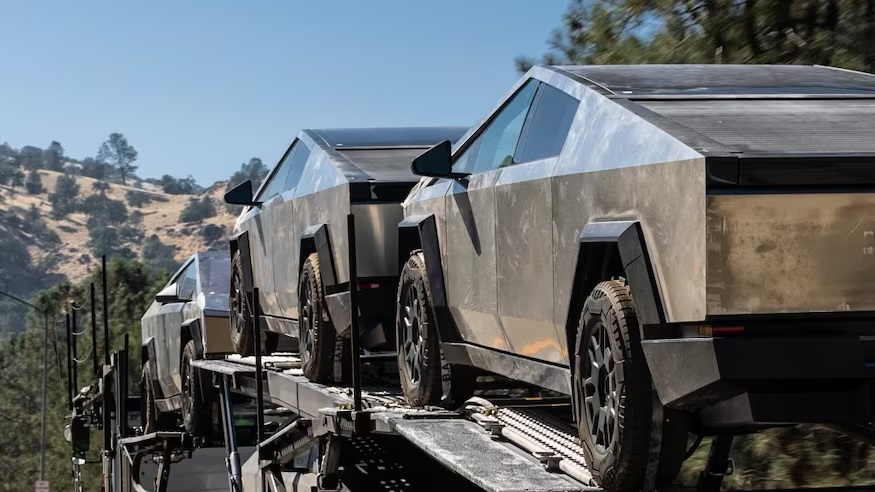
Tesla is now touting a compact electric pickup truck, a strategic pivot that comes as its long-hyped Cybertruck continues to underperform.

The potential shift was revealed by Lars Moravy, Tesla’s vice president of engineering, who said the company has been actively considering a smaller sibling to the Cybertruck, particularly with an eye on international markets where demand and regulatory requirements sharply differ from the U.S.

“We always talked about making a smaller pickup,” Moravy said during an event in California over the weekend, hosted by Tesla investors and owners. He explained that such a model could align with future plans for Tesla’s robotaxi platform, saying, “That kind of service is useful not just for people, but also for goods… We’ve definitely been churning in the design studio about what we might do to serve that need.”

This marks a possible recalibration of Tesla’s electric truck ambitions, especially as Cybertruck sales remain far below expectations. Tesla had predicted annual sales of over 250,000 units, but the reality has been sobering: just under 39,000 Cybertrucks were sold throughout 2024, and approximately 11,000 have been sold so far in 2025, according to industry estimates. That figure is a fraction of what Tesla envisioned when it launched the “apocalypse-proof” truck with high hopes and cinematic flair in 2023.

At the heart of the problem is the Cybertruck’s design and pricing. Initially promised at a starting price of $39,900, the actual entry-level model now starts at over $60,000, with premium trims inching close to the $100,000 mark. The vehicle’s hefty 6,000kg frame and sharp-edged design have further restricted its global expansion. The truck is not road-legal in many markets, including Europe and China—Tesla’s two largest markets outside the U.S.

Authorities in the UK seized one of the first Cybertrucks imported into the country earlier this year, while another in the European Union had to be modified to pass local safety regulations due to its angular, rigid body. While Tesla has managed to expand Cybertruck sales to Canada, Mexico, Saudi Arabia, the UAE, and Qatar, these remain relatively limited markets compared to the regulatory-tight European and Chinese auto sectors.

Meanwhile, Tesla’s overall vehicle sales have continued to slump. In the second quarter of 2025, the automaker recorded a 13.5% year-over-year drop, marking the second consecutive quarter of declining sales. The disappointing numbers come at a pivotal time for the company, which has been battling mounting criticism over its controversial self-driving technology claims.

California’s Legal Challenge

Tesla’s ability to continue selling vehicles in its home state of California is also under scrutiny. The California Department of Motor Vehicles has concluded a weeklong court hearing on a lawsuit it filed in 2022, accusing Tesla of misleading consumers about the capabilities of its “Full Self-Driving” (FSD) and “Autopilot” systems. The DMV is seeking to suspend Tesla’s sales license in the state for at least 30 days and to impose monetary penalties.

The suit argues that Tesla falsely marketed its driver-assist features as nearly autonomous, citing statements from the company’s website that implied the cars could operate from departure to destination without human input. DMV Commander Melanie Rosario, testifying as a witness, told the court she found Tesla’s branding around “Autopilot” and “FSD” to be confusing and contradictory, saying it gave the impression the vehicles could drive themselves despite disclaimers in the fine print.

Tesla’s legal team pushed back, arguing that the company had always stated drivers must remain attentive and that the systems are not fully autonomous. However, multiple witnesses, including experts in vehicle automation and advertising law, suggested that the language used by Tesla could indeed mislead consumers. The case remains pending, but legal analysts have flagged it as one with potentially far-reaching implications for Tesla’s operations nationwide.

Adding to Tesla’s woes is the public backlash tied to CEO Elon Musk’s recent appointment as the face of the White House’s controversial DOGE Office, which spurred protests outside Tesla dealerships across the country earlier this year. The political spotlight, coupled with growing consumer dissatisfaction, has only intensified the company’s mounting image problems.

Further complicating the situation are several lawsuits. In Florida, a wrongful death case alleges that a Tesla operating on Autopilot struck a parked SUV, killing a 22-year-old woman, while another class-action lawsuit and federal probe are examining reports of “phantom braking,” where Teslas suddenly slam on the brakes without cause, creating safety hazards at high speeds.

Amid the turbulence, a compact pickup could serve as a fresh offering to re-engage markets increasingly wary of Tesla’s bolder bets. Although Moravy noted that it’s still at the design phase, it is not clear whether a smaller truck will succeed where the Cybertruck stumbled.

Why Must We Have Companies?

0

Nations rise when leaders architect visions. Companies advance when business leaders articulate visions. Out of those visions are missions encapsulated. Simply, the enduring success of firms is intrinsically linked to a clear mission, relentless innovation, and strategic growth. A firm’s mission serves as its guiding star, articulating its fundamental purpose and the value it aims to deliver to stakeholders.

That clear purpose becomes the bedrock upon which all innovation is built, ensuring that new ideas and products are not merely novelties but purposeful advancements that align with the company’s core identity and market needs.

When they say in ancestral Igbo that a good product sells itself, the message is simple: through great products, product-market fits are readily attained. Oliver de Coque has noted that great music comes from God; and I paraphrase that great products emerge out of an innovation vision.

Innovation, in this context, is a continuous pursuit – from disruptive technologies to incremental process improvements – all designed to create new value, differentiate the firm, and overcome market frictions, ultimately driving its competitive edge.

Growth, therefore, is the natural outcome of a well-defined mission married with sustained innovation. It’s not just about expanding size but about enhancing market relevance and impact. Tekedia highlights that true growth involves scaling operations, capturing new market segments, and creating sustainable value for stakeholders. This strategic expansion allows firms to build “category-king” positions, solidifying their presence and influence.

Vision. Mission. By consistently revisiting their mission, fostering a culture of innovation, and executing intelligent growth strategies, firms can navigate dynamic landscapes, secure long-term viability, and contribute meaningfully to the broader economy.

From this September, at Tekedia Mini-MBA, we will be co-learning on “Why Do We Have Companies”? And everything that is required to answer that question! See our curriculum here

Top Cryptos to Buy Now: BlockDAG, Pi Network, AAVE, & HYPE Deliver Real Growth in 2025

0

This year isn’t about guessing games anymore. In 2025, the questions people are asking have changed. Who is actually building? Who is delivering products? Who’s doing work that matters to users? The noise is still out there, but it’s easier now to identify projects that are showing real momentum. That’s where the top cryptos to buy now begin to stand out, not because they’re trending, but because they’re gaining real traction.

Names like BlockDAG, Pi Network, Hyperliquid, and Aave aren’t waiting to be noticed. They’re taking action and showing results. Here’s a closer look at what sets each of them apart and why they’re gaining attention for the next breakout cycle.

1. BlockDAG: Live Demo Confirms Real-Time Dual Mining System

BlockDAG’s recently launched live demo has shifted attention from hype to working products. Instead of teasers or announcements, the demo provided exactly what many in the market wanted to see: mining devices running and earning BDAG live. The mobile-based X1 miner and the X10 hardware unit worked together smoothly, showing BlockDAG’s setup is no longer theoretical; it’s operational.

More than 2 million people have already installed the X1 app, which delivers up to 20 BDAG per day through an easy-to-use interface. The demo highlighted how output scales with the X10 hardware, which boosts earnings to 200 BDAG daily when connected via Bluetooth.

BlockDAG (BDAG) has raised $354 million and is priced at $0.0016 in Batch 29 of crypto presale. A scheduled post-launch price of $0.05 by August 11 points to a projected return of 3025%.

But this isn’t just about numbers. BlockDAG’s architecture uses a Block-DAG model based on directed acyclic graphs (DAGs), which improves scalability by enabling simultaneous transaction processing. Combined with referral campaigns, bonuses, and ongoing promotions, BlockDAG makes a strong case as one of the top cryptos to buy now.

2. Hyperliquid (HYPE): Big Swings with Breakout Opportunity

Hyperliquid (HYPE) is showing serious price movement. It fell 7.40% over the past week but still gained 23.81% this month and 101.73% over six months. The price now ranges from $42.73 to $49.58. A move past resistance at $53.15 could open the door to $60.00. Support sits at $39.45 and $32.60, indicating a possible 24% downside risk.

An RSI of 45.29 reflects neutral conditions, and a Stochastic of 11.73 points to potential overselling. Meanwhile, the MACD is slightly negative, adding some caution. Among the top cryptos to buy now, HYPE’s direction depends on whether it holds above key support or breaks past resistance.

3. Pi Network (PI): Short-Term Strength After Prolonged Drop

After a lengthy downtrend, Pi Network (PI) rose 4.48% this week. It is still down 7.33% over the past month and 33.36% over six months, but currently trades between $0.42 and $0.47. This range hints at some short-term stability. The 10-day SMA sits at $0.47, slightly above the 100-day SMA of $0.46, a setup that indicates near-term support.

The Relative Strength Index (RSI) at 42.37 suggests PI may be undervalued, while the low Stochastic reading of 7.72 points toward possible overselling. For PI to climb, it needs to push past resistance at $0.50 and then $0.55. As one of the top cryptos to buy now, its next move likely hinges on whether it can clear these resistance levels or hold above key support zones.

4. Aave (AAVE): Watching Resistance for the Next Move

Aave (AAVE) slipped 7.35% this week but is still up 32.99% over the last month. It has dropped 10.17% in six months. The current price sits between $307.48 and $340.26. Its 10-day SMA is $305.62, and the 100-day SMA is $318.53. With an RSI of 40.30 and a Stochastic of 19.90, AAVE is showing oversold signs.

The MACD reading of -2.626 confirms pressure to the downside. If AAVE breaks above $355.60, it could rise to $388, representing a potential 15% to 20% gain. On the other hand, falling below $290.05 or $257.27 could lead to deeper losses. For anyone monitoring the top cryptos to buy now, AAVE is worth tracking due to its volatility and technical indicators.

These 4 Projects Are Gaining Real Ground

There’s no shortage of new projects in 2025, but only a few are building things that people actually use. Pi Network is starting to find short-term support after a tough stretch. Hyperliquid is volatile but still showing momentum. Aave’s current drop hasn’t erased its strong monthly performance and is nearing an important resistance level.

Still, BlockDAG is leading the way among the top cryptos to buy now. Its live demo proved that real mining output, up to 200 BDAG daily, is already happening through the X10 hardware. With a DAG-based structure built for scalability, referral-based incentives, and a $0.0016 entry point alongside a 3025% projected return, BlockDAG isn’t preparing to launch; it’s already moving forward.

Sun King Secures $156 Million Securitisation to Expand Affordable Solar Access in Kenya

0

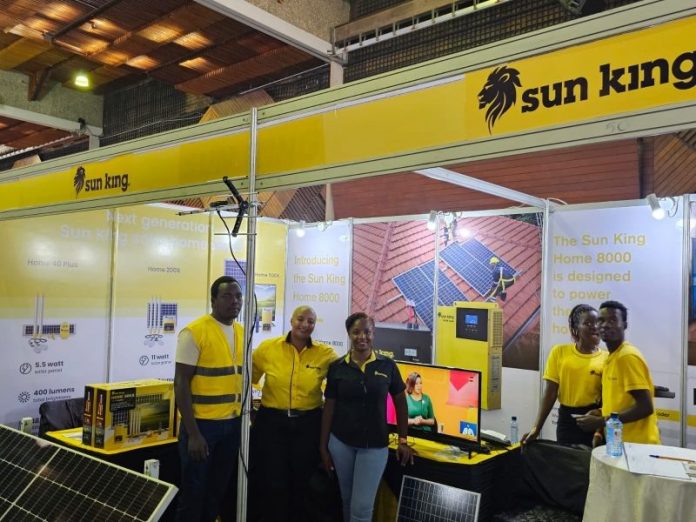
Sun King, Kenya’s largest provider of off-grid solar energy solutions, has successfully closed a landmark $156 million (KES 20.1 billion) securitisation to accelerate access to affordable solar power across Kenya.

The deal is reportedly the largest in sub-Saharan Africa, outside South Africa, and the first to be majority-backed by commercial banks.

The deal is backed by five commercial banks which include, Absa Bank Kenya Ltd, Citi, The Co-operative Bank of Kenya, KCB Bank Kenya Limited, and Stanbic Bank Kenya Ltd and three development finance institutions—British International Investment, Dutch development bank FMO, and Norfund (Norwegian Investment Fund for Developing Countries).

The funding will enable 1.4 million low-income households and businesses to gain electricity access, many for the first time, reducing dependence on costly and polluting fuels like kerosene and diesel.

The securitisation is built on the Sun King’s award-winning $130 million transaction completed in 2023. Through its pay-as-you-go model, Sun King allows households to access solar products with small, flexible payments starting from $0.19 (KES 25) per day via mobile money. To date, the company has extended $1.3 billion in solar loans to nearly 10 million customers across Africa.

Speaking on the funds raised, Anish Thakkar, co-founder of Sun King said,

This deal signals a major turning point for green energy finance in Africa. It shows that African commercial banks believe in the power of pay-as-you-go solar and are ready to back it with serious capital. Local currency capital is essential to unlocking the scale and speed needed to achieve universal energy access.”

Also commenting, Jorge Rubio Nava, Citi’s Global Head of Social Finance, noted that the securitisation underscores the impact of innovative financing models.

In his words, It demonstrates the effectiveness of pay-as-you-go business models to reach underserved communities at scale and the role of development finance institutions in mobilising private capital.”

Founded in 2007, Sun King designs, distributes, installs, and finances solar energy solutions for the 1.8 billion people without reliable access to electricity. From cost-effective solar lanterns and home systems that provide entry-level access to electricity to powerful, multi-kilowatt-scale solar systems that offer power equity with the traditional electrical grid, Sun King’s products meet diverse power and light needs across Africa and Asia.

Through innovative product design, affordable pay-as-you-go financing, and a grassroots field team of 15,000 agents providing installation and service, Sun King has powered the lives of over 82 million people.

The company currently operates one of the world’s largest direct-to-consumer, pay-as-you-go (PAYG) solar distribution networks, growing by 150,000 new clients per month across seven countries. In Kenya, one in five people use Sun King, with 18 million Kenyans benefiting from its operations over a decade.

According to GOGLA, the global association for the off-grid solar energy industry, Sun King now accounts for 38% of industry-wide PAYG solar revenue. This growth has eliminated 22 million tons of carbon dioxide emissions and saved consumers $4.4 billion in energy costs.

Continuing its mission to provide energy independence, the company recently expanded its solar inverter line with the launch of the PowerPlay Pro. This new product is designed to offer an uninterrupted power supply to homes and businesses, further solidifying Sun King’s leadership in the off-grid solar industry.

With this new funding, Sun King already powering 30% of Kenyan homes, plans to finance approximately 1.4 million solar products and smartphones in Kenya. Combined with its 2023 securitisation, the two transactions will support the delivery of around 3.7 million solar products and smartphones.

Looking ahead, the company plans to expand its presence in existing markets and explore new regions where solar energy can make a significant impact.