DD
MM
YYYY

PAGES

DD
MM
YYYY

spot_img

PAGES

Home Blog Page 81

Burry Escalates His Tech War, Calls Tesla “Ridiculously Overvalued” as Musk Defends His Vision

0

Michael Burry has found a new target in his widening clash with the world’s most powerful tech names — and this time, he’s aiming straight at Elon Musk.

The investor known for the subprime mortgage call that inspired The Big Short said on Sunday night that Tesla’s valuation “is ridiculously overvalued today and has been for a good long time.” The remark appeared in a fresh post on his Substack, published days after he revealed bets against Nvidia and Palantir.

Burry argued that Musk’s newly approved $1 trillion compensation plan will further dilute Tesla’s shares over time. He also delivered one of his sharpest jabs yet at Musk’s shifting product pitches.

“The Elon cult was all-in on electric cars until competition showed up, then all-in on autonomous driving until competition showed up, and now is all-in on robots — until competition shows up,” he wrote.

A Long-Running Grudge Match

This is not Burry’s first swing at the company. In 2021, he wagered against about $530 million worth of Tesla stock before exiting the trade months later, explaining to CNBC that it had been “just a trade.”

His latest salvo arrives as Tesla’s stock trades at more than 250 times earnings — far above traditional automakers — a valuation that even long-time short seller Jim Chanos said in 2023 was inflated.

Burry has spent the past year calling the surge in AI-linked stocks a bubble. After disclosing short positions against Nvidia and Palantir last month, he traded barbs with both companies online. In November, he deregistered his hedge fund and moved his commentary to Substack, where he has been more vocal.

Musk’s Response as Tesla Shares Climb

Tesla’s stock is up 11% in 2025, buoyed by the company’s robotaxi push. Musk, who often spars with short sellers, has insisted that Tesla will become the world’s most valuable company.

His $1 trillion pay package, approved by Tesla shareholders last month, hinges on the carmaker’s valuation rising to $8.5 trillion within ten years. That target is nearly twice Nvidia’s current valuation.

Tesla still leads the US EV market with about 41% market share as of August, though that number has slid as rivals push their own models into the market.

Musk argues that the company’s future rests on two pillars: its robotaxi program and its humanoid robot, Optimus. Both lines face growing rivalry from firms like Google-backed Waymo and China’s Unitree, which has gained attention with its lower-cost robotics platform.

A Wider Tech Showdown

Burry’s campaign puts him at odds with nearly every major force in the tech rally. He has attacked AI exuberance, questioned the basis of trillion-dollar pay packages, and now taken aim at the flagship company of the EV and automation race.

For investors, the fight between the man who foresaw the housing collapse and the man steering the most polarizing automaker on the planet adds a fresh layer of drama to a market already running hot on expectations of AI-fueled transformation.

Investors, now driving one of the most heated valuations in global markets, are expected to determine whether Burry’s warnings gain traction this time — or whether Tesla’s momentum continues to defy skepticism.

India’s Factory Output Slumps to 14-Month Low in October, Casting Shadow Over Robust GDP Growth

0

India’s industrial engine registered a sharp slowdown in October 2025, with the Index of Industrial Production (IIP) growing a meager 0.4%, marking a 14-month low that signals a significant pause in economic activity.

The figure fell dramatically short of the 4.0% growth recorded in September and the 3.1% growth expected by economists in a Reuters poll, dampening the optimism fueled by recent headline GDP numbers.

The Ministry of Statistics & Programme Implementation attributed the weak performance largely to the calendar effect, noting a smaller number of working days in October due to major national festivals, including Dussehra and Deepawali. The 0.4% increase represents the lowest growth rate since August 2024.

Sectoral Deceleration and Contraction

The three primary sectors that constitute industrial output exhibited a mixed, yet overwhelmingly negative, performance:

Manufacturing Sector: Growth in the largest component of the index slowed sharply, rising just 1.8% in October compared with a healthy 4.8% in September, indicating a loss of momentum as pre-festive inventory building concluded.

Mining Activity: The sector contracted, deteriorating by 1.8%.

Electricity Production: The most significant decline was seen in the utility sector, which plunged by 6.9%.

The growth rates of the three sectors for the month of October 2025 are thus Mining (-1.8%), Manufacturing (1.8%), and Electricity (-6.9%).

The Paradox of GDP and Forward Outlook

The sharp industrial slowdown in October creates a divergence with the strong macroeconomic performance reported just prior. The Ministry of Statistics and Programme Implementation data showed that India’s economy grew faster than expected in the quarter ending in September (Q2 FY26), at a robust 8.2%, up from 7.8% in the previous quarter (Q1 FY26).

October was a crucial month for the economy, as New Delhi had rolled out Goods and Services Tax (GST) reductions, effective September 22, specifically to spur domestic consumption and soften the blow from the 50% U.S. tariff on Indian goods. The IIP data tracks short-term changes in output across a basket of industrial products, where eight core industries, including steel, cement, electricity, and fertilizer, account for 40% of the index’s weight.

Despite the tariffs and the low October output, economists suggest the underlying domestic economy remains robust. Dipti Deshpande, principal economist at S&P Global-owned Crisil, stated that “sturdy consumption demand” will partially offset the negative impact of weaker export demand between October and December, providing a beneficial cushion for the manufacturing sector.

She added that robust rural incomes, low inflation, reduced interest rates, and tax relief “should keep consumption healthy.”

However, she cautioned that the government is “likely to moderate its capex in H2 [October-March] to meet fiscal deficit target amid subdued tax collections,” a potential drag on the infrastructure and capital goods segment moving forward.

Analysis: Impact of the 50% U.S. Tariff

The 50% U.S. tariff, which escalated from a 25% duty in early August, has caused immediate and profound damage to India’s export sector. The tariff impacts over half of India’s exports to its largest trading partner, the United States, placing approximately $48.2 billion worth of goods (based on 2024 export values) at risk.

The steepest damage was concentrated in sectors where India holds a competitive edge and which are crucial for domestic employment. These labor-intensive sectors—including textiles and apparel, gems and jewelry, leather and footwear, solar panels, and chemicals—faced the full 50% duty, which has been cited as a punitive measure linked to India’s continued purchase of Russian energy.

Exports in this critical group plummeted by 31.2% between May and October 2025, according to the Global Trade Research Initiative (GTRI). This tariff regime renders Indian goods among the most heavily taxed in the U.S. market, creating a severe cost disadvantage against rivals like Vietnam and Bangladesh.

The resulting weaker export demand is directly reflected in the IIP data, where manufacturing output grew only 1.8% in October, a significant deceleration from 4.8% in September. This is despite the pre-festival inventory building that typically precedes the holiday season (Dussehra and Deepawali, which ironically contributed to fewer working days and the overall low 0.4% IIP number). The tariffs have triggered volatility and a broad market correction in export-linked sectors, leading to a decline in engineering goods exports by 16.71% year-on-year in October.

Recognizing that it could not immediately reverse the U.S. tariffs through negotiation, New Delhi deployed the GST cut as a tool to substitute external demand with sturdy domestic consumption, creating an internal “shock absorber” for the economy.

Bitcoin Slides Below $90K as December Opens With Renewed Selling Pressure

0

Bitcoin began December on a downward slide, dropping below $90,000 on Monday and extending losses after suffering its steepest monthly decline since the 2021 crypto crash. Renewed risk aversion pushed investors out of both stocks and digital assets, fueling a selloff that shows few signs of easing.

The world’s largest cryptocurrency fell as much as 6.1% during the session and was trading near $86,384 at the time of reporting, down nearly 5% and headed for its largest single-day fall in a month. The downturn leaves Bitcoin hovering near last month’s eight-month low of $80,553.

Market analysts observed that Bitcoin’s sharp fall below $86,000 coincided with a notable shift in wallet behavior. Large holders have slowed their accumulation, while smaller retail buyers have increased their purchases, an imbalance that often signals a late-cycle phase marked by fragility. Bitcoin has fallen considerably since setting an all-time high of $126,223 in early October.

Further declines could send the price back toward the November 21 low of $80,553, a drop previously accelerated by concerns surrounding an emerging artificial-intelligence bubble. According to commentary from The Kobeissi Letter, the latest slide stemmed from thin weekend liquidity combined with record-high leverage, rather than fundamental weakness. The publication noted that Bitcoin plunged $4,000 within minutes despite the absence of market-moving news, triggering mass liquidations and a cascading selloff.

Victoria Scholar, head of investment at Interactive Investor, said BTC selling pressure appears persistent, “It feels like investors, big and small, are feeling very cautious toward cryptos in the short term at least”, she said.

Analysts widely agree that the $80,000–$85,000 range now represents critical support. A sustained hold above that zone could prompt stabilization or even a rebound in the coming weeks. However, a decisive breakdown could signal the start of a deeper retreat. Investors who bought near the October peak may have to wait significantly longer before returning to profit.

The broader crypto market mirrored Bitcoin’s decline. Ethereum slumped over 7% to around $2,800, while XRP, BNB, Solana, Cardano, and Tron also posted sharp losses. More than $564.3 million in long positions were liquidated, including $188.5 million tied to Bitcoin and $139.6 million linked to Ether. In total, both long and short liquidations erased approximately $641 million from the market.

The selloff is widely viewed as a “risk-off start to December,” as investors divest from riskier assets amid rising macroeconomic uncertainty. Expectations for swift interest-rate cuts from the Federal Reserve have diminished, while inflation remains stubborn in major economies. Consequently, risk assets including cryptocurrencies have come under renewed pressure.

Heatmap data viewed by Tekedia presents additional concerns. Bitcoin’s price has been consuming liquidity around $86,000, but substantial bid orders remain stacked between the current spot price and $79,600. This suggests a possible move lower to sweep remaining liquidity before any meaningful rebound.

Technically, Bitcoin confirmed a bear-flag pattern on the daily chart by dropping below the lower boundary at $90,300. Veteran trader Peter Brandt shared a macro-outlook indicating that Bitcoin could find long-term support within the $45,000–$70,000 zone.

Outlook

The crypto market now turns its attention to the first key economic events of December. The Fed’s preferred inflation gauge, due December 5, may sway expectations for rate cuts. A softer reading could lift sentiment, while a stronger print may apply additional downward pressure on crypto. Also, the U.S. CPI report follows on December 10 and is expected to further influence market outlooks ahead of the upcoming Federal Reserve decision.

With both inflation readings scheduled before the Fed meeting, markets may undergo multiple sentiment resets within days. As highlighted by Cointelegraph, Bitcoin’s current trajectory is closely mirroring the 2022 bear market, with a near-perfect correlation so far in 2025. If the pattern holds, a sustained rebound may not materialize until well into the first quarter of next year.

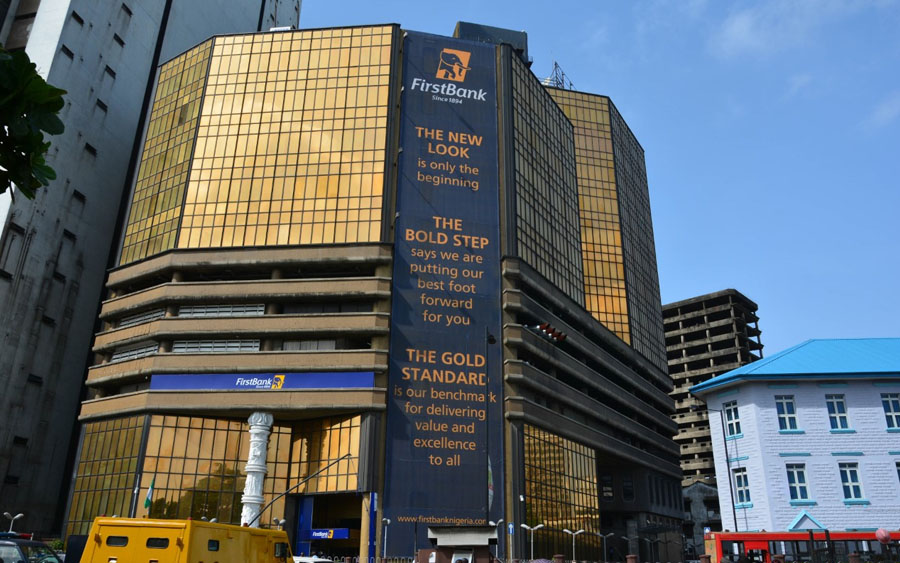
FBN HoldCo Exits Merchant Banking as EverQuest Completes Takeover FBNQuest

0

First HoldCo Plc has confirmed to the Nigerian Exchange Limited (NGX) that it has completed the sale of its 100 percent equity stake in FBNQuest Merchant Bank Limited to EverQuest Acquisition LLP, bringing a long-running restructuring of its investment banking and asset management subsidiaries to a definitive close.

The announcement, contained in a regulatory filing dated November 27, 2025, states that all approvals from the Central Bank of Nigeria have now been secured, making the transaction final and formally ending FBN Holdings’ ownership of the merchant banking franchise.

EverQuest Acquisition LLP is said to be a consortium comprising Custodian Investments Plc, Aion Investments, and Evercorp Industries.

The road to divestment

The journey toward this exit began in September 2024 when FBN HoldCo revealed its intention to sell FBNQuest Merchant Bank as part of a wider portfolio rebalancing effort. At the time, the Group pointed to the need to reinforce its core commercial banking operations, which account for the bulk of its revenue, market share, and long-term growth prospects.

According to a report by Nairametrics:

• EverQuest emerged as the preferred buyer after a competitive bidding process.
• The sale was framed as a “strategic separation” that would streamline the Group’s HoldCo structure.
• The transaction was aimed at sharpening FBN HoldCo’s focus on commercial banking and accelerating its digital banking push.

Analysts were broadly aligned in their view that the divestment was both tactical and overdue. Under the HoldCo model, banks often face higher regulatory capital requirements tied to small subsidiaries. FBNQuest Merchant Bank, contributing less than 5 percent of Group revenue and assets, had long been seen as a business with limited scale relative to the Group’s larger ambitions.

Some analysts have argued that trimming non-core operations would eliminate regulatory drag, support a cleaner capital structure, and help unlock shareholder value. The move also aligned with a wider pattern in the Nigerian banking sector where HoldCos have been pruning subsidiaries to focus on segments with stronger margins and faster digital adoption.

What the completion signals for the market

With the completion of the sale, FBNQuest Merchant Bank is now fully out of the FBN Holdings umbrella. EverQuest Acquisition LLP assumes complete operational and strategic responsibility for the franchise.

The new owners bring a mix of institutional investment backgrounds, and the market will be watching for whether EverQuest adopts a more aggressive expansion stance in corporate finance, structured credit, and capital markets. It is notable that EverQuest is stepping into a merchant banking sector that has grown more competitive, driven by rising demand for advisory services, debt capital structuring, and private-market deals.

The divestment brings immediate clarity to FBN Holdco’s business model. The Group can now redirect capital, talent, and managerial attention toward higher-growth areas, which include commercial banking, consumer lending, agency banking, and payments. This shift fits neatly into a broader strategy of pushing digital financial services more forcefully across Nigeria, where electronic transactions and mobile banking continue to expand.

In addition, the sale reshapes competitive dynamics in merchant banking. EverQuest’s entry adds a new layer of competition to a space heavily influenced by institutions that blend investment banking, capital markets, and structured finance.

Meanwhile, FBN HoldCo’s focus on strengthening its main banking franchise   reinforces a broader trend among Nigeria’s tier-one banks. Several have scaled back non-core subsidiaries in response to higher regulatory scrutiny, rising capital thresholds, and the need to maintain leaner operating models.

Legacy and background of FBNQuest Merchant Bank

FBNQuest Merchant Bank began life as Kakawa Discount House before being acquired by FBN Holdings in 2014. It secured regulatory approval to operate as a merchant bank in 2015. Over the years, it has built capabilities in corporate banking, treasury operations, structured finance, and investment banking advisory.

Yet despite its reputation and niche strengths, the bank remained a relatively small piece of the FBN Holdings empire, contributing under 5 percent of Group revenue and assets. The decision to sell it fits within a deliberate, multiyear internal evaluation of how the Group allocates capital under the HoldCo structure.

Looking ahead, with all regulatory and transactional processes concluded, the focus will now shift to two critical issues:

• How EverQuest plans to reposition FBNQuest Merchant Bank in a market where competition is intensifying.
• How FBN HoldCo leverages the released capital and operational clarity to accelerate growth in commercial and digital banking.

The transaction is widely seen as one of the most consequential corporate realignments in Nigeria’s financial services industry this year, setting the stage for both institutions to pursue sharply different growth paths.

BlockDAG’s Launch Stability: Mandatory Vesting Aligns with Cardano Upgrades and Ethereum Accumulation

0

The current market for foundational distributed ledger platforms presents a paradox. The much-anticipated Cardano (ADA) price rally is continuously suppressed by sudden, large-scale crypto sales from major holders, while the latest Ethereum (ETH) forecast analysis reveals that its robust underlying principles are in constant conflict with unpredictable price volatility.

This ongoing struggle among established cryptos underscores a critical vulnerability: how can projects effectively safeguard against the immediate, value-destroying sales by short-term speculators upon public launch? BlockDAG addresses this with a structured solution: the Vesting Alignment.

By implementing a mandatory 40% immediate unlock and distributing the remaining 60% monthly over three subsequent periods, the project actively discourages quick financial exits. This anti-speculative framework is specifically designed to reward those committed to the crypto’s long-term success, positioning BlockDAG as the genuine best new crypto to buy for sustainable growth.

1. BlockDAG’s 40/60 Vesting Shield: Protecting Launch Integrity

The exceptional success of BlockDAG’s over $435 million funding campaign is now secured by a stringent economic safeguard: the mandatory crypto release schedule. This structure functions as an important protection measure, ensuring the project primarily benefits patient capital rather than speculative participants seeking rapid returns. The policy dictates that all purchased cryptos follow a fixed distribution schedule: 40% is made available immediately upon public listing, and the remaining 60% is released monthly over the subsequent three months.

This 40/60 structure is a deliberate defense against sudden market downturns. By strictly limiting the quantity of available cryptos that can be sold immediately, BlockDAG effectively discourages “pump-and-dump” trading schemes and prevents the kind of immediate price collapse that has plagued many previous pre-launch initiatives.

The recent termination of all promotional incentives and perks further reinforces this anti-speculative posture, firmly positioning the project as a structurally sound best new crypto to buy. Currently in Batch 32, the price is set at $0.005, contrasting sharply with the confirmed public listing price of $0.05 per crypto, which signals a clear runway for potential high returns for early participants.

The structured release schedule effectively bridges the period between the funding phase and the full operational launch, ensuring the crypto distribution is gradual and healthy. This methodical approach aligns the financial commitment of all ecosystem participants: the core team, the major institutional backers provided an $86 million commitment, and the extensive community of over 312,000 holders.

This disciplined, non-speculative foundation, combined with the project’s 15,000 TPS hybrid technology, is why BlockDAG is viewed as a strong candidate for the best new crypto to buy. Furthermore, with only 4.2 billion coins remaining for sale, the supply is rapidly tightening.

2. Cardano Eyes Breakout Amidst Technical and Regulatory Catalysts

Cardano (ADA) has recently faced considerable downward pressure, trading near $0.61 USD following a noticeable decline in late October. This price weakness, where the crypto struggled to hold the crucial $0.60 price floor, was partly exacerbated by large-scale sales from major holders, amounting to 100 million ADA between October 28 and 31.

Despite this immediate bearish activity, the underlying technical analysis shows the price consolidating within a recognizable multi-month symmetrical triangle pattern, which market observers often suggest precedes a significant directional movement.

The pathway for a Cardano (ADA) price rally is being paved by key fundamental and regulatory developments. The Midnight network, a quantum-resistant system upgrade, is scheduled for full deployment by November 2025. This major enhancement is seen as a vital factor that could attract substantial corporate adoption.

Moreover, regulatory clarity in the U.S., where the GENIUS Act classified ADA as a commodity, strongly supports growing institutional interest. Analysts project a 75% probability of an ADA ETF by 2026, which, if approved, could trigger a substantial market rally past the $1.00 resistance level and potentially towards $2.05 by the close of 2025.

3. Ethereum Rebounds as Institutional and Whale Accumulation Solidifies Support

Ethereum’s price action since late October has been defined by pronounced volatility and difficulty in maintaining the critical $4,000 price point, with the crypto falling to approximately $3,868 on October 30 amidst negative market sentiment.

Despite this short-term pressure, the fundamental health of the underlying network points toward sustained strength. On-chain metrics have indicated that Ethereum’s altcoin activity reached a historic all-time high on its network. This provides a clear, solid foundation that stands in stark contrast to the recent price decline.

The Ethereum (ETH) forecast analysis for the immediate future remains focused on a potential market recovery in November. Analysts predict ETH could appreciate by 11.66% to reach $4,272.40 by the month’s end. Supporting this positive outlook, whales engaged in a substantial $135 million buying frenzy. Furthermore, institutional confidence remains strong, with Ethereum ETFs recording $246.02 million in inflows on October 28. This consistent accumulation by large market participants suggests a firm conviction that the crypto is being positioned for a larger, sustained upward trend.

Final Assessment: Structure vs. Volatility

Established cryptos continue to struggle against market volatility: the potential Cardano (ADA) price rally is being suppressed by large-holder sales despite the promise of its quantum-resistant upgrade. Similarly, the Ethereum (ETH) forecast analysis points to a separation between strong accumulation by large entities and record network usage, which clash with uncertain prices. This continuous conflict demonstrates the need for structured systems that reward genuine, long-term commitment.

BlockDAG provides this necessary structure through its Vesting Alignment. By mandating a 40% immediate unlock with the remaining 60% released over three months, the project ensures sustained supply distribution and effectively guards against the sharp market dumps that frequently damage post-launch periods. This anti-speculative design, combined with its massive funding success, firmly establishes BlockDAG as the superior best new crypto to buy for those prioritizing long-term project viability.