DD
MM
YYYY

PAGES

DD
MM
YYYY

spot_img

PAGES

Home Blog Page 84

ZKP Crypto Launches Privacy-Focused AI Presale at $0.0004, While Dogecoin & Zcash Lose Momentum

0

The cryptocurrency market regularly presents a classic dilemma. Established networks offer proven history and deep liquidity, but their massive valuations naturally limit future exponential growth. Conversely, nascent protocols introduce novel tokenomics and fresh cryptographic frameworks specifically designed to capture early-stage capital.

This divergence is visibly impacting current asset charts. Dogecoin remains tightly anchored near the $0.10 mark, while Zcash experiences a sharp downward correction following its massive gains earlier this year. As momentum stalls across these legacy networks, tactical investors are actively rotating funds into ground-floor entry positions. Zero Knowledge Proof (ZKP), a Layer 1 blockchain building private AI infrastructure, is securing major traction with its algorithmic, 25-stage public presale framework.

Dogecoin Remains Anchored Near $0.10

Dogecoin persists as one of the most visible brands in the global digital asset ecosystem. The network benefits from an exceptionally large, dedicated base of retail supporters, extensive presence on global trading desks, and multiple years of institutional recognition.

Despite these structural strengths, its current price velocity appears remarkably muted. DOGE has spent several consecutive weeks compressing around the $0.10 horizontal level without signaling any clear macroeconomic breakout. While it safely retains its spot among the largest digital currencies by total market capitalization, this stagnant behavior points to a network seeking external macro catalysts rather than experiencing organic, self-sustained momentum.

For strategic market actors, the core concern regarding large-cap tokens is not network longevity but mathematical upside limitations. Dogecoin has already traversed several aggressive macro cycles and locked in tremendous valuation growth over time.

Consequently, risk-managed capital is systematically shifting attention toward nascent architectures that occupy the starting phases of development and have yet to trigger their primary valuation expansion phase.

Zcash Reverses into a Market Correction

Zcash charts display an entirely distinct technical structure, yet the network faces an identical capital rotation challenge.

The privacy-centric protocol generated an aggressive upward trend earlier this trading year, fueled by a sharp revival of global interest in cryptographic anonymity tools and private ledger transactions. However, following that rapid expansion, ZEC has entered a significant cooling-off trend.

Consolidating deep within the mid-$500 territory, Zcash has yielded its short-term bullish momentum as market participants systematically realize profits from its preceding vertical surge. Although the platform retains its reputation as a leading protocol for confidential transactions, this healthy market pullback forces investors to re-examine whether its near-term risk-to-reward ratio remains as compelling as it was prior to the rally.

Critically, a standard technical correction does not indicate long-term structural failure for Zcash. Heavy capitalization networks routinely undergo major retracements following vertical expansions. However, these prolonged periods of consolidation naturally drive market capital to look for unreleased, micro-cap protocols positioned at the absolute baseline of their adoption lifecycles.

This demand for structural alternatives explains why early-stage blockchain projects rapidly secure visibility the moment established market leaders begin moving sideways.

The Value Proposition Driving ZKP Crypto

Zero Knowledge Proof enters the digital asset landscape from a radically earlier phase than highly liquid tokens like Dogecoin or Zcash.

The underlying project operates as a baseline Layer 1 protocol specifically engineered to power privacy-preserving artificial intelligence operations. Moving away from standard project setups that focus exclusively on basic token distribution, ZKP features Proof Pods; actual physical computing nodes that execute resource-intensive tasks directly within the network. Standard network validators retain full responsibility for verifying transactions and securing the distributed ledger, while the distributed Proof Pods supply raw processing capacity to power the broader computing ecosystem.

The strict architecture governing this launch has emerged as its most compelling selling point among market analysts.

Project documentation explicitly states that the framework allows no hidden insider allocations and zero private seed-round discounts. Instead, public participation occurs via an open, automated advancement matrix utilizing unalterable pricing thresholds and fixed supply tranches.

Market advocates argue that this absolute algorithmic transparency provides participants with perfect visibility into ongoing presale operations and upcoming transition milestones.

Dissecting the ZKP Presale Framework

The token distribution strategy for ZKP executes through a tightly managed 25-stage structural matrix.

Current public distribution data confirms an initial Stage 1 entry rate of $0.0004, an official exchange listing target of $0.04, and a fixed timeline of 25 micro-phases. Token costs scale upward through each consecutive milestone until reaching $0.02 during the final Stage 25.

Concurrently, available token tranches taper downward as the funding sequence moves forward. Stage 1 kicks off with 2.5 billion tokens open to the public, whereas Stage 25 narrows the supply down to 1.5 billion tokens.

The network architecture firmly restricts the aggregate presale pool to exactly 35% of the macro token supply. This distribution model ensures that step-ups in asset price and reductions in tranche availability occur under automated, predictable smart contract conditions.

By Stage 10, the contract sets token costs at precisely $0.00106, illustrating the exact mathematical curve dictating the timeline.

Management defines this fundraising architecture as purely quantitative rather than discretionary. Instead of shifting parameters based on volatile market conditions, progression relies on fixed, pre-programmed mechanics visible to every observer.

The initial Stage 1 kicked off at precisely two times the peak clearing price established during the project’s original competitive auction phase, laying the blueprint for the current 25-stage matrix. Management notes that Founding Member status is mathematically locked, as it required participation prior to the launch of the public structure.

This intentional transition from a competitive bidding environment to a fixed, rule-based framework underscores ZKP’s focus on predictable, non-discretionary asset distribution.

Final Thoughts

Dogecoin and Zcash maintain their roles as vital pillars of the blockchain economy, backed by deep community loyalty and lengthy historical operations. Nevertheless, their recent sideways and downward price trajectories are pushing sophisticated capital to look beyond large-cap market choices.

Zero Knowledge Proof presents an analytical alternative. By combining a native Layer 1 engine designed for confidential machine learning, physical computing power from Proof Pods, a locked 35% public supply tranche, and an open 25-stage pricing schedule, the protocol differentiates itself from multi-billion-dollar projects.

Explore Zero Knowledge Proof:

Website: https://zkp.com/

Buy: purchase.zkp.com

X: https://x.com/ZKPofficial

Telegram: https://t.me/ZKPofficial

STMicroelectronics Raises AI Data Centre Revenue Target to $1bn, Shares Rise 10%

0

The artificial intelligence spending wave is creating winners far beyond the companies building headline-grabbing AI processors. On Tuesday, semiconductor manufacturer STMicroelectronics sharply increased its revenue targets for its data-center business, signaling that demand for the infrastructure supporting AI systems continues to accelerate at a pace faster than many industry observers anticipated.

Investors welcomed the announcement. Shares of the Franco-Italian chipmaker climbed as much as 10% to €65.21, their highest level since September 2000, before settling slightly lower. The stock remained among the strongest performers on Europe’s benchmark STOXX 600 index, reflecting growing confidence that STMicroelectronics is becoming a significant beneficiary of the global AI investment cycle.

The company now expects its data-center business to generate approximately $1 billion in revenue in 2026, a substantial increase from its previous forecast of revenue “nicely above” $500 million. Even more striking was management’s outlook for 2027.

“Assuming the current dynamic continues and with the current engagements we have, revenues could double in 2027,” the company said.

That projection effectively raises STMicro’s 2027 ambitions from its earlier expectation of revenue “well above $1 billion” and points to a business that could become one of the company’s fastest-growing segments over the next several years.

The upgraded guidance highlights an increasingly important reality in the AI era: while companies such as Nvidia dominate attention because of their graphics processing units, a vast ecosystem of semiconductor firms is benefiting from the massive infrastructure required to support AI computing.

Unlike Nvidia and other companies focused on AI accelerators, STMicroelectronics’ exposure lies primarily in the hardware surrounding those processors. Its products are used in power management systems, energy conversion equipment, industrial electronics, and other critical components that help data centers operate efficiently.

As hyperscale cloud providers and technology companies spend hundreds of billions of dollars building AI infrastructure, demand is rising not only for computing chips but also for the supporting technologies that distribute power, manage heat, and ensure reliable operation of increasingly energy-intensive facilities.

The scale of that opportunity is enormous. Global technology giants, including Microsoft, Amazon, Alphabet, Meta, and Oracle, are collectively committing unprecedented amounts of capital to AI infrastructure. Industry forecasts suggest annual spending on AI-related data centers could approach $1 trillion within the next few years.

That spending boom is creating opportunities for suppliers throughout the semiconductor value chain. For STMicroelectronics, the upgraded forecast is being driven by two factors: stronger-than-expected customer demand and progress in expanding manufacturing capacity.

The company said its improved outlook reflects both the continued surge in AI-related infrastructure spending and advances in ramping production capabilities to meet future orders. Capacity expansion has become a critical competitive advantage in the semiconductor industry as customers seek assurance that suppliers can meet long-term demand.

Analysts believe the guidance upgrade could lead to meaningful revisions in earnings expectations.

According to analysts at Jefferies, the data-center business alone could contribute approximately 7% growth to STMicro’s revenue in 2027, representing a substantial portion of their overall forecast of 20.5% growth for the company that year.

Analysts at J.P. Morgan reached a similar conclusion.

“The new guidance on AI likely results in estimates rising in both years though we would think that estimates will rise more in 2027 than in 2026,” the bank said in a research note.

The market reaction suggests investors view STMicroelectronics as more than a traditional industrial semiconductor company. Instead, it is becoming part of the broader AI infrastructure story that has propelled valuations across the technology sector.

That transformation is good news for European technology companies. While the United States dominates AI software and advanced processor development, European firms have often struggled to establish leading positions in the most lucrative segments of the technology industry.

STMicro’s growing role in AI infrastructure offers a different path to capturing value from the AI revolution. Rather than competing directly with Nvidia, AMD, or other AI chip designers, the company is supplying the essential components that enable AI data centers to function.

Early enthusiasm around AI focused largely on the chips used to train and run models. Increasingly, attention is turning toward the infrastructure ecosystem required to support those chips, including networking equipment, power systems, cooling technologies, and semiconductor components.

As AI models become larger and more energy-intensive, those supporting technologies are emerging as critical bottlenecks and significant profit opportunities.

For STMicroelectronics, Tuesday’s upgraded targets suggest management believes the current AI investment cycle remains in its early stages. If hyperscale spending continues at its current pace, the company’s data-center business could become a major growth engine and an increasingly important contributor to earnings over the remainder of the decade.

The sharp rally in the stock indicates investors are beginning to price in that possibility.

SK Hynix Commits to Doubling Wafer Capacity by 2030 as Goldman Sachs raises its 2028 Profit Forecast to 24%

0

SK Hynix, the world’s second-largest memory chipmaker, plans to double its wafer production capacity over the next five years to meet surging demand for high-bandwidth memory (HBM) chips essential to artificial intelligence systems, the chairman of its parent SK Group said on Tuesday.

Chey Tae-won, speaking at the Computex technology conference in Taipei, a gathering that has drawn top executives from Nvidia and other leading tech firms, outlined an aggressive expansion strategy amid what he described as persistent supply bottlenecks in the memory industry.

“We are going to double the whole capacity over the next five years … there are a lot of obstacles and hurdles, but we will get over them and expand,” Chey told reporters.

SK Hynix holds a commanding 58% share of the HBM market in the first quarter, according to Counterpoint Research, ahead of Samsung Electronics and Micron Technology, each with 21%. HBM chips are critical for powering AI accelerators from Nvidia and others, and demand has outstripped supply as data center operators race to build ever-larger training clusters.

Chey reiterated his earlier forecast that memory supply shortages could persist through 2030, a view first expressed in March. He highlighted Nvidia’s upcoming AI personal computer architecture as another driver of long-term demand, and expressed hope that SK Hynix could become a major supplier of HBM for Nvidia’s advanced Vera Rubin platform.

Goldman Sachs Upgrades Profit Forecasts on Sustained AI Tailwinds

The bullish outlook is echoed by analysts. Goldman Sachs raised its 2028 operating profit forecasts for SK Hynix and Samsung by 24% and 23.3%, respectively, to 454 trillion won ($299.62 billion) and 610 trillion won. The bank cited sustained AI-driven demand as the key factor, expecting memory chip shortages to keep pricing elevated for years.

This momentum has already translated into landmark valuations. Last week, SK Hynix topped $1 trillion in market value for the first time, joining Samsung Electronics and Micron Technology in the elite club. The KOSPI benchmark has been one of the world’s best-performing major indexes, fueled almost entirely by the AI boom and the outsized success of South Korea’s memory chip giants.

Intensifying Competition in the HBM Market

Competition in high-bandwidth memory is heating up rapidly. On Tuesday, Samsung unveiled a mock-up of its future HBM5 chip and introduced new Heat Path Block thermal management technology to improve performance and efficiency. Last week, Samsung said it had begun shipping samples of its latest HBM4E chip to customers, claiming a lead over rivals in distributing advanced memory for AI data centers.

Chey noted that SK Hynix’s HBM4E roadmap would depend heavily on customer demand.

“There’s only one customer for HBM4E right now,” he said, referring to Nvidia.

He also stressed the need for deeper partnerships in Taiwan, not just with TSMC but across the broader ecosystem, to support scaling ambitions.

On pricing, Chey struck a balanced tone, warning that excessive increases could harm the broader AI ecosystem.

“The whole AI industry needs more sustainability. We have to continue to grow, but sudden jumps in prices can become a problem and actually hurt sustainability,” he said.

This reflects a maturing industry awareness: while tight supply has driven strong profits, unchecked price surges risk slowing AI adoption and triggering pushback from hyperscalers and cloud providers.

SK Hynix’s expansion plans come as the company navigates a complex global environment. Geopolitical risks, including U.S.-China tensions and export controls, continue to shape supply chain strategies. The firm’s heavy reliance on Nvidia as its primary HBM customer also presents concentration risk, though strong demand across the AI stack has so far mitigated concerns.

The doubling of wafer capacity represents a massive capital commitment in an industry known for cyclical swings. Success will depend on execution, continued AI investment by Big Tech, and the company’s ability to maintain technological leadership in HBM and advanced packaging.

SK Hynix has invested heavily in these areas, but competition from Samsung’s aggressive HBM roadmap and Micron’s innovations will test its position.

For South Korea, the success of SK Hynix and Samsung is strategically vital. The two companies together account for a significant portion of the KOSPI and national exports. Their performance has transformed the country into a central player in the global AI supply chain, but it also concentrates economic risk in a handful of national champions.

Overall, the AI-driven memory boom is reshaping the traditionally cyclical semiconductor industry into something more structurally growth-oriented, at least in the high-end segment. Goldman Sachs and other analysts now see sustained shortages through the end of the decade, suggesting a multi-year supercycle rather than the boom-bust pattern of previous decades.

Trump Signs Executive Order Mandating Companies To Share Advanced AI Models With Govt. Before Roll Out

0

President Donald Trump has signed a scaled-back executive order that creates a voluntary framework for frontier artificial intelligence companies to share advanced models with the U.S. government before public release.

The executive order, which highlights Washington’s growing struggle to balance national security concerns with the desire to maintain America’s technological lead over China, follows a faceoff with Anthropic.

The order, signed privately on Tuesday, marks a significant shift from earlier proposals that would have subjected cutting-edge AI systems to a much longer government review process. Instead of the previously discussed 90-day review window, companies will now have the option of providing federal agencies access to powerful AI models up to 30 days before launch.

The shorter review period underscores the administration’s recognition that lengthy regulatory hurdles could slow innovation at a time when competition among American AI developers has intensified dramatically. The White House has repeatedly emphasized that maintaining U.S. leadership in artificial intelligence remains a strategic priority amid fierce competition from China.

Trump himself signaled those concerns last month when he publicly questioned whether stronger oversight could inadvertently undermine U.S. competitiveness.

“We’re leading China. We’re leading everybody,” Trump told reporters on May 21. “And I don’t want to do anything that’s going to get in the way of that lead.”

The executive order arrives as policymakers grapple with a new generation of AI systems that are becoming increasingly capable of identifying software vulnerabilities, generating sophisticated code, and potentially enabling offensive cyber operations.

The emergence of so-called frontier models, the most advanced AI systems currently being developed by companies such as OpenAI, Anthropic, Google DeepMind, and other leading developers, has been at the center of those concerns.

Recent advances have alarmed cybersecurity experts because AI systems are increasingly capable of automating tasks that once required highly skilled human researchers. These capabilities can be used defensively to discover vulnerabilities before attackers do, but they can also potentially be used to identify and exploit software weaknesses at unprecedented speed and scale.

Anthropic’s handling of its powerful Mythos model illustrates the industry’s growing caution. The company disclosed earlier this year that it had restricted the release of Claude Mythos after internal testing revealed cybersecurity capabilities that exceeded the firm’s comfort level for a broad public rollout.

The startup subsequently indicated that it was developing additional safeguards before making Mythos-level systems more widely available, reflecting a broader industry debate over how quickly capable models should be deployed. The new model was a bone of contention between Washington and Anthropic as the former sought the use of Mythos for defense purposes. In March, the Pentagon formally designated the company a supply-chain risk, intensifying the rift and forcing Anthropic to sue.

The administration’s new order appears designed to address precisely those challenges. By encouraging companies to voluntarily share models before release, federal agencies gain an opportunity to evaluate emerging risks without imposing mandatory licensing requirements or lengthy approval processes that could slow development cycles.

The voluntary nature of the framework is particularly noteworthy. Unlike regulatory approaches being explored in some other jurisdictions, the U.S. government is seeking cooperation rather than direct control over model releases. That approach is likely intended to preserve goodwill with major AI developers, many of whom have warned that overly restrictive regulation could hamper innovation and push research activity overseas.

AI regulation has been immersed in a political tussle. The technology has become a key arena in the broader geopolitical contest between the United States and China, leading policymakers to weigh security concerns against economic and strategic considerations.

Many technology executives have argued that American leadership in AI depends on rapid deployment, large-scale investment, and the ability to commercialize breakthroughs quickly. From that perspective, a mandatory review system could create competitive disadvantages for U.S. firms relative to foreign rivals.

Yet cybersecurity officials worry that the same capabilities driving economic growth could also create new national security risks. Advanced AI models are becoming capable of accelerating vulnerability discovery, malware analysis, penetration testing, and other tasks traditionally performed by cybersecurity professionals.

The order therefore represents an attempt to thread a difficult needle: obtaining greater visibility into emerging AI risks without erecting barriers that industry leaders fear could slow innovation. Its effectiveness will ultimately depend on how many companies choose to participate and how much information they are willing to share with federal agencies.

SpaceX Reserves 5% Of IPO For Select Buyers As Musk Commits To One-Year Lock-Up

0
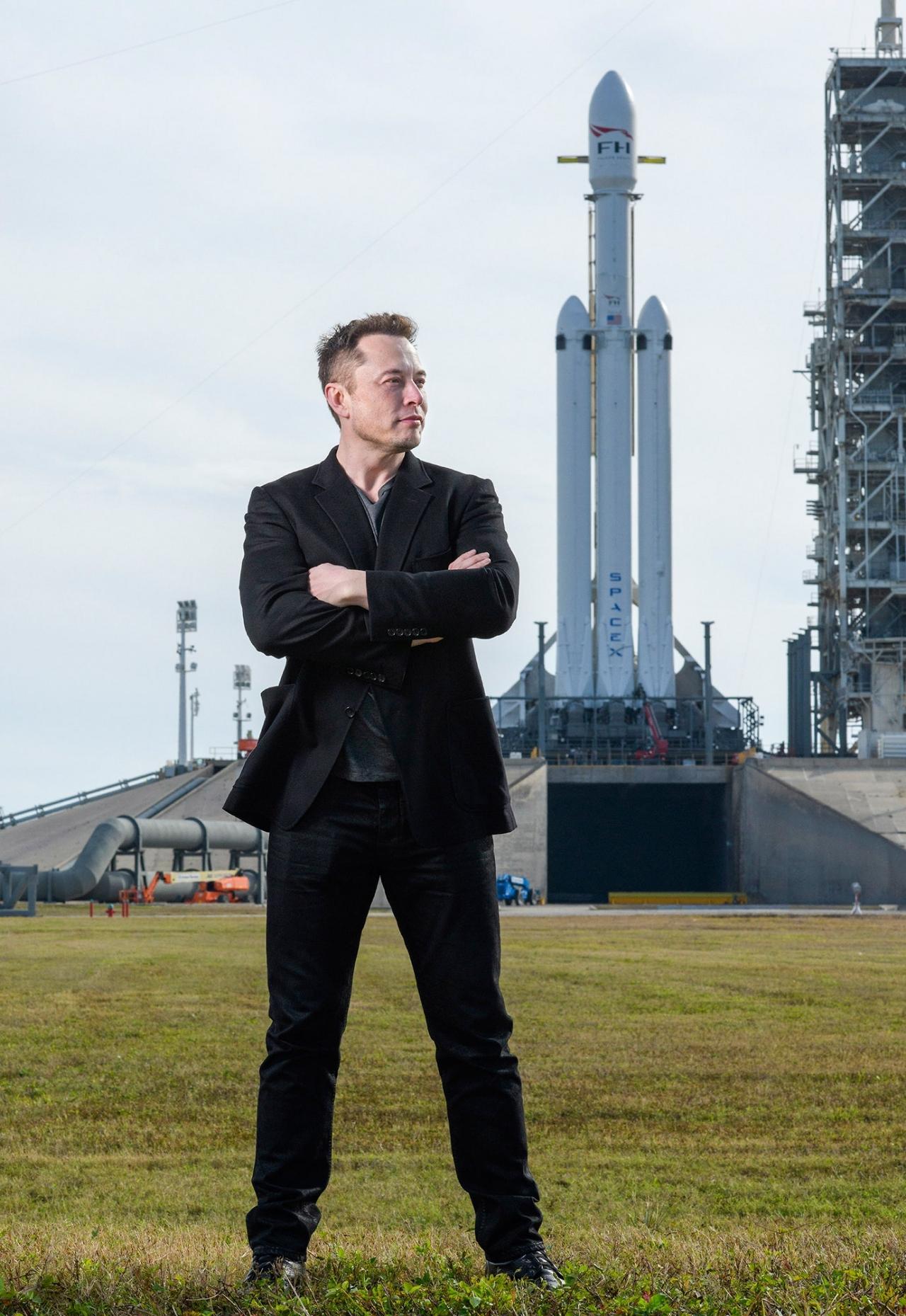
Elon Musk, CEO SpaceX

As investors prepare for what could become one of the largest stock market debuts in history, SpaceX has unveiled an unconventional share-sale framework that offers select insiders early access to liquidity while maintaining restrictions on founder Elon Musk and other major shareholders.

A regulatory filing released Monday showed that SpaceX has reserved 5% of the shares in its planned initial public offering for certain employees and individuals chosen by company executives. Participants in this directed share program will be allowed to purchase shares at the IPO price and, notably, will not be subject to the lock-up restrictions that typically prevent insiders from selling stock immediately after a public listing.

The arrangement represents another example of SpaceX’s departure from traditional IPO conventions as the company pursues a valuation of approximately $1.75 trillion, a figure that would place it among the world’s most valuable publicly traded companies from the moment it lists.

Under the directed share program, any shares that are not purchased by eligible participants will be reallocated and sold to public investors. The filing did not disclose the number of shares expected to be distributed through the program, nor did it identify which employees or outside individuals may qualify.

The disclosure rings a bell because lock-up agreements have long been a standard feature of IPOs. Most newly listed companies require insiders, executives, and early investors to hold their shares for roughly six months before selling. The restrictions are designed to prevent a flood of stock from entering the market immediately after a listing, which could pressure share prices and undermine investor confidence.

SpaceX, however, is pursuing a more flexible approach. Rather than imposing a uniform six-month lock-up period, the company plans a staggered release mechanism that ties the ability to sell shares to both corporate performance and stock-price milestones. According to the filing, certain shareholders could become eligible to sell portions of their holdings shortly after SpaceX reports its first quarterly earnings results as a public company, provided specified conditions are met.

Additional tranches of restricted stock would then be released over the following months, with any remaining restrictions expiring after six months.

The structure echoes practices seen during the IPO boom of 2020 and 2021, when companies sought innovative ways to balance insider liquidity demands with market stability. Firms such as Airbnb, DoorDash, and Snowflake adopted phased share-release mechanisms that allowed some investors to sell stock earlier than traditional lock-up arrangements would permit.

More recently, AI infrastructure company Cerebras and cybersecurity firm Rubrik have implemented similar structures.

For SpaceX, the staggered approach could help manage what is expected to be intense investor demand while providing a controlled path for employees and early investors to realize gains accumulated over years of private-market growth. The filing also offered fresh insight into Elon Musk’s position within the company. Despite maintaining overwhelming control of SpaceX, Musk has agreed not to sell shares for approximately one year following the IPO.

According to the filing, Musk controls 85.1% of the company’s voting power and owns 12.3% of its Class A shares. His commitment to a longer lock-up period is likely intended to reassure investors that management remains focused on long-term value creation rather than near-term monetization.

Other significant shareholders are also subject to one-year restrictions, although the filing does not identify those investors or disclose the size of their holdings.

The contrast between the treatment of select program participants and major shareholders is glaring. While some employees and invited individuals may gain immediate liquidity, the company’s most influential stakeholders will remain largely locked in for an extended period.

The approach reflects SpaceX’s unique position in capital markets. Unlike many technology startups that pursue public listings primarily to raise cash, SpaceX enters the market after years of strong private financing and significant revenue generation from its launch services, satellite communications business, and government contracts.

Its satellite internet division, Starlink, has become one of the fastest-growing communications businesses globally, while SpaceX continues to dominate commercial launch markets and expand its role in national security and space infrastructure projects.

The IPO is therefore seen by some as less about accessing capital and more about creating a public-market structure capable of supporting future growth while rewarding long-term employees and investors.

By combining selective exemptions, performance-based share releases, and extended restrictions on top insiders, SpaceX is attempting to strike a balance between market stability and shareholder flexibility. Whether investors embrace that approach could become an important test for future mega-cap technology listings, particularly as companies seek alternatives to traditional IPO lock-up arrangements.

With a projected valuation of $1.75 trillion and extraordinary investor interest already building, the structure of SpaceX’s IPO may prove almost as closely watched as the offering itself.