DD
MM
YYYY

PAGES

DD
MM
YYYY

spot_img

PAGES

Home Blog Page 846

How Nigeria Could Reform The Electoral Act before the 2027 Elections

1

I read the recommendations of the Nigerian Bar Association (NBA)  to the House of Representatives on the Amendment of the Electoral Act 2022. Below is a summary of this village boy’s own recommendation

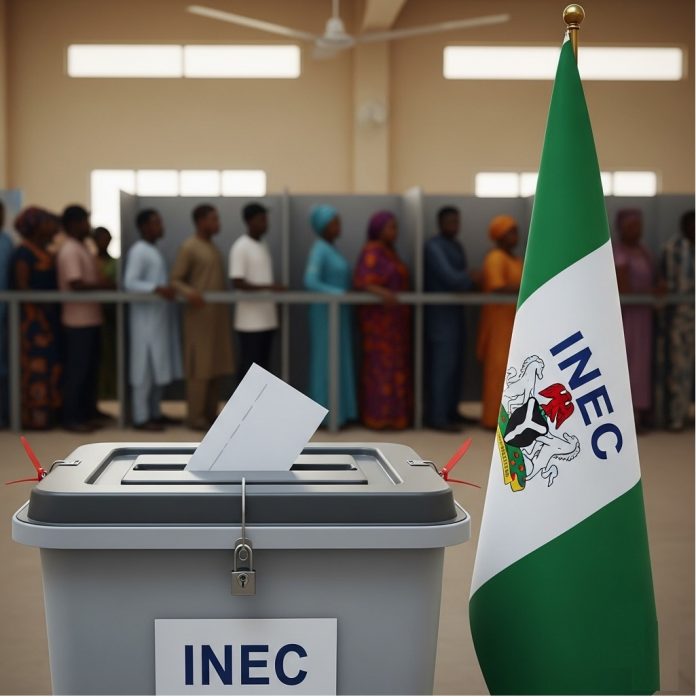
I am not a lawyer, but that will not stop a village boy from adding his voice to this.  Besides what the Learned Gentlemen have noted, I posit that INEC is allowed to operate a constitutional and statutory structure that renders it largely unaccountable for the integrity of its actions. That is unfortunate for Nigeria. My proposal is straightforward: Nigeria’s Electoral Act should be reformed to allow aggrieved candidates to sue INEC directly during electoral dispute resolutions, especially in instances where the Commission is alleged to have violated established procedures. Presently, the law channels grievances toward the declared winner, not the body that conducted the election. This approach fails to hold INEC responsible for lapses in compliance with electoral guidelines.

Consider this common scenario: two candidates contest an election, and one is declared the winner. The loser then sues the winner, even though the conduct and outcome were managed by INEC. Why is the candidate, and not the electoral umpire, the primary defendant? This misplacement of accountability shields INEC from the consequences of poor execution. If, however, INEC were legally compelled to defend its conduct and began to lose cases due to procedural failures, it would have a powerful incentive to reform its operations and uphold the integrity of the electoral process.

Such a shift would foster a system where both the winner and the loser are equally invested in ensuring that INEC strictly adheres to the rulebook. If INEC’s failure can nullify an election result, all stakeholders – including the likely winner – will be motivated to insist on compliance from the Commission.

At present, INEC exists as a passive player: its outcomes are binding, yet it faces little risk for procedural missteps. By making INEC legally answerable and allowing its actions to be scrutinized and challenged in court, we create a shared-responsibility model. In this model, the credibility of the process becomes a mutual interest for all candidates. That, indeed, is the pathway to a more transparent, accountable, and democratic electoral system in Nigeria.

More so, every rulebook by INEC should be treated as an extension of the Constitution. It is very offensive for lawyers to argue that guidelines created by INEC for the elections should be ignored because those documents are not in the Constitution. If the Constitution empowers the parliament to pass the INEC Act, bringing INEC into existence, that Constitution vests power to INEC to write manuals to run its operations. Where those manuals are adopted in line with the Constitution, they become valid documents which must be adhered to as part of the rulebook.

I do think that the Court must understand that reality. And closing that loophole will stop the procedural technicalities which have become common in the adjudication of electoral matters. In other words, if INEC makes BVAS mandatory, it is irrelevant if the Constitution does not mention BVAS, and not adhering to the rulebook on BVAS becomes a reason to cancel an election, as that election has been conducted outside the Constitution.

LinkedIn Version

Nigeria’s Independent National Electoral Commission (INEC) largely operates without accountability for its actions, which is detrimental to the nation. I propose reforming Nigeria’s Electoral Act to allow aggrieved candidates to directly sue INEC for procedural violations during election disputes.

Currently, grievances are directed at the declared winner, not INEC itself. This shields INEC from responsibility for its errors. For example, when a losing candidate sues the winner, even though INEC managed the election, INEC isn’t the primary defendant. This misplaces accountability. If INEC were legally compelled to defend its conduct and lost cases due to procedural failures, it would be incentivized to improve operations and uphold electoral integrity.

This shift would create a system where all stakeholders, including winners, are invested in INEC’s adherence to rules. If INEC’s failures could nullify results, everyone would push for its compliance.

Currently, INEC’s outcomes are binding, but it faces minimal risk for missteps. Making INEC legally accountable and allowing its actions to be challenged in court fosters a shared-responsibility model, where process credibility is a mutual interest. This leads to a more transparent, accountable, and democratic Nigerian electoral system.

Furthermore, every INEC rulebook should be treated as a constitutional extension. It’s problematic for lawyers to argue that INEC guidelines should be ignored because they aren’t explicitly in the Constitution. The Constitution empowers Parliament to create INEC and vests INEC with the power to create operational manuals. When adopted constitutionally, these manuals become valid and must be adhered to. Courts should recognize this, closing loopholes that lead to procedural technicalities in election adjudication. For instance, if INEC mandates BVAS (Bimodal Voter Accreditation System), non-adherence should be grounds for cancellation, as the election was conducted outside the established rules.


PRESS RELEASE

NBA ELECTORAL REFORM COMMITTEE PRESENTS CRUCIAL RECOMMENDATIONS TO THE HOUSE OF REPRESENTATIVES ON THE AMENDMENT OF THE ELECTORAL ACT 2022

Abuja, Nigeria — July 18, 2025

The Electoral Reform Committee of the Nigerian Bar Association (NBA), led by its Chairman, Dr. Monday Onyekachi Ubani, SAN, has formally presented a comprehensive memorandum to the House of Representatives Committee on Electoral Matters, urging the National Assembly to effect far-reaching amendments to the Electoral Act 2022.

The delegation was received by the Chairman of the House Committee, Hon. Balogun, alongside the Clerks of both the House and the Senate. The Chairman of the Senate Committee on Electoral Matters, who was unavoidably absent, is expected to receive the NBA team at a rescheduled meeting.

The President of the Nigerian Bar Association, Mazi Afam Osigwe, SAN, who would have been part of the delegation, was unavoidably absent due to an official engagement.

Key Recommendations Presented by the NBA Electoral Reform Committee Include:

  1. Legal Standing in Pre-Election Matters
    Amendment of Section 29(5) to restrict the right of action to only aspirants within the same political party, and retention of the 14-day filing window under Section 29(8) for timely resolution.

  2. Candidate Substitution
    Amendment of Section 33 to allow substitution only in cases of death or voluntary withdrawal, backed by affidavit and documentation.

  3. Internal Party Democracy
    Strengthening Section 84 to empower INEC with oversight on primaries, mandate early submission and publication of delegate lists, and sanction defaulting parties.

  4. Technology and Electoral Integrity
    Amendments to Sections 47 and 60 to:

Make BVAS mandatory for voter accreditation;

Make BVAS data binding as the official accreditation record;

Legally recognize electronic transmission of results to IReV;

Penalize INEC officers who fail to transmit results electronically.


  1. Documentary Evidence in Petitions
    Clarification of Section 137 to accept certified documents (e.g., BVAS logs, IReV screenshots, EC8A forms) as sufficient proof of irregularities, minimizing the need for oral testimony.

  2. Electoral Offences Commission
    Establishment of an independent Commission with prosecutorial powers to address vote-buying, violence, result manipulation, and misconduct by electoral officers.

  3. Early Voting for Election Officials
    Introduction of early voting for INEC officials, accredited security personnel, journalists, and observers to improve neutrality and efficiency on election day.

  4. Legal Status of INEC Guidelines
    Grant statutory force to INEC’s guidelines and regulations issued under the Act to enhance compliance and uniformity.

  5. Harmonization of Election Dates
    Recommendation for all elections to be conducted on the same day nationwide to reduce cost and enhance integrity.

  6. Other Recommendations


Binding INEC Timetables to promote certainty and accountability;

Jurisdictional clarity in election-related cases to avoid forum shopping;

Harmonized timeline for public officers’ resignation before contesting elections;

Pilot diaspora voting for Nigerians in foreign missions during presidential elections.

Commitment to Electoral Reform

In his remarks, Dr. M.O. Ubani, SAN, reaffirmed the NBA’s unshakable commitment to credible elections in Nigeria. “We are optimistic that these amendments, if adopted, will pave the way for a more transparent and inclusive electoral process in 2027 and beyond,” he stated.

Mr. Sam Itodo, Alternate Chairman of the Committee, also attended the session and emphasized the alignment of these proposals with global democratic standards.

Encouragingly, feedback from the lawmakers suggests that many of the NBA’s recommendations are already being incorporated in the ongoing legislative review of the Electoral Act.

The NBA Electoral Reform Committee will continue to engage with the National Assembly to ensure the successful passage of these reforms.

Signed:
Dr. M.O. Ubani, SAN
Chairman, NBA Electoral Reform Committee

Mr. Sam Itodo
Alternate Chairman, NBA Electoral Reform Committee

Little Pepe (LILPEPE) Tipped by AI to Beat Pepe (PEPE) and Shiba Inu (SHIB) in Next Bull Run

0

The next crypto bull run is no longer a distant dream—it’s quickly taking shape. While the usual suspects like Shiba Inu (SHIB) and Pepe (PEPE) are expected to rally, there’s a fast-rising newcomer that artificial intelligence models are increasingly highlighting as a standout performer: Little Pepe (LILPEPE). AI trend trackers, sentiment analyzers, and price prediction algorithms are converging on one conclusion—LILPEPE could outshine both PEPE and SHIB in the upcoming bull cycle, offering higher upside potential, stronger community engagement, and better long-term positioning.

The New Wave of Meme Coins Is About Utility, Not Just Hype

Meme coins have matured since the days of DOGE and early SHIB. Today’s investors are looking for more than jokes and viral tweets. The next generation of meme coins must combine cultural relevance with functionality and infrastructure. That’s where LILPEPE makes its strongest case. Built on Ethereum, LILPEPE is launching an entire Layer-2 chain dedicated to meme coin innovation. This isn’t just a vanity addition. The LILPEPE chain is a sniper bot–resistant, high-speed transaction platform, tailored to support meme creators and traders alike. In contrast, PEPE operates purely as a token, and while SHIB has built an ecosystem over time, its momentum has slowed considerably since its early highs. According to AI analysis tools scanning for tokens with high engagement and technical developments, LILPEPE’s ecosystem places it ahead of legacy meme coins in terms of utility. This factor matters more than ever in a maturing market.

Why AI Models Are Betting on LILPEPE

Natural language processing models and machine learning systems that parse crypto data from Reddit, Twitter, Telegram, and trading forums have flagged Little Pepe as one of the most discussed and positively trending meme coins this quarter. Mentions of LILPEPE have surged by over 300% in the last month alone, outpacing SHIB and closely rivaling PEPE in online engagement. But the buzz isn’t just coming from retail traders. Whale wallet trackers have identified several large ETH addresses accumulating LILPEPE tokens throughout the presale. This aligns with AI-driven wallet analysis suggesting that early-stage smart money has begun rotating into LILPEPE in anticipation of post-listing gains. AI-based price projection models, which factor in tokenomics, community size, historical meme coin patterns, and upcoming events, now estimate that LILPEPE could deliver a return of up to 100 times its current price, currently under $0.0015. This would place it well ahead of PEPE’s projected growth and dramatically outperform SHIB’s potential, which many analysts believe has already experienced its peak. The $777,000 offer from LILPEPE, with 10 winners each getting $77,000 in tokens, is getting a lot of attention. This approach builds a community from the ground up, encourages users to create content, and initiates a viral loop that keeps LILPEPE at the forefront of trending issues.

Presale Success and CoinMarketCap Listing Signal Big Moves Ahead

LILPEPE is already making waves during its Stage 5 presale, currently priced at $0.0014. Over $6.7 million has been raised, and 5.3 million tokens have been sold, showing strong early investor appetite.  Additionally, the project is already listed on CoinMarketCap, which lends it a level of respectability and visibility that is rare for coins still in presale. This early exposure is a big reason why AI models are so positive. It allows them to collect data on mood, demand, and interest long before the first major exchange listing, which is also expected to occur soon after the presale concludes..

Final Thoughts: Will LILPEPE Outpace SHIB and PEPE?

While nothing in crypto is ever guaranteed, the early signals from both AI-based prediction tools and human market observers are clear: Little Pepe is on track to become the top meme coin of the next bull run. With a presale price under $0.0015, a thriving community, exchange listings coming soon, and a unique Layer-2 ecosystem behind it, LILPEPE is positioned to offer far greater upside than Shiba Inu or Pepe. If SHIB was the meme coin of the last bull run, and PEPE captured attention in between, then 2025 could very well be the year of Little Pepe. For those hunting the next explosive play, LILPEPE may be the smartest bet to watch—and AI agrees.


For more information about Little Pepe (LILPEPE) visit the links below:

Website: https://littlepepe.com

Whitepaper: https://littlepepe.com/whitepaper.pdf

Telegram: https://t.me/littlepepetoken

Twitter/X: https://x.com/littlepepetoken 


A Call for Pragmatism in Nigeria’s State Structure

0

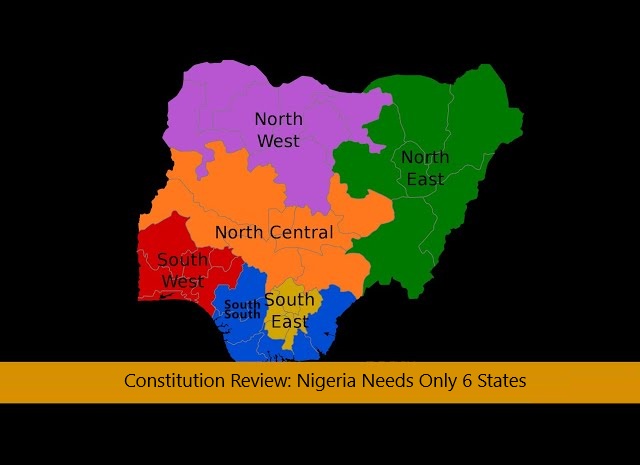
As a citizen deeply invested in the progress of Nigeria, I respectfully submit my position on the ongoing constitutional review concerning the creation of additional states. Speaking from the humble lens of a “village boy,” I must emphasize that I am not in support of adding more states to the Nigerian federation.

While I acknowledge the sentiments and genuine agitations driving the calls for new states, I believe that Nigeria’s long-term progress will be better served by restructuring the country into six geopolitical regions—South East, South West, South South, North East, North West, and North Central. Each of these six regions would operate as a state, with only six governors, and the presidency rotating every five years across the six geopolitical zones. This approach would drastically reduce administrative waste, promote unity, and redirect focus to regional development.

Historically, Nigeria witnessed its most rapid development during the regional government era. In contrast, the current structure of 36 states has proven to be inefficient and economically unsustainable. Many of these states struggle to meet basic obligations, relying heavily on federal allocations. As a matter of economic reality, the dividend Alhaji Aliko Dangote receives from his private enterprise often exceeds the annual budgets of several states in Nigeria. This underscores how fiscally fragile our state system has become.

In conclusion, multiplying the number of states without instituting governance based on pragmatism, integrity, and meritocracy will yield no tangible progress. Even if Nigeria is divided into 150 states, the absence of effective and visionary leadership will mean stagnation. Our priority should not be in expanding political boundaries, but in reimagining the structure of governance to drive sustainable development and inclusive prosperity.

Bullish Files for IPO as Trump’s Crypto Embrace Sends Bitcoin and Industry Valuations Soaring

0

Bullish, the cryptocurrency exchange backed by billionaire Peter Thiel, filed for an initial public offering (IPO) on Friday, joining a wave of digital asset firms heading to public markets amid renewed investor enthusiasm and unprecedented political support for the industry.

The filing, submitted to the U.S. Securities and Exchange Commission (SEC), marks a critical moment for Bullish and the broader crypto sector, which has long sought regulatory clarity and mainstream legitimacy. The company plans to list its shares on the New York Stock Exchange under the ticker “BLSH.”

Bullish is led by Tom Farley, a veteran of traditional finance and former president of the New York Stock Exchange, and was spun out of Block.one in 2021 with backing from Thiel’s Founders Fund and Thiel Capital, along with investors such as Nomura, Mike Novogratz, and other institutional players. In 2023, Bullish expanded into crypto media by acquiring CoinDesk, further deepening its footprint in the digital asset ecosystem.

In its filing, Bullish reported an average daily trading volume of over $2.5 billion in the first quarter of 2025, ranking it among the top five global exchanges for Bitcoin and Ether spot volume. Since its launch, the platform has executed more than $1.25 trillion in cumulative trades, underscoring its rapid growth and rising stature among crypto market leaders like Binance, Coinbase, and Kraken—all named as competitors in its prospectus.

But Bullish’s timing is especially notable. Its IPO filing came just hours after President Donald Trump signed the GENIUS Act into law—a sweeping piece of legislation that establishes a regulatory framework for stablecoins, the blockchain-based tokens tied to fiat currencies like the U.S. dollar.

The bill, passed by Congress during a week of pro-crypto legislative momentum branded as “Crypto Week,” has been hailed by industry stakeholders as a foundational step toward legitimizing digital assets in the U.S. financial system. It sets out requirements for 1:1 fiat backing, audits, and licensing structures, enabling companies like Bullish to operate in a more predictable regulatory environment.

The impact was immediate. Within 24 hours of Trump signing the GENIUS Act, Bitcoin surged to an all-time high of $122,838, while the entire crypto market capitalization climbed to $2.4 trillion, briefly surpassing Amazon to become the fifth-largest asset class in the world. The GENIUS Act, combined with other crypto-friendly bills such as the CLARITY Act and the Anti-CBDC Surveillance State Act, formed a trio of laws aimed at integrating digital assets into the American economy while shielding it from unwanted government overreach.

Bullish explicitly echoed this agenda in its SEC filing, stating that its mission is to “drive the adoption of stablecoins, digital assets, and blockchain technology,” a nod to the regulatory tailwinds now reshaping the industry’s trajectory.

The sector’s resurgence has been fueled not only by legislation but also by direct political backing from President Trump, who has emerged as an outspoken champion of crypto. His administration has staffed top roles with tech-aligned figures such as David Sacks, now serving as Trump’s AI and Crypto czar, and aligned closely with billionaire allies, including Elon Musk and Peter Thiel, all of whom have actively supported his re-election bid and legislative agenda.

Trump’s approach has sharply diverged from the regulatory stance of previous administrations, which emphasized enforcement actions and risk containment. Instead, the Trump White House has opted for integration—bringing crypto into the mainstream financial fold and offering it the legal certainty that investors have demanded for years.

Bullish is not alone in seizing the moment. Circle, the issuer of USDC, saw its stock surge more than sevenfold after its June IPO. Etoro, the online trading platform with crypto services, went public in May, and Galaxy Digital, founded by Novogratz, transitioned its listing from the Toronto Stock Exchange to the Nasdaq that same month. Gemini, the exchange run by the Winklevoss twins, also filed confidentially for an IPO in June.

Meanwhile, Bitcoin, the industry’s bellwether, is up nearly 30% this month alone, and over 100% since July 2024—an explosive rally that analysts attribute to the policy clarity, institutional inflows, and growing belief that crypto is now on the path to permanent integration into the financial system.

As Bullish prepares to go public, it will do so in a market environment more favorable than any crypto firm has previously enjoyed. With strong backing, massive volumes, and a seasoned Wall Street executive at its helm, Bullish appears poised to become a pillar of the newly legitimized digital asset economy.

And with the White House and Capitol Hill now in sync with Silicon Valley’s most powerful crypto evangelists, the exchange is entering a public market where momentum—and the presidency—are on its side.

Crypto Heists Surge in 2025: Over $2.17 Billion Stolen in The First Half of The Year

1

The year 2025 is shaping up to be the most devastating on record for cryptocurrency-related theft.

According to Chainalysis report, the first half (H1) of 2025, has witnessed unprecedented levels of cryptocurrency theft, with over $2.17 billion already stolen from crypto services, surpassing the total losses of 2024.

The bulk of these losses stems from a single catastrophic incident, the North Korean-linked $1.5 billion hack of ByBit, now the largest individual hack in crypto history.

By the end of June, the value stolen year-to-date (YTD) had already exceeded 2022’s totals by 17%, making 2025 the most dangerous year for crypto holders and platforms. If current trends persist, total thefts could surpass $4 billion by the end of the year.

A growing share of this activity now targets individual users, not just centralized services. Personal wallet compromises account for 23.35% of all stolen funds so far in 2025, highlighting a worrying trend of increasingly personalized attacks.

Among these, “wrench attacks” which involve physical violence or coercion to force access to a victim’s crypto assets  have risen sharply. These attacks appear to correlate with bitcoin price movements, suggesting attackers strike when perceived value is high.

Also, illicit crypto volumes in 2025 are on pace to match or exceed 2024’s $51 billion, despite major shakeups in the ecosystem. The closure of Garantex, a sanctioned Russian exchange, and expected FinCEN measures against Cambodia-based Huione Group, a platform that reportedly processed over $70 billion in inflows have disrupted how bad actors move funds.

Stolen fund activity has emerged as the top concern in 2025. While other illicit crypto activities show mixed year-on-year trends, theft is rising at an alarming pace. The trajectory of theft in 2025 far exceeds prior years, with the cumulative value stolen climbing past $2 billion in just six months.

A deeper look into personal wallet thefts reveals a troubling increase in violent crime. 2025 is projected to witness nearly double the number of physical attacks against crypto holders than any previous year, with many incidents involving maiming, kidnapping, or even murder. Given the likelihood of underreporting, the real figures may be significantly higher.

There is a clear correlation between these violent incidents and the future trajectory of bitcoin’s price. Rising valuations or even the perception of upcoming increases seem to embolden attackers, especially those targeting known holders.

Interestingly, many of these crimes involve basic laundering methods, underscoring a common trend: organized crime groups increasingly use crypto for its speed and perceived anonymity, but lack the technical sophistication of more advanced threat actors.

Despite this, blockchain technology still offers law enforcement a powerful tool. Unlike traditional financial systems, blockchains serve as a single, immutable ledger — enabling real-time tracking of funds, mapping of criminal networks, and cross-border investigative leads.

Geographically, North America leads in both bitcoin and altcoin theft, likely due to high crypto adoption and the presence of high-value targets. Europe dominates ether and stablecoin theft, possibly due to asset preference or higher liquidity. Meanwhile, the APAC region ranks second for BTC theft and third for ETH, while Central and South Asia & Oceania (CSAO) rank second in altcoin and stablecoin thefts.

Sub-Saharan Africa consistently reports the lowest value stolen, likely a reflection of lower crypto wealth, not necessarily reduced victimization.

Thus far, 2025 data present a troubling picture of how crypto crime is evolving. While the ecosystem has matured in terms of regulatory frameworks and institutional security practices, threat actors have correspondingly upgraded their capabilities and expanded their range of targets.

The ByBit hack which occurred in February 2025, demonstrates that even sophisticated industry entities remain vulnerable to advanced persistent threats, while the surge in personal wallet compromises shows that individual holders of cryptocurrency face unprecedented risks. The geographic expansion of crypto crime, and the correlation between asset prices and violent attacks add additional complexity to an already challenging security environment.

In summary, the crypto industry faces an intensifying security crisis in 2025, with both digital and physical threats on the rise. As attackers grow bolder and more targeted, the need for robust protection, education, and global collaboration has never been more urgent.