DD
MM
YYYY

PAGES

DD
MM
YYYY

spot_img

PAGES

Home Blog Page 847

The Overlooked Hero of Home Security: Your Garage Door

0

When most homeowners think about securing their property, they picture front?door locks, alarm systems, and sturdy windows. Yet the largest moving part of nearly every house, the garage door, often gets minimal attention until something breaks. A well?maintained, properly balanced door does far more than protect the family car. It deters intruders, shields tools and seasonal items from costly damage, improves energy efficiency, and adds instant curb appeal. Treating your garage door as an essential security layer rather than an after-thought starts with understanding how the system works and what proactive care really means.

Anatomy of a Modern Garage Door

A typical sectional door relies on a precise interaction of panels, rollers, tracks, cables, springs, and an opener motor. When any single component wears out, the entire mechanism strains, causing noisy operation or sudden failure. Springs shoulder most of the weight, more than 150?pounds, so they need periodic inspection. Rollers and hinges collect dust and road salt, shortening their lifespan without lubrication. Advanced openers now include smart Wi?Fi controls, battery backups, and rolling?code security to prevent “code?grabbing” break?ins.

Warning Signs You Should Never Ignore

  • Uneven movement or jerking – indicates frayed cables or misaligned tracks.
  • Loud grinding or squeaking – usually means dry rollers or hinges.
  • Delayed response from the wall switch or remote – points to circuitry or safety?sensor issues.
  • Sagging panels – suggest worn hinges or water damage that can eventually warp the whole door.

Addressing these symptoms early prevents costlier structural repairs and keeps your family safe in emergencies.

Preventive Maintenance: More Than a Weekend Job

DIY upkeep covers basics such as tightening visible hardware, clearing track debris, and testing the auto?reverse sensors with a 2?x?4 block. For deeper tasks like torsion spring adjustments, cable replacement, and opener recalibration professional help is critical. Torsion springs store enough tension to cause severe injury if handled incorrectly. Certified technicians bring specialized tools, correct replacement parts, and the training to balance the door so it neither slams shut nor drifts open.

Halfway through the life of an opener (about seven to ten years), scheduling a full safety tune?up can reveal hidden wear and software glitches. A small investment now avoids midnight emergencies later on. That is why many Brooklyn homeowners search for reliable garage door repairspecialists instead of pushing off the task.

Smart Upgrades That Pay for Themselves

  1. Insulated Steel Panels – cut heating and cooling costs, especially for attached garages.
  2. High?Cycle Springs – rated for 25,000+ open–close cycles versus the standard 10,000.
  3. LED Motion Lighting – discourages trespassers and brightens the driveway automatically.
  4. Fingerprint or Keypad Entry – convenient for kids and eliminates lost remotes.

These enhancements modernize your garage without a full remodel and add resale value instantly.

Weatherproofing for Brooklyn’s Four Seasons

Brooklyn’s humid summers and icy winters wreak havoc on untreated metal and wood. Galvanized hardware, rubber bottom seals, and polyurethane?coated weather strips combat rust and keep critters out. Annual inspections each spring and fall ensure your door glides smoothly despite salty slush or sweltering heat.

Choose Confidence with Mr. Garage Door Repairman

Mr. Garage Door Repairman has served Brooklyn, NY?11223 for over two decades, delivering expert installation, precision spring repairs, custom door designs, and round?the?clock emergency response. Every technician is factory?trained, background?checked, and committed to 100?percent satisfaction at a price that respects your budget. Call 718?300?4032 today and discover why thousands of homeowners trust us to keep their biggest door operating safely, quietly, and beautifully.


Mr. Garage Door Repairman

Brooklyn, NY 11223

718-300-4032

mrgaragedoorrepairman.com


Is Becoming an Online Casino VIP Actually Worth Your Money?

0

Have you ever stared at your online casino’s VIP program and wondered what it would be like to reach the highest level? What type of rewards might you be offered, and would all the money you spend playing online casino games be worth it? Let’s find out.

What is a High Roller?

A high roller is a player who spends a lot of money with either an online casino or a brick-and-mortar establishment. Because of this, they are revered by the casinos they frequent, and in order to keep them coming back to their sites and continuing to spend large, an online casino is prepared to offer them special VIP perks.

But most high rollers are not only people who have loads of money that they lavish on gambling just for the fun of it. To achieve genuine high roller status, you have to have excellent bankroll management skills and a deep understanding of online casino games and their rules.

One of the most famous high rollers was Australian media magnate Kerry Packer, of whom it is alleged, won around £7 million in one night at the baccarat and blackjack tables. Known for betting as much as £50,000 per hand, it is said that he also tipped casino staff more than £50k.

What Sort of Perks Can an Online Casino VIP Expect

You’ll find that if you do reach VIP status, any casino in online Europe will treat you very differently from their run-of-the-mill players. As a regular high roller, you’ll either be in the top tier of a loyalty program or you’ll receive personal invites to exclusive VIP schemes where you’ll be rewarded with some extraordinary benefits.

As well as being given special bonuses and promotions, you’ll be given things like:

  • Quicker withdrawal times.
  • Higher maximum deposit limits.
  • Higher cash-out limits.
  • A personal account manager.
  • Promotions and cashback offers tailored to your player profile.
  • Special gifts that include exclusive luxury holidays and tickets to amazing concerts, sporting events, etc.

If you do reach VIP status, you should study the top online casinos list at GHZD and compare the rewards that each platform’s VIP members will be entitled to.

How Online Casino Loyalty/VIP Programs Work

Loyalty/VIP programs are commonplace in the online casino world. According to Emiliana Rostowicz, an expert from GHZD, it’s one of the strategies that casinos employ to retain loyal customers and high-rolling VIPs in particular. With some platforms, entry into the program is by invitation only; however, a growing number of platforms now automatically enrol players in their loyalty programs with their first deposit.

Online casino loyalty programs are usually tiered. The number of tiers and the names assigned to them vary from casino to casino. The example shown below is taken from NV Casino, whose loyalty/VIP program is called the Members’ Club.

Status/Levels Points Weekly Bonus Cashback Birthday Bonus
Novice Levels 0–9 0
Middle Levels 10–19 500 50% + 20 fs on Joker Stoker (Endorphina) 2% +
Master Levels 20–29 3,000 70% + 30 fs on Big Bass Splash (Pragmatic Play) 4% +
Expert Levels 30–39 50,000 100% + 50 fs on Coin Win: Hold The Spin (Gamzix) 6% +
Legend Levels 40–49 250,000 120% + 70 fs on Sweet Bonanza 1000 (Pragmatic Play) 8% +
Myth Levels 50–59 500,000 150% + 100 fs on Sizzling Hot Deluxe (Novomatic) 10% +


Each time you make a new deposit and play games, you will earn loyalty points, which are referred to as ‘comp’ points. These points are issued on a complementary basis, hence the abbreviation to ‘comp’ points. The more points you accumulate during one month, the higher the tier you will join if the total number of points is sufficient.

Each level offers specific rewards that you can exchange your comp points for. At the lowest level, you will be able to exchange the points for bonus cash with which to play more games. But if you rise through the tiers, you’ll be entitled to some serious add-ons.

Is Becoming an Online Casino VIP Worth It?

If you’re wealthy enough to reach VIP status, the perks you’ll be offered will make your gambling experiences smoother. But at what cost? Most loyalty levels are reset on a monthly basis, and continuing to deposit and play heavily can take its toll.

The most important thing of all when striving to reach or maintain online casino VIP status is to gamble responsibly. Even if you’re wealthy, you don’t want to get into the situation where you’re gambling simply for VIP benefits. There is no fun in doing so, and gambling should be about excitement and being able to stay in control.

Concluding Thoughts

It’s crucial to weigh the benefits of attaining VIP status against the cost, especially for those who may be considered wealthy but whose wealth is not unlimited. For most mere, average-wealth mortals who enjoy online casino gambling, getting the most out of your loyalty points gathered through normal play patterns and not blindly chasing VIP status will extend your bankroll and, therefore, optimise your online gambling experience. In other words, it will give you best value for money spent, something that cannot be said for being an online casino VIP.


How Nigeria Could Reform The Electoral Act before the 2027 Elections

1

I read the recommendations of the Nigerian Bar Association (NBA)  to the House of Representatives on the Amendment of the Electoral Act 2022. Below is a summary of this village boy’s own recommendation

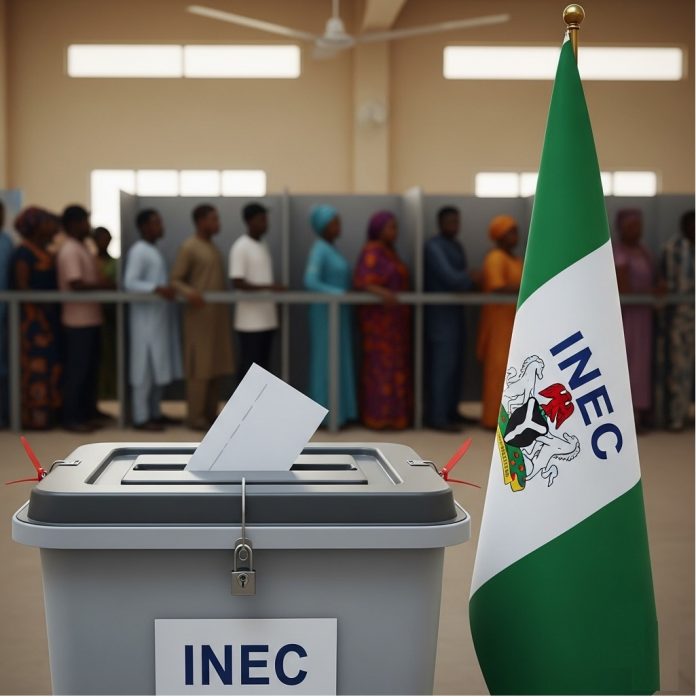
I am not a lawyer, but that will not stop a village boy from adding his voice to this.  Besides what the Learned Gentlemen have noted, I posit that INEC is allowed to operate a constitutional and statutory structure that renders it largely unaccountable for the integrity of its actions. That is unfortunate for Nigeria. My proposal is straightforward: Nigeria’s Electoral Act should be reformed to allow aggrieved candidates to sue INEC directly during electoral dispute resolutions, especially in instances where the Commission is alleged to have violated established procedures. Presently, the law channels grievances toward the declared winner, not the body that conducted the election. This approach fails to hold INEC responsible for lapses in compliance with electoral guidelines.

Consider this common scenario: two candidates contest an election, and one is declared the winner. The loser then sues the winner, even though the conduct and outcome were managed by INEC. Why is the candidate, and not the electoral umpire, the primary defendant? This misplacement of accountability shields INEC from the consequences of poor execution. If, however, INEC were legally compelled to defend its conduct and began to lose cases due to procedural failures, it would have a powerful incentive to reform its operations and uphold the integrity of the electoral process.

Such a shift would foster a system where both the winner and the loser are equally invested in ensuring that INEC strictly adheres to the rulebook. If INEC’s failure can nullify an election result, all stakeholders – including the likely winner – will be motivated to insist on compliance from the Commission.

At present, INEC exists as a passive player: its outcomes are binding, yet it faces little risk for procedural missteps. By making INEC legally answerable and allowing its actions to be scrutinized and challenged in court, we create a shared-responsibility model. In this model, the credibility of the process becomes a mutual interest for all candidates. That, indeed, is the pathway to a more transparent, accountable, and democratic electoral system in Nigeria.

More so, every rulebook by INEC should be treated as an extension of the Constitution. It is very offensive for lawyers to argue that guidelines created by INEC for the elections should be ignored because those documents are not in the Constitution. If the Constitution empowers the parliament to pass the INEC Act, bringing INEC into existence, that Constitution vests power to INEC to write manuals to run its operations. Where those manuals are adopted in line with the Constitution, they become valid documents which must be adhered to as part of the rulebook.

I do think that the Court must understand that reality. And closing that loophole will stop the procedural technicalities which have become common in the adjudication of electoral matters. In other words, if INEC makes BVAS mandatory, it is irrelevant if the Constitution does not mention BVAS, and not adhering to the rulebook on BVAS becomes a reason to cancel an election, as that election has been conducted outside the Constitution.

LinkedIn Version

Nigeria’s Independent National Electoral Commission (INEC) largely operates without accountability for its actions, which is detrimental to the nation. I propose reforming Nigeria’s Electoral Act to allow aggrieved candidates to directly sue INEC for procedural violations during election disputes.

Currently, grievances are directed at the declared winner, not INEC itself. This shields INEC from responsibility for its errors. For example, when a losing candidate sues the winner, even though INEC managed the election, INEC isn’t the primary defendant. This misplaces accountability. If INEC were legally compelled to defend its conduct and lost cases due to procedural failures, it would be incentivized to improve operations and uphold electoral integrity.

This shift would create a system where all stakeholders, including winners, are invested in INEC’s adherence to rules. If INEC’s failures could nullify results, everyone would push for its compliance.

Currently, INEC’s outcomes are binding, but it faces minimal risk for missteps. Making INEC legally accountable and allowing its actions to be challenged in court fosters a shared-responsibility model, where process credibility is a mutual interest. This leads to a more transparent, accountable, and democratic Nigerian electoral system.

Furthermore, every INEC rulebook should be treated as a constitutional extension. It’s problematic for lawyers to argue that INEC guidelines should be ignored because they aren’t explicitly in the Constitution. The Constitution empowers Parliament to create INEC and vests INEC with the power to create operational manuals. When adopted constitutionally, these manuals become valid and must be adhered to. Courts should recognize this, closing loopholes that lead to procedural technicalities in election adjudication. For instance, if INEC mandates BVAS (Bimodal Voter Accreditation System), non-adherence should be grounds for cancellation, as the election was conducted outside the established rules.


PRESS RELEASE

NBA ELECTORAL REFORM COMMITTEE PRESENTS CRUCIAL RECOMMENDATIONS TO THE HOUSE OF REPRESENTATIVES ON THE AMENDMENT OF THE ELECTORAL ACT 2022

Abuja, Nigeria — July 18, 2025

The Electoral Reform Committee of the Nigerian Bar Association (NBA), led by its Chairman, Dr. Monday Onyekachi Ubani, SAN, has formally presented a comprehensive memorandum to the House of Representatives Committee on Electoral Matters, urging the National Assembly to effect far-reaching amendments to the Electoral Act 2022.

The delegation was received by the Chairman of the House Committee, Hon. Balogun, alongside the Clerks of both the House and the Senate. The Chairman of the Senate Committee on Electoral Matters, who was unavoidably absent, is expected to receive the NBA team at a rescheduled meeting.

The President of the Nigerian Bar Association, Mazi Afam Osigwe, SAN, who would have been part of the delegation, was unavoidably absent due to an official engagement.

Key Recommendations Presented by the NBA Electoral Reform Committee Include:

  1. Legal Standing in Pre-Election Matters
    Amendment of Section 29(5) to restrict the right of action to only aspirants within the same political party, and retention of the 14-day filing window under Section 29(8) for timely resolution.

  2. Candidate Substitution
    Amendment of Section 33 to allow substitution only in cases of death or voluntary withdrawal, backed by affidavit and documentation.

  3. Internal Party Democracy
    Strengthening Section 84 to empower INEC with oversight on primaries, mandate early submission and publication of delegate lists, and sanction defaulting parties.

  4. Technology and Electoral Integrity
    Amendments to Sections 47 and 60 to:

Make BVAS mandatory for voter accreditation;

Make BVAS data binding as the official accreditation record;

Legally recognize electronic transmission of results to IReV;

Penalize INEC officers who fail to transmit results electronically.


  1. Documentary Evidence in Petitions
    Clarification of Section 137 to accept certified documents (e.g., BVAS logs, IReV screenshots, EC8A forms) as sufficient proof of irregularities, minimizing the need for oral testimony.

  2. Electoral Offences Commission
    Establishment of an independent Commission with prosecutorial powers to address vote-buying, violence, result manipulation, and misconduct by electoral officers.

  3. Early Voting for Election Officials
    Introduction of early voting for INEC officials, accredited security personnel, journalists, and observers to improve neutrality and efficiency on election day.

  4. Legal Status of INEC Guidelines
    Grant statutory force to INEC’s guidelines and regulations issued under the Act to enhance compliance and uniformity.

  5. Harmonization of Election Dates
    Recommendation for all elections to be conducted on the same day nationwide to reduce cost and enhance integrity.

  6. Other Recommendations


Binding INEC Timetables to promote certainty and accountability;

Jurisdictional clarity in election-related cases to avoid forum shopping;

Harmonized timeline for public officers’ resignation before contesting elections;

Pilot diaspora voting for Nigerians in foreign missions during presidential elections.

Commitment to Electoral Reform

In his remarks, Dr. M.O. Ubani, SAN, reaffirmed the NBA’s unshakable commitment to credible elections in Nigeria. “We are optimistic that these amendments, if adopted, will pave the way for a more transparent and inclusive electoral process in 2027 and beyond,” he stated.

Mr. Sam Itodo, Alternate Chairman of the Committee, also attended the session and emphasized the alignment of these proposals with global democratic standards.

Encouragingly, feedback from the lawmakers suggests that many of the NBA’s recommendations are already being incorporated in the ongoing legislative review of the Electoral Act.

The NBA Electoral Reform Committee will continue to engage with the National Assembly to ensure the successful passage of these reforms.

Signed:
Dr. M.O. Ubani, SAN
Chairman, NBA Electoral Reform Committee

Mr. Sam Itodo
Alternate Chairman, NBA Electoral Reform Committee

Little Pepe (LILPEPE) Tipped by AI to Beat Pepe (PEPE) and Shiba Inu (SHIB) in Next Bull Run

0

The next crypto bull run is no longer a distant dream—it’s quickly taking shape. While the usual suspects like Shiba Inu (SHIB) and Pepe (PEPE) are expected to rally, there’s a fast-rising newcomer that artificial intelligence models are increasingly highlighting as a standout performer: Little Pepe (LILPEPE). AI trend trackers, sentiment analyzers, and price prediction algorithms are converging on one conclusion—LILPEPE could outshine both PEPE and SHIB in the upcoming bull cycle, offering higher upside potential, stronger community engagement, and better long-term positioning.

The New Wave of Meme Coins Is About Utility, Not Just Hype

Meme coins have matured since the days of DOGE and early SHIB. Today’s investors are looking for more than jokes and viral tweets. The next generation of meme coins must combine cultural relevance with functionality and infrastructure. That’s where LILPEPE makes its strongest case. Built on Ethereum, LILPEPE is launching an entire Layer-2 chain dedicated to meme coin innovation. This isn’t just a vanity addition. The LILPEPE chain is a sniper bot–resistant, high-speed transaction platform, tailored to support meme creators and traders alike. In contrast, PEPE operates purely as a token, and while SHIB has built an ecosystem over time, its momentum has slowed considerably since its early highs. According to AI analysis tools scanning for tokens with high engagement and technical developments, LILPEPE’s ecosystem places it ahead of legacy meme coins in terms of utility. This factor matters more than ever in a maturing market.

Why AI Models Are Betting on LILPEPE

Natural language processing models and machine learning systems that parse crypto data from Reddit, Twitter, Telegram, and trading forums have flagged Little Pepe as one of the most discussed and positively trending meme coins this quarter. Mentions of LILPEPE have surged by over 300% in the last month alone, outpacing SHIB and closely rivaling PEPE in online engagement. But the buzz isn’t just coming from retail traders. Whale wallet trackers have identified several large ETH addresses accumulating LILPEPE tokens throughout the presale. This aligns with AI-driven wallet analysis suggesting that early-stage smart money has begun rotating into LILPEPE in anticipation of post-listing gains. AI-based price projection models, which factor in tokenomics, community size, historical meme coin patterns, and upcoming events, now estimate that LILPEPE could deliver a return of up to 100 times its current price, currently under $0.0015. This would place it well ahead of PEPE’s projected growth and dramatically outperform SHIB’s potential, which many analysts believe has already experienced its peak. The $777,000 offer from LILPEPE, with 10 winners each getting $77,000 in tokens, is getting a lot of attention. This approach builds a community from the ground up, encourages users to create content, and initiates a viral loop that keeps LILPEPE at the forefront of trending issues.

Presale Success and CoinMarketCap Listing Signal Big Moves Ahead

LILPEPE is already making waves during its Stage 5 presale, currently priced at $0.0014. Over $6.7 million has been raised, and 5.3 million tokens have been sold, showing strong early investor appetite.  Additionally, the project is already listed on CoinMarketCap, which lends it a level of respectability and visibility that is rare for coins still in presale. This early exposure is a big reason why AI models are so positive. It allows them to collect data on mood, demand, and interest long before the first major exchange listing, which is also expected to occur soon after the presale concludes..

Final Thoughts: Will LILPEPE Outpace SHIB and PEPE?

While nothing in crypto is ever guaranteed, the early signals from both AI-based prediction tools and human market observers are clear: Little Pepe is on track to become the top meme coin of the next bull run. With a presale price under $0.0015, a thriving community, exchange listings coming soon, and a unique Layer-2 ecosystem behind it, LILPEPE is positioned to offer far greater upside than Shiba Inu or Pepe. If SHIB was the meme coin of the last bull run, and PEPE captured attention in between, then 2025 could very well be the year of Little Pepe. For those hunting the next explosive play, LILPEPE may be the smartest bet to watch—and AI agrees.


For more information about Little Pepe (LILPEPE) visit the links below:

Website: https://littlepepe.com

Whitepaper: https://littlepepe.com/whitepaper.pdf

Telegram: https://t.me/littlepepetoken

Twitter/X: https://x.com/littlepepetoken 


A Call for Pragmatism in Nigeria’s State Structure

0

As a citizen deeply invested in the progress of Nigeria, I respectfully submit my position on the ongoing constitutional review concerning the creation of additional states. Speaking from the humble lens of a “village boy,” I must emphasize that I am not in support of adding more states to the Nigerian federation.

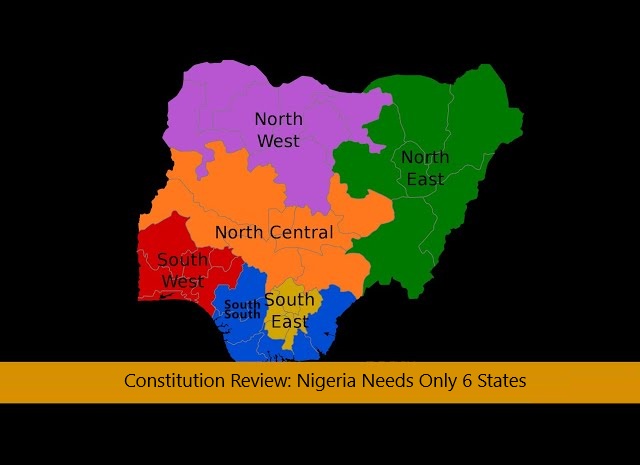
While I acknowledge the sentiments and genuine agitations driving the calls for new states, I believe that Nigeria’s long-term progress will be better served by restructuring the country into six geopolitical regions—South East, South West, South South, North East, North West, and North Central. Each of these six regions would operate as a state, with only six governors, and the presidency rotating every five years across the six geopolitical zones. This approach would drastically reduce administrative waste, promote unity, and redirect focus to regional development.

Historically, Nigeria witnessed its most rapid development during the regional government era. In contrast, the current structure of 36 states has proven to be inefficient and economically unsustainable. Many of these states struggle to meet basic obligations, relying heavily on federal allocations. As a matter of economic reality, the dividend Alhaji Aliko Dangote receives from his private enterprise often exceeds the annual budgets of several states in Nigeria. This underscores how fiscally fragile our state system has become.

In conclusion, multiplying the number of states without instituting governance based on pragmatism, integrity, and meritocracy will yield no tangible progress. Even if Nigeria is divided into 150 states, the absence of effective and visionary leadership will mean stagnation. Our priority should not be in expanding political boundaries, but in reimagining the structure of governance to drive sustainable development and inclusive prosperity.