DD
MM
YYYY

PAGES

DD
MM
YYYY

spot_img

PAGES

Home Blog Page 848

Bullish Files for IPO as Trump’s Crypto Embrace Sends Bitcoin and Industry Valuations Soaring

0

Bullish, the cryptocurrency exchange backed by billionaire Peter Thiel, filed for an initial public offering (IPO) on Friday, joining a wave of digital asset firms heading to public markets amid renewed investor enthusiasm and unprecedented political support for the industry.

The filing, submitted to the U.S. Securities and Exchange Commission (SEC), marks a critical moment for Bullish and the broader crypto sector, which has long sought regulatory clarity and mainstream legitimacy. The company plans to list its shares on the New York Stock Exchange under the ticker “BLSH.”

Bullish is led by Tom Farley, a veteran of traditional finance and former president of the New York Stock Exchange, and was spun out of Block.one in 2021 with backing from Thiel’s Founders Fund and Thiel Capital, along with investors such as Nomura, Mike Novogratz, and other institutional players. In 2023, Bullish expanded into crypto media by acquiring CoinDesk, further deepening its footprint in the digital asset ecosystem.

In its filing, Bullish reported an average daily trading volume of over $2.5 billion in the first quarter of 2025, ranking it among the top five global exchanges for Bitcoin and Ether spot volume. Since its launch, the platform has executed more than $1.25 trillion in cumulative trades, underscoring its rapid growth and rising stature among crypto market leaders like Binance, Coinbase, and Kraken—all named as competitors in its prospectus.

But Bullish’s timing is especially notable. Its IPO filing came just hours after President Donald Trump signed the GENIUS Act into law—a sweeping piece of legislation that establishes a regulatory framework for stablecoins, the blockchain-based tokens tied to fiat currencies like the U.S. dollar.

The bill, passed by Congress during a week of pro-crypto legislative momentum branded as “Crypto Week,” has been hailed by industry stakeholders as a foundational step toward legitimizing digital assets in the U.S. financial system. It sets out requirements for 1:1 fiat backing, audits, and licensing structures, enabling companies like Bullish to operate in a more predictable regulatory environment.

The impact was immediate. Within 24 hours of Trump signing the GENIUS Act, Bitcoin surged to an all-time high of $122,838, while the entire crypto market capitalization climbed to $2.4 trillion, briefly surpassing Amazon to become the fifth-largest asset class in the world. The GENIUS Act, combined with other crypto-friendly bills such as the CLARITY Act and the Anti-CBDC Surveillance State Act, formed a trio of laws aimed at integrating digital assets into the American economy while shielding it from unwanted government overreach.

Bullish explicitly echoed this agenda in its SEC filing, stating that its mission is to “drive the adoption of stablecoins, digital assets, and blockchain technology,” a nod to the regulatory tailwinds now reshaping the industry’s trajectory.

The sector’s resurgence has been fueled not only by legislation but also by direct political backing from President Trump, who has emerged as an outspoken champion of crypto. His administration has staffed top roles with tech-aligned figures such as David Sacks, now serving as Trump’s AI and Crypto czar, and aligned closely with billionaire allies, including Elon Musk and Peter Thiel, all of whom have actively supported his re-election bid and legislative agenda.

Trump’s approach has sharply diverged from the regulatory stance of previous administrations, which emphasized enforcement actions and risk containment. Instead, the Trump White House has opted for integration—bringing crypto into the mainstream financial fold and offering it the legal certainty that investors have demanded for years.

Bullish is not alone in seizing the moment. Circle, the issuer of USDC, saw its stock surge more than sevenfold after its June IPO. Etoro, the online trading platform with crypto services, went public in May, and Galaxy Digital, founded by Novogratz, transitioned its listing from the Toronto Stock Exchange to the Nasdaq that same month. Gemini, the exchange run by the Winklevoss twins, also filed confidentially for an IPO in June.

Meanwhile, Bitcoin, the industry’s bellwether, is up nearly 30% this month alone, and over 100% since July 2024—an explosive rally that analysts attribute to the policy clarity, institutional inflows, and growing belief that crypto is now on the path to permanent integration into the financial system.

As Bullish prepares to go public, it will do so in a market environment more favorable than any crypto firm has previously enjoyed. With strong backing, massive volumes, and a seasoned Wall Street executive at its helm, Bullish appears poised to become a pillar of the newly legitimized digital asset economy.

And with the White House and Capitol Hill now in sync with Silicon Valley’s most powerful crypto evangelists, the exchange is entering a public market where momentum—and the presidency—are on its side.

Crypto Heists Surge in 2025: Over $2.17 Billion Stolen in The First Half of The Year

1

The year 2025 is shaping up to be the most devastating on record for cryptocurrency-related theft.

According to Chainalysis report, the first half (H1) of 2025, has witnessed unprecedented levels of cryptocurrency theft, with over $2.17 billion already stolen from crypto services, surpassing the total losses of 2024.

The bulk of these losses stems from a single catastrophic incident, the North Korean-linked $1.5 billion hack of ByBit, now the largest individual hack in crypto history.

By the end of June, the value stolen year-to-date (YTD) had already exceeded 2022’s totals by 17%, making 2025 the most dangerous year for crypto holders and platforms. If current trends persist, total thefts could surpass $4 billion by the end of the year.

A growing share of this activity now targets individual users, not just centralized services. Personal wallet compromises account for 23.35% of all stolen funds so far in 2025, highlighting a worrying trend of increasingly personalized attacks.

Among these, “wrench attacks” which involve physical violence or coercion to force access to a victim’s crypto assets  have risen sharply. These attacks appear to correlate with bitcoin price movements, suggesting attackers strike when perceived value is high.

Also, illicit crypto volumes in 2025 are on pace to match or exceed 2024’s $51 billion, despite major shakeups in the ecosystem. The closure of Garantex, a sanctioned Russian exchange, and expected FinCEN measures against Cambodia-based Huione Group, a platform that reportedly processed over $70 billion in inflows have disrupted how bad actors move funds.

Stolen fund activity has emerged as the top concern in 2025. While other illicit crypto activities show mixed year-on-year trends, theft is rising at an alarming pace. The trajectory of theft in 2025 far exceeds prior years, with the cumulative value stolen climbing past $2 billion in just six months.

A deeper look into personal wallet thefts reveals a troubling increase in violent crime. 2025 is projected to witness nearly double the number of physical attacks against crypto holders than any previous year, with many incidents involving maiming, kidnapping, or even murder. Given the likelihood of underreporting, the real figures may be significantly higher.

There is a clear correlation between these violent incidents and the future trajectory of bitcoin’s price. Rising valuations or even the perception of upcoming increases seem to embolden attackers, especially those targeting known holders.

Interestingly, many of these crimes involve basic laundering methods, underscoring a common trend: organized crime groups increasingly use crypto for its speed and perceived anonymity, but lack the technical sophistication of more advanced threat actors.

Despite this, blockchain technology still offers law enforcement a powerful tool. Unlike traditional financial systems, blockchains serve as a single, immutable ledger — enabling real-time tracking of funds, mapping of criminal networks, and cross-border investigative leads.

Geographically, North America leads in both bitcoin and altcoin theft, likely due to high crypto adoption and the presence of high-value targets. Europe dominates ether and stablecoin theft, possibly due to asset preference or higher liquidity. Meanwhile, the APAC region ranks second for BTC theft and third for ETH, while Central and South Asia & Oceania (CSAO) rank second in altcoin and stablecoin thefts.

Sub-Saharan Africa consistently reports the lowest value stolen, likely a reflection of lower crypto wealth, not necessarily reduced victimization.

Thus far, 2025 data present a troubling picture of how crypto crime is evolving. While the ecosystem has matured in terms of regulatory frameworks and institutional security practices, threat actors have correspondingly upgraded their capabilities and expanded their range of targets.

The ByBit hack which occurred in February 2025, demonstrates that even sophisticated industry entities remain vulnerable to advanced persistent threats, while the surge in personal wallet compromises shows that individual holders of cryptocurrency face unprecedented risks. The geographic expansion of crypto crime, and the correlation between asset prices and violent attacks add additional complexity to an already challenging security environment.

In summary, the crypto industry faces an intensifying security crisis in 2025, with both digital and physical threats on the rise. As attackers grow bolder and more targeted, the need for robust protection, education, and global collaboration has never been more urgent.

Analysts Reveal When Effects of Trump’s Tariffs Will Hit U.S. Economy — Say Lag in Full Economic Fallout Deceptive

0

Apollo Global Management’s chief economist Torsten Sløk has warned that the most damaging effects of President Donald Trump’s sweeping tariff policies will begin to grip the U.S. economy toward the end of the year, potentially setting off a dreaded stagflation shock that could drag into 2025.

Speaking to Bloomberg, Sløk said inflation is only beginning to “lift off” and will likely accelerate through November and December, driven largely by the tariff hikes imposed earlier this year. These duties, part of Trump’s broader trade war strategy to reassert U.S. economic leverage, have so far not had the dramatic economic fallout that many had feared. This has fueled a growing belief among some Americans that the tariffs might not hurt the U.S. economy after all.

But Sløk cautioned against such optimism. “They need to wait to see the peak,” he said, referring to the Federal Reserve’s patience in adjusting rates. “We have really only had the take-off stage,” he added, warning that inflationary pressures are just beginning to filter through the system.

So far, headline inflation remains within manageable bounds, rising to 2.7% in June from 2.4% in May. Meanwhile, prices for durable goods — including cars, appliances, and electronics — rose 0.7% year-on-year, marking a second straight month of growth following over two years of steady declines. These figures, Sløk said, are early signs of broader inflation, which he expects to intensify as supply chains adjust and importers pass tariff costs onto consumers.

More importantly, Sløk emphasized that services inflation — which accounts for nearly 60% of the Consumer Price Index — is likely to climb next. This, he warned, will be worsened by Trump’s mass deportation drive, which is tightening the labor market and pushing wages higher, raising costs for employers and ultimately for consumers.

The relatively muted impact of the tariffs to date has led many to dismiss warnings issued by economists earlier this year. When Trump first announced the levies — targeting goods from China, the European Union, and Mexico — several economic analysts and trade experts predicted a dual blow: one to the U.S. economy, through higher input costs and inflation, and another to global supply chains, especially in Asia and Europe. There were fears that global trade volumes could fall, investor confidence would erode, and central banks would be forced into a policy corner.

However, those dire predictions have not fully materialized, at least not yet. Retail sales remain steady, unemployment is still low, and GDP growth has not seen any sharp contractions. This delay in consequences has created a sense that the U.S. economy might weather the tariffs better than expected.

But Sløk argues that the lag is deceptive. In a recent whitepaper, he projected that GDP growth in 2025 could more than halve from its peak in 2024 as inflation becomes entrenched and consumer demand weakens. He estimates inflation will remain elevated around 3% throughout next year, while the unemployment rate could rise gradually over the next two years as businesses struggle to absorb rising labor and input costs.

“This is the start of a stagflation shock,” Sløk warned — a toxic mix of persistent inflation and slowing growth, which limits the Federal Reserve’s ability to cut interest rates. “If the Fed loosens too soon, it risks fanning inflation. If it holds steady, it may stall growth.”

In essence, the early resilience of the U.S. economy may be masking a deeper, slower-moving threat — one that could unwind over the coming quarters as tariffs ripple more forcefully through the pricing system, global supply chains adjust, and wage pressures mount due to labor shortages caused in part by deportations.

For now, the economy appears to be holding. But according to Apollo’s analysis, the real test lies ahead, when the delayed consequences of Trump’s trade war could finally come home to roost, dragging the country into one of the most precarious economic scenarios in modern history.

Microsoft Ends Use of China-Based Engineers for Pentagon Cloud Systems After Espionage Concerns

0

Microsoft has formally halted the use of China-based engineers in maintaining cloud computing infrastructure for the U.S. Department of Defense, following a damning ProPublica investigation that revealed critical national security lapses in the tech giant’s global support model.

The report, which sent shockwaves through Washington and the broader defense community, raised urgent questions over the extent of foreign access to sensitive U.S. military systems.

At the center of the controversy was Microsoft’s reliance on what it described as a “digital escort” model — a system in which U.S.-based citizens with security clearances supervised foreign engineers, including those based in China, as they provided technical assistance to Pentagon-linked cloud environments. But the report found these digital escorts often lacked the technical knowledge required to monitor or prevent malicious activity, exposing a serious vulnerability in the management of high-security data.

Microsoft’s Chief Communications Officer Frank X. Shaw responded on Friday, announcing sweeping policy changes in light of the uproar.

“In response to concerns raised earlier this week about U.S.-supervised foreign engineers, Microsoft has made changes to our support for U.S. Government customers to assure that no China-based engineering teams are providing technical assistance for DoD Government cloud and related services,” Shaw said in a statement posted on X.

The Department of Defense has yet to issue an official statement on the matter, but U.S. Secretary of Defense Pete Hegseth condemned the arrangement publicly, writing on X: “Foreign engineers — from any country, including of course China — should NEVER be allowed to maintain or access DoD systems.”

He also ordered an immediate two-week review of all cloud service contracts involving the Pentagon.

The original ProPublica report disclosed that the Microsoft support system gave Chinese nationals the ability to view and troubleshoot live systems tied to highly sensitive military data, including systems classified under “Impact Level 4 and 5” — levels reserved for critical national defense operations. These include communications systems, weapons development, logistics infrastructure, and classified planning tools.

Although Microsoft disclosed its use of foreign engineers to U.S. regulators during the contracting phase, several Pentagon officials were reportedly unaware of the arrangement until it was publicly exposed. The ProPublica investigation detailed internal confusion within the Defense Department, with one senior official calling the digital escort system “a clear failure of vetting and oversight.”

The revelations have drawn a swift response from lawmakers on both sides of the aisle, but particularly from Republicans who have taken a hawkish stance on China. Senator Tom Cotton, chair of the Senate Intelligence Committee, demanded a comprehensive accounting from the Pentagon and other federal agencies about whether other contractors were also using foreign nationals to support critical systems.

“The U.S. government recognizes that China’s cyber capabilities pose one of the most aggressive and dangerous threats to the United States, as evidenced by infiltration of our critical infrastructure, telecommunications networks, and supply chains,” Cotton wrote in the letter.

The U.S. military “must guard against all potential threats within its supply chain, including those from subcontractors,” he wrote.

House Republicans are reportedly drafting new legislation that would explicitly prohibit foreign nationals — especially from adversarial nations like China — from engaging in the maintenance, support, or oversight of U.S. military or intelligence-related systems, regardless of supervision status.

How the System Worked — And Failed

Microsoft implemented the digital escort framework in 2016 as a workaround to U.S. government requirements that sensitive systems be handled only by citizens or permanent residents. The company claimed that with strict oversight and encrypted access, the risk posed by foreign engineers could be mitigated.

But the ProPublica investigation found the model deeply flawed. Not only did escorts lack the ability to validate the foreign engineers’ actions in real time, but some U.S. staff reportedly raised internal concerns about their inability to monitor specific types of code injections or detect potential backdoor installations. In at least one case, a China-based engineer reportedly maintained unmonitored access for several minutes when the digital escort lost connectivity.

A former Microsoft insider told ProPublica that the company had “pushed the envelope” on what government guidelines allowed, citing intense pressure to meet service-level agreements (SLAs) for government contracts worth hundreds of millions of dollars. Microsoft is one of a few elite cloud vendors authorized to handle government workloads under the Department of Defense’s Joint Warfighting Cloud Capability (JWCC) program.

The episode comes at a time of heightened scrutiny over America’s tech supply chains and digital infrastructure security. U.S. defense policy has increasingly focused on reducing dependency on adversarial nations, especially in areas like semiconductors, rare earth elements, and AI infrastructure.

Ironically, Microsoft had been working to position itself as the most security-focused cloud provider in government. Its Azure Government cloud, designed for classified workloads, had often been touted as the gold standard. But this incident threatens to undermine that reputation — and could open the door for competitors like Amazon Web Services and Oracle to seek tighter Pentagon partnerships.

Analysts believe the breach of protocol could also invite retaliatory audits from federal watchdogs, including the Government Accountability Office (GAO) and the Department of Homeland Security’s Cybersecurity and Infrastructure Security Agency (CISA).

That means Microsoft’s immediate halt to China-based support is only the beginning. The Defense Department’s ongoing review could result in stricter compliance requirements across all federal agencies using cloud providers. Meanwhile, lawmakers are expected to hold hearings in August to further investigate the scale and implications of the digital escort policy.

While Microsoft maintains that no classified data was ever compromised, the damage may already be done — both to its credibility and to confidence in the broader ecosystem of public-private tech partnerships that power the U.S. national security apparatus.

Lawmaker Slams Commerce Secretary Over Nvidia Sales to China, Even as Nvidia Faces Hurdles in Resuming Supply

0

A Republican lawmaker is ramping up pressure on the U.S. Commerce Department over its decision to allow Nvidia to resume exports of its H20 artificial intelligence chips to China, warning that the move could severely undermine America’s technological edge and empower Beijing’s military and surveillance ambitions.

In a strongly worded letter sent Friday to Commerce Secretary Howard Lutnick, Rep. John Moolenaar, who chairs the House Select Committee on the Chinese Communist Party, criticized the reversal of an earlier export restriction and demanded urgent clarification on how the department intends to handle the renewed sales. The ban, initially imposed in April by the Trump administration, was aimed at cutting off China’s access to cutting-edge U.S.-designed AI chips out of national security concerns.

“The Commerce Department made the right call in banning the H20,” Moolenaar wrote, referring to Nvidia’s China-specific chip. “We can’t let the Chinese Communist Party use American chips to train AI models that will power its military, censor its people, and undercut American innovation.”

Moolenaar also warned that allowing the H20 chips into China could tilt the global AI race in Beijing’s favor.

“The H20 significantly outperforms anything Chinese chipmakers like Huawei can currently produce at scale,” he noted, calling it a “substantial increase to China’s AI development.”

His latest remarks are the strongest yet since Nvidia announced earlier this week that it had secured approval to resume H20 shipments to China under a revised licensing regime. Under the current policy, the Commerce Department still requires export licenses for H20 sales, but Nvidia said it has received assurance that licenses will be granted and is preparing to ship chips.

Nvidia designed the H20 in response to Biden-era restrictions that blocked exports of its most advanced GPUs to China. While the H20 was specifically engineered to comply with those rules, it remains potent in key AI tasks like inference — the process by which trained AI models generate real-time responses. Inference computing is now one of the most commercially valuable segments of the AI chip market, with applications spanning from cloud services to AI assistants.

Moolenaar’s letter underscores concern that these chips are already helping Chinese tech giants accelerate AI capabilities. He pointed to Chinese companies like Tencent and DeepSeek, which have reportedly used the H20 in developing massive AI systems and even supercomputers. A recent congressional report released in April 2025 by the Select Committee on China cited the H20’s critical role in enabling DeepSeek’s AI model that stunned the global tech community earlier this year.

The lawmaker’s criticism represents a rare public rebuke of a Trump administration policy by a fellow Republican, underlining how deep the alarm runs among Washington’s China hawks over Beijing’s rapid AI progress. Bipartisan consensus has emerged around restricting China’s access to American-designed chips, a key ingredient in building powerful machine learning models and national security tools.

The decision to ease restrictions has triggered broader market reactions as well. Nvidia shares dipped into negative territory on Friday shortly after Moolenaar issued his letter. A spokesperson for Nvidia defended the move, saying, “The government made the best decision for America, promoting U.S. technology leadership, economic growth and national security.”

The Commerce Department has not commented publicly, but Secretary Lutnick said Tuesday that the move to resume H20 exports is tied to wider negotiations with China involving rare earth materials and strategic commodities like magnets — essential components in both defense and tech industries.

But lawmakers like Moolenaar remain unconvinced. In his letter, he requested a detailed briefing no later than August 8 on how the Commerce Department plans to assess license applications for the H20 and similar chips. He also demanded transparency on the number of chips expected to be exported and the recipients.

The controversy has reignited debate over the delicate balance between preserving America’s technological dominance and engaging in strategic trade, particularly with a geopolitical rival that is actively working to close the AI gap.

Nvidia Faces Hurdles in Resuming China AI Chip Supply Following U.S. Approval

Meanwhile, Nvidia has informed customers in China that it has limited supplies of its H20 artificial intelligence chips, the most advanced model it is allowed to export to the country under current U.S. restrictions.

The disclosure, reported by The Information, adds to growing uncertainty surrounding Nvidia’s business in China, even as the company attempts to navigate intensifying geopolitical and regulatory headwinds.

The H20 was part of a trio of custom AI chips—alongside the L20 and L2—developed by Nvidia to comply with Washington’s sweeping export controls, which aimed to curtail China’s access to advanced U.S. semiconductors for military and surveillance use. While the L20 and L2 made it to market, the H20 faced delays and eventually a halt in shipments following an April directive from the U.S. Commerce Department requiring licenses for sales of all three chips to China.

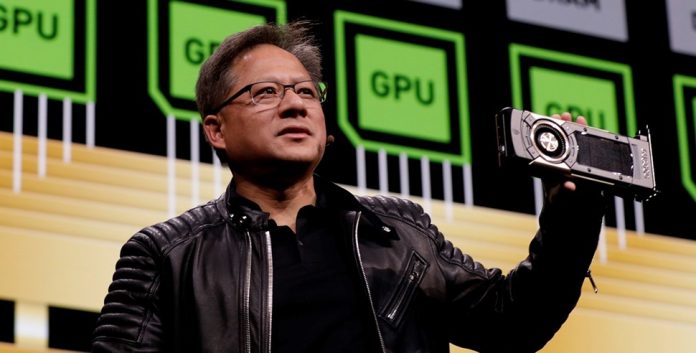
According to The Information, Nvidia was forced to cancel customer orders and manufacturing slots at Taiwan Semiconductor Manufacturing Company (TSMC) as a result of the April policy change. TSMC, which had previously allocated capacity for H20 production, repurposed its lines for other clients, and restarting H20 production would take up to nine months, Nvidia CEO Jensen Huang reportedly told attendees at a media briefing in Beijing this past week.

Despite this disruption, Huang said Nvidia expects licenses for the H20 to be granted swiftly. He also assured that shipments would resume in China, although the recent internal communication cited by The Information suggests supply will be significantly constrained in the near term.

Meanwhile, Nvidia has announced plans to introduce a new graphics chip specifically for the Chinese market called the RTX Pro GPU. This product, the company says, is engineered to fall below the performance thresholds that would trigger U.S. export bans, making it compliant with current restrictions.

The shortage of H20 chips adds to Nvidia’s complex position in China, a market that accounted for about 17% of its data center revenue before the October 2023 export ban. Since then, Nvidia has been trying to shore up its presence with modified hardware, while also adapting to shifting policies from Washington.

The timing of the resumed shipments followed a private meeting between Jensen Huang and President Donald Trump earlier this year, where tech export restrictions and Nvidia’s China interests were reportedly discussed. After that meeting, Huang embarked on a closely watched trip to China, where he met with top executives and publicly expressed optimism that licenses for H20 exports would be processed swiftly.

In Beijing, Huang confirmed that the company was working to increase the supply of the H20 chip in China, and at the same time announced the RTX Pro GPU. The RTX Pro is a graphics chip designed for less advanced AI tasks, making it exempt from the latest round of restrictions.

Analysts say the company’s balancing act—maintaining U.S. compliance while preserving market share in China—will continue to test Nvidia’s strategic flexibility. With high-end chip demand surging due to the AI boom, competitors including Huawei have also ramped up their efforts, seizing the opportunity created by Nvidia’s regulatory constraints.

Nvidia is expected to provide updates on its China strategy during its next earnings report, scheduled for August 21.