DD
MM
YYYY

PAGES

DD
MM
YYYY

spot_img

PAGES

Home Blog Page 862

FBN Holdings Shares Soar Over 20% As Oba Otudeko’s Exit in N323bn Stake Transfer

0

Shares of FBN Holdings Plc (FirstHoldco), Nigeria’s oldest banking group, have surged more than 20% in just two trading sessions, fueled by growing investor speculation after a massive off-market transaction involving over 10.4 billion shares altered the company’s ownership structure.

The stock, which closed at N29.30 on Monday, July 14, jumped to N32.20 on Wednesday and climbed further to N35.40 in early trading on Thursday, July 17, amid a wave of buying activity triggered by the seismic share transfer.

The rally follows a major negotiated deal executed on Wednesday, July 16, on the Nigerian Exchange (NGX), where 10,433,909,058 units of FirstHoldco shares — representing about 25% of the company’s total 41.87 billion outstanding shares — were traded off-market at N31.00 per share across seventeen transactions. Valued at approximately N323.33 billion, the deal ranks as one of the largest block trades in the local bourse this year.

While the NGX negotiated trade window allows for large-volume pre-arranged trades outside the usual daily price discovery mechanism, all transactions are still cleared through the exchange to ensure regulatory compliance and transparency. Market watchers believe the volume and the precision of the deal signal a significant realignment of power within the bank’s ownership.

Prior to the transaction, FirstHoldco had three major known shareholders: billionaire businessman Oba Otudeko, industrialist Femi Otedola, and former First Bank chairman Tunde Hassan-Odukale. Several other investors hold sizable interests but fall below the 5% threshold required by the NGX to be classified as significant shareholders.

Now, fresh information points to RC Investment Management Limited, a little-known investment firm, as the new power bloc. The company, reportedly linked to one Samuel Babatunde Sule, is said to have acquired the entire 10.433 billion shares in the off-market transaction. RC Investment reportedly bought 7.787 billion shares from Barbican Capital and RAML — both associated with Oba Otudeko — and another 2.647 billion shares from entities related to Hassan-Odukale. The latter includes Leadway Holdings, Leadway Pensure PFA, Haskal Holdings, and Leadway/NNPC Staff Pension Investment.

The development marks a possible end to the long-standing rivalry between Otudeko and Otedola over control of FirstHoldco. Otudeko had, in 2023, mounted a surprise return to the shareholding register with a huge acquisition that temporarily tipped control in his favor. But with the latest transaction, Otudeko and Hassan-Odukale appear to have stepped aside for a new player whose motives and affiliations remain unclear to the broader market.

Market analysts suggest that the sharp rise in the company’s share price reflects investor optimism over potential governance changes or strategic direction that could come with the shake-up. However, some have cautioned that a lack of clarity about RC Investment’s backers or plans could introduce fresh uncertainty down the line.

Meanwhile, there are regulatory concerns that stoke interest. Under Nigeria’s corporate governance rules, any shareholder who acquires a 5% or more stake is required to make disclosures to both the exchange and the Securities and Exchange Commission (SEC). If RC Investment now holds 25%, its emergence will trigger new expectations of disclosure and possible changes to the company’s board structure.

The reshuffling also comes at a time when FBN Holdings is exploring strategic expansion and strengthening its balance sheet after recent macroeconomic headwinds. Investors, for now, are taking positions, betting that the transfer of such a large block of shares may unlock value or herald a new era for one of Nigeria’s most storied financial institutions.

Fuel Data War: Dangote Accuses Officials of Inflating Nigeria’s Petrol Consumption by 17 Million Liters Daily

0

A fresh controversy is escalating over the true volume of Nigeria’s daily petrol consumption, as Africa’s richest man, Aliko Dangote, openly challenges the official data endorsed by the Nigerian Midstream and Downstream Petroleum Regulatory Authority (NMDPRA).

While the NMDPRA pegs daily usage at around 50 million liters, Dangote insists the actual figure is significantly lower, closer to 33 million liters—a gap of 17 million liters that has been alleged to have been exploited for years to siphon public funds through the now-defunct fuel subsidy scheme.

Speaking during a visit by members of the Global CEO Africa group to the Dangote Refinery in Ibeju-Lekki, Lagos, the billionaire industrialist revealed that, contrary to government figures, Nigeria’s actual petrol consumption does not exceed 33 million liters per day. He warned that the country had been misled for years with bloated estimates of 60 to 70 million liters per day, sometimes even as high as 100 million liters — figures that enabled a powerful cabal to siphon off vast sums under the guise of fuel subsidy payments.

He had earlier stated that when he decided to embark on the project, people tried to dissuade him, saying it was impossible to survive in the industry without joining the cartel that controlled fuel importation, describing it as a “mafia business.”

His comments cast fresh light on the controversy surrounding Nigeria’s downstream petroleum sector, particularly the opacity of the country’s fuel consumption and subsidy regime.

Energy economist and policy analyst, Kelvin Emmanuel, corroborated Dangote’s claims by explaining the technical mechanics of the fraud. In a post on social media, Emmanuel accused regulators and oil marketers of engaging in a coordinated operation that manipulated documents to support inflated claims.

“All those times when the regulator told you Nigerians consume 70 million liters per day and they were paying for subsidy… what actually gets delivered is around 30 million liters,” Emmanuel wrote. “The remaining PMS in crude equivalent is diverted mid-ocean, and then customs documents are falsified to represent 70 million liters per day.”

According to him, the subsidy racket was a sophisticated scheme involving the lifting of crude oil equivalent to 70 million liters on Free on Board (FOB) terms, while only about 30 million liters of refined petrol would be delivered into Nigeria. The shortfall, he said, was monetized through illegal sales, with false documentation used to validate the full 70 million liter figure, creating a gaping hole in national finances.

“I can tell you that for the last few years, this scheme has been producing N471 billion monthly for a cabal that do not want it to end,” Emmanuel said.

The scale of the alleged fraud has added weight to growing calls for a forensic audit of the country’s fuel import and distribution records during the years the fuel subsidy was paid.

The Nigerian Midstream and Downstream Petroleum Regulatory Authority (NMDPRA), the agency responsible for collating and publishing daily petrol consumption figures, has consistently insisted that its data is accurate. Following the removal of the petrol subsidy in May 2023, the agency pegged Nigeria’s consumption at about 50 million liters per day, down from earlier estimates of over 60 million.

The PIA (Petroleum Industry Act) mandates the NMDPRA to ensure transparency in petroleum supply and enforce compliance among marketers. However, Dangote’s assertion has cast doubt on the integrity of this oversight, prompting fresh demands for institutional reforms and independent verification of data.

However, some industry stakeholders have questioned the accuracy of Dangote’s figures. Speaking to LEADERSHIP, lawyer and energy sector analyst Taiwo Ogunloye of the Institute of Energy and Extractive Industry Law said while Dangote’s position is important, it must be weighed against the agency’s statutory role.

“Dangote may have figures at his disposal, but those may be limited in scope. NMDPRA is the agency with the responsibility and capacity to provide accurate information,” Ogunloye said.

Still, he acknowledged that allegations of corruption were serious and said they deserved a thorough and independent investigation.

“However, Dangote is an operator and may have some figures in his disposal but that may be limited in scope because the NMDPRA has the duty and responsibility as well as capacity to provide accurate information on the actual marketer situation,” he said.

Since President Bola Tinubu announced the end of fuel subsidy in his May 29, 2023, inauguration speech, petrol prices have tripled, inflation has surged, and poverty levels have risen, leading to widespread public discontent. While the government argues that subsidy removal was necessary to curb unsustainable spending, the controversy over past abuses continues to dominate public discourse.

Critics say the failure to prosecute those responsible for subsidy fraud has further eroded trust in Nigeria’s energy governance.

Uber Bets Big on Robotaxis with Lucid and Nuro in $300m Push to Dominate the Future It Sparked

0

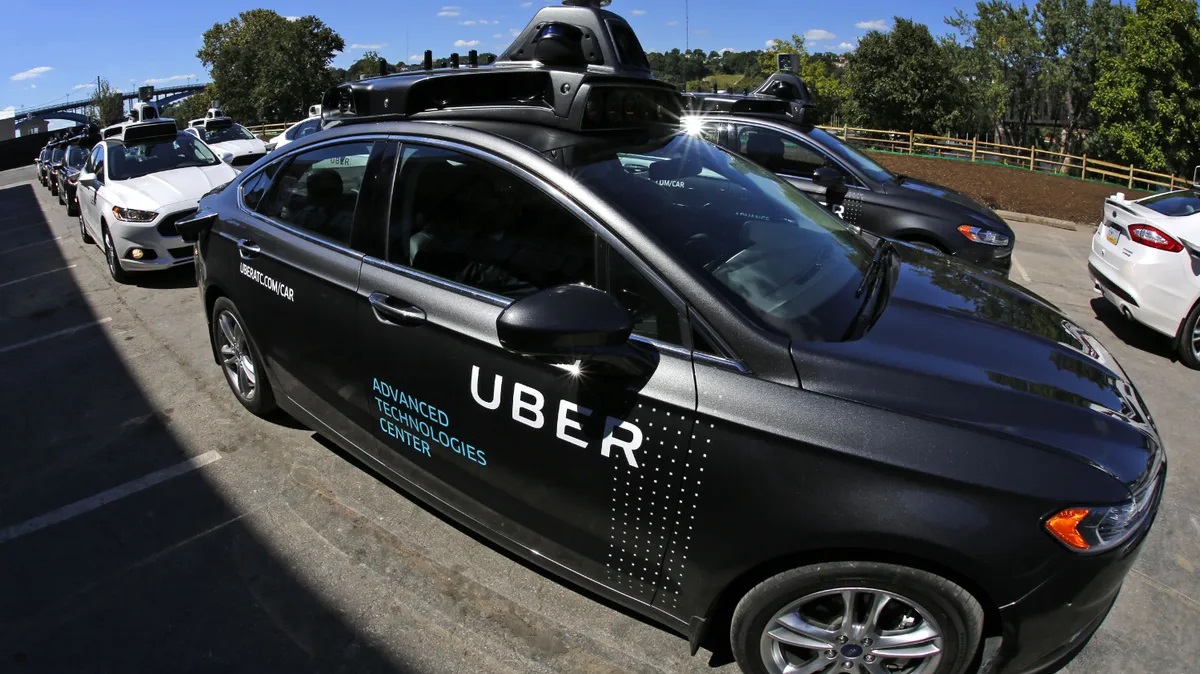
Uber is moving aggressively to reclaim its place at the front of the transportation revolution with a sweeping new partnership announced Thursday that will see it deploy more than 20,000 robotaxis across the United States over the next six years.

The initiative marks a bold new chapter in the ride-hailing giant’s quest to dominate autonomous transport, teaming up with electric vehicle maker Lucid and self-driving tech startup Nuro to develop and deploy the fleet.

Under the agreement, Uber will invest $300 million in Lucid, which will manufacture the electric robotaxis. Nuro, backed by Google and the SoftBank Vision Fund, will provide the Level 4 autonomous driving technology capable of ferrying passengers without a human driver under normal conditions. The rollout is set to begin in a major U.S. city next year, though the companies have not yet disclosed which one.

“We’re thrilled to partner with Nuro and Lucid on this new robotaxi program, purpose-built just for the Uber platform, to safely bring the magic of autonomous driving to more people across the world,” said Uber CEO Dara Khosrowshahi.

Lucid interim CEO Marc Winterhoff hailed the partnership as a leap into a “completely new” addressable market. The company’s Gravity EVs, with a reported 450-mile range, are expected to reduce operating costs and charging downtimes, improving both affordability and scalability.

The announcement sent Lucid’s stock soaring 30 percent on Thursday, while Uber shares ticked up slightly.

The move comes amid intensifying competition in the robotaxi space, with Uber’s longtime rival Waymo—owned by Alphabet—already offering driverless rides in Phoenix, San Francisco, Los Angeles, and, more recently, Atlanta and Austin. Waymo’s fleet, also rated Level 4 by industry standards, is considered a frontrunner in safe, real-world deployment. Meanwhile, Tesla, which launched a supervised robotaxi pilot in Austin this June, is betting on its Full Self-Driving (FSD) software to eventually evolve into a true driverless system, though it remains classified as Level 2 automation, requiring constant driver oversight.

The battle to define the next era of mobility has escalated rapidly, and Uber’s latest deal signals it does not intend to watch passively as newcomers and rivals eat away at the market it pioneered.

With over 130 million users worldwide, Uber is banking on its scale and brand loyalty to position itself as a central player in the robotaxi economy, which many analysts now consider the next major frontier in U.S. tech. The company’s earlier stumbles in autonomous driving—including the fatal 2018 crash that led it to offload its self-driving unit to Aurora—now appear to be giving way to renewed ambition backed by established EV and AI players.

Nuro, which is already testing its autonomous tech at a proving ground in Las Vegas, described the deal as a “blueprint for a robotaxi program that’s both commercially viable and globally scalable.” The startup raised $106 million in fresh capital in April from investors including T. Rowe Price, Fidelity, Tiger Global, and Greylock, further strengthening its runway.

With robotaxis shaping up to be the next seismic shift in mobility and artificial intelligence, Uber’s new deal is seen as a high-stakes bid to ensure it doesn’t get left behind in a market it helped create.

M-KOPA Named Among CNBC’s World’s Top Fintech Companies 2025 as It Surpasses 1 Million Smartphone Sales

0

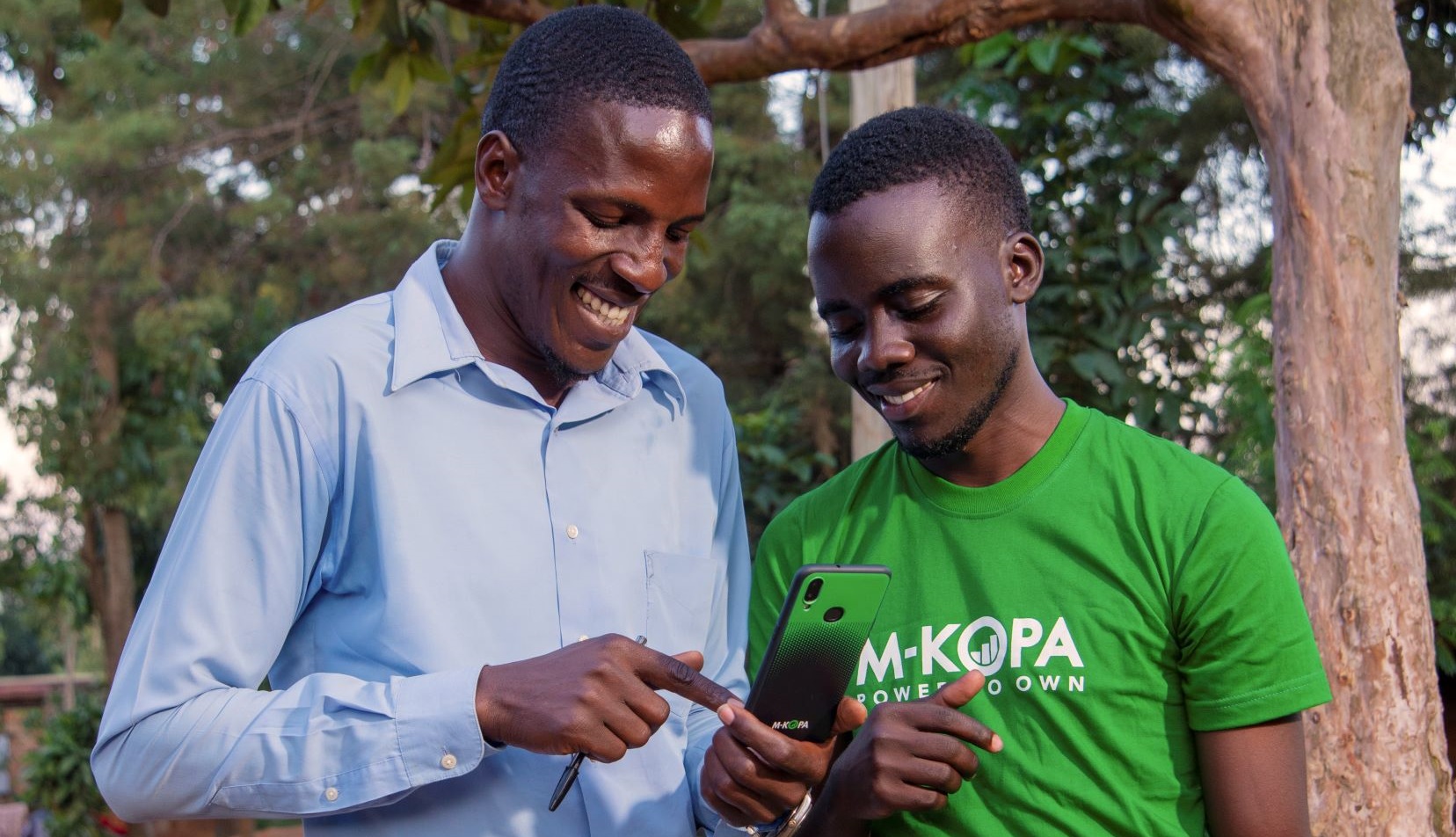
M-KOPA, a trailblazing African fintech known for providing affordable smartphones and digital financial services, has earned a spot on CNBC’s prestigious World’s Top Fintech Companies 2025 list.

The list, compiled by Statista in collaboration with CNBC, features 300 global leaders selected through a rigorous process that included the evaluation of over 2,000 companies. These companies were assessed against a general set of KPIs, in addition to certain sector-specific metrics for their category. M-KOPA was featured in the Alternative Financing category, joining the ranks of notable names like Tala, Sun Finance, and MicroVentures, companies that are redefining access to digital lending and funding.

Commenting on the recognition by CNBC, Jesse Moore, CEO and Co-Founder of M-KOPA, said,

“Reaching the $2 billion credit milestone and being recognized as one of the world’s top fintechs by CNBC represents a critical inflection point—not just for M-KOPA, but for how we think about sustainable growth in emerging markets.”

M-KOPA’s recognition by CNBC comes just one week after the company announced a major milestone of surpassinng over 1 million M-KOPA-branded smartphones sold within 12 months. Sharing the news on LinkedIn, the company wrote,

“We’ve hit a major milestone! In just 12 months, our M-KOPA-branded smartphones have surpassed 1 million sales. To us, this milestone goes beyond impressive numbers; it highlights our commitment to making financial inclusion accessible across Africa.

“The M-KOPA smartphones are integrated with our Smart Money Platform to deliver essential financial services to help access affordable credit, health insurance, and device protection. With every phone, we’re not just connecting people to the internet; each phone represents a step forward for everyday earners to achieve their economic goals.”

M-KOPA’s Nairobi-based assembly plant, Africa’s largest smartphone factory by volume, has played a vital role in this growth. Since opening in 2023, the facility has created over 400 jobs and achieved ISO 9001 quality certification in 2024. The company currently offers four flagship devices—the X20, X2, M10, and S34 with new models expected in the latter half of 2025

With its innovative model that embeds financial services directly into smartphones, M-KOPA has achieved what traditional financial institutions often struggle with, reaching underserved populations with sustainable, scalable solutions. Its Smart Money Platform processes over 15 transactions per second and onboards more than 200,000 new customers monthly, underscoring its significant impact.

The company’s smartphone devices go beyond connectivity, offering users access to health insurance, affordable credit, and device protection. This unique integration allows millions of people many of them previously excluded from formal financial systems to build credit histories and gain economic empowerment. Leveraging a decade of payment data and AI-powered analytics, M-KOPA is helping to reshape financial inclusion in Africa.

M-KOPA’s key achievements include:

  • Surpassing 1 million smartphone sales in 12 months

  • Creating over 400 new jobs since 2023

  • Attaining ISO 9001 certification in 2024

  • Enabling mobile internet access for 1.7 million first-time users

  • Extending $1.5 billion in credit to more than 6 million customers

  • Refurbishing over 100,000 smartphones, reducing CO2 emissions by nearly 8,000 Tonnes

Founded in 2010, M-KOPA continues to pioneer financial inclusion in Sub-Saharan Africa, blending digital micropayments, AI, and innovative distribution to unlock life-changing opportunities for millions.

When providing smartphone financing, M-Kopa combines digital micropayments with advanced AI and machine learning to build “individualized credit profiles”. Operating across Kenya, Uganda, Nigeria, Ghana, and South Africa, M-KOPA manages the continent’s largest direct sales force, comprising over 35,000 agents.

Beyond financial inclusion, M-Kopa is also working to address climate change. The company’s Kenyan facility also refurbishes phones, with every 13 refurbished phones save one tonne of CO2 emissions. To date, over 100,000 smartphones have been refurbished at up to 40% discount.

Trump’s Threat to Fire Fed Chair Powell Jolts Markets, Raises Concern Over Central Bank Independence

0

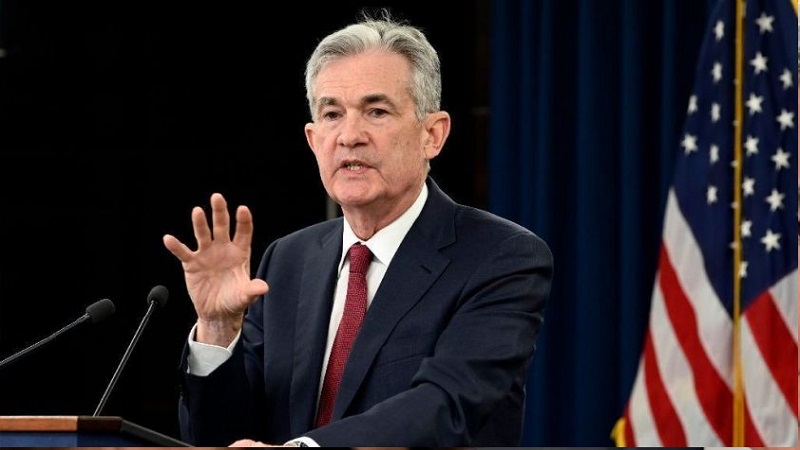
President Donald Trump has stirred financial markets and ignited legal debate after threatening to fire Federal Reserve Chairman Jerome Powell—an unprecedented move that would shake the foundations of U.S. monetary policy.

During a closed-door meeting at the White House on Tuesday night, Trump reportedly told House Republicans that he was prepared to remove Powell from his post. The session, originally convened to discuss stalled cryptocurrency legislation, veered into explosive territory when Trump presented a draft termination letter and sought lawmakers’ opinions on firing the Fed chair, according to sources who were in the room, quoted by Bloomberg.

The president allegedly received unanimous approval from the GOP lawmakers present. “He said he was ready to do it,” one official confirmed anonymously, adding that Trump accused Powell of mismanaging the economy and slowing down growth with “deliberate rate tightening.”

But hours later on Wednesday, Trump dialed back publicly. “We’re not planning on doing it,” he told reporters at the White House. Still, he added a caveat: “I don’t rule out anything. But I think it’s highly unlikely—unless he has to leave for fraud.”

The president’s caveat has done little to ease the growing tension between the White House and the central bank. At the center of Trump’s latest grievance is a $2.5 billion renovation of the Federal Reserve’s headquarters in Washington, which he has called “wasteful” and “suspicious.” Powell has already called for an internal investigation by the Fed’s inspector general to address the concerns.

Markets whipsawed in response to the revelation. The S&P 500 opened lower but recovered after Trump appeared to step back. The Dow rose 0.5% and the Nasdaq closed at a new high, up 0.3%, as investors tried to gauge whether the president was posturing or genuinely preparing for a legal and political showdown.

Powell, who was nominated by Trump in 2018 to lead the central bank, has clashed repeatedly with the president over interest rate policy. Trump has pushed for deep rate cuts—up to 300 basis points from the current 4.25%–4.5% target range—accusing Powell of stalling economic growth and jeopardizing his second-term agenda.

The Fed chair has largely refrained from public spats but has consistently defended the institution’s independence. Under U.S. law, Federal Reserve governors, including the chair, can only be removed “for cause,” typically involving proven legal or ethical violations. Mere disagreements over policy or performance do not qualify.

Still, Trump has tested the limits of executive power before. He has already succeeded in ousting leaders of independent regulatory agencies like the Consumer Financial Protection Bureau and the Federal Housing Finance Agency after securing favorable court rulings. However, those agencies have different statutory protections than the Federal Reserve, and legal scholars warn that firing Powell could result in a prolonged constitutional battle.

“This would be a five-alarm fire for global markets,” said Tobin Marcus, an analyst at Wolfe Research and a former Biden economic adviser. In a client note, Wolfe said the move could trigger equity selloffs, a spike in bond yields, and loss of confidence in U.S. economic management. “It would make the Fed look like just another political tool,” Marcus said.

Some GOP lawmakers are trying to calm tensions. Treasury Secretary Scott Bessent told Bloomberg that a firing was “very unlikely,” while Rep. French Hill, chair of the House Financial Services Committee, said he didn’t expect Trump to follow through.

But others are amplifying the speculation. Florida Rep. Anna Paulina Luna, an outspoken Trump ally, posted on X that Powell’s dismissal was “imminent,” citing what she described as “credible insider confirmation.”

“Hearing Jerome Powell is getting fired! From a very serious source,” she wrote, later adding, “I’m 99% sure firing is imminent.”

Powell’s term as chair ends in May 2026, but the growing feud highlights a stark challenge: whether a sitting president can unilaterally remove the Fed chair without triggering a constitutional crisis.

The Supreme Court has yet to rule directly on the specific protections for the Fed, but in a recent decision upholding the president’s power to fire heads of independent agencies, it hinted at limits when national economic stability is at stake.

CNBC’s Jim Cramer, a longtime market analyst, warned against what he called a “reckless campaign” to undermine Powell.

“I hope today is the last day that Trump goes after Jay Powell, whose term ends in ten months anyway,” he said. “Gunning for Powell will only hurt Trump, the same way it hurts the markets, and I don’t think the President’s a masochist.”

Although for now, Powell remains in place and has not commented publicly on the matter, the episode has cast a long shadow over the central bank’s perceived neutrality and its ability to function in a politically volatile environment.