DD
MM
YYYY

PAGES

DD
MM
YYYY

spot_img

PAGES

Home Blog Page 866

Uber Bets Big on Robotaxis with Lucid and Nuro in $300m Push to Dominate the Future It Sparked

0

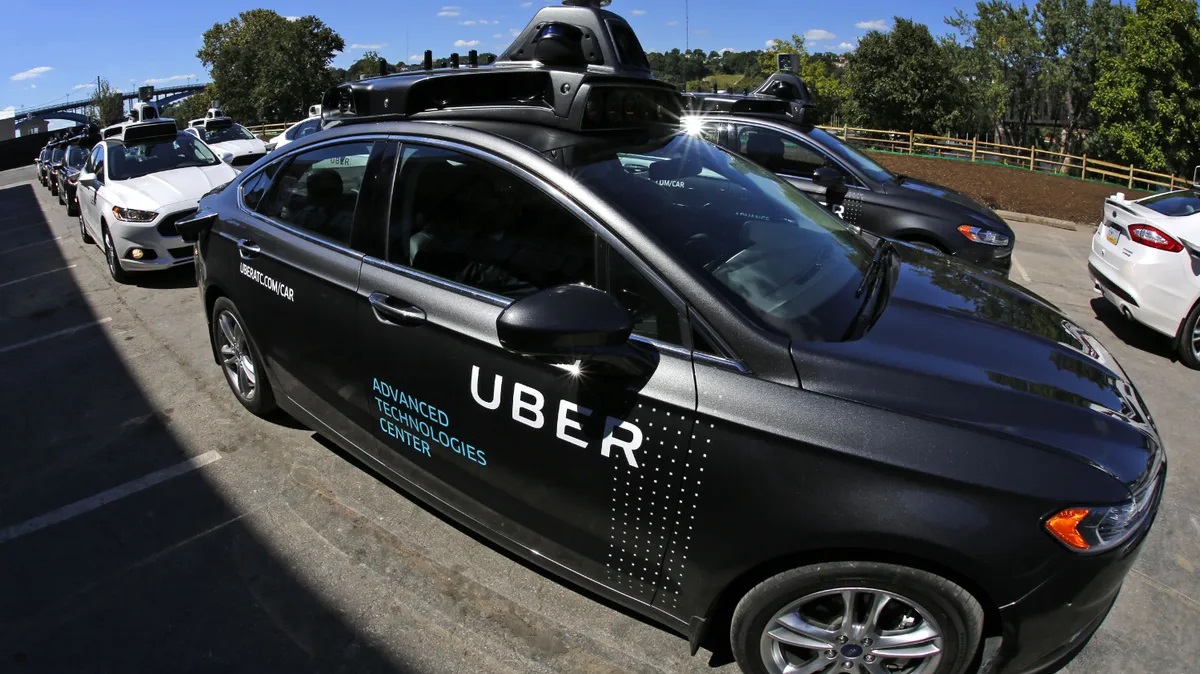
Uber is moving aggressively to reclaim its place at the front of the transportation revolution with a sweeping new partnership announced Thursday that will see it deploy more than 20,000 robotaxis across the United States over the next six years.

The initiative marks a bold new chapter in the ride-hailing giant’s quest to dominate autonomous transport, teaming up with electric vehicle maker Lucid and self-driving tech startup Nuro to develop and deploy the fleet.

Under the agreement, Uber will invest $300 million in Lucid, which will manufacture the electric robotaxis. Nuro, backed by Google and the SoftBank Vision Fund, will provide the Level 4 autonomous driving technology capable of ferrying passengers without a human driver under normal conditions. The rollout is set to begin in a major U.S. city next year, though the companies have not yet disclosed which one.

“We’re thrilled to partner with Nuro and Lucid on this new robotaxi program, purpose-built just for the Uber platform, to safely bring the magic of autonomous driving to more people across the world,” said Uber CEO Dara Khosrowshahi.

Lucid interim CEO Marc Winterhoff hailed the partnership as a leap into a “completely new” addressable market. The company’s Gravity EVs, with a reported 450-mile range, are expected to reduce operating costs and charging downtimes, improving both affordability and scalability.

The announcement sent Lucid’s stock soaring 30 percent on Thursday, while Uber shares ticked up slightly.

The move comes amid intensifying competition in the robotaxi space, with Uber’s longtime rival Waymo—owned by Alphabet—already offering driverless rides in Phoenix, San Francisco, Los Angeles, and, more recently, Atlanta and Austin. Waymo’s fleet, also rated Level 4 by industry standards, is considered a frontrunner in safe, real-world deployment. Meanwhile, Tesla, which launched a supervised robotaxi pilot in Austin this June, is betting on its Full Self-Driving (FSD) software to eventually evolve into a true driverless system, though it remains classified as Level 2 automation, requiring constant driver oversight.

The battle to define the next era of mobility has escalated rapidly, and Uber’s latest deal signals it does not intend to watch passively as newcomers and rivals eat away at the market it pioneered.

With over 130 million users worldwide, Uber is banking on its scale and brand loyalty to position itself as a central player in the robotaxi economy, which many analysts now consider the next major frontier in U.S. tech. The company’s earlier stumbles in autonomous driving—including the fatal 2018 crash that led it to offload its self-driving unit to Aurora—now appear to be giving way to renewed ambition backed by established EV and AI players.

Nuro, which is already testing its autonomous tech at a proving ground in Las Vegas, described the deal as a “blueprint for a robotaxi program that’s both commercially viable and globally scalable.” The startup raised $106 million in fresh capital in April from investors including T. Rowe Price, Fidelity, Tiger Global, and Greylock, further strengthening its runway.

With robotaxis shaping up to be the next seismic shift in mobility and artificial intelligence, Uber’s new deal is seen as a high-stakes bid to ensure it doesn’t get left behind in a market it helped create.

M-KOPA Named Among CNBC’s World’s Top Fintech Companies 2025 as It Surpasses 1 Million Smartphone Sales

0

M-KOPA, a trailblazing African fintech known for providing affordable smartphones and digital financial services, has earned a spot on CNBC’s prestigious World’s Top Fintech Companies 2025 list.

The list, compiled by Statista in collaboration with CNBC, features 300 global leaders selected through a rigorous process that included the evaluation of over 2,000 companies. These companies were assessed against a general set of KPIs, in addition to certain sector-specific metrics for their category. M-KOPA was featured in the Alternative Financing category, joining the ranks of notable names like Tala, Sun Finance, and MicroVentures, companies that are redefining access to digital lending and funding.

Commenting on the recognition by CNBC, Jesse Moore, CEO and Co-Founder of M-KOPA, said,

“Reaching the $2 billion credit milestone and being recognized as one of the world’s top fintechs by CNBC represents a critical inflection point—not just for M-KOPA, but for how we think about sustainable growth in emerging markets.”

M-KOPA’s recognition by CNBC comes just one week after the company announced a major milestone of surpassinng over 1 million M-KOPA-branded smartphones sold within 12 months. Sharing the news on LinkedIn, the company wrote,

“We’ve hit a major milestone! In just 12 months, our M-KOPA-branded smartphones have surpassed 1 million sales. To us, this milestone goes beyond impressive numbers; it highlights our commitment to making financial inclusion accessible across Africa.

“The M-KOPA smartphones are integrated with our Smart Money Platform to deliver essential financial services to help access affordable credit, health insurance, and device protection. With every phone, we’re not just connecting people to the internet; each phone represents a step forward for everyday earners to achieve their economic goals.”

M-KOPA’s Nairobi-based assembly plant, Africa’s largest smartphone factory by volume, has played a vital role in this growth. Since opening in 2023, the facility has created over 400 jobs and achieved ISO 9001 quality certification in 2024. The company currently offers four flagship devices—the X20, X2, M10, and S34 with new models expected in the latter half of 2025

With its innovative model that embeds financial services directly into smartphones, M-KOPA has achieved what traditional financial institutions often struggle with, reaching underserved populations with sustainable, scalable solutions. Its Smart Money Platform processes over 15 transactions per second and onboards more than 200,000 new customers monthly, underscoring its significant impact.

The company’s smartphone devices go beyond connectivity, offering users access to health insurance, affordable credit, and device protection. This unique integration allows millions of people many of them previously excluded from formal financial systems to build credit histories and gain economic empowerment. Leveraging a decade of payment data and AI-powered analytics, M-KOPA is helping to reshape financial inclusion in Africa.

M-KOPA’s key achievements include:

  • Surpassing 1 million smartphone sales in 12 months

  • Creating over 400 new jobs since 2023

  • Attaining ISO 9001 certification in 2024

  • Enabling mobile internet access for 1.7 million first-time users

  • Extending $1.5 billion in credit to more than 6 million customers

  • Refurbishing over 100,000 smartphones, reducing CO2 emissions by nearly 8,000 Tonnes

Founded in 2010, M-KOPA continues to pioneer financial inclusion in Sub-Saharan Africa, blending digital micropayments, AI, and innovative distribution to unlock life-changing opportunities for millions.

When providing smartphone financing, M-Kopa combines digital micropayments with advanced AI and machine learning to build “individualized credit profiles”. Operating across Kenya, Uganda, Nigeria, Ghana, and South Africa, M-KOPA manages the continent’s largest direct sales force, comprising over 35,000 agents.

Beyond financial inclusion, M-Kopa is also working to address climate change. The company’s Kenyan facility also refurbishes phones, with every 13 refurbished phones save one tonne of CO2 emissions. To date, over 100,000 smartphones have been refurbished at up to 40% discount.

Trump’s Threat to Fire Fed Chair Powell Jolts Markets, Raises Concern Over Central Bank Independence

0

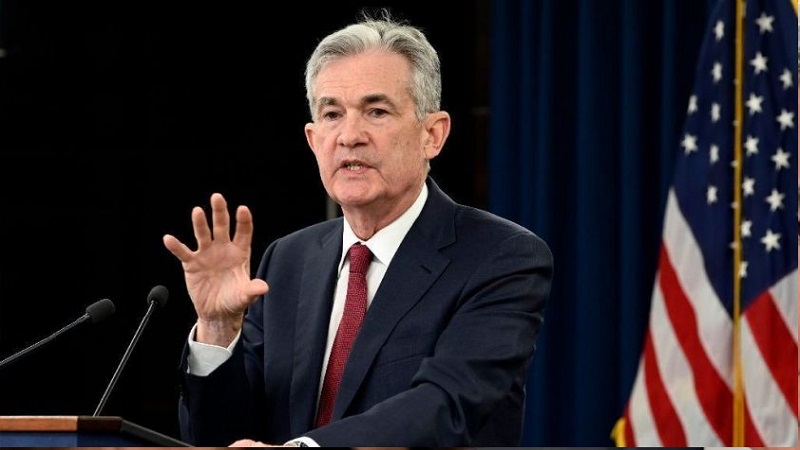
President Donald Trump has stirred financial markets and ignited legal debate after threatening to fire Federal Reserve Chairman Jerome Powell—an unprecedented move that would shake the foundations of U.S. monetary policy.

During a closed-door meeting at the White House on Tuesday night, Trump reportedly told House Republicans that he was prepared to remove Powell from his post. The session, originally convened to discuss stalled cryptocurrency legislation, veered into explosive territory when Trump presented a draft termination letter and sought lawmakers’ opinions on firing the Fed chair, according to sources who were in the room, quoted by Bloomberg.

The president allegedly received unanimous approval from the GOP lawmakers present. “He said he was ready to do it,” one official confirmed anonymously, adding that Trump accused Powell of mismanaging the economy and slowing down growth with “deliberate rate tightening.”

But hours later on Wednesday, Trump dialed back publicly. “We’re not planning on doing it,” he told reporters at the White House. Still, he added a caveat: “I don’t rule out anything. But I think it’s highly unlikely—unless he has to leave for fraud.”

The president’s caveat has done little to ease the growing tension between the White House and the central bank. At the center of Trump’s latest grievance is a $2.5 billion renovation of the Federal Reserve’s headquarters in Washington, which he has called “wasteful” and “suspicious.” Powell has already called for an internal investigation by the Fed’s inspector general to address the concerns.

Markets whipsawed in response to the revelation. The S&P 500 opened lower but recovered after Trump appeared to step back. The Dow rose 0.5% and the Nasdaq closed at a new high, up 0.3%, as investors tried to gauge whether the president was posturing or genuinely preparing for a legal and political showdown.

Powell, who was nominated by Trump in 2018 to lead the central bank, has clashed repeatedly with the president over interest rate policy. Trump has pushed for deep rate cuts—up to 300 basis points from the current 4.25%–4.5% target range—accusing Powell of stalling economic growth and jeopardizing his second-term agenda.

The Fed chair has largely refrained from public spats but has consistently defended the institution’s independence. Under U.S. law, Federal Reserve governors, including the chair, can only be removed “for cause,” typically involving proven legal or ethical violations. Mere disagreements over policy or performance do not qualify.

Still, Trump has tested the limits of executive power before. He has already succeeded in ousting leaders of independent regulatory agencies like the Consumer Financial Protection Bureau and the Federal Housing Finance Agency after securing favorable court rulings. However, those agencies have different statutory protections than the Federal Reserve, and legal scholars warn that firing Powell could result in a prolonged constitutional battle.

“This would be a five-alarm fire for global markets,” said Tobin Marcus, an analyst at Wolfe Research and a former Biden economic adviser. In a client note, Wolfe said the move could trigger equity selloffs, a spike in bond yields, and loss of confidence in U.S. economic management. “It would make the Fed look like just another political tool,” Marcus said.

Some GOP lawmakers are trying to calm tensions. Treasury Secretary Scott Bessent told Bloomberg that a firing was “very unlikely,” while Rep. French Hill, chair of the House Financial Services Committee, said he didn’t expect Trump to follow through.

But others are amplifying the speculation. Florida Rep. Anna Paulina Luna, an outspoken Trump ally, posted on X that Powell’s dismissal was “imminent,” citing what she described as “credible insider confirmation.”

“Hearing Jerome Powell is getting fired! From a very serious source,” she wrote, later adding, “I’m 99% sure firing is imminent.”

Powell’s term as chair ends in May 2026, but the growing feud highlights a stark challenge: whether a sitting president can unilaterally remove the Fed chair without triggering a constitutional crisis.

The Supreme Court has yet to rule directly on the specific protections for the Fed, but in a recent decision upholding the president’s power to fire heads of independent agencies, it hinted at limits when national economic stability is at stake.

CNBC’s Jim Cramer, a longtime market analyst, warned against what he called a “reckless campaign” to undermine Powell.

“I hope today is the last day that Trump goes after Jay Powell, whose term ends in ten months anyway,” he said. “Gunning for Powell will only hurt Trump, the same way it hurts the markets, and I don’t think the President’s a masochist.”

Although for now, Powell remains in place and has not commented publicly on the matter, the episode has cast a long shadow over the central bank’s perceived neutrality and its ability to function in a politically volatile environment.

Coinbase Unveils All-in-One “Base App” as It Bets on a Super App Future for Crypto

0

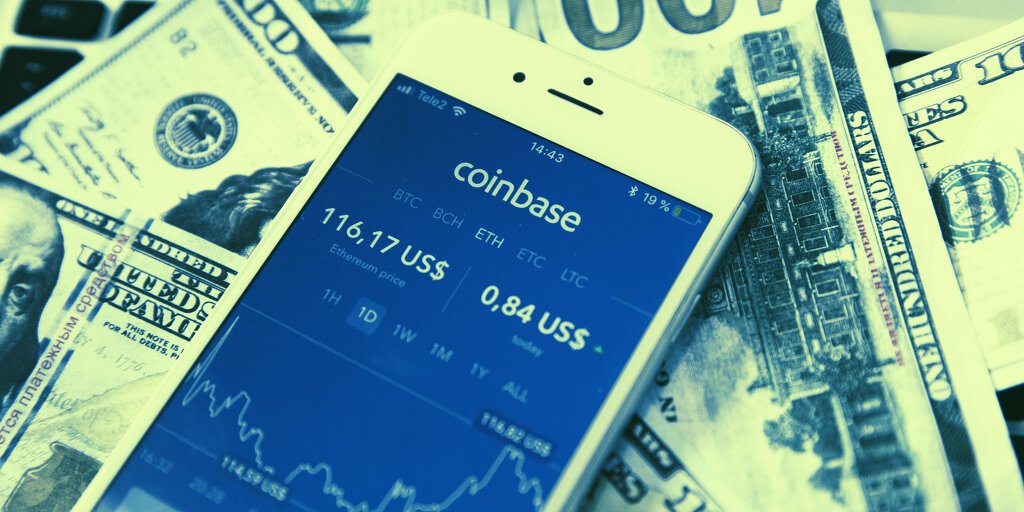
Coinbase on Wednesday launched a new all-in-one consumer app called the “Base App” — an ambitious bid to recreate the success of China’s super apps like WeChat and Alipay, and a major departure from the company’s traditional focus on crypto trading.

The app, which replaces the Coinbase Wallet, is designed as a single portal for trading, payments, messaging, identity management, and even social content — all running on the company’s own public blockchain network, Base. Built on Ethereum, Base offers fast, ultra-low-cost transactions and is now being positioned as a key pillar in Coinbase’s effort to pull in users far beyond its traditional crypto base.

Coinbase says the app is designed not just for crypto traders, but for mainstream users — shoppers, content creators, small businesses — who may not be deeply engaged in the crypto economy but still need tools for payments, identity, and social interaction. The company’s broader vision is to build what it calls an “everything app” — a single destination to buy, sell, send, and create on-chain content, interact with decentralized apps (dapps), and connect with communities.

Super App Race in the West

Coinbase’s move pushes it deeper into a race that tech giants like Meta and X have also been trying to crack. While China has long relied on all-in-one apps like WeChat and Alipay to handle payments, communication, social media, and services in one seamless interface, no Western company has yet managed to pull off the same feat. Coinbase’s bet is that by building directly on blockchain, it can offer a new kind of infrastructure that sidesteps traditional app ecosystems, potentially giving users more control over their data and transactions.

The Base App is also Coinbase’s response to a deeper structural problem: its overreliance on trading fees, a revenue stream that has proven volatile amid crypto market downturns. The new app, built around real-world utility, is aimed at diversifying that revenue and drawing users who may never have bought crypto before.

Key Features: Identity, Payments, Creator Economy

As part of the rollout, Coinbase introduced Base Account, a streamlined blockchain-based identity and verification system, and Base Pay, a one-click express checkout system for USDC, the stablecoin issued by Circle. Base Pay is already live on tens of thousands of Shopify stores and will roll out to all merchants by year-end. A tap-to-pay version is also expected for physical retail stores.

Shopify’s product head, Alex Danco, confirmed at the launch event that U.S. users paying with USDC will get 1% cashback later this year. The move strengthens Shopify and Coinbase’s growing partnership, which has expanded as the Trump administration’s pro-crypto policies take effect, fueling a fresh wave of blockchain adoption across fintech and retail.

Coinbase also aims to reshape the creator economy by integrating direct monetization features. Users will be able to send and receive USDC within chat interfaces — with fees waived to encourage adoption — and creators will be rewarded for engaging content directly within the app. Coinbase has committed funding toward creator rewards to kickstart this model, though the company says this will not generate immediate revenue.

The app’s social layer will also support messaging and community functions, creating a decentralized alternative to platforms like Instagram and Twitter. Coinbase is positioning this feature as a major opportunity for content creators frustrated by platform algorithms and revenue-sharing restrictions on traditional apps.

Base Network Grows, Corporate Adoption Expands

Until now, Base has been popular mainly with developers and crypto-native builders. But Coinbase hopes this new app will mark a turning point in its mainstream adoption. One of the biggest recent endorsements came from JPMorgan, which announced in June that it would launch a blockchain-based “deposit token” on Base — a move that signaled growing institutional interest.

Base’s promise of lightning-fast transactions — often under a second and costing less than a cent — gives Coinbase an edge in delivering mass-market fintech services where cost and speed are critical. Those features could make it an appealing alternative to traditional payment rails, especially for merchants seeking lower fees.

The timing of the Base App launch also coincides with a broader regulatory shift in the United States. With Trump back in the White House and Congress poised to pass new crypto legislation, Coinbase and other firms are racing to push out new products under a more favorable policy environment.

Last month, Coinbase partnered with American Express to launch its first credit card, while Shopify integrated USDC-powered payments via both Coinbase and Stripe. The new developments are part of what Coinbase CEO Brian Armstrong has described as a “stretch goal” to make USDC the most used stablecoin globally, challenging Tether’s USDT, which still holds the top spot.

Armstrong has also laid out a bold five-to-10-year vision to turn Coinbase into “the number one financial services app in the world.” The Base App appears to be the centerpiece of that strategy, bringing together all of Coinbase’s efforts — payments, DeFi, identity, commerce, and content — into one user-focused platform.

While it may take time for Coinbase to see meaningful revenue from the new app, the company is betting big that building the future of finance will depend on creating everyday use cases beyond crypto speculation. The Base App, it believes, is that bridge.

Larry Ellison Surpasses Mark Zuckerberg to Become World’s Second Richest as Oracle Rides AI Boom

0

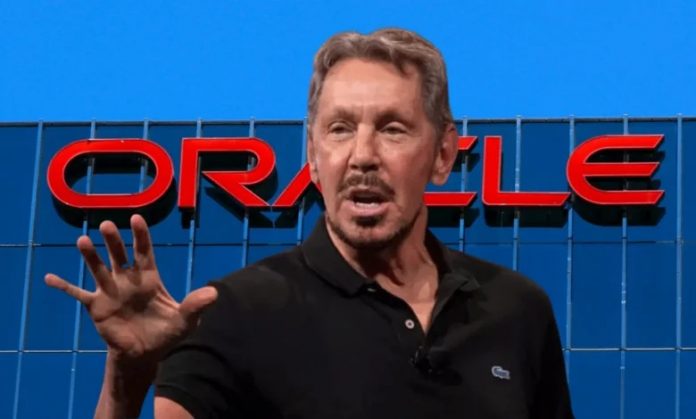
Oracle co-founder and Chief Technology Officer Larry Ellison has climbed to the Number 2 spot on Bloomberg’s Billionaires Index, surpassing Meta CEO Mark Zuckerberg for the first time.

Ellison’s net worth has surged to an estimated $251.2 billion, buoyed by a staggering $59 billion gain since July 2024, as Oracle’s stock continues to rally on growing investor enthusiasm for artificial intelligence.

The tech CEO’s rise comes as Oracle benefits from a wave of AI-driven demand across enterprise clients. Oracle is embedding AI into its enterprise software, such as Fusion Cloud ERP and Oracle Health Data Intelligence, enhancing forecasting, automation, and workforce management. For example, in healthcare, Oracle’s AI tools predict staffing needs, reducing overtime and improving patient care. The Oracle AI Agent Studio allows clients to build autonomous AI systems, redefining enterprise workflows.

Oracle’s stock has nearly doubled in value since April, driven by strong quarterly earnings, cloud partnerships, and continued AI expansion. Its stock climbed from $140.72 in April 2025 to $242.608 as of July 17, 2025, a roughly 72% increase. The company’s fiscal Q4 2025 earnings report underscored its upward trajectory, with revenue rising 11% year-over-year to $15.9 billion. Cloud services and license support brought in $11.7 billion, a 14% increase, while operating cash flow reached $20.8 billion for the fiscal year, up 12%.

Other notable fiscal 2025 highlights include:

  • Total annual revenue: $57.4 billion (up 8% YoY)

  • Cloud services and license support: $44.0 billion (up 12% YoY)

  • Non-GAAP net income: $4.9 billion for Q4

  • Non-GAAP EPS: $1.70

  • Oracle’s market cap: ~$650 billion

  • Global ranking: 16th most valuable company by market capitalization

It is also worth noting that Ellison’s wealth leap was further accelerated by a $3.59 billion drop in Zuckerberg’s fortune on July 15. Despite the dip, Zuckerberg still boasts a $43.4 billion gain year-to-date. Closely behind Ellison is Amazon founder Jeff Bezos, whose net worth stands at $247 billion.

Larry Ellison, now 80, founded Oracle in 1977 and led the company as CEO for 37 years before stepping down in 2014. Today, he remains Oracle’s largest shareholder, owning roughly 40% of the company, a stake that accounts for over 80% of his total fortune. Ellison also served on Tesla’s board from 2018 to 2022. According to Forbes, his net worth was $59 billion in 2020, marking a stunning increase of over 325% in just five years.

His company, Oracle, has recently announced several high-profile AI deals. Just this week, Oracle committed to investing $3 billion to grow its AI and cloud infrastructure in Germany and the Netherlands. Last month, the company unveiled a massive $30 billion annual cloud deal with OpenAI, aimed at powering the growing needs of the ChatGPT maker’s expanding user base.

Oracle’s deal with OpenAI for AI model training, alongside partnerships with xAI (for Grok-3) and IBM (for Watson X), has solidified its position in the AI infrastructure race. These deals leverage Oracle Cloud Infrastructure (OCI) to meet the computational demands of large-scale AI workloads. Notably, Oracle’s strategic focus on AI infrastructure, sovereign cloud solutions, and vertical integration with its enterprise software positions it to capture significant market share in the AI-driven cloud boom, despite competition from hyperscalers.

Ellison’s story continues to exemplify strategic innovation and bold leadership. As AI reshapes the global tech landscape, Oracle’s rapid ascent and Ellison’s wealth boom signal a new era for the enterprise software giant.