DD
MM
YYYY

PAGES

DD
MM
YYYY

spot_img

PAGES

Home Blog Page 870

Sonnet BioTherapeutics Announces $888M Combination With Rorschach For HYPE Treasury

0

Sonnet BioTherapeutics (NASDAQ: SONN) announced a transformative $888 million business combination with Rorschach I LLC to form Hyperliquid Strategies Inc. (HSI), pivoting from biotech to a cryptocurrency treasury strategy focused on HYPE tokens. The new entity will hold 12.6 million HYPE tokens (valued at ~$583 million) and $305 million in cash, aiming to be the largest U.S.-based public company holding HYPE, the native token of the Hyperliquid Layer-1 blockchain.

The deal, backed by investors like Atlas Merchant Capital, Paradigm, Galaxy Digital, and others, includes a $5.5 million private placement and conversion of $2 million in convertible notes. Sonnet’s stock surged significantly, with pre-market gains reported between 153% and 300%, settling around $9.64 to $19.67. Post-merger, Sonnet will operate as a wholly owned HSI subsidiary, continuing biotech development (e.g., SON-1010), while shareholders receive contingent value rights (CVRs) tied to biotech assets.

The transaction, expected to close in the second half of 2025, positions HSI as a leader in crypto treasury management, though HYPE’s volatility and regulatory uncertainties pose risks. The $888 million business combination between Sonnet BioTherapeutics (SONN) and Rorschach I LLC to form Hyperliquid Strategies Inc. (HSI) has significant implications for Sonnet’s shareholders, the biotech and crypto industries, and the broader market.

Sonnet’s shift from a clinical-stage biotech focused on oncology (e.g., SON-1010) to a hybrid entity with a primary focus on managing a HYPE token treasury is unprecedented. HSI aims to be the largest U.S.-based public company holding HYPE tokens, valued at ~$583 million of the deal’s total. This positions HSI as a novel player bridging traditional finance and decentralized finance (DeFi).

Sonnet’s biotech operations will continue as a wholly owned subsidiary, with ongoing development of assets like SON-1010. Shareholders will receive contingent value rights (CVRs) tied to biotech milestones, preserving some exposure to potential upside in oncology but subordinating it to the crypto strategy.

SONN’s stock surged 153% to 300% in pre-market trading on July 14, 2025, with prices ranging from $9.64 to $19.67, reflecting investor enthusiasm for the crypto pivot. However, HYPE’s volatility (historically significant for altcoins) could lead to sharp fluctuations in HSI’s valuation post-merger. The $305 million cash component and $5.5 million private placement provide HSI with substantial liquidity to manage its treasury and potentially expand crypto holdings. This could attract institutional investors seeking crypto exposure through a public company.

The pivot introduces high risk due to HYPE’s price volatility, regulatory uncertainties in crypto (e.g., SEC oversight), and the untested nature of a biotech-crypto hybrid model. Biotech investors may face dilution or reduced focus on Sonnet’s original pipeline. The deal reflects growing mainstream acceptance of cryptocurrencies, with HSI leveraging a public company structure to offer regulated exposure to HYPE. This could inspire similar pivots by other small-cap firms seeking to capitalize on crypto market trends.

Sonnet’s move may signal challenges in biotech funding, as small-cap biotechs often struggle with high R&D costs and long timelines. Pivoting to crypto could be a strategy to unlock capital, but it risks alienating biotech-focused investors. The transaction, expected to close in H2 2025, requires shareholder approval and regulatory clearance. Crypto’s evolving regulatory landscape (e.g., potential SEC classification of HYPE as a security) could complicate or delay the merger.

CVRs tied to biotech assets introduce complexity, as their value depends on uncertain milestones, potentially leading to disputes among shareholders. Long-term SONN shareholders, who invested in its oncology pipeline, may view the pivot as a betrayal of the company’s original mission. The relegation of biotech to a subsidiary and reliance on CVRs for future biotech gains could frustrate those expecting direct R&D progress. Some may sell shares to avoid crypto-related risks.

New investors, particularly those bullish on HYPE and Hyperliquid’s Layer-1 blockchain, are likely driving the stock surge. They see HSI as a unique vehicle to gain exposure to crypto via a public company, potentially attracting speculative capital from DeFi advocates. A smaller group may support the hybrid model, seeing diversification benefits in combining biotech’s long-term potential with crypto’s high-reward (but high-risk) profile.

Supporters argue HSI’s $583 million HYPE treasury and $305 million cash reserve create a strong foundation for growth, especially if HYPE appreciates. Backing from firms like Paradigm and Galaxy Digital adds credibility, and the stock’s surge reflects market optimism. Skeptics highlight the risks of HYPE’s volatility, regulatory hurdles, and the unproven track record of blending biotech and crypto. Biotech purists may argue that Sonnet is abandoning its core competency, while crypto critics may see HSI as a speculative gamble.

Industry peers may view Sonnet’s pivot as a sign of desperation or a lack of confidence in its pipeline, potentially impacting perceptions of small-cap biotechs broadly. DeFi advocates may welcome HSI as a bridge between traditional and decentralized finance, but some may question the need for a public company to hold HYPE when investors can directly buy tokens on Hyperliquid. The dual focus on crypto treasury management and biotech R&D could strain resources and leadership attention.

The Sonnet-Rorschach combination is a bold, polarizing move that could redefine how public companies engage with cryptocurrencies. It offers significant upside potential if HYPE appreciates and biotech assets deliver, but it also introduces substantial risks due to market volatility, regulatory uncertainty, and the challenge of managing a hybrid business model. The divide among stakeholders—biotech loyalists versus crypto speculators, cautious traditionalists versus risk-tolerant innovators—will shape HSI’s trajectory.
White House’s AI and Crypto Chief Defends Nvidia’s China Chip Deal as Strategic Move to Undercut Huawei’s Rise

0

White House AI and crypto adviser David Sacks has come out in full defense of the Biden administration’s decision to allow Nvidia to resume sales of its H20 AI chips to China, arguing that the move is a tactical step to stop China’s tech giant Huawei from gaining unchallenged dominance in the world’s second-largest economy.

In an interview with Bloomberg on Tuesday, Sacks said the government’s shift in position “makes a lot of sense” given Huawei’s fast-rising capabilities.

“There is a compelling argument here that you just don’t want to hand Huawei the entire Chinese market when Nvidia is capable of competing for a big slice of it with a deprecated, less capable chip,” he said.

Nvidia’s H20 chip — designed specifically to comply with earlier U.S. restrictions — had its sales halted in April after the U.S. government said licenses would be required for any such transactions. But in a blog post on July 14, Nvidia confirmed that the U.S. had now given assurances that licenses will be granted and that the company hopes to begin deliveries soon.

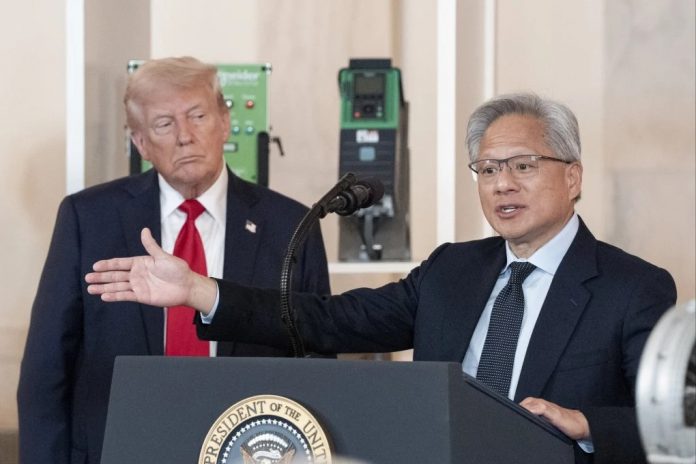
The announcement followed a private meeting between Nvidia CEO Jensen Huang and President Donald Trump last week, where Nvidia reaffirmed its support for the administration’s goals of job creation, onshoring, and AI leadership. Commerce Secretary Howard Lutnick later said the green light to resume H20 sales was part of a wider negotiation involving rare-earth deals with China. Lutnick emphasized that the administration wants Chinese developers to remain tied to American technology by giving them “the fourth best” chip, not the most advanced models like the H100 or H200.

“We want to keep having the Chinese use the American technology stack, because they still rely upon it,” Lutnick said. “You want to sell the Chinese enough that their developers get addicted to the American technology stack.”

But Nvidia’s CEO, Jensen Huang, has not hidden his frustration with the export curbs. He has repeatedly warned that Washington’s clampdown is self-defeating and risks backfiring — both on U.S. companies and on America’s long-term tech leadership.

Speaking the Financial Times in March, Huang said that the restrictions hurt Nvidia’s bottom line, cost it significant market share, and undermine America’s chip supremacy. added that Huawei’s “presence in AI is growing every single year” and Nvidia “can’t assume they are not going to be a factor.”

He further called the U.S. strategy “poorly executed,” noting that restricting chip access was emboldening Beijing’s push for semiconductor independence. Huang added that Huawei, in particular, had become “the single most formidable technology company” in China.

“Their presence in AI is growing every single year, and we can’t assume they are not going to be a factor. They have conquered every market they’ve engaged,” Huang said.

Despite sweeping U.S. sanctions intended to hobble China’s access to advanced semiconductors, Huawei has emerged more resilient than expected. With massive support from the Chinese government — including funding, partnerships, and intellectual property protections — the tech giant has defied Western expectations and built cutting-edge chips that power everything from smartphones to AI data centers.

In 2023, Huawei shocked the industry by unveiling a 7-nanometer chip inside its Mate 60 Pro smartphone — a feat once thought to be impossible under U.S. restrictions. The move drew global attention and exposed gaps in the effectiveness of U.S. export bans.

U.S. intelligence officials have since warned that China’s semiconductor ambitions are gaining traction faster than predicted, partly because companies like Huawei are using sanctions as a rallying cry for tech self-reliance.

“China is maybe one and a half to two years behind us in chip design,” Sacks admitted, “but Huawei is moving fast to catch up. Even before they fully catch up, I think you will see them exporting their chips for the global market.”

Nvidia’s ability to sell to China is not just about quarterly earnings. China represents one of the largest markets for AI chips globally, with data centers, cloud computing, surveillance, and military sectors all demanding high-powered GPUs. U.S. companies dominate this segment, but with restrictions in place, they are now at risk of being squeezed out.

Without access to Chinese buyers, American chipmakers risk losing out to domestic rivals like Huawei, SMIC, and new players backed by Beijing’s multibillion-dollar semiconductor funds.

Dan Ives of Wedbush Securities echoed that view in a note following the H20 decision. “Nvidia resuming H20 chip sales in China is a gamechanger in our view. Trump knows there is one chip in the world fueling the AI revolution, and it’s Nvidia,” Ives wrote. “Giving the green light to Jensen/Nvidia is all part of negotiations with China. Nvidia gets $30 billion+ annual biz back.”

Following the news, Nvidia’s stock surged by over 5% on Tuesday, closing at a record high of $170.70. Investors interpreted the decision as a strategic win for Nvidia, ensuring it can reclaim lost ground in China’s rapidly growing AI sector while staying within the bounds of national security.

The move reflects Washington’s delicate balancing act — protecting U.S. innovation and security interests without triggering a full-scale decoupling that could alienate key markets and accelerate China’s tech independence.

“We’re not selling our latest greatest chips to China, but we can deprive Huawei of basically having this giant market share in China that they can then use to scale up and compete with us globally,” Sacks told Ludlow.

Fasmicro Opens Calls for Microprocessors & AI Training for African Governments

0

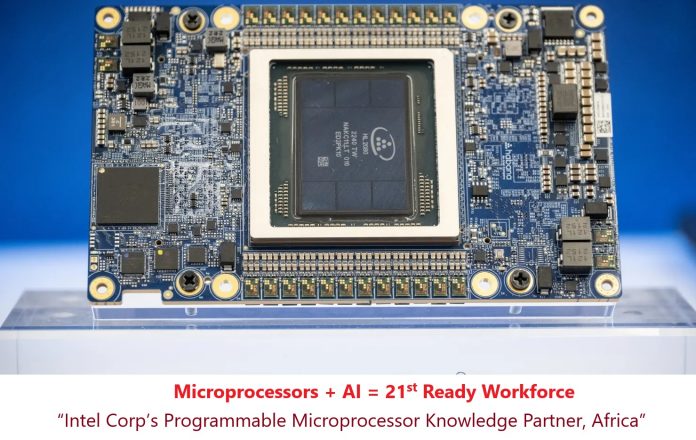
Our microelectronics business will be running some special workshops sponsored by governments at state and national levels across Africa. Yes, Fasmicro, Africa’s only programmable microprocessor knowledge partner for Intel Corp in Africa, will begin teaching the fusion of microprocessors and artificial intelligence (AI). Fasmicro is here to ensure companies, research institutions and broad customers understand how these systems will help in this fledgling AI era. We have the tools and knowledge capabilities to support Africa in the evolving amazing era of AI-driven opportunities.

While most have focused on the software aspect of AI, it is important to note that until microprocessors have evolved, software will have limitations. With more than a decade of partnership with Intel in programmable microprocessors, we will be introducing new systems into the African markets.

Visit intel.com and contact Fasmicro through the email provided https://www.intel.com/content/www/us/en/support/programmable/support-resources/fpga-training/overview.html . You must be a state or national government in Africa to qualify. We come with microchips, designkits, process systems, etc. We have just a few slots for this batch of training, and we look forward to support governments as they design and architect AI roadmap, pushing them to remember that AI doesn’t end with software; we are the hardware people, and we have provided engineering services across Africa with absolute quality.

Prof Ndubuisi Ekekwe

(PhD, Electrical & Computer Engineering / with focus on Microelectronics & Robotics Engineering, Johns Hopkins University)

Chairman, Fasmicro Microelectronics

Fasmicro recently celebrated 15 solid years of Intel Corp partnership

Server CPU Impact on Forex EA Performance – What Trading Session Data Reveals

0

During a particularly volatile Asian session, a trader running multiple grid EAs watched in horror as his execution times doubled. His MT4 platform showed all the usual metrics – stable internet, normal ping times, and steady broker connection. The culprit? CPU throttling on his supposedly “optimized” VPS.

This scenario highlights why selecting vps for forex traders requires understanding how processor architecture affects automated trading performance. The relationship between CPU cycles and EA execution isn’t linear – it’s exponential under certain market conditions.

CPU Threading Patterns During High-Impact News Events

When analyzing server performance during major economic releases, single-threaded CPU performance becomes critically important. MT4 and MT5 platforms primarily utilize single-core processing for trade execution, regardless of how many cores your VPS has available. During the recent Fed rate decisions, traders using multi-core servers but lower single-thread performance experienced significant delays.

Providers like NewYorkCityServers typically optimize for this with processors featuring higher base clock speeds, but many traders don’t realize why this matters more than total core count. A 4-core CPU running at 3.5GHz often outperforms an 8-core system at 2.8GHz for forex automation.

Memory-to-CPU Pipeline Optimization for Multiple EAs

Running concurrent expert advisors creates unique memory access patterns that can bottleneck even powerful servers. Each EA instance needs rapid access to both market data and its own operational memory space. The speed of this data transfer between RAM and CPU becomes a critical performance factor.

In testing environments, we’ve observed that EAs processing tick data can generate up to 2GB of memory transactions per hour per instance. Without proper memory channel configuration, this creates processing queues that delay trade execution. 

The Hidden Cost of CPU Power Management

Modern server processors include sophisticated power management features that can severely impact trading performance. These systems often take microseconds to ramp up from power-saving states – an eternity in forex trading terms. During recent volatility in EUR/USD pairs, traders experienced delays of up to 200ms due to processor power state transitions.

Proper configuration requires disabling various C-states and ensuring consistent CPU frequency. This maintains immediate response times but increases power consumption – a tradeoff many traders don’t consider when selecting budget VPS options.

Real-World Impact on Grid Trading Systems

Grid trading strategies are particularly sensitive to processor performance due to their concurrent order management requirements. Each grid level needs constant monitoring and rapid execution capability. A system running 20 grid levels across multiple currency pairs can generate over 100 processor interrupts per second during active market periods.

The processing overhead increases exponentially with each additional grid level or currency pair. Traders often discover this limitation only after scaling their strategies, leading to missed opportunities and inconsistent execution.

Network Interface Controller (NIC) CPU Offloading

One frequently overlooked aspect of server configuration is NIC processor offloading. Modern network interfaces can handle packet processing independently, reducing CPU load. However, many VPS providers don’t properly configure these features, forcing the main processor to handle network tasks that could be offloaded.

During high-frequency trading periods, this can consume up to 15% of available CPU cycles – resources that should be dedicated to EA execution and market analysis.

Session-Specific Performance Requirements

Different trading sessions demand varying levels of processor performance. Asian session algorithmic trading typically requires more consistent, sustained performance due to the nature of price movement. European and US sessions often need burst performance capability to handle sudden market shifts.

Configure processor performance profiles based on your primary trading sessions. European session traders might benefit from higher turbo boost frequencies, while Asian session strategies often perform better with steady base clock speeds.

Monitoring and Optimization Strategy

Implement continuous CPU performance monitoring focusing on three key metrics: process time, thread switching, and interrupt handling. These measurements provide early warning of potential execution problems before they impact trading performance.

NewYorkCityServers and similar quality providers typically offer monitoring tools, but traders should implement their own metrics tracking. Record execution times across different market conditions and correlate them with CPU performance data to optimize their setup.

The relationship between processor architecture and trading performance becomes more critical as strategies grow more sophisticated. Understanding these technical requirements helps traders build infrastructure that scales with their strategies rather than becoming a bottleneck to growth.

Remember: CPU performance isn’t just about raw speed – it’s about consistent, reliable execution under all market conditions. Choose and configure your trading infrastructure with this principle in mind.

New Exit Model and IP Dynamics: Scale AI, Windsurf, OpenAI/ Microsoft [podcast]

1

The video podcast discusses a “new exit model” emerging in the startup world, particularly in the context of Artificial Intelligence. Driven by the increasing value of “knowledge” (embodied in human talent and IP) and the desire to avoid regulatory scrutiny, large tech companies are opting to “dis-member” startups rather than acquire them outright.

Examples like Meta’s “reverse acquire-hiring” of Scale AI’s leadership and Google’s acquisition of key R&D teams (e.g., from Windsurf) illustrate this trend. These strategies allow big tech to gain crucial human capital and intellectual property without triggering antitrust concerns associated with full company acquisitions.

The lecture highlights that this approach, while legally permissible currently, may lead to the degradation of the “stripped” companies and could have long-term implications for market competition and innovation. The IP dynamics between OpenAI and Microsoft also underscore how intellectual property can be shared or accessed through strategic alliances, further diversifying the ways in which valuable assets are transferred in the tech landscape.

Lecture summary is available here.

OpenAI’s planned $3 billion acquisition of AI coding startup Windsurf collapsed due to tensions with Microsoft, OpenAI’s largest investor. Microsoft’s existing partnership with OpenAI entitled it to Windsurf’s intellectual property (IP), but OpenAI was reportedly unwilling to grant this access, creating a major sticking point in the deal.

The situation was further complicated by Windsurf’s reluctance to share its IP with Microsoft. The collapse of the deal created an opportunity for other companies:

Google stepped in to acquire Windsurf’s leadership team and licensed the company’s technology for $2.4 billion.

Cognition subsequently acquired the remaining assets of Windsurf, including its product, IP, and the majority of its employees.

The Windsurf deal highlights the intensifying competition in the AI sector for talent and technology.

The failed acquisition also exposed the complexities and potential limitations that can arise in partnerships between large tech companies and smaller startups in the rapidly evolving AI landscape.

In summary, OpenAI did not understand what it signed into. Yes, OpenAI is tethered to Microsoft and anything it gets belongs to Microsoft. Simply, whether the IP was created internally or acquired like the Windsurf failed deal, Microsoft is going to partake in the IP cake.

Of course, we can also learn a new exit model. Largely, Windsurf has been cannibalized without annoying the regulators. Google picked the things it liked, and the remaining parts have been absorbed by Cognition. And just like that, the exit happened and that is it!

The podcast video is at Blucera.com.

How To Listen to Tekedia Daily

At Blucera, home of Blucera WinGPT (AI personal educator and coach), eVault Legal Custodial services (store vital personal, family and business documents securely), business tools to grow enterprises, and global archives of Tekedia courses and libraries, Ndubuisi Ekekwe podcasts every week day. Some Tekedia Institute programs offer bonus access to Tekedia Daily or one can register at Blucera for the podcast.