DD
MM
YYYY

PAGES

DD
MM
YYYY

spot_img

PAGES

Home Blog Page 888

Chipmaker Groq Nears $6bn Valuation with Fresh $600m Raise Amid Growing AI Hardware Momentum

0

AI chipmaker Groq is on track to close a major funding round that would raise approximately $600 million, boosting its valuation to nearly $6 billion—more than double its worth from just a year ago.

According to sources familiar with the matter, quoted by Bloomberg, the raise is being led by Austin-based venture firm Disruptive, which is reportedly contributing over $300 million to the round. Although the deal is not yet finalized and terms may shift, it signals one of the most aggressive jumps in valuation for an AI hardware startup in recent memory.

Groq last raised capital in August 2024, pulling in $640 million at a $2.8 billion valuation in a round led by BlackRock. That investment round also drew participation from major players, including Neuberger Berman, Cisco Investments, Samsung Catalyst Fund, KDDI, and Type One Ventures. With this new deal, Groq would bring its total funding to well over $2 billion.

Founded in 2016 by Jonathan Ross, a former Google engineer who helped design the search giant’s Tensor Processing Unit (TPU), Groq emerged from stealth with the goal of building high-performance chips specifically tailored for AI inference tasks that rely on running pre-trained AI models efficiently and at high speed. Ross’ vision materialized in Groq’s Language Processing Unit (LPU), a custom-designed processor built for ultra-fast and deterministic inference. The LPU has since become a core part of Groq’s pitch to clients looking for scalable, low-latency infrastructure to support large language models.

The company’s recent growth has been powered by landmark partnerships. In April, Groq signed a deal with Meta to provide AI infrastructure aimed at accelerating inference performance for Meta’s Llama 4 model. The following month, Groq announced a strategic partnership with Bell Canada to support the telecom giant’s nationwide AI infrastructure initiative. But perhaps most notably, Groq reportedly secured a $1.5 billion commitment from Saudi Arabia earlier this year, part of a sovereign initiative to build national AI capacity. That deal alone is expected to generate about $500 million in revenue for Groq in 2025.

These moves have positioned Groq as one of the most formidable challengers to Nvidia, which dominates the AI chip market with its GPUs. While Nvidia controls much of the training and inference pipeline, startups like Groq are beginning to carve out a niche by focusing on inference acceleration, an increasingly crucial aspect of AI deployment at scale.

Groq’s LPU has been benchmarked running Meta’s Llama?2?70B model at over 100 tokens per second, a figure that highlights the company’s ability to support large-scale real-time applications, from AI chatbots to edge computing tasks.

Despite its technical progress, Groq has remained a relatively quiet force compared to other hardware players. The company employs around 250 people, with operations across the U.S. and an expanding international presence. But the latest raise—if completed—marks a coming-of-age moment for Groq, elevating it into a rare class of privately-held AI infrastructure companies with multibillion-dollar valuations and active deployments.

Disruptive’s lead investment is also seen as a notable shift in investor appetite toward highly specialized AI hardware solutions. The firm’s reported $300 million commitment suggests strong confidence in Groq’s ability to scale quickly, even as the broader venture market remains cautious amid geopolitical tension and volatility in the chip supply chain.

Groq’s ambition is nothing short of global. CEO Jonathan Ross has said he expects the company to ship up to 2 million LPUs by the end of 2025, aiming to power more than half of the world’s inference computing needs. Whether that target is achievable remains to be seen, but the sheer magnitude of the company’s partnerships and funding suggests Groq is no longer just a startup with an experimental chip—it’s emerging as a cornerstone of next-generation AI infrastructure.

Neither Groq nor Disruptive has publicly commented on the deal, but sources close to the negotiations expect the funding round to close in the coming weeks.
India Overtakes China as Top Smartphone Exporter to U.S., Fueled by Apple’s Supply Chain Shift

0

India has emerged as the leading exporter of smartphones to the United States for the first time, overtaking China in a sweeping shift driven by Apple’s accelerating pivot away from Beijing.

According to research firm Canalys, smartphones assembled in India accounted for 44% of all U.S. imports in the second quarter of 2025, up from just 13% during the same period last year. In contrast, China’s share of U.S. smartphone imports collapsed to 25%, down sharply from 61% a year earlier. Vietnam’s share now stands at 30%, also ahead of China.

The figures reflect a broader realignment in the global electronics supply chain, particularly among top smartphone makers, as the trade war initiated under President Trump’s first term continues to reshape business decisions. A key driver of this shift is Apple’s deepening presence in India, spurred by persistent threats of tariffs on Chinese-made products and political pressure to manufacture closer to U.S. shores.

The surge in shipments from India was primarily driven by Apple’s accelerated shift toward the country at a time of heightened trade uncertainty between the U.S. and China, said Sanyam Chaurasia, a principal analyst at Canalys.

This marks the first time India exported more smartphones to the U.S. than to China.

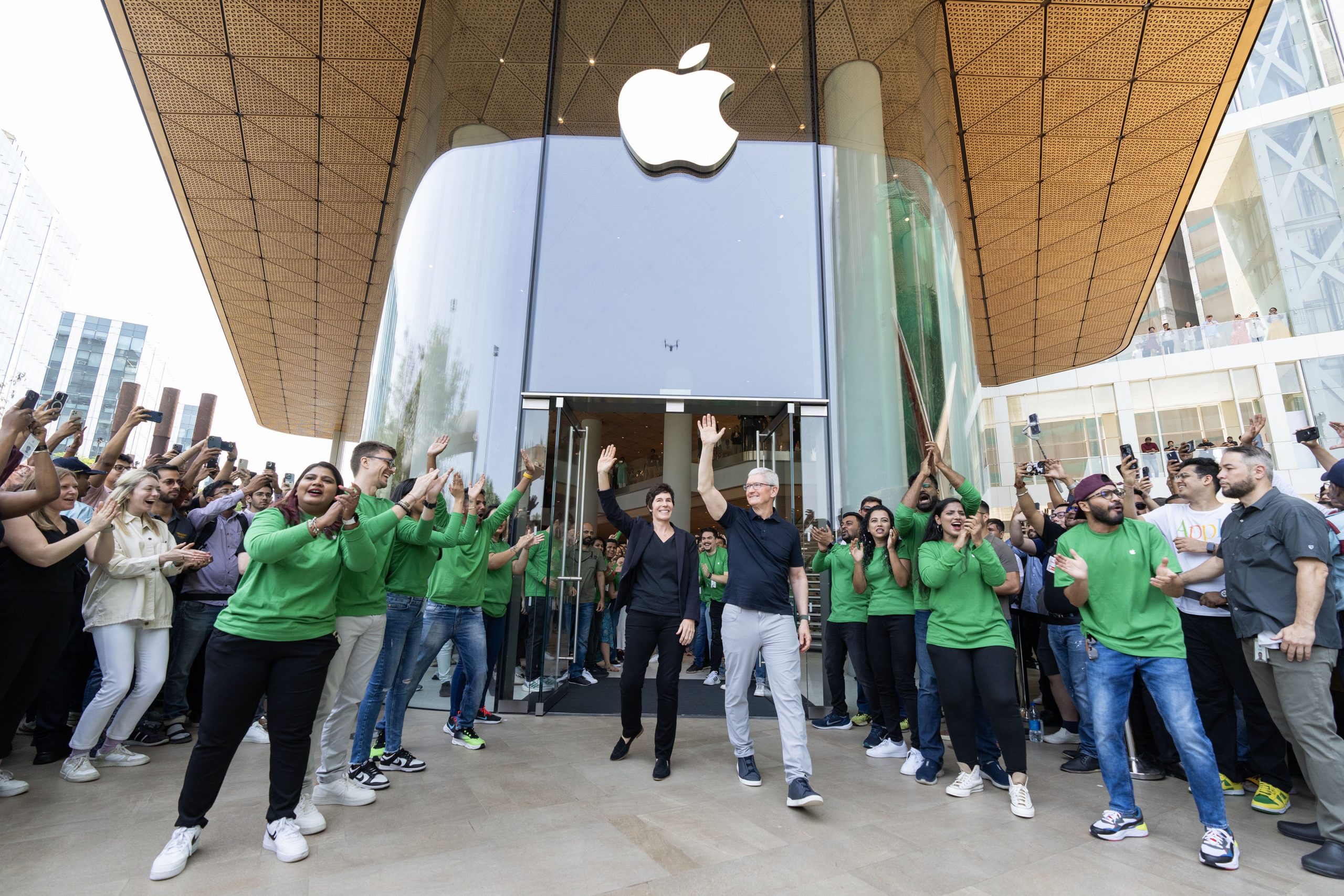
Apple, which began assembling iPhones in India in 2017, is now pushing to manufacture a quarter of all iPhones in the country within the next few years. Already, it has started trial production of the iPhone 16 Pro in India — a model historically manufactured almost exclusively in China due to the complexity of its components and high yield requirements. While these early units are not expected to fulfill the entirety of U.S. demand, the company’s move is significant in underlining India’s growing importance in Apple’s global strategy.

President Trump, who has made “Made in America” a cornerstone of his economic policy, has repeatedly urged Apple CEO Tim Cook to relocate more production to the United States. Although Cook has resisted calls to move core assembly stateside, citing feasibility and cost barriers, Apple has taken a middle path by expanding in India, a country with a large labor pool and government incentives for electronics manufacturing.

Trump’s administration earlier imposed high triple-digit tariffs on China-made electronics but opted for a more restrained 26% levy on Indian imports in April. While those tariffs are currently paused, the administration has warned that they could be reinstated after the August 1 deadline if trade talks with New Delhi don’t yield results. Despite the pause, the risk of unpredictable tariff policy continues to shape strategic decisions for global tech firms.

Meanwhile, Apple’s global peers such as Samsung and Motorola have also increased their assembly footprint in India, though their transition has been slower and more limited in scope. According to Canalys, Apple’s shift is unmatched in speed and scale.

Manufacturing firms like Agilian Technology, based in Guangdong, China, are also moving rapidly to reposition. The company is currently renovating a facility in India to begin partial production.

“The plan for India is moving ahead as fast as we can,” said Renaud Anjoran, Agilian’s executive vice president. Trial runs are scheduled in the coming weeks, with the goal of ramping to full-scale output.

However, the shift is not without hurdles. Industry executives say yield rates — which measure production efficiency — remain lower in India and Vietnam compared to China. Anjoran attributed these challenges to quality-control issues, an inexperienced workforce, and logistical inefficiencies.

Even as India captures a growing share of U.S.-bound smartphone assembly, the overall U.S. market is showing signs of cooling. iPhone shipments to the U.S. dropped by 11% in the second quarter to 13.3 million units, reversing strong growth earlier in the year. Globally, iPhone shipments fell 2% to 44.8 million units in the April-June period.

Investors have responded with caution. Apple shares have declined 14% in 2025 amid concerns about its heavy reliance on geopolitically fraught supply chains and rising competition in both hardware and artificial intelligence.

Still, analysts say the rebalancing of the supply chain is likely to continue. With Apple leading the charge and Washington maintaining pressure on China, India’s role as a key manufacturing base for the global smartphone market appears more solidified than ever.

Trump’s $750bn Energy Deal with EU Faces Doubts, Non-Binding Pledges Cloud Implementation

0

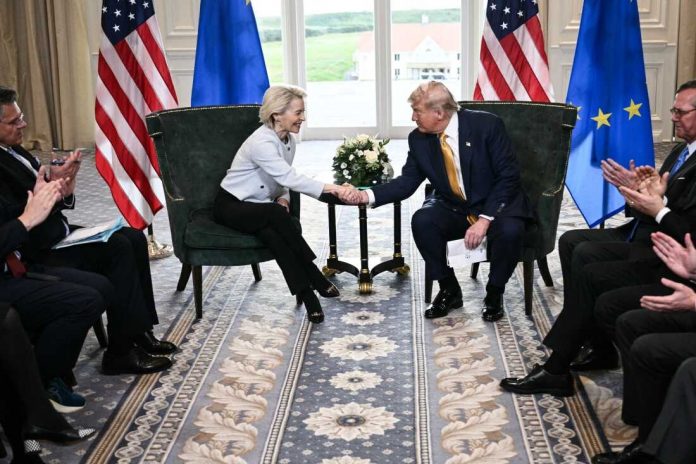
President Donald Trump’s landmark $750 billion energy pact with the European Union, touted as a historic reorientation of transatlantic trade, is already facing skepticism over its feasibility and binding nature.

Though the deal outlines massive U.S. energy sales to Europe and pledges $600 billion in EU investment in the U.S. by 2028, industry analysts and policy experts quoted by CNBC believe the targets are largely aspirational and politically complicated.

The White House says the EU has agreed to purchase $750 billion worth of U.S. energy and invest an additional $600 billion in the U.S. economy, with President Trump reciprocating by lowering a threatened 30% tariff on EU goods—excluding steel and aluminum—to 15%. However, experts warn that the commitments are vague and unenforceable, setting the stage for a potential transatlantic fallout if expectations are not met.

Despite the White House’s portrayal of the agreement as a formal deal, the European Commission—the EU’s executive body—has emphasized that the investment figure is based on expressions of interest from companies and not legally binding.

“This is non-binding. It’s a pledge,” said Erik Brattberg, a Europe expert at the Atlantic Council. “The EU itself doesn’t buy energy. It would be member states or companies from member states.”

Even the energy purchasing commitments raise red flags. European Commission President Ursula von der Leyen told reporters that the $750 billion would be spread out in $250 billion annual tranches through the remainder of Trump’s term, targeting U.S. oil, liquified natural gas (LNG), and nuclear fuel to replace Russian imports. But analysts say tripling current U.S. energy exports to meet those numbers would be a monumental logistical and political challenge.

Data from commodities tracker Kpler shows that in 2024, EU member states imported about $80 billion worth of U.S. oil, LNG, liquefied petroleum gas, and coal. Meeting the $250 billion yearly target would require more than a threefold increase.

“If this deal were to be realized, we’d be talking about the United States providing the lion’s share of European energy imports,” said Helima Croft, head of global commodity strategy at RBC Capital Markets. The bloc’s total energy imports stood at $433 billion in 2024.

Supply constraints further cloud the picture. U.S. oil production is currently flat and may decline in the coming months, according to Rystad Energy analyst Svetlana Tretyakova. Rerouting existing exports from Asia and Latin America to the EU would strain long-standing trade relationships. Additionally, Europe’s dwindling refining capacity and climate goals are in tension with the idea of dramatically increasing oil imports.

On the gas front, U.S. LNG terminals are already running at full capacity, with no short-term slack to accommodate surging demand from Europe.

“There isn’t room to increase shipments right now,” said Mathieu Utting of Rystad. Even as more LNG infrastructure comes online in the next two years, he said Europe already sources over half its LNG imports from the U.S. “It’s very unrealistic that Europe would import exclusively from the U.S.,” he added. “They will want to diversify to some extent.”

That diversification imperative makes the scale of Trump’s energy goals even more difficult to achieve, especially when no enforcement mechanism exists to hold either side accountable. A White House official, however, insisted on Tuesday that Trump expects the EU to honor its commitment.

“That is what the EU agreed to purchase,” the official told CNBC. “The President reserves the right to adjust tariff rates if any party reneges.”

For now, the deal serves more as a political signal than a definitive trade overhaul. Experts like Alex Munton of Rapidan Energy note that while the $750 billion headline is “unrealistic,” the EU is still committed to expanding U.S. energy trade as it phases out Russian fossil fuels by 2028. The looming 25 million metric ton shortfall in LNG imports from Russia presents a gap the U.S. is well-placed to fill.

“The interests line up,” Munton said. “That’s why it’s essentially a convenient deal.”

However, without enforceability or concrete purchase mechanisms, Trump’s energy pact appears to be more of a political gesture than a guaranteed transformation of U.S.-EU economic ties—one that may yet become another flashpoint if expectations aren’t met and tariff threats return to the table.

Dangote Refinery Drops N100bn Import License Lawsuit Against NNPCL Amid Mounting Monopoly Allegations

0

The Dangote Petroleum Refinery has formally withdrawn its N100 billion lawsuit challenging the issuance of fuel import licenses to competitors, including the Nigerian National Petroleum Company Limited (NNPCL), signaling a strategic retreat from a legal battle that had drawn scrutiny from regulators, oil marketers, and economic observers.

In a notice of discontinuance filed on July 28, 2025, by its legal counsel, George Ibrahim, SAN, Dangote Refinery notified the Federal High Court in Abuja that it would no longer pursue the suit marked FHC/ABJ/CS/1324/2024. The refinery stated: “TAKE NOTICE that the Plaintiff (Dangote Refinery) herein discontinues this Suit against the Defendants forthwith.”

The decision to withdraw the lawsuit follows months of intense legal maneuvering and regulatory interventions. The original suit sought to void fuel import licenses granted by the Nigerian Midstream and Downstream Petroleum Regulatory Authority (NMDPRA) to several Nigerian oil companies, including NNPCL, Matrix Petroleum Services Limited, A.A. Rano Limited, and four others.

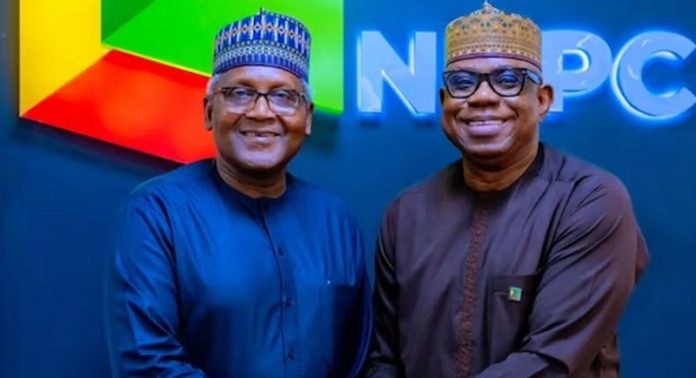
This development comes against the backdrop of fresh calls by Africa’s richest man, Aliko Dangote, urging President Bola Tinubu to include refined petroleum products on the list of items banned under the Federal Government’s ‘Nigeria First’ policy—a protectionist policy aimed at reducing imports in favor of local production.

Dangote’s latest request reignited concerns that the billionaire industrialist is seeking to entrench a monopoly in Nigeria’s deregulated downstream oil sector. Industry stakeholders say that if such a ban were enforced, it would effectively block competition, leaving Dangote as the sole supplier of refined fuel in Africa’s most populous country.

It is also noted that the move contradicts the spirit of the Petroleum Industry Act (PIA), which liberalized the petroleum sector and allows for a free-market system where multiple players can import, produce, and sell petroleum products. Section 317(8) and (9) of the PIA explicitly permit the issuance of licenses to qualified entities for such activities, underscoring the law’s objective to promote competition, not restrict it.

FCCPC’s Rejected Intervention

Earlier in the case, the Federal Competition and Consumer Protection Commission (FCCPC) had tried to join the lawsuit, raising alarms that Dangote’s legal push could result in anti-competitive outcomes and a dominant market position. But Justice Inyang Ekwo of the Federal High Court dismissed the FCCPC’s joinder application in March 2025, ruling that the commission had failed to prove its relevance to the case, which revolved around regulatory powers under the PIA, not competition enforcement.

Dangote’s lawyer had strongly opposed the FCCPC’s involvement, arguing that the refinery was lawfully licensed under the PIA and that its case was aimed at correcting regulatory breaches by the NMDPRA. He branded the FCCPC a “meddlesome interloper,” insisting that it lacked the authority to intervene in matters strictly governed by petroleum law.

However, the refinery has now chosen to walk away from the case altogether. When the matter comes up on the next adjourned date, September 29, 2025, Dangote’s legal team is expected to make a formal oral application for withdrawal, in accordance with court rules. The presiding judge, Justice Mohammed Umar, is expected to deliver a final pronouncement on the matter.

A Pattern of Monopoly?

The move to discontinue the lawsuit doesn’t erase the wider perception that Dangote is angling to consolidate control across multiple sectors. The businessman has previously faced accusations of monopolistic behavior in the cement industry, where his company holds a dominant market share, often benefiting from policy decisions that restrict competition or favor local production.

Similar accusations have now surfaced in the oil and gas sector. In 2024, Dangote accused rival importers of flooding the Nigerian market with substandard fuels—a claim that led to heightened regulatory pressure on private marketers. By mid-2025, NNPCL had withdrawn as the intermediary between Dangote Refinery and other marketers, following a federal directive that allowed direct purchase of products from the refinery.

While Dangote maintains that his refinery is capable of meeting Nigeria’s daily consumption demands, critics warn that turning off the tap for other importers would increase prices, reduce supply chain flexibility, and put the entire country at the mercy of a single supplier.

Legal experts say the court will still need to rule on the oral application for discontinuance. However, with the written notice already in place, the case is essentially over—unless revived under a different framework.

Still, the broader conversation about monopoly, regulation, and market fairness is far from settled. Dangote’s influence on policy and his aggressive posture in defending market turf are now drawing increasing scrutiny—not just from competitors, but also from economists and civil society advocates who fear that a monopoly on refined fuel in Nigeria would roll back the gains of deregulation.

With Nigeria’s energy security and the credibility of its free market reforms hanging in the balance, the government now faces a critical test of its commitment to competition, transparency, and equitable access in one of the country’s most vital sectors.

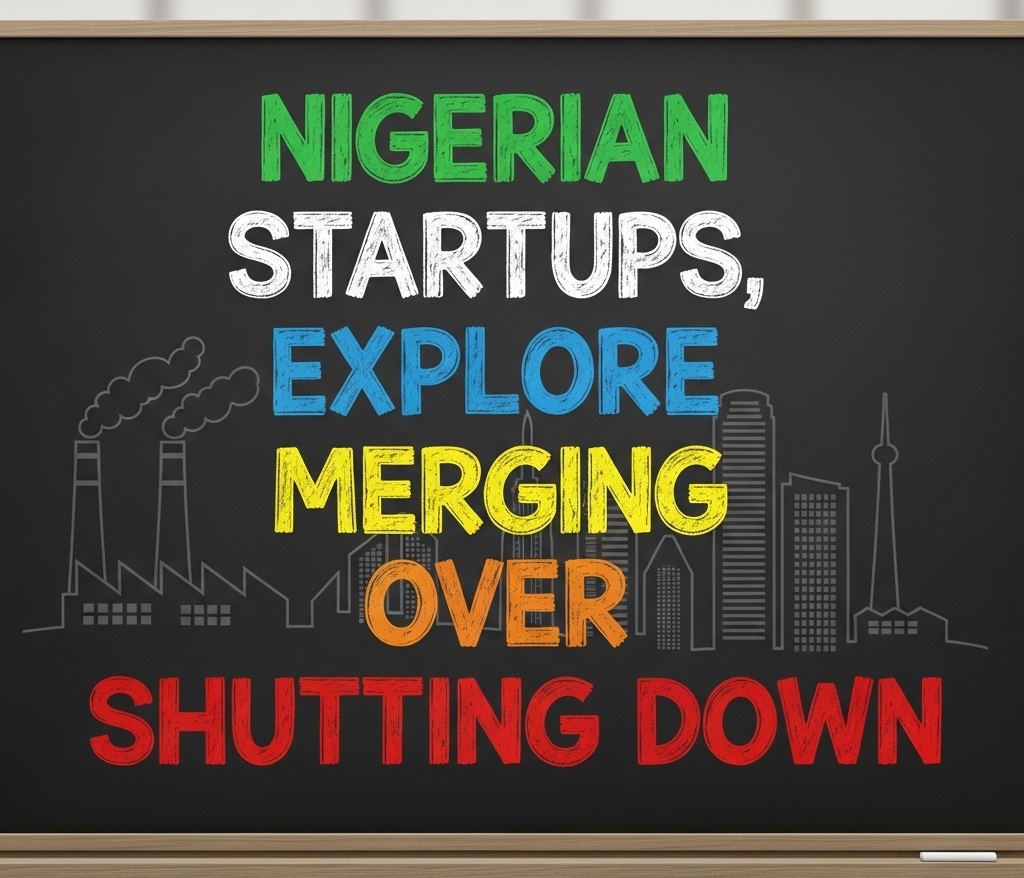
Nigerian Startups, Explore Merging Over Shutting Down

1

In the contemporary Nigeria startup scene, we have two distinct periods: before and after the floating of Naira. Before the Naira floating policy was put in place, growth capital from foreign investors was in abundance. But after the initiative, everything has dried up as the deterioration of Naira has decimated asset values, discouraging most foreign venture capitalists to put money in Nigerian startups.

The implication has been consequential as many startups are running out of cash even when they’re growing Naira revenue. So, what do some startups do? They just shut down. Today, I have a message: do not shutdown, simply explore how to merge.

Nigeria will be back because nations rarely kaput. The old landscape of vibrant startup ecosystem will return very soon. So, despite some of these current challenges, there is no need for these premature closures. Simply, rather than succumbing to these capital pressures and shutting down, a strategic pivot towards mergers presents a compelling alternative, allowing founders to preserve value, leverage combined strengths, and navigate the complex market more effectively.

And that means someone must give up a CEO title to become a CTO or CPO or whatever. There is nothing bad there. Merging offers a lifeline by consolidating resources, expanding market reach, and fostering shared expertise. It enables startups facing similar hurdles to pool talent, technology, and customer bases, creating a more robust entity with enhanced resilience. This collaborative approach not only mitigates the risk of individual failure but also positions the merged entity for greater innovation and sustainable growth, transforming potential shutdowns into opportunities for collective success.

Finally, if you are planning to shut down, before you do that, Tekedia Capital would like to have a conversation with the founders. We have developed a framework we’re using with our startups and that is working. We understand the long gestation period to profitability in Nigeria, and the necessity of working capital. Sure, and we also note that Nigeria has many great things which could be unlocked right now.

In short, the velocity of moving capital has significantly improved and that is one thing a merged and stronger startup can build upon.  Look at the flanks and you will notice that mindless shutdown over just working capital could be managed with strategic mergers.