DD
MM
YYYY

PAGES

DD
MM
YYYY

spot_img

PAGES

Home Blog Page 893

GameSquare Holdings Acquires CryptoPunk #5577 For $5.15M

0

GameSquare Holdings, Inc. (Nasdaq: GAME), a media, entertainment, and technology company, acquired CryptoPunk #5577, known as the “Cowboy Ape,” for $5.15 million in preferred stock from Robert Leshner, founder of DeFi protocol Compound and CEO of Superstate. The stock is convertible into approximately 3.4 million common shares at $1.50 per share. This marks GameSquare’s first direct NFT investment, aligning with its blockchain-native brand strategy targeting 6-10% annualized stablecoin returns.

The Cowboy Ape, one of only 24 Ape CryptoPunks in the 10,000-piece collection, is a culturally significant digital asset, now part of GameSquare’s treasury and displayed on its X profile. The company also added $10 million in Ethereum (2,742.75 ETH at $3,646 per ETH), bringing its total ETH holdings to 12,913.49 ETH, valued at over $52 million.

However, the NFT market has shown recent activity, with a wallet (0x1bb3) spending 2,082 ETH (about $5.87 million) to purchase 45 CryptoPunks in a single sweep, indicating a resurgence in high-value NFT transactions.  GameSquare’s acquisition of the Cowboy Ape marks one of the first instances of a publicly traded company (Nasdaq: GAME) using equity (preferred stock convertible to 3.4 million shares at $1.50) to acquire a high-value NFT. This signals a shift toward treating NFTs as strategic treasury assets, akin to holding stocks, bonds, or cryptocurrencies like Ethereum.

By structuring the deal with preferred stock rather than cash, GameSquare preserves liquidity while aligning the seller, Robert Leshner (Compound founder and Superstate CEO), with the company’s long-term performance. This equity-based structure could become a model for future high-value NFT transactions, especially in markets where cash flow is constrained. GameSquare’s $52 million Ethereum treasury (12,913.49 ETH) and the addition of the Cowboy Ape NFT reflect a broader trend of companies diversifying treasuries with digital assets.

Unlike Bitcoin-focused treasuries, GameSquare’s Ethereum-centric approach, including NFTs, taps into the cultural and financial potential of the Ethereum ecosystem, including DeFi and digital collectibles. CryptoPunks, especially rare ones like the Cowboy Ape (one of 24 Ape Punks), are seen as digital artifacts symbolizing early internet culture and decentralized identity. GameSquare’s use of the Cowboy Ape as its X profile picture and its plans for marketing activations, community building, and licensing demonstrate how NFTs can enhance brand equity and engage younger, crypto-native audiences (e.g., Gen Z and Millennials).

GameSquare is leveraging the Cowboy Ape as a yield-bearing asset by borrowing stablecoins against it at a fixed rate through Dialectic’s Medici platform, aiming for 6-10% annualized returns. This strategy, managed by 1OF1 AG (led by Ryan Zurrer), involves using NFTs as collateral in DeFi protocols, a novel approach that could redefine how corporations monetize digital assets. If the hoodie punks were acquired by GameSquare or a similar entity, they could also be used for such yield strategies, amplifying returns on high-value NFTs.

GameSquare’s broader Ethereum yield strategy targets 8-14% annualized returns, surpassing typical ETH staking yields of 3-4%. This reflects a sophisticated approach to DeFi, using machine learning and risk management to optimize returns. The integration of NFTs into this framework could set a precedent for other firms to treat digital collectibles as both cultural and financial instruments.

The involvement of Robert Leshner, a DeFi pioneer, as a shareholder and advisor strengthens GameSquare’s ability to bridge traditional finance (TradFi) and decentralized finance (DeFi). His expertise could guide the company in scaling its NFT and ETH yield strategies, potentially influencing other public companies to explore similar models. GameSquare’s stock (Nasdaq: GAME) surged 72% over the past month to $1.30-$1.32 as of July 24, 2025, reflecting investor enthusiasm for its crypto strategy.

With a $125.2 million market cap and 77.06% revenue growth, GameSquare’s crypto pivot enhances its appeal to investors seeking exposure to blockchain without direct crypto investment. However, its low current ratio (0.57) and high cash burn rate raise concerns about sustainability, making the success of its yield strategy critical.

GameSquare’s move could catalyze a trend where companies treat NFTs as balance sheet assets, similar to real estate or intellectual property. This could drive demand for blue-chip NFTs, pushing floor prices higher. Critics question the intrinsic value of NFTs compared to cryptocurrencies like Bitcoin. GameSquare’s strategy hinges on sustained NFT market growth and successful yield generation. A market downturn, as seen in 2021-2022, could impair asset values and returns, especially if the hoodie punks acquisition reflects speculative overreach.

The NFT market’s 20% surge is promising, but its history of boom-and-bust cycles (e.g., 50% drop from 2021 highs) poses risks. GameSquare’s $52 million ETH and NFT portfolio is exposed to Ethereum price swings and NFT market sentiment. GameSquare’s current ratio of 0.57 signals potential liquidity issues, and its $250 million crypto treasury authorization (with $45 million already spent) could strain finances if yields underperform or NFT values decline.

GameSquare’s acquisition of the Cowboy Ape CryptoPunk for $5.15 million positions it as a trailblazer in blending NFTs with corporate treasury strategies, leveraging cultural, financial, and DeFi opportunities. The move signals confidence in the NFT market’s revival, with implications for increased institutional adoption, innovative financing models, and brand engagement. However, risks like market volatility, liquidity constraints, and regulatory challenges remain. The unconfirmed hoodie punks sweep, if real, would amplify these trends, indicating broader market momentum but also speculative fervor.

Crypto Exchange WOOX Exploited, Resulting In Unauthorized Withdrawals of $14M

0

WOO Exchange experienced an exploit resulting in unauthorized withdrawals initially estimated at over $12 million but later confirmed to be $14 million. The exploit affected nine user accounts and involved assets across Bitcoin, Ethereum, BNB, and Arbitrum networks. The breach was linked to a targeted phishing attack that compromised a team member’s device, allowing access to the platform’s development environment.

WOO X promptly detected the incident, paused withdrawals, and blocked several unauthorized transactions. The exchange has committed to fully reimbursing affected users and is collaborating with external security teams and other exchanges to track the stolen funds, with six wallet addresses linked to the attacker published for monitoring.

Withdrawals remain suspended pending a comprehensive security audit, but trading activities and user funds are reported as unaffected. This incident is part of a broader wave of crypto exchange hacks in July 2025, with total losses exceeding $3.1 billion this year. The breach, caused by a phishing attack compromising a team member’s device, underscores vulnerabilities in centralized platforms, where single points of failure (e.g., employee credentials) can lead to significant losses.

This may further erode user confidence in centralized exchanges (CEXs), pushing traders toward decentralized alternatives or self-custody solutions. WOO X’s commitment to fully reimburse affected users mitigates immediate financial harm but doesn’t eliminate reputational damage, especially as this is one of multiple hacks in July 2025, with industry losses exceeding $3.1 billion this year.

High-profile exploits like this intensify calls for stricter regulations. Governments and financial authorities may push for enhanced security standards, mandatory audits, or insurance requirements for CEXs, potentially increasing operational costs and barriers to entry for smaller platforms. WOO X’s response—suspending withdrawals, conducting a security audit, and collaborating with external teams—sets a precedent for crisis management. However, the incident highlights the need for robust internal security practices, such as multi-factor authentication, employee training, and air-gapped systems for critical operations.

The broader crypto industry may see accelerated adoption of advanced security measures, like multi-signature wallets or hardware security modules, to prevent similar breaches. The exploit could lead to short-term market volatility, particularly for assets heavily traded on WOO X, as users reassess platform reliability. Some traders may diversify across platforms or move to decentralized exchanges (DEXs) to avoid custodial risks.

The incident reinforces the importance of self-custody, potentially boosting demand for hardware wallets and non-custodial solutions. CEXs like WOO X offer user-friendly interfaces, high liquidity, and advanced trading features (e.g., futures, margin trading). They often provide customer support and fiat on-ramps, making them accessible to mainstream users. Centralized control creates vulnerabilities, as seen in the WOO X hack, where a single compromised device led to a $14 million loss.

Custodial risks, regulatory exposure, and potential mismanagement deter users prioritizing security and autonomy. The incident reinforces skepticism about CEXs’ ability to safeguard funds, especially as hacks become more frequent (e.g., $3.1 billion in losses in 2025). Users may question whether convenience justifies the risks. DEXs eliminate custodial risks by allowing users to retain control of their private keys. They are less susceptible to centralized breaches, as no single entity controls the platform. Blockchain transparency also enables real-time auditing.

DEXs often suffer from lower liquidity, higher transaction fees (especially on Ethereum), and complex interfaces that deter novice users. They are not immune to exploits, such as smart contract vulnerabilities, as seen in past DeFi hacks. The WOO X breach may drive users to DEXs, boosting platforms like Uniswap or SushiSwap. However, the learning curve and gas fees could limit mass adoption, maintaining the divide.

The WOO X exploit highlights the fragility of centralized crypto platforms and fuels the debate over CEXs versus DEXs. While CEXs remain dominant for their convenience, incidents like this push users and developers toward decentralized solutions, despite their limitations. The divide will likely persist until hybrid platforms or new security paradigms reconcile the trade-offs between usability and autonomy.

Beyond Labour, We Must Have Knowledge For the Knowledge Economy AI Era

0

“As we begin a new fiscal year, I’ve been reflecting on the road we’ve traveled together and the path ahead. Before anything else, I want to speak about what’s been weighing heavily on me and what I know many of you are thinking about: the recent job eliminations. These decisions are among the most difficult we have to make. They affect people we’ve worked alongside, learned from, and shared countless moments with—our colleagues, teammates, and friends.

“I want to express my sincere gratitude to those who have left. Their contributions have shaped who we are as a company, helping build the foundation we stand on today. And for that, I am deeply grateful. I also want to acknowledge the uncertainty and seeming incongruence of the times we’re in.

“By every objective measure, Microsoft is thriving our market performance, strategic positioning, and growth all point up and to the right. We’re investing more in CapEx than ever before. Our overall headcount is relatively unchanged, and some of the talent and expertise in our industry and at Microsoft are being recognized and rewarded at levels never seen before. And yet, at the same time, we’ve undergone layoffs.”- Microsoft CEO Satya Nadella.

Yes, the conclusion was “And yet, at the same time, we’ve undergone layoffs”. And there is nothing bad about it. Because layoffs will come and will continue to happen. Why? Labour is a FACTOR of production, and as a production factor, it must do its work and when not needed, must make way.

It is an illusion to think that your company is your family. Anyone who tells you that has not explained to you the core meaning of labour in classical economics. In classical economics, labour refers to the physical and mental effort exerted by humans to produce goods and services. Classical economists, like Adam Smith, viewed labour as a key determinant of a commodity’s value, believing that the amount of labour required to produce something directly influences its exchangeable value. The implication is that labour can be “commoditized”.

When something is commoditizable, it is not directly defensible. So, to make your labour defensible, you need Knowledge. Microsoft is weeding our labour even as it hires Knowledge AI talent because AI systems are accelerating the pace of the commoditization of labour.

Today, companies need Knowledge to grow capital in this knowledge AI era! Simply, the big boss is telling us: I am not promising anyone of iron clad job; layoffs will happen, but more people will come to Microsoft. It is left for you to adjust the class you belong in the factors of production.

Microsoft CEO Addresses Emotional Toll of Layoffs Amid Strategic Shift Toward AI

Microsoft CEO Addresses Emotional Toll of Layoffs Amid Strategic Shift Toward AI

0

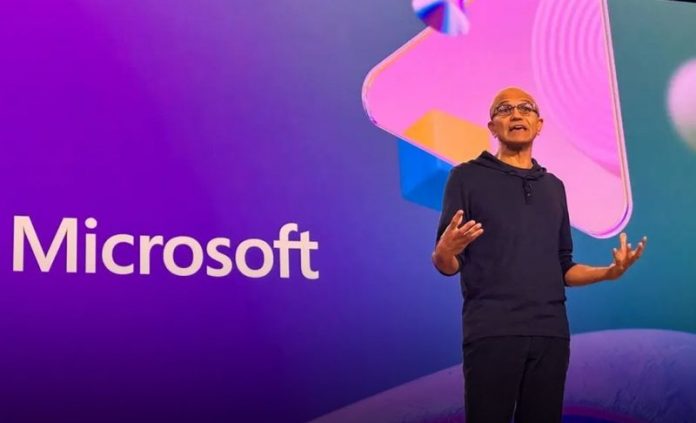
Microsoft CEO Satya Nadella has expressed deep concern over the tech giant’s recent wave of job cuts, admitting that the decision has been “weighing heavily” on him.

In a candid reflection, Nadella acknowledged the personal and emotional toll of laying off employees, even as the company navigates shifting market dynamics and realigns its strategic priorities. His comments come amid broader industry-wide restructuring as major tech firms grapple with economic uncertainty and a renewed focus on efficiency.

In a heartfelt company-wide memo, he wrote,

“As we begin a new fiscal year, I’ve been reflecting on the road we’ve traveled together and the path ahead. Before anything else, I want to speak about what’s been weighing heavily on me and what I know many of you are thinking about: the recent job eliminations. These decisions are among the most difficult we have to make. They affect people we’ve worked alongside, learned from, and shared countless moments with—our colleagues, teammates, and friends.

“I want to express my sincere gratitude to those who have left. Their contributions have shaped who we are as a company, helping build the foundation we stand on today. And for that, I am deeply grateful. I also want to acknowledge the uncertainty and seeming incongruence of the times we’re in.

“By every objective measure, Microsoft is thriving our market performance, strategic positioning, and growth all point up and to the right. We’re investing more in CapEx than ever before. Our overall headcount is relatively unchanged, and some of the talent and expertise in our industry and at Microsoft are being recognized and rewarded at levels never seen before. And yet, at the same time, we’ve undergone layoffs.”

Microsoft employed 228,000 people as of June 2024. This calendar year, the company has held several rounds of layoffs. In January, it cut less than 1% of headcount based on performance. Fast forward to June 2025, Microsoft laid off about 9,000 employees. The move affected less than 4% of its global workforce across different teams. The 50-year-old software company slashed more than 6,000 jobs in May and then at least 300 more in June. The tech giant is reshaping how it works streamlining management, investing heavily in AI, and transitioning to a more agile organization that can compete in a rapidly changing tech landscape.

One major reason behind the job cuts is Microsoft’s goal to flatten its corporate hierarchy. By reducing layers of management, the company hopes to respond faster to market demands, improve decision-making, and cut operational costs. Notably, the incessant job cut comes as it plans to invest roughly $80 billion this fiscal year in AI infrastructure. This includes expanding Azure data centers, developing new tools like Copilot, and enhancing machine learning capabilities. Such investments, while essential for long-term competitiveness, require reallocation of resources. 

Talking about the company’s priority, Satya noted that Microsoft is focused on the business priorities which include, security, quality, and AI transformation. The company is doubling down on fundamentals while continuing to define new frontiers in AI. As AI becomes more central to Microsoft’s operations, new roles will likely open up in cloud computing, machine learning, and data engineering.

LetsBONK’s 1% Revenue Allocation For Token Buybacks Is A Strategic Move to Strengthen Its Ecosystem

0

LetsBONK, a Solana-based memecoin launchpad, has announced it will allocate 1% of its total revenue to buy back top tokens within the BONK ecosystem, such as Useless Coin and ANI (xAI’s Grok AI Companion token). This initiative, funded from the team’s marketing budget, aims to bolster liquidity and support token value through weekly buybacks. For instance, with $1.5 million in daily fees, approximately $15,000 is earmarked for these purchases.

The strategy is part of LetsBONK’s broader effort to foster a sustainable ecosystem, with revenue also supporting BONKsol staking, token burns, and ecosystem growth initiatives. The platform recently surpassed Pump.fun in daily trading volume and token issuance, with tokens launched on LetsBONK exceeding a $1 billion market cap.

By committing 1% of revenue (e.g., $15,000 daily from $1.5 million in fees), LetsBONK aims to increase liquidity and reduce volatility for ecosystem tokens. Regular buybacks can create a price floor, supporting token values and incentivizing holding over speculative selling. This move strengthens the BONK ecosystem by redistributing value to key projects, fostering confidence among investors and developers building on the platform.

LetsBONK’s strategy differentiates it from competitors like Pump.fun, which it recently surpassed in daily trading volume and token issuance. By reinvesting revenue into the ecosystem, LetsBONK signals a long-term commitment to sustainability, potentially attracting more projects and users. The focus on ecosystem growth (via staking, burns, and buybacks) could position LetsBONK as a more community-driven alternative to other Solana-based launchpads.

While buybacks support token prices, they could raise concerns about market manipulation, as the team controls which tokens are purchased. If not transparently managed, this could alienate some community members who prioritize decentralization. The reliance on team-driven initiatives (funded from marketing budgets) may spark debates about governance and whether community input should guide buyback decisions.

The buyback program could set a precedent for other memecoin launchpads, encouraging similar revenue allocation models to bolster ecosystem tokens. This could drive competition but also risks inflating token prices artificially across the sector. Increased liquidity and market cap ($1 billion+ for LetsBONK-launched tokens) may draw more institutional interest to Solana memecoins, bridging retail and professional investors.

Many memecoins, including some on Pump.fun, thrive on hype and short-term price pumps, often lacking utility or long-term viability. This fuels volatility and risks rug pulls, eroding trust. LetsBONK’s approach, with buybacks, staking, and burns, reflects a shift toward creating self-sustaining ecosystems. By reinvesting revenue, it aims to align incentives between the platform, token holders, and developers, contrasting with purely speculative models.

The buyback program, while beneficial, introduces a degree of centralization, as the LetsBONK team decides which tokens to support. This contrasts with fully decentralized platforms where community governance dictates resource allocation. LetsBONK’s success on Solana underscores the chain’s dominance in memecoin innovation due to low fees and high throughput.

Solana’s growing memecoin ecosystem could pull liquidity and attention away from other chains, deepening the divide between Solana-based projects and competitors. Memecoins have historically been retail-driven, but initiatives like LetsBONK’s, which add structure and predictability (via buybacks and staking), may attract institutional players seeking exposure to high-growth DeFi sectors. This creates a divide between retail-driven hype cycles and institutional demand for structured investment opportunities.

LetsBONK’s 1% revenue allocation for token buybacks is a strategic move to strengthen its ecosystem, enhance token stability, and differentiate itself in the competitive memecoin launchpad market. However, it also highlights tensions in the broader crypto space: speculation vs. sustainability, centralization vs. decentralization, and Solana’s dominance vs. other blockchains.