DD
MM
YYYY

PAGES

DD
MM
YYYY

spot_img

PAGES

Home Blog Page 9

S&P 500 Reaches New Record High as Markets Add $1.2 Trillion While Oil Prices Slide on Iran Deal Hopes

0

Wall Street delivered another historic session as the S&P 500 closed at a fresh all-time high, adding an estimated $1.2 trillion in market capitalization in a single trading day.

The rally reflected growing investor confidence in the U.S. economy, resilient corporate earnings, and renewed optimism that geopolitical tensions in the Middle East may begin to ease.

Crude oil futures fell to around $76 per barrel after comments from U.S. Treasury Secretary Scott Bessent suggested that a diplomatic agreement with Iran could be reached as soon as today.

The combination of surging equity markets and declining energy prices created a favorable backdrop for investors, reinforcing expectations that inflationary pressures could continue to moderate while economic growth remains intact.

Technology stocks once again played a leading role in driving the broader market higher, with artificial intelligence-related companies and other mega-cap firms attracting strong buying interest. Investors have increasingly viewed these companies as long-term beneficiaries of expanding AI investment and resilient consumer demand.

The record-setting performance of the S&P 500 also signals confidence that corporate America can continue delivering solid earnings despite ongoing global uncertainties.

Recent quarterly reports from several major companies have exceeded analyst expectations, helping fuel optimism that businesses remain well-positioned to navigate higher interest rates and evolving market conditions.

One of the biggest drivers behind the day’s positive sentiment came from developments in the energy market. Oil prices declined after Treasury Secretary Scott Bessent indicated that negotiations with Iran were progressing and that a deal could materialize in the near future.

Markets interpreted the comments as a sign that geopolitical risks surrounding global oil supplies may begin to diminish. Lower oil prices are generally welcomed by investors because they can ease inflationary pressures across the economy.

Energy costs influence transportation, manufacturing, logistics, and consumer prices, meaning sustained declines in crude prices often translate into lower costs for businesses and households alike.

This development also strengthens expectations that central banks, including the U.S. Federal Reserve, may have greater flexibility in future monetary policy decisions if inflation continues to cool.

The decline in oil prices provided support for sectors outside the energy industry. Airlines, transportation companies, manufacturers, and consumer-focused businesses often benefit from lower fuel costs, improving profitability and encouraging additional investment.

Investors shifted capital toward growth-oriented sectors that tend to perform well in environments characterized by stable inflation and improving economic outlooks. Financial markets have spent much of the year balancing strong economic data against persistent geopolitical uncertainty.

While conflicts in the Middle East have periodically pushed energy prices higher and unsettled investors, renewed hopes for diplomacy have helped restore confidence. If negotiations with Iran ultimately result in a meaningful agreement.

Markets may anticipate greater stability in global energy supplies, reducing one of the major risks facing the global economy. Analysts caution that markets remain sensitive to incoming economic data and geopolitical developments.

Inflation reports, labor market figures, and central bank communications will continue shaping investor expectations over the coming months. Any unexpected deterioration in global conditions could quickly alter market sentiment.

The S&P 500’s new record high, combined with a $1.2 trillion increase in market value and falling oil prices, highlights a market environment increasingly driven by optimism over economic resilience, corporate profitability, and the possibility of easing geopolitical tensions.

Should progress on an Iran agreement continue while inflation remains under control, global financial markets could enter the second half of the year with renewed momentum and stronger confidence in sustained economic growth.


NiDEC 2026: Unlocking Nigeria’s Future Through the Diaspora and the Capital Market

0

I am honored to be participating in the Nigeria Diaspora Economic Conference (NiDEC) 2026, taking place from 11–15 August 2026 in Toronto, Mississauga, and Brampton, Ontario, Canada. Under the theme “Invest Nigeria; Thrive Abroad,” the conference brings together members of the Nigerian diaspora, policymakers, investors, entrepreneurs, and business leaders to explore practical pathways for accelerating investment and economic development in Nigeria. I look forward to engaging with participants on how modern capital markets can become powerful engines for national transformation.

On Day One, I will deliver the keynote address, “Unlocking Diaspora Wealth Through Nigeria’s Capital Markets: Building a Globally Competitive Investment Gateway.”

On Day Two, I will participate in a plenary session on “Investing Home: How Nigeria’s Capital Market is Creating Wealth for the Diaspora.” These discussions will examine how Nigeria’s evolving capital market ecosystem, including the opportunities created under the Investment and Securities Act (ISA) 2025, can connect global Nigerian capital with innovative businesses, infrastructure projects, and long-term wealth creation opportunities.

Good People, the future of Nigeria’s economy will increasingly be shaped by investment, innovation, and collaboration between Nigerians at home and abroad. I invite members of the diaspora, institutional investors, entrepreneurs, professionals, and everyone passionate about Nigeria’s economic future to join us at NiDEC 2026. Together, we can build stronger capital markets, mobilize global Nigerian talent and capital, and create a more prosperous future for our nation. I look forward to seeing you in Canada.

Prof Ndubuisi Ekekwe

Founder, Contisx Securities Exchange Plc

Breaking Down the Main Causes of Truck Accident Cases in Arizona

0

Arizona highways carry thousands of commercial trucks every day, keeping stores stocked and businesses moving. Along with that heavy traffic comes a greater chance of serious crashes that can change lives in seconds. Unlike regular car accidents, truck collisions often involve larger vehicles, more damage, and several parties who may share responsibility.

Knowing the causes of truck accident cases in Arizona helps people better understand why these crashes happen and why careful investigation matters after one occurs. Every accident has a story behind it, and the reason is often more complicated than it first appears.

Let’s look at the biggest factors.

Driver Fatigue

Driving a commercial truck for long hours is physically and mentally demanding. Even though federal rules limit driving hours, fatigue still becomes a problem in some situations. A tired driver may react more slowly, miss traffic signs, or struggle to stay focused on the road. A few seconds of lost attention can have serious results because trucks need much more distance to stop than smaller vehicles. Sleep loss can also affect decision-making, making simple driving tasks harder than they should be. This is one reason investigators often review driving logs after a serious truck crash.

Distracted Driving

Distractions are not limited to passenger vehicles. Truck drivers can also lose focus because of mobile phones, navigation systems, food, or other activities inside the cab. Looking away from the road for only a short time may be enough to miss sudden traffic changes.

Commercial trucks travel long distances, and even a brief distraction can cover a large stretch of road before the driver looks forward again. Safe driving depends on giving full attention to traffic, road signs, and changing conditions at all times.

Speeding and Reckless Driving

Large trucks cannot stop as quickly as smaller vehicles, especially when carrying heavy loads. Driving above the speed limit or too fast for road conditions increases the chance of losing control. Some drivers also make unsafe lane changes, follow other vehicles too closely, or take sharp turns at higher speeds.

These actions increase the risk of collisions and often make the damage much worse. Delivery schedules may create pressure, but reaching a destination quickly should never come before road safety.

Poor Truck Maintenance

Commercial trucks must be inspected and maintained on a regular schedule to remain safe. Worn brakes, damaged tires, faulty lights, or steering problems can all increase the chance of a crash. Mechanical failures sometimes happen without warning, but many can be prevented through proper maintenance.

Trucking companies and maintenance providers both play important roles in keeping vehicles in safe working condition. Records of repairs and inspections often become important during accident investigations because they may reveal whether required maintenance was completed correctly.

Improperly Loaded or Overloaded Cargo

The way cargo is loaded affects how a truck moves on the road. If cargo is not secured correctly, it can shift during travel and make the vehicle harder to control. Overloaded trucks may also place extra pressure on brakes and tires, reducing their ability to perform safely. In some cases, cargo can even fall onto the roadway and create hazards for nearby drivers. Safe loading practices help reduce these risks and support better vehicle balance throughout the trip.

Inexperienced Drivers and Road Conditions

Operating a commercial truck requires skill, training, and experience. New or poorly trained drivers may struggle with turning, braking, or responding to sudden traffic changes. Challenging road conditions across Arizona can make these situations even harder to manage. Heavy rain, strong winds, dust storms, and construction zones require drivers to slow down and adjust carefully.

Poor weather does not automatically cause an accident, but failing to respond safely often becomes part of the problem. Looking closely at the causes of truck accident cases often shows that several factors worked together instead of only one mistake.

Why Identifying the Cause Matters?

Finding the exact cause of a truck accident is an important step because it helps explain how the crash happened. Investigators may review police reports, driver records, maintenance documents, electronic logging data, and witness statements before reaching conclusions. Commercial truck accidents can involve the driver, the trucking company, maintenance providers, or cargo loading teams, depending on the facts of the case.

Understanding the reason behind a crash also helps insurance companies and legal professionals evaluate responsibility using available evidence. Every accident is different, so careful investigation is needed before decisions are made. Looking at reliable records instead of assumptions creates a clearer picture of what happened and why the collision occurred.

Takeaway

Truck accidents rarely happen because of a single mistake. Driver fatigue, distractions, speeding, poor maintenance, unsafe cargo loading, limited experience, and difficult road conditions can all increase the risk of a serious collision.

Looking at these factors carefully allows investigators to understand how the crash developed and who may have played a role. Learning about the causes of truck accident cases in Arizona also reminds drivers, trucking companies, and everyone involved in road safety that careful driving and proper vehicle maintenance remain some of the best ways to reduce preventable accidents.

SK hynix Delivers Record Results, but the Market Wants Even More

0

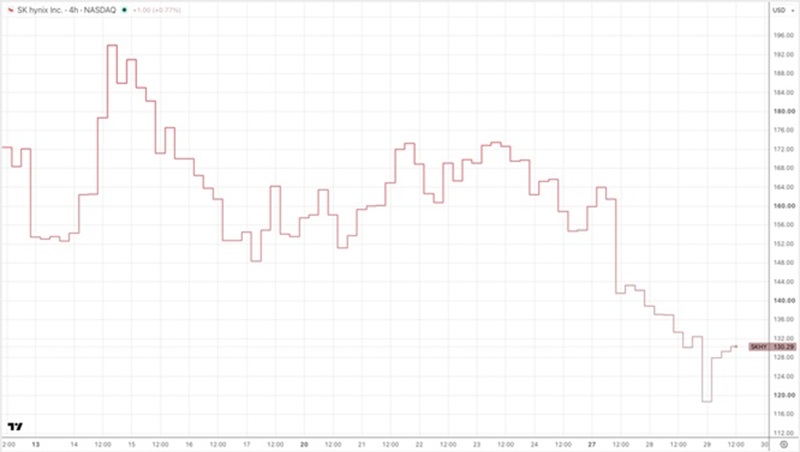
The AI boom has turned memory manufacturers into some of the biggest beneficiaries of the semiconductor industry, with SK hynix emerging as perhaps its largest winner and its shares becoming one of the top stock gainers. However, the company’s latest quarterly report highlighted a key important feature of today’s stock market: even record-breaking financial results may not be enough if they fail to surpass investors’ already lofty expectations.

In the second quarter, SK hynix reported revenue of $54.55 billion, up 257% year over year, while operating profit increased by an impressive 557%, reaching a record $41.6 billion. For the first half of the year, the company’s operating profit exceeded the equivalent of $69 billion for the first time in its history.

Nevertheless, both figures were below analysts’ consensus estimates, disappointing the market and weighing on global semiconductor stocks. Qualcomm shares fell by about 3%, while Nvidia stock declined by a similar percentage, and AMD lost around 6%. Micron Technology also experienced a decline before rebounding sharply.

This reaction perfectly illustrates the current situation in the AI sector. Memory manufacturers’ stocks have grown significantly over the past two years, driven by the rapid adoption of Nvidia accelerators and explosive demand for HBM memory. As a result, investors began pricing in an almost ideal growth scenario, in which companies should not only deliver record results, but also constantly outperform increasingly ambitious analyst forecasts.

At the same time, SK hynix’s fundamental position remains exceptionally strong. The company has already started mass deliveries of HBM4 memory, plans to increase production volumes in the second half of the year, and has also begun shipping the first samples of the next generation HBM4E. Meanwhile, the company continues upgrading its NAND production lines. By the end of the year, 321-layer memory is expected to account for about half of the company’s total output.

Long-term contracts provide additional stability to the business. SK hynix has already signed around ten multi-year agreements to supply memory to its largest customers and continues negotiations with new ones. Such contracts help memory manufacturers reduce their dependence on the traditional cyclical nature of the industry, which has remained one of the main challenges of the DRAM market for decades.

The company’s balance sheet remains equally strong. By the end of the quarter, cash holdings exceeded $60 billion, while capital expenditures this year will reach $27.5 billion. These investments are aimed at building new facilities and further expanding production capacity, as management expects to maintain leadership in the most profitable segments of the memory market.

At the same time, the company is actively preparing for the next technological cycle. In the second half of the year, SK hynix plans to begin mass production of LPDDR6 memory for smartphones, laptops, and AI-enabled devices. The new memory generation will deliver roughly one-third higher bandwidth than LPDDR5X, while improving energy efficiency by more than 20% thanks to enhanced power management. As AI increasingly moves onto consumer devices, demand for such solutions could become another growth driver.

The market situation shows that memory prices remain high even despite China’s attempts to increase competition. Chinese manufacturer CXMT continues to expand DRAM production with government backing, yet memory modules based on its chips are priced similarly to, and in some cases even above, comparable products from Samsung and SK hynix. This suggests that pricing is driven less by production costs than by the persistent shortage of advanced memory chips and the industry’s limited production capacity.

As a result, the memory market remains one of the most attractive segments of the semiconductor industry, while simultaneously becoming increasingly demanding of its leaders. SK hynix continues to deliver record growth, actively invest in new technologies, and expand production, yet even that is no longer enough to satisfy investors. In today’s AI-driven market, companies are competing not only against rivals, but also against the market’s own high expectations.

How Regional Marketing Strategies Create Stronger Customer Connections

0

Not all marketing strategies are created equal. The right one can take your brand to new heights, but only if you’re crystal-clear about your end goal.

Want maximum reach? Go big with a broad campaign that gets your product in front of the right people. Want customers who don’t just buy from you but actually stick around? Regional marketing is where the magic happens.

When your messaging, offers, and channels reflect local realities, your brand starts feeling like it belongs within the scene. With time, this means deeper customer trust, better customer retention, stronger brand recognition, and significantly higher engagement.

But don’t take our word for it; let’s see why this happens and how you can implement these strategies within your own marketing plan.

How Regional Marketing Strategies Create Engagement

The main reason localized marketing gets better results than broad campaigns is personalization. Customers today are exposed to ads wherever they go, so they can tell the difference between a brand that just wants to slip into their wallet and one that actually gives a damn.

When you align your brand messaging with local beliefs, way of speaking, or cultural nuances, you take one step further than competitors. Plus, buyers have come to expect it; personalization is a way to show your audience you’re invested.

Now, let’s take a look at the three pillars that make regional marketing strategies so much more efficient:

1. Nuanced Messaging and Cultural Resonance

The first rule of marketing communication is to speak the same language as your audience. If the region you’re targeting has a local dialect, use it in your ads and communications. Overall, tone, idioms, and visual imagery must mirror the lived realities of the local demographic rather than forcing generic corporate templates.

Big brands, like Nivea or Unilever, take this one step further and adjust both their formulations and ad messaging to align with specific climate conditions and cultural beauty standards.

2. Community Integration and High-Touch Involvement

Keep in mind that your audience is fed up with standard media buys (TV spots, radio slots, billboards, or sponsored social media ads). They are most likely desensitized, so even highly personalized content can fly under the radar.

One way to catch people’s attention is by earning your presence in their mental space. You can do so by actively participating in the physical and social fabric of the community.

Here is what that looks like in practice:

  • Sponsoring local institutions: Funding a neighborhood sports league, supporting a community center, or hosting regional events
  • Solving local problems: Funding local clean water initiatives, sponsoring local transport hubs, or running neighborhood cleanup drives
  • Building local networks: Creating physical agent networks or supporting local vendors

3. Data-Driven Market Insights

Another rule of good marketing is to make buyers feel special. Customers enjoy receiving discounts or offers that look tailored for their needs, and you can do this by using geo-fencing, regional sales data, and localized search behavior.

With the help of AI-driven communication platforms, you can segment your data by zip code or municipality to dynamically serve localized offers, payment methods (e.g., local mobile money preference), or fulfillment options. Just make sure to keep human content experts in the loop to review and edit any communication before going public.

Partnering with Regional Experts (The Secret Fourth Pillar)

The focus of a regional marketing campaign shouldn’t be solely on the buyers; you also need support from local media experts.

When you work with local partners, you don’t have to reinvent the wheel by understanding how the local market operates from scratch. Instead, you can use your partners’ knowledge and launch timely, market-ready campaigns at a faster pace.

For instance, if an expanding national restaurant chain is preparing to launch across the Greater Cincinnati area, a broad Ohio-wide campaign may overlook important differences within the local market. Working with a Cincinnati marketing agency can give the brand access to regional insight that helps tailor messaging and campaign execution to the distinct communities, preferences, and cultural touchpoints that shape Greater Cincinnati.

Regional touchpoints like local rivalries, regional food obsession (Skyline vs. Gold Star chili), and local institution affiliations (UC Bearcats, Bengals, Reds) matter when you want your campaign tone to feel like a neighbor offering savvy advice.

Lastly, local marketing agencies maintain decades-long relationships with regional broadcast networks, local podcasts, neighborhood civic boards, and local influencers. This accelerates campaign execution and unlocks preferred local ad rates that outside teams often cannot access.

Localization is Your Strongest Tool

A well-designed regional marketing strategy can be your brand’s sharpest competitive advantage. When you meet customers where they live, speak their language, and solve their specific regional challenges, loyalty follows naturally.

Regional marketing can turn one-time buyers into devoted brand advocates and boost brand reputation to new levels. Own your regions, and sustained growth will take care of itself in the long run.