DD
MM
YYYY

PAGES

DD
MM
YYYY

spot_img

PAGES

Home Blog Page 9

Core Inflation Drives Nigeria’s Inflation Slowdown in June 2026

0

Nigeria’s inflation story in June 2026 offers a cautious sign of progress for an economy that has spent the past several years battling persistent price pressures and cost-of-living challenges. According to the latest data.

The country’s headline inflation rate eased slightly to 15.91% year-on-year in June, down from 15.93% recorded in May. The decline appears marginal, it marks the first reduction in inflation in three months and reinforces the broader trend of moderating price growth compared with the same period last year.

The significance of the latest figure becomes clearer when viewed against the backdrop of June 2025, when headline inflation stood at a much higher 25.29%.

The nearly ten-percentage-point decline over the course of one year reflects the impact of tighter monetary policy, improved foreign exchange stability, and gradual adjustments across various sectors of the economy.

While inflation remains elevated by historical standards, the pace of price increases has slowed considerably, providing some relief to households and businesses. Month-on-month data further supports the narrative of moderation.

Headline inflation rose by 1.66% in June compared with 1.75% in May. This means that consumer prices are still increasing, but they are doing so at a slower rate than in previous months. The easing does not necessarily translate into lower prices in markets and stores. Instead, it indicates that the speed at which prices are rising has decelerated.

A major driver behind the moderation in headline inflation was the sharp decline in core inflation. Core inflation, which excludes volatile agricultural produce and energy prices, fell significantly to 15.92% year-on-year from 16.82% in May. On a monthly basis, core inflation also eased to 1.66%, down from 1.94% in the previous month.

The decline in core inflation is particularly important because it often provides a clearer picture of underlying price trends within the economy.

Unlike food prices, which can fluctuate due to seasonal factors, weather conditions, or supply disruptions, core inflation reflects broader demand and structural pressures. Therefore, the latest data suggests that inflationary pressures are beginning to soften across several segments of the economy.

Several factors may have contributed to this development. The Central Bank of Nigeria’s aggressive monetary tightening over the past year has helped reduce excess liquidity and stabilize inflation expectations.

Relative stability in the foreign exchange market has also reduced imported inflation pressures, particularly for manufacturers and businesses that rely heavily on imported inputs. Improvements in supply chains and easing transportation bottlenecks may have contributed to the slowdown in core price increases.

Despite these encouraging signs, challenges remain. Inflation at nearly 16% continues to erode purchasing power and place pressure on household incomes. Food prices remain elevated in many parts of the country, while high borrowing costs and structural issues such as inadequate infrastructure and insecurity continue to weigh on economic activity.

The June 2026 inflation figures provide cautious optimism. The data suggests that Nigeria may be entering a period of more stable price growth after years of severe inflationary pressures. Sustaining this progress, will require consistent policy coordination, continued exchange-rate stability, improved agricultural productivity, and reforms aimed at boosting domestic production.

If these gains can be maintained, Nigeria could gradually move toward a more predictable inflation environment, creating better conditions for investment, business expansion, and stronger economic growth in the years ahead.

Enugu Approves 19,000-Home Housing Project As Calls Grow For States to Tackle Nigeria’s Housing Crisis

0

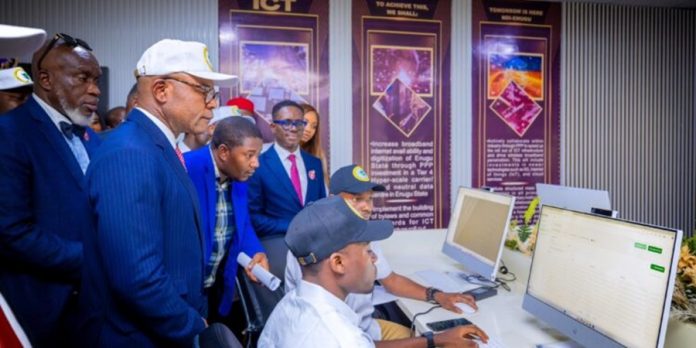
The Enugu State Government has approved the construction of 19,000 housing units across two major residential developments in a move that has been widely welcomed by housing stakeholders as one of the most practical ways state governments can address Nigeria’s worsening housing shortage and rising accommodation costs.

The initiative, approved by the State Executive Council on Sunday, is expected to expand the supply of homes, improve affordability and ease pressure on the state’s property market, while also stimulating construction activity and job creation.

Industry experts have long argued that increasing housing supply through large-scale public and public-private residential developments remains one of the most effective ways to moderate home prices and rents. With demand for housing consistently outstripping supply across Nigeria, many analysts say the country’s affordability crisis cannot be solved without sustained investment in mass housing.

The approvals in Enugu have also renewed calls for other state governments, particularly those with severe housing shortages, to embark on similar large-scale housing programmes.

According to the News Agency of Nigeria (NAN), the approval was announced after the State Executive Council meeting by the Commissioner for Works and Infrastructure, Ben Okoh.

He said the projects comprise 1,000 housing units within the New Enugu City development and another 18,000 homes under the Gateway Estate mass housing scheme.

“The Enugu State Government has approved the construction of 19,000 housing units aimed to address the housing deficit and reduce the cost of housing in the state,” Okoh said.

He explained that the 1,000-unit New Enugu City project will consist of four-bedroom and five-bedroom houses, while the larger Gateway Estate project will provide 18,000 homes designed to expand access to housing at more affordable prices.

According to him, Gateway Estate will be delivered as a fully serviced residential community, complete with road networks, electricity and water infrastructure.

Okoh said approval for the New Enugu City housing project followed the completion of the first phase of the city’s 6.5-kilometre dual carriageway, while construction of internal roads is continuing.

Beyond housing, the Executive Council approved several other infrastructure projects.

These include the immediate commencement of the 10.5-kilometre Igogoro-Amachara-Ikpamodo-Okpo-Amaada Road, drainage rehabilitation and flood control works in flood-prone parts of Nsukka, procurement of more than 30 pieces of light equipment for the Ministry of Works, and the completion and upgrade of Wings C and D of the Enugu State Secretariat Complex alongside the rehabilitation of Wings A and B.

The council also approved several tourism projects, including the Ovu Lake Golf Resort, tourism developments at Akwuke and Attakwu, and the 5.32-kilometre Okpatu-Awhum Cable Car Project.

These projects complement Enugu’s broader tourism strategy announced in 2025, which includes plans for Nigeria’s longest canopy walkway at the Nsude Pyramid site, a zipline at Ngwo Pine Forest, and expanded visitor facilities at Awhum Waterfall.

A Growing National Housing Challenge

Nigeria’s housing shortage has continued to worsen over the past decade as rapid urbanization, population growth, inflation, rising construction costs, and limited mortgage financing have pushed home ownership beyond the reach of millions of households. Recent industry estimates place Nigeria’s housing deficit at around 30 million units, significantly higher than earlier estimates of about 17 million units, highlighting the widening gap between demand and supply.

Housing experts attribute much of the deficit to decades of inadequate government investment in housing, weak urban planning, limited access to long-term housing finance, and insufficient incentives for private developers to build affordable homes.

The result has been soaring rents and rapidly increasing property prices across many urban centers, forcing many Nigerians to spend a substantial share of their income on accommodation.

Analysts note that while the private sector has remained active in developing high-end residential estates, affordable housing for low- and middle-income earners has received far less attention, leaving millions of families priced out of the formal housing market.

The Enugu initiative has also intensified calls for the Lagos State Government to significantly expand affordable housing programmes. Lagos remains Nigeria’s commercial capital and its largest property market, but it also faces one of the country’s most acute housing shortages. Strong population growth, continuous migration into the city, limited land availability, and rising construction costs have contributed to escalating rents and property prices.

Residents, housing advocates and real estate stakeholders have repeatedly urged the Lagos State Government to increase investment in mass housing, arguing that expanding the stock of affordable homes is one of the most sustainable ways to moderate rental costs and improve access to decent housing.

Many Nigerians say governments cannot rely solely on private developers to solve the housing crisis, particularly as most private projects target middle- and upper-income buyers rather than workers and low-income households.

The growing public sentiment is that state governments should play a larger role by providing serviced land, investing in infrastructure, partnering with developers through public-private partnerships, and delivering large-scale affordable housing estates similar to the programme announced by Enugu.

At the national level, the Federal Government has sought to increase housing delivery through the Renewed Hope Housing Programme, which combines government-funded developments with Public-Private Partnership (PPP) models.

The Federal Ministry of Housing and Urban Development is also reviewing a proposal by China Hyway Group Limited to build 10,000 housing units across Nigeria within 30 months using prefabricated construction technology under an Engineering, Procurement, Construction, and Financing (EPC+F) arrangement.

Other recent initiatives include the handover of 116 completed homes under the National Housing Programme to the Benue State Government and the allocation of rent-to-own housing units in Abuja through the Federal Mortgage Bank of Nigeria.

Even so, housing experts say significantly larger investments by both federal and state governments, alongside stronger private-sector participation and expanded mortgage financing, will be required to meaningfully reduce Nigeria’s estimated 30 million-unit housing deficit and make decent housing affordable for millions of Nigerians.

Why the 2026 FIFA World Cup Was a Game-Changer for Global Sports

0

The 2026 FIFA World Cup will be remembered as one of the most significant sporting events in modern history. Co-hosted by the United States, Canada, and Mexico, the tournament shattered previous attendance records and demonstrated the enormous capacity of North America to organize mega-events on an unprecedented scale.

With matches spread across numerous cities, millions of fans traveled from around the world to witness what became the largest World Cup ever staged.

The tournament’s scale was extraordinary. Expanded to include 48 national teams, the competition featured more matches than any previous edition, effectively creating what many observers described as the equivalent of hosting dozens of Super Bowls within just over a month.

Stadiums were packed, fan zones flourished, and celebrations stretched far beyond host cities into communities across the continent. Despite the logistical complexity of managing such a massive event, organizers successfully delivered a secure and festive environment, with no major security incidents disrupting the competition.

A major talking point throughout the tournament was the role played by the United States government in ensuring smooth operations. President Donald Trump’s administration had established the White House FIFA Task Force approximately sixteen months before kickoff, focusing on security coordination, infrastructure preparedness, immigration facilitation for fans, and inter-agency cooperation.

The initiative reflected the recognition that the World Cup was not merely a sporting event but also a major geopolitical and economic opportunity. On the pitch, the tournament delivered unforgettable drama.

The eventual champions, Spain, cemented their status as one of world football’s dominant powers by lifting the trophy after a remarkable campaign. Spain’s triumph showcased the country’s exceptional football philosophy, blending technical brilliance, tactical discipline, and a new generation of talented stars.

Their victory added another prestigious chapter to Spain’s football history and further strengthened European dominance in international football. Beyond the sporting spectacle, the economic impact of the World Cup was enormous.

The tournament generated billions of dollars in economic activity across host nations.

Tourism experienced an unprecedented surge as millions of international visitors filled hotels, restaurants, entertainment venues, and local businesses. Airlines recorded increased passenger traffic, while retail spending and hospitality revenues reached record levels in several host cities.

Infrastructure investments made in preparation for the event also provided long-term benefits. Upgrades to transportation systems, stadium facilities, digital infrastructure, and urban development projects are expected to continue delivering economic returns for years after the final whistle.

Local businesses, ranging from small retailers to multinational corporations, benefited from heightened consumer spending and global exposure.

The tournament created hundreds of thousands of temporary and permanent jobs in sectors including construction, hospitality, security, transportation, and event management.

The global media attention also enhanced North America’s image as a premier destination for international sporting events, potentially encouraging future investments and tourism.

The 2026 FIFA World Cup demonstrated the immense power of sport to unite people across cultures and borders. It was not simply a football tournament but a celebration of global cooperation, national pride, and economic opportunity.

Record-breaking attendance, successful security operations, and substantial financial gains highlighted the event’s historic significance. As fans look back on the tournament, the memories of Spain’s championship victory, vibrant celebrations, and the economic transformation brought by the event will ensure that the 2026 FIFA World Cup remains a landmark moment in the history of international sport.

Germany’s Solar Market Faces Uncertainty Amid Proposed Subsidy Cuts

0

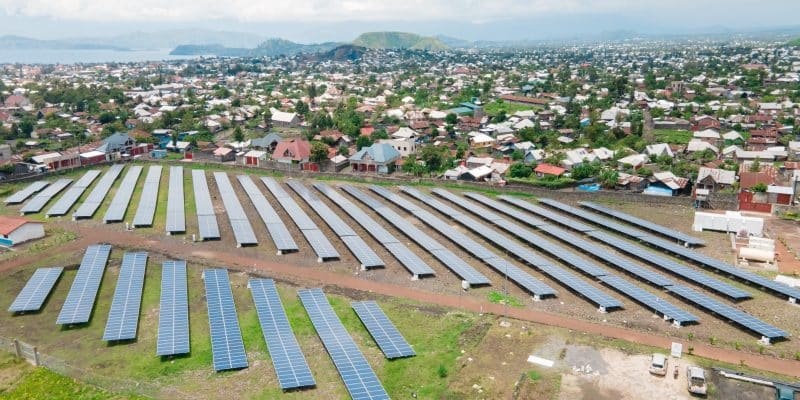
Germany’s solar industry has emerged as one of the country’s most significant pillars in its transition toward clean energy. Over the past decade, the nation has invested heavily in renewable energy technologies, positioning itself as a global leader in solar power adoption.

Recent government proposals have sparked concern among industry leaders, who argue that planned policy changes could undermine the sector’s momentum and jeopardize Germany’s broader climate objectives.

The concerns stem from proposals aimed at reducing subsidies and altering market incentives for renewable energy producers.

Germany’s solar sector has long benefited from supportive policies, including feed-in tariffs and investment incentives that encouraged households, businesses, and utilities to install photovoltaic systems. These measures contributed to a rapid increase in solar capacity, helping the country reduce its reliance on fossil fuels and imported energy sources.

Industry representatives argue that scaling back support mechanisms at this stage could slow investment precisely when Europe faces increasing energy security challenges. The solar industry believes that policy uncertainty discourages investors, delays projects, and weakens the competitiveness of domestic manufacturers.

Germany’s renewable energy ambitions are deeply tied to its broader economic and environmental strategies. Following disruptions in global energy markets and the continent’s efforts to reduce dependence on foreign fossil fuel supplies, solar energy has become an essential component of national energy security.

The government has set ambitious targets for expanding renewable capacity, with solar expected to contribute a substantial share of future electricity generation.

Industry groups warn that contradictory policies may make achieving these targets increasingly difficult.

They argue that reducing incentives while simultaneously demanding faster renewable deployment sends mixed signals to the market. Such inconsistency could result in lower installation rates and a decline in domestic production capabilities.

Another major concern is employment. Germany’s solar industry supports thousands of jobs across manufacturing, installation, maintenance, research, and supply chain services.

Industry associations fear that weaker government support could lead to job losses and discourage innovation in one of Europe’s most promising green sectors. The transition to renewable energy has often been presented as an opportunity for economic modernization, and setbacks in the solar sector could undermine confidence in that vision.

Germany faces increasing international competition in clean technology. Countries such as China and the United States are heavily investing in renewable energy industries through substantial subsidies and industrial policies.

The United States’ Inflation Reduction Act, for example, has introduced significant incentives for green technology investments, attracting companies and capital. Solar executives argue that Germany and Europe risk losing their competitive edge if they fail to provide stable and attractive conditions for renewable businesses.

Environmental organizations have also expressed concern. Slower solar deployment could hinder Germany’s ability to meet its climate commitments and emissions reduction targets. The country has pledged to significantly cut greenhouse gas emissions and achieve climate neutrality in the coming decades.

Accelerating renewable energy expansion is widely regarded as essential to reaching these objectives. Supporters of the government’s proposals argue that reforms are necessary to ensure fiscal discipline and improve market efficiency.

They contend that the renewable energy sector has matured considerably and should gradually become less dependent on subsidies. Critics counter that the transition remains incomplete and that premature policy changes could create long-term setbacks.

The debate highlights the delicate balance between managing public finances and maintaining momentum in the energy transition. Germany’s solar industry believes that stable and predictable policies are crucial for sustaining investment, innovation, and employment.

As the country seeks to strengthen energy security and meet ambitious climate goals, the outcome of these policy discussions could shape the future of one of Europe’s most important renewable energy markets.

X’s Creator Program Fueled Rage Bait and Declining Content Quality

0

The debate over creator payments on X has become increasingly intense as the platform continues to evolve from its Twitter roots.

While monetization programs are often introduced with the intention of rewarding content creators and encouraging engagement, many users argue that X’s creator payment system has produced unintended consequences.

Rather than attracting high-quality writers, analysts, journalists, and industry experts, the program has arguably incentivized sensationalism, rage bait, and low-quality engagement farming.

Twitter historically occupied a unique position among social media platforms. It was widely regarded as the internet’s town square—a place where academics, policymakers, investors, journalists, entrepreneurs, and technologists exchanged ideas in real time.

Major news stories often broke first on Twitter, and thoughtful threads from industry experts could shape public discourse. The platform’s value was rooted in the quality of its conversations and the credibility of many of its influential users.

The transition to X introduced a stronger emphasis on monetization and engagement metrics. Creator payments, tied largely to impressions and interactions, fundamentally changed user incentives.

Instead of prioritizing insightful commentary or nuanced discussions, many users discovered that emotionally charged, divisive, or provocative content generated far greater visibility and financial rewards.

As a result, rage bait has become increasingly common.

Posts designed to provoke outrage, spark endless arguments, or trigger emotional reactions often outperform balanced or informative content. The economic incentives of the platform now encourage users to maximize engagement by any means necessary, even if that engagement contributes little meaningful value to public discourse.

The payment system itself has not proven lucrative enough to attract truly exceptional creators on a large scale. Established journalists, researchers, economists, and industry specialists generally possess alternative income sources through publications, consulting work, newsletters, speaking engagements, or other platforms.

The relatively modest earnings offered by X are rarely sufficient to persuade these professionals to dedicate substantial time to producing exclusive content for the platform. The monetization model has disproportionately benefited engagement farmers and paid promoters who optimize content specifically for algorithmic reach.

This has contributed to a perception that much of the platform is now dominated by shills, repetitive viral posts, and sensational narratives rather than authentic expertise.

The consequences extend beyond user experience. When thoughtful voices become drowned out by engagement-driven content, the overall quality of information on the platform deteriorates.

Users may become less trusting of what they encounter, while experts may choose to reduce their participation altogether. Over time, this creates a negative feedback loop: as experts leave, lower-quality content occupies more space, further discouraging informed contributors from remaining active.

Critics therefore argue that X should reconsider or even eliminate creator payments in their current form. Rather than rewarding raw engagement, the platform could focus on improving content discovery, promoting credible voices, and building systems that emphasize expertise and constructive dialogue.

Features that highlight authoritative commentary or community-driven reputation mechanisms may prove more beneficial than direct monetization based primarily on impressions.

Social media platforms are shaped by the incentives they create. If financial rewards are tied to outrage and virality, users will naturally produce more outrage and virality.

Twitter once earned its reputation as a hub for intelligent discussion because its culture rewarded insight and expertise. Whether X can reclaim that identity may depend on its willingness to rethink the incentives that currently define its ecosystem.