DD
MM
YYYY

PAGES

DD
MM
YYYY

spot_img

PAGES

Home Blog Page 9

Robotics and Physical AI Attract Record $16.3 Billion in First-Quarter Funding

0

The robotics and physical artificial intelligence industry has entered a new phase of rapid expansion, attracting a record $16.3 billion in funding across 492 deals during the first quarter of the year.

The scale of investment highlights growing confidence among venture capital firms, technology companies and institutional investors that intelligent machines capable of operating in the physical world could become one of the most important technology markets of the coming decade.

Unlike traditional software-based artificial intelligence, physical AI combines advanced machine learning with robotics, sensors, computer vision and autonomous decision-making.

These technologies allow machines to perceive their surroundings, learn from physical environments and perform tasks with limited human intervention.

The increasing availability of powerful AI models and specialized computing hardware has accelerated development, making sophisticated robots more commercially viable. The $16.3 billion raised in the first quarter represents a significant milestone for the sector.

Funding across nearly 500 transactions indicates that investor interest is not concentrated in a handful of companies but is spreading across different areas of the robotics ecosystem.

Startups are developing technologies for manufacturing, logistics, healthcare, agriculture, warehouses, construction and consumer applications.

One of the biggest drivers behind the investment boom is the global shortage of workers in physically demanding and repetitive industries.

Companies are searching for ways to increase productivity while reducing their dependence on manual labor. Robots equipped with AI could help address these challenges by performing tasks continuously and adapting to changing environments.

Manufacturing is expected to remain one of the largest markets for physical AI. Industrial robots have already transformed factories, but newer systems are becoming more flexible. Instead of being programmed to perform one repetitive task.

AI-powered robots can potentially recognize objects, understand instructions and adjust their actions according to circumstances. Warehousing and logistics are also attracting significant attention.

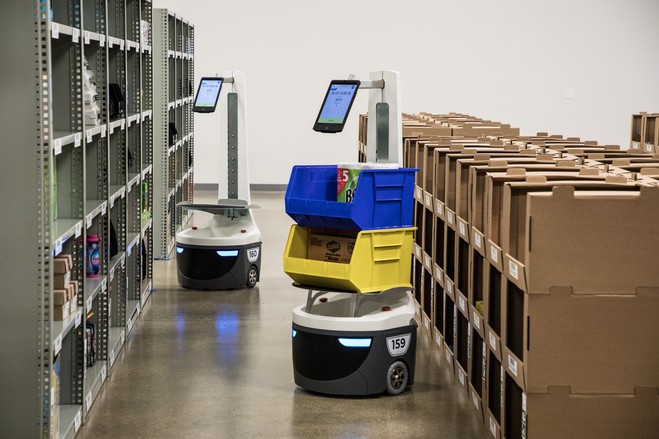
E-commerce has created demand for faster and more efficient fulfillment systems, while labor costs continue to pressure businesses. Autonomous mobile robots, robotic arms and AI-powered sorting systems could improve productivity throughout supply chains.

The emergence of humanoid robots has added another dimension to the investment story. Developers are attempting to create machines capable of operating in environments designed for humans, potentially allowing robots to work alongside people without requiring companies to completely redesign their facilities.

However, the sector still faces major challenges. Developing reliable hardware is expensive, while robots must operate safely in unpredictable real-world environments. Battery limitations, manufacturing costs, regulatory requirements and difficulties in scaling production could slow commercialization.

Despite these obstacles, the record first-quarter funding demonstrates that investors increasingly view robotics and physical AI as more than speculative technology. The combination of AI breakthroughs, automation demand and advances in hardware is creating a powerful investment narrative.

If startups can successfully convert capital into commercially useful machines, physical AI could become a major pillar of the next technology cycle. The $16.3 billion raised in the first quarter may therefore represent not simply a funding record.

But an early indication of how quickly intelligent machines are moving from research laboratories into the real economy.

Commerzbank Chair Calls For German Takeover Rules Review After UniCredit Gains Control

0

Commerzbank supervisory board chairman Jens Weidmann has called for Germany to review its takeover rules, noting that UniCredit was able to secure effective control of the German lender without paying shareholders an adequate control premium.

Weidmann told Sueddeutsche Zeitung that UniCredit’s approach raised questions because the Italian bank was able to build a majority position even though relatively few shareholders accepted its offer and the terms were not financially attractive.

“UniCredit was thus able to achieve a majority with a financially unattractive offer without paying an appropriate control premium,” Weidmann said. “That raises questions about takeover law in Germany, which lawmakers may want to examine.”

Of the roughly 73% of Commerzbank shares that were eligible to be tendered to UniCredit, fewer than 18% were actually tendered, according to Weidmann. Institutional and retail investors accounted for less than three percentage points of the shares tendered, while the remainder came from banks linked to UniCredit, he said.

The figures highlight the unusual route through which UniCredit has expanded its influence at Commerzbank. Rather than relying primarily on broad shareholder acceptance of a conventional takeover offer, the Italian bank has gradually accumulated a large stake in the German lender.

UniCredit’s stake reached about 48% in July, a level that gives it sufficient voting power to determine shareholder resolutions even though it has not acquired 50% or more of Commerzbank’s shares. The offer period has ended, but the transaction is not yet fully settled because regulatory approvals are still required before UniCredit can take possession of the shares tendered through the offer.

The dispute places Germany’s takeover framework under renewed scrutiny because the case raises a broader question about how an investor can obtain effective corporate control without making a traditional offer that attracts a large proportion of minority shareholders.

A conventional takeover normally involves a control premium, with the acquiring company offering shareholders a price above the prevailing market value in exchange for surrendering control. Weidmann’s criticism centers on whether Germany’s rules adequately protect shareholders when control can instead be accumulated through market purchases and other transactions.

The issue is considered sensitive because Commerzbank is one of Germany’s major commercial banks and has long been viewed as strategically important to the country’s financial system and corporate sector. The German government also remains a significant shareholder. Its stake originated from the state rescue of Commerzbank during the global financial crisis, when Berlin provided support to the bank.

Weidmann said the government should ultimately dispose of that holding because it was acquired as part of a temporary rescue measure. He argued, however, that the current situation justifies keeping the stake for the time being.

“The stake was part of a rescue measure, so the federal government should eventually withdraw,” Weidmann said. “But in the current phase, it makes sense for the government to remain a shareholder in order to actively represent the interests of Germany as a business location.”

The comments underline the political dimension of UniCredit’s expansion. The proposed combination has raised concerns in Germany about the future ownership and strategic direction of a major domestic bank, particularly given UniCredit’s status as an Italian lender.

For Commerzbank, UniCredit’s 48% position significantly changes the balance of power. Even without outright majority ownership, the stake gives UniCredit substantial influence over shareholder decisions and makes the Italian lender a dominant force in determining Commerzbank’s future.

Weidmann’s intervention also suggests that the dispute could outlast the immediate takeover process. A review of German takeover rules could focus on whether existing thresholds and procedures give shareholders sufficient protection when a bidder accumulates a controlling position without securing broad participation in a formal offer.

The case could therefore become a reference point in Germany’s debate over how to balance the rights of shareholders, the interests of potential acquirers and the importance of large domestic companies.

Germany’s 23.6% Wage Gap Raises Concerns Over Foreign Worker Pay

0

The pay gap between German and foreign full-time workers in Germany stood at 23.6% at the end of 2025, according to figures announced by the Labour Ministry.

The disparity highlights a persistent divide within one of Europe’s largest labour markets, even as Germany continues to rely heavily on foreign workers to address shortages across key sectors of its economy.

Germany has faced significant demographic and labour-market pressures in recent years. An ageing population and a shrinking domestic workforce have increased demand for workers from abroad.

Foreign employees have become increasingly important in industries ranging from manufacturing and construction to healthcare, logistics, hospitality and information technology. Yet the latest pay figures suggest that entering the German labour market does not necessarily translate into equal earnings.

A pay gap of 23.6% means that foreign full-time employees, on average, earn substantially less than their German counterparts. Such a comparison does not automatically mean that workers performing identical jobs receive different salaries solely because of nationality.

Differences in occupation, qualifications, seniority, working experience, industry, region and employment status can all influence earnings.  Still, the scale of the disparity raises questions about how effectively Germany is integrating foreign workers into its economy.

Many international employees arrive with qualifications and professional experience obtained outside Germany, but their credentials may not always be fully recognised.

Language barriers can also restrict access to higher-paying positions, while unfamiliarity with the German employment system may make it more difficult for foreign workers to negotiate salaries or move into senior roles.

The issue is particularly important because Germany needs foreign labour to maintain economic productivity. Companies across the country have repeatedly warned about shortages of skilled workers, making immigration an increasingly important part of economic policy.

If foreign workers remain concentrated in lower-paid occupations despite possessing valuable skills, Germany could be failing to capture a significant portion of the economic potential created by migration.

Closing the pay gap would therefore have implications beyond individual household incomes. Higher wages would strengthen purchasing power, increase tax contributions and potentially improve Germany’s ability to attract and retain skilled international workers.

For businesses, better integration could also expand the pool of employees capable of filling specialised and managerial positions.

The government may consequently face pressure to improve qualification recognition, professional training and language support while strengthening measures against workplace discrimination.

Greater transparency around salaries could also help workers understand whether their compensation reflects their qualifications and responsibilities. At the same time, the 23.6% figure should be interpreted carefully.

An aggregate wage gap can reflect the different types of jobs held by German and foreign workers rather than a direct wage penalty for nationality. Understanding the underlying causes requires examining the gap by occupation, education, age, region and length of residence.

The figures provide an important snapshot of Germany’s labour-market challenges at the end of 2025. As the country becomes increasingly dependent on international workers, narrowing the earnings divide could become both a social objective and an economic necessity.

Germany’s ability to attract talent will ultimately depend not only on how many foreign workers enter the country, but also on whether they have genuine opportunities to progress, earn competitive wages and participate fully in the economy.

OpenAI’s Chief Economist Says AI Is Changing the Job of Studying Jobs

0

At OpenAI, figuring out how artificial intelligence will transform the labor market has become a moving target, with the researchers studying AI’s economic impact forced to adapt almost as quickly as the technology itself.

Ronnie Chatterji, OpenAI’s chief economist, leads a team of about a dozen economists, data scientists, business professionals, former teachers and former government workers examining how AI is changing workers, companies and the broader economy.

But even the questions they are trying to answer are changing.

“The job description is changing a lot,” Chatterji told Business Insider.

He cited recursive self-improvement, the idea that AI systems could improve their own capabilities, as an example. It was not a major focus of his team’s work a year ago but has since emerged as an area the researchers are studying. That illustrates one of the central difficulties of researching AI’s economic effects: the underlying technology is evolving faster than many traditional economic models and assumptions can accommodate.

Chatterji joined OpenAI in 2024 after a career in government and academia. He served in the Biden White House as coordinator of the $52 billion CHIPS program and as acting deputy director of the National Economic Council. He was previously chief economist at the Commerce Department and remains a professor of business and public policy at Duke University.

OpenAI was not initially part of his plans.

Chatterji had been preparing to write a book about his government experience when a former colleague who had joined OpenAI contacted him. Their initial discussions centered on supply chains and semiconductors, areas that were increasingly important to OpenAI as the company considered the enormous computing infrastructure required to train and operate advanced AI systems.

The conversations eventually expanded into a broader question: how should a company building increasingly capable AI understand its economic consequences?

“This is a whole emerging category, and that’s when the chief economist role got created,” Chatterji said.

He reports to OpenAI’s chief financial officer, Sarah Friar.

Chatterji’s team is organized around three broad questions: what AI is doing to work now, how companies are adopting the technology and reorganizing around it, and what increasingly capable AI could mean for the economy in the future.

“We built the team around three sets of questions: How AI is changing work today; how businesses are adopting and reorganizing around AI; and what increasingly capable AI could mean for the economy tomorrow,” he said.

The three areas are closely connected.

The first involves measuring changes that are already taking place in employment, wages, productivity and the tasks workers perform. The second examines how companies are incorporating AI into their operations and whether the technology changes organizational structures, staffing needs and business models.

The third is considerably harder because it requires economists to reason about technologies that may not yet exist in mature form.

That uncertainty is shaping the type of people Chatterji wants to hire.

“We need people who can bring rigorous economic thinking to what’s happening today, but who are also comfortable tackling questions where we don’t have all the answers yet,” he said. “You have to be comfortable with being uncomfortable.”

That represents a significant departure from conventional economic research, where researchers can spend years studying relatively stable datasets and established relationships.

At OpenAI, the underlying technology can change between the beginning and end of a research project.

Chatterji described the pace of innovation inside the company as “a little insane,” noting that a study using data through June could already be viewed by some as outdated by August.

That creates a methodological problem for economists attempting to measure AI’s impact. If AI capabilities, adoption rates and business practices are changing rapidly, conclusions based on historical data can become obsolete before they are published. It also means researchers must combine traditional economic analysis with real-time data, industry research and close engagement with companies, governments and universities.

Collaboration is therefore another central part of the job.

“We get a lot of questions from our colleagues about economics,” Chatterji said, while noting that his team also works with external organizations.

OpenAI has argued that no single company, government or academic institution has enough information or resources to fully understand AI’s economic effects. The scale of the changes being considered makes cooperation relevant, particularly for questions involving employment, productivity, taxation and economic inequality.

Chatterji’s own career illustrates the breadth of issues now falling under the chief economist’s remit.

His academic research focused on innovation and entrepreneurship. At OpenAI, his work extends into labor markets, corporate adoption, industrial policy and the potential effects of increasingly capable AI systems.

That breadth reflects how difficult it is to separate AI’s technological impact from its economic consequences.

A more capable model can alter the economics of software development. Greater automation can change hiring decisions. Lower costs for certain forms of knowledge work can create new businesses while reducing demand for some existing tasks. At the same time, entirely new categories of work may emerge around technologies that did not previously exist.

For Chatterji’s team, the challenge is to distinguish between these competing effects rather than assume that AI will simply eliminate jobs or, alternatively, make workers uniformly more productive.

The need for that analysis is becoming more urgent as companies move from experimenting with AI to incorporating it into everyday operations. Businesses are increasingly using AI for coding, customer service, research, marketing, administration and other knowledge-intensive tasks. The economic consequences could depend less on whether AI can perform a particular task and more on how companies reorganize work around those capabilities.

That is why Chatterji says members of his team must have a high degree of independence.

Researchers cannot simply wait for a fixed assignment. They need to identify which questions matter, determine who needs the answers, and adjust their work as the technology changes.

The approach also shows that OpenAI is no longer simply developing AI models and measuring their technical performance. It is now building an internal research capability aimed at understanding how those models affect the economy in which OpenAI operates. That could become more relevant for a company whose technology is being adopted across industries.

OpenAI needs to understand not only whether its models are becoming more capable, but what those capabilities mean for customers, workers and businesses. The answers could influence product development, enterprise strategy and the company’s engagement with governments as policymakers debate how AI should be regulated.

The research also has an unusual feedback loop. OpenAI is studying the economic effects of the technology while simultaneously building the technology that could cause those effects. That gives Chatterji’s team access to an unusually close view of AI adoption, but it also creates a need for rigorous analysis to separate evidence from assumptions about what the technology may eventually achieve.

For now, Chatterji says the uncertainty is part of what makes the work compelling.

“If you’re an economist at a cocktail party or on the sidelines of your kid’s soccer game, usually you’re not very popular,” he said.

That has changed.

“What’s AI going to do in the job market?” is now a question that economists, business leaders, workers and governments increasingly want answered.

OpenAI’s decision to employ a dedicated team to study that question reflects how central the economic consequences of AI have become to the company’s own strategy. But the team’s biggest challenge may be that by the time it answers one question, the technology may have created several new ones.

Binance Founder CZ Urges Countries to “Tokenize Everything” as A New Route to Attract FDI

0

Binance co-founder Changpeng Zhao popularly known as “CZ”,  has urged countries to embrace broad-based asset tokenization.

He stated that the emerging technology could provide a powerful new avenue for raising capital and attracting foreign direct investment (FDI).

In a post on X, he wrote,

“Let’s tokenize everything. Tokenization is one of the best ways for countries to “raise money”, or attract FDI (Foreign Direct Investment). Which country/company won’t want to sell their (tokenized) stocks to everyone in the world?

“I support tokenization on all blockchains. While this creates the fragmented liquidity problem, it is the fastest way to grow the sector, with multiple players pushing. Fragmentation can be somewhat addressed if there is high interchangeability amongst different issuers, which is important.”

His call reflects the growing push to bring real-world assets onto blockchain networks, potentially opening national economies to a wider pool of global investors.

The statement came in response to fresh data from BNB Chain showing 776,000 real-world asset (RWA) holders on the network, an increase of roughly 370 percent in just 30 days.

That rapid growth has positioned BNB Chain as a current leader in on-chain RWA adoption. CZ used the milestone as a springboard to argue that tokenization should expand far beyond any single chain.

At its core, his argument is straightforward. Tokenizing stocks, bonds, real estate, and other traditional assets makes them programmable, fractional, and accessible to anyone with an internet connection and a compatible wallet.

A company or government that issues a tokenized equity or debt instrument can, in theory, sell pieces of it to investors anywhere in the world without the usual geographic, regulatory, or intermediary barriers that constrain conventional capital markets.

Tokenization is increasingly being viewed as one of the most significant applications of blockchain technology because it can transform how real-world assets are issued, owned, traded, and financed.

By representing assets such as government bonds, real estate, commodities, company shares and other financial instruments as digital tokens on a blockchain, tokenization can make traditionally illiquid or difficult-to-access markets more accessible to a broader pool of investors.

For nations, the potential benefits extend beyond simply adopting a new financial technology. Tokenization could provide governments and businesses with another mechanism to raise capital and attract foreign direct investment.

Instead of relying exclusively on traditional financial institutions and markets, countries could create regulated digital representations of assets and investment opportunities that can potentially be accessed by investors across different jurisdictions.

Notably, CZ explicitly supports tokenization across all blockchains rather than concentrating activity on one network. He acknowledges the downside this creates which is fragmented liquidity.

For him, when the same type of asset exists in slightly different forms on multiple chains, buyers and sellers can find themselves split across isolated pools, reducing overall market efficiency.

The broader context for CZ’s comment is the accelerating migration of real-world value onto public blockchains. Tokenized treasuries, private credit, real estate, and equities have moved from proof-of-concept to measurable on-chain volumes in recent years.

Outlook

Looking ahead, the tokenization sector could become an increasingly important part of global capital markets as financial institutions, governments, and companies explore blockchain-based alternatives for issuing and distributing assets.

If the current pace of adoption continues, tokenized stocks, bonds, treasuries, real estate and private-market assets could move from niche applications into more mainstream investment products.

Ultimately, the long-term potential of tokenization extends beyond simply putting traditional assets on a blockchain. Its larger promise is the creation of a more accessible, programmable, and globally connected capital market.