

The robotics and physical artificial intelligence industry has entered a new phase of rapid expansion, attracting a record $16.3 billion in funding across 492 deals during the first quarter of the year.
The scale of investment highlights growing confidence among venture capital firms, technology companies and institutional investors that intelligent machines capable of operating in the physical world could become one of the most important technology markets of the coming decade.
Unlike traditional software-based artificial intelligence, physical AI combines advanced machine learning with robotics, sensors, computer vision and autonomous decision-making.
These technologies allow machines to perceive their surroundings, learn from physical environments and perform tasks with limited human intervention.
Register for the next Tekedia Mini-MBA.
Register for Tekedia AI in Business Masterclass.
Join Tekedia Capital Syndicate and co-invest in great global startups.
The increasing availability of powerful AI models and specialized computing hardware has accelerated development, making sophisticated robots more commercially viable. The $16.3 billion raised in the first quarter represents a significant milestone for the sector.
Funding across nearly 500 transactions indicates that investor interest is not concentrated in a handful of companies but is spreading across different areas of the robotics ecosystem.
Startups are developing technologies for manufacturing, logistics, healthcare, agriculture, warehouses, construction and consumer applications.
One of the biggest drivers behind the investment boom is the global shortage of workers in physically demanding and repetitive industries.

Companies are searching for ways to increase productivity while reducing their dependence on manual labor. Robots equipped with AI could help address these challenges by performing tasks continuously and adapting to changing environments.
Manufacturing is expected to remain one of the largest markets for physical AI. Industrial robots have already transformed factories, but newer systems are becoming more flexible. Instead of being programmed to perform one repetitive task.
AI-powered robots can potentially recognize objects, understand instructions and adjust their actions according to circumstances. Warehousing and logistics are also attracting significant attention.

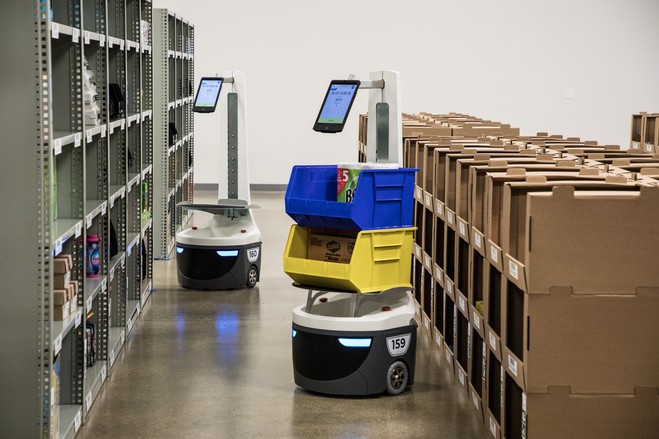
E-commerce has created demand for faster and more efficient fulfillment systems, while labor costs continue to pressure businesses. Autonomous mobile robots, robotic arms and AI-powered sorting systems could improve productivity throughout supply chains.
The emergence of humanoid robots has added another dimension to the investment story. Developers are attempting to create machines capable of operating in environments designed for humans, potentially allowing robots to work alongside people without requiring companies to completely redesign their facilities.
However, the sector still faces major challenges. Developing reliable hardware is expensive, while robots must operate safely in unpredictable real-world environments. Battery limitations, manufacturing costs, regulatory requirements and difficulties in scaling production could slow commercialization.
Despite these obstacles, the record first-quarter funding demonstrates that investors increasingly view robotics and physical AI as more than speculative technology. The combination of AI breakthroughs, automation demand and advances in hardware is creating a powerful investment narrative.
If startups can successfully convert capital into commercially useful machines, physical AI could become a major pillar of the next technology cycle. The $16.3 billion raised in the first quarter may therefore represent not simply a funding record.
But an early indication of how quickly intelligent machines are moving from research laboratories into the real economy.