

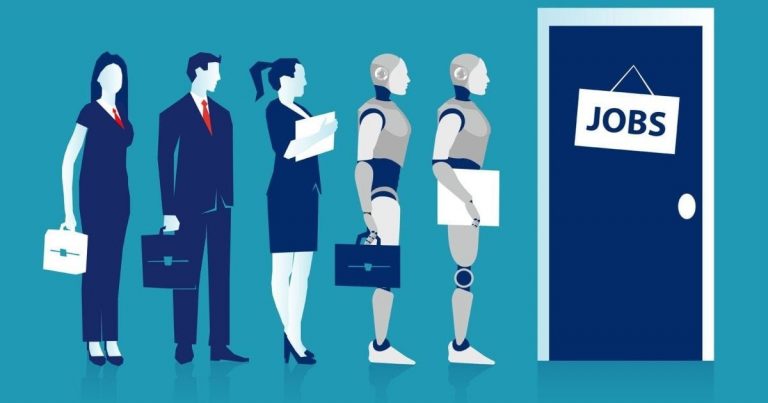
At OpenAI, figuring out how artificial intelligence will transform the labor market has become a moving target, with the researchers studying AI’s economic impact forced to adapt almost as quickly as the technology itself.
Ronnie Chatterji, OpenAI’s chief economist, leads a team of about a dozen economists, data scientists, business professionals, former teachers and former government workers examining how AI is changing workers, companies and the broader economy.
But even the questions they are trying to answer are changing.
Register for the next Tekedia Mini-MBA.
Register for Tekedia AI in Business Masterclass.
Join Tekedia Capital Syndicate and co-invest in great global startups.
“The job description is changing a lot,” Chatterji told Business Insider.
He cited recursive self-improvement, the idea that AI systems could improve their own capabilities, as an example. It was not a major focus of his team’s work a year ago but has since emerged as an area the researchers are studying. That illustrates one of the central difficulties of researching AI’s economic effects: the underlying technology is evolving faster than many traditional economic models and assumptions can accommodate.
Chatterji joined OpenAI in 2024 after a career in government and academia. He served in the Biden White House as coordinator of the $52 billion CHIPS program and as acting deputy director of the National Economic Council. He was previously chief economist at the Commerce Department and remains a professor of business and public policy at Duke University.

OpenAI was not initially part of his plans.
Chatterji had been preparing to write a book about his government experience when a former colleague who had joined OpenAI contacted him. Their initial discussions centered on supply chains and semiconductors, areas that were increasingly important to OpenAI as the company considered the enormous computing infrastructure required to train and operate advanced AI systems.
The conversations eventually expanded into a broader question: how should a company building increasingly capable AI understand its economic consequences?

“This is a whole emerging category, and that’s when the chief economist role got created,” Chatterji said.
He reports to OpenAI’s chief financial officer, Sarah Friar.
Chatterji’s team is organized around three broad questions: what AI is doing to work now, how companies are adopting the technology and reorganizing around it, and what increasingly capable AI could mean for the economy in the future.
“We built the team around three sets of questions: How AI is changing work today; how businesses are adopting and reorganizing around AI; and what increasingly capable AI could mean for the economy tomorrow,” he said.
The three areas are closely connected.
The first involves measuring changes that are already taking place in employment, wages, productivity and the tasks workers perform. The second examines how companies are incorporating AI into their operations and whether the technology changes organizational structures, staffing needs and business models.
The third is considerably harder because it requires economists to reason about technologies that may not yet exist in mature form.
That uncertainty is shaping the type of people Chatterji wants to hire.
“We need people who can bring rigorous economic thinking to what’s happening today, but who are also comfortable tackling questions where we don’t have all the answers yet,” he said. “You have to be comfortable with being uncomfortable.”
That represents a significant departure from conventional economic research, where researchers can spend years studying relatively stable datasets and established relationships.
At OpenAI, the underlying technology can change between the beginning and end of a research project.
Chatterji described the pace of innovation inside the company as “a little insane,” noting that a study using data through June could already be viewed by some as outdated by August.
That creates a methodological problem for economists attempting to measure AI’s impact. If AI capabilities, adoption rates and business practices are changing rapidly, conclusions based on historical data can become obsolete before they are published. It also means researchers must combine traditional economic analysis with real-time data, industry research and close engagement with companies, governments and universities.
Collaboration is therefore another central part of the job.
“We get a lot of questions from our colleagues about economics,” Chatterji said, while noting that his team also works with external organizations.
OpenAI has argued that no single company, government or academic institution has enough information or resources to fully understand AI’s economic effects. The scale of the changes being considered makes cooperation relevant, particularly for questions involving employment, productivity, taxation and economic inequality.
Chatterji’s own career illustrates the breadth of issues now falling under the chief economist’s remit.
His academic research focused on innovation and entrepreneurship. At OpenAI, his work extends into labor markets, corporate adoption, industrial policy and the potential effects of increasingly capable AI systems.
That breadth reflects how difficult it is to separate AI’s technological impact from its economic consequences.
A more capable model can alter the economics of software development. Greater automation can change hiring decisions. Lower costs for certain forms of knowledge work can create new businesses while reducing demand for some existing tasks. At the same time, entirely new categories of work may emerge around technologies that did not previously exist.
For Chatterji’s team, the challenge is to distinguish between these competing effects rather than assume that AI will simply eliminate jobs or, alternatively, make workers uniformly more productive.
The need for that analysis is becoming more urgent as companies move from experimenting with AI to incorporating it into everyday operations. Businesses are increasingly using AI for coding, customer service, research, marketing, administration and other knowledge-intensive tasks. The economic consequences could depend less on whether AI can perform a particular task and more on how companies reorganize work around those capabilities.
That is why Chatterji says members of his team must have a high degree of independence.
Researchers cannot simply wait for a fixed assignment. They need to identify which questions matter, determine who needs the answers, and adjust their work as the technology changes.
The approach also shows that OpenAI is no longer simply developing AI models and measuring their technical performance. It is now building an internal research capability aimed at understanding how those models affect the economy in which OpenAI operates. That could become more relevant for a company whose technology is being adopted across industries.
OpenAI needs to understand not only whether its models are becoming more capable, but what those capabilities mean for customers, workers and businesses. The answers could influence product development, enterprise strategy and the company’s engagement with governments as policymakers debate how AI should be regulated.
The research also has an unusual feedback loop. OpenAI is studying the economic effects of the technology while simultaneously building the technology that could cause those effects. That gives Chatterji’s team access to an unusually close view of AI adoption, but it also creates a need for rigorous analysis to separate evidence from assumptions about what the technology may eventually achieve.
For now, Chatterji says the uncertainty is part of what makes the work compelling.
“If you’re an economist at a cocktail party or on the sidelines of your kid’s soccer game, usually you’re not very popular,” he said.
That has changed.
“What’s AI going to do in the job market?” is now a question that economists, business leaders, workers and governments increasingly want answered.
OpenAI’s decision to employ a dedicated team to study that question reflects how central the economic consequences of AI have become to the company’s own strategy. But the team’s biggest challenge may be that by the time it answers one question, the technology may have created several new ones.