DD
MM
YYYY

PAGES

DD
MM
YYYY

spot_img

PAGES

Home Blog Page 919

Africa: Rethink How You Build

0

The landscape of global innovation is shifting at an unprecedented pace, and recent trends at Tekedia Capital highlight a critical divergence. Our latest cohort of 18 companies, invested in just three months ago, is demonstrating the fastest revenue growth we’ve ever observed, surpassing even the strong performance of our October 2024 class. This earlier class included a remarkable company that achieved a $10 million Annual Recurring Revenue (ARR) within four months of its inception and is now on track for $100 million within its first year, having recently secured $36 million in funding.

This data leads to a stark conclusion: the innovation gap between developing and developed nations is not merely present, but rapidly widening to an asymmetrical degree. The defining characteristic of leading companies today is “AI-nativity.” These are not just firms using artificial intelligence, but rather businesses fundamentally built upon AI, regardless of their industry. For instance, the most successful insurance companies of tomorrow will likely be AI companies that happen to offer insurance products, not traditional insurance firms merely integrating AI. Similarly, a premier online tutor like ChatGPT isn’t an edtech company that uses AI; it’s an AI company providing educational services.

When we contrast these emerging, AI-native enterprises with many African startups, a troubling pattern emerges. The gap in the pace of innovation and the value delivered to users is expanding. There’s a tangible risk that many African Software-as-a-Service (SaaS) companies could face overnight disintermediation.

This observation is not an alarmist prediction, but a conclusion drawn from reviewing the financials of dozens of companies across five continents in Tekedia Capital. In this rapidly accelerating era of AI, many African startups are struggling to keep pace, and a significant portion of our SaaS companies could potentially disappear by 2027. Urgent action is required. We must fundamentally rethink our approach to building businesses to ensure Africa can compete and win in this new global landscape. I have called the landscape the accelerated society era and we must find our level there productively.

The Accelerated Society: A New Era of Disruption and Integration

Jack Dorsey Unveils Bitchat, A Fully Decentralized, Off-Grid Messaging App With No Internet or Servers, Designed to Rival WhatsApp

0

Block CEO and Twitter co-founder Jack Dorsey has launched Bitchat, a radical new messaging platform that operates completely off the internet, signaling a major push toward decentralized, surveillance-resistant communication.

Announced over the weekend, the beta version of the app is now available on Apple’s TestFlight, with a white paper published on GitHub detailing the technical foundations of what Dorsey describes as a “personal experiment” in alternative connectivity.

Unlike mainstream messaging platforms such as Meta’s WhatsApp, Messenger, or Telegram, Bitchat does not require a phone number, email, or any central server to function. The app works entirely over Bluetooth mesh networks, allowing users to send encrypted messages between nearby devices — even in the absence of Wi-Fi, mobile data, or internet infrastructure.

A Challenge to Centralized Messaging Giants

Dorsey’s latest project is already being seen as a potential rival to WhatsApp, particularly in regions where internet shutdowns, government surveillance, or data privacy concerns are prevalent. While WhatsApp remains the dominant player in mobile messaging — with over 2 billion users globally — it requires user registration through personal identifiers like phone numbers, stores data on cloud servers, and has faced scrutiny over metadata collection and integration with Meta’s broader advertising ecosystem.

Bitchat, in contrast, is a privacy-first tool that doesn’t track users or store any messages outside of devices. Its peer-to-peer architecture ensures that conversations never touch centralized infrastructure, and messages are ephemeral by default, disappearing once delivered or after a set time.

How Bitchat Works

Bitchat leverages Bluetooth mesh networking and store-and-forward technology, enabling messages to hop across multiple devices like digital whispers in a crowd. Even if the recipient is not in range, another user’s phone can hold and later forward the message, making the system resilient in disaster zones, protest areas, remote regions, or under authoritarian censorship.

The app also includes support for group chats or “rooms,” which can be named using hashtags and locked behind passwords. In future updates, WiFi Direct support is expected, expanding the app’s operational range and speed while maintaining the infrastructure-free design.

This setup mirrors technology used in Bridgefy, a Bluetooth messaging app that became popular during the Hong Kong protests of 2019, and in Briar, another off-grid messaging app used in authoritarian states and emergencies. But Bitchat’s simple interface, strong encryption focus, and Dorsey’s influential backing could allow it to break through to a broader audience.

Aligning with Dorsey’s Push for Decentralization

The launch follows Dorsey’s continued advocacy for decentralized platforms. After stepping away from Twitter, he backed Bluesky, a federated social media protocol, and supported Damus, a Nostr-based app that runs on open standards with no central authority.

Bitchat is an extension of this mission. Dorsey called it an experiment in “Bluetooth mesh networks, relays, store-and-forward models, message encryption models, and a few other things” — essentially, a testbed for off-grid communication that could upend how people connect in restrictive or crisis environments.

Implications for Global Messaging and Security

Dorsey’s move comes at a time when governments are clamping down on encrypted communication, and tech platforms are facing increasing demands to hand over user data. In this climate, apps like Bitchat are not just technological experiments — they are statements of digital autonomy.

The potential to rival WhatsApp, especially among users concerned with privacy or living under regimes prone to surveillance or internet control, is substantial. While WhatsApp has end-to-end encryption, its reliance on centralized servers and phone-based identifiers creates attack surfaces that Bitchat aims to eliminate entirely.

Bitchat is still in beta and available only to iOS testers for now, but its ambition is clear. With no central database, user accounts, or app-based identity, it embodies one of the most radical visions yet for peer-to-peer communication.

In an era of growing concerns over state surveillance, tech censorship, and infrastructure failure, Jack Dorsey’s Bitchat is carving out a space where freedom of speech and privacy do not depend on connectivity — or on big tech platforms.

Key Lessons from How Nigerian Influencers Use Social Media

0

Between April 23 and July 6, 2025, an in-depth analysis of Nigerian influencers’ social media activity revealed fascinating patterns that speak volumes about how influence is built and sustained in the digital age. From the rapid-fire conversations of Twitter to the quieter corridors of LinkedIn, Nigerian social, business, and political influencers are making deliberate choices about where, how, and what they post.

In a country where social media platforms have become the new public square, understanding these choices offers valuable lessons for anyone seeking to shape narratives, build credibility, or mobilize audiences. In this piece, our analyst explores what the data tells us about platform preferences, content formats, and untapped opportunities. The article also states key lesson for aspiring influencers, brands, and strategists can learn from those who are already leading the way.

Twitter is the primary arena for digital influence

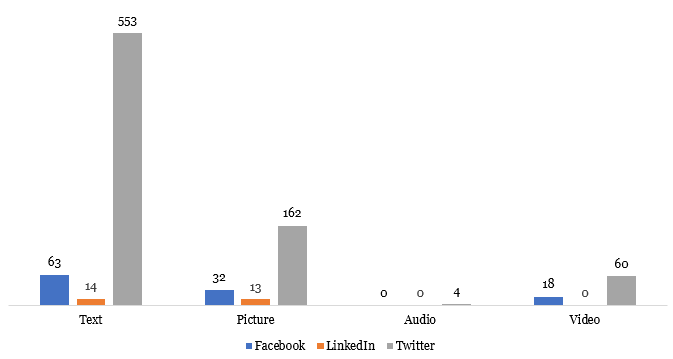
The analysis reveals that Twitter stands out as the most heavily used platform by Nigerian influencers. During the period under review, influencers posted 553 text messages on Twitter, far outpacing Facebook’s 63 and LinkedIn’s 14. Twitter also saw the highest number of picture posts at 162, compared to 32 on Facebook and 13 on LinkedIn.

Exhibit 1: Content type by social media type

social media types used by Nigerian influencers
Source: Social media handles, 2025

This pattern highlights Twitter’s role as the main stage for public discourse in Nigeria. Influencers use the platform’s immediacy and reach to share opinions, respond to events in real time, and participate in national conversations. The dominance of text posts is consistent with Twitter’s design as a text-first platform that encourages concise, impactful communication. The significant number of picture posts further suggests that influencers understand the power of visuals to drive engagement and virality.

The key lesson here is that Twitter is indispensable for those who want to shape conversations, mobilize followers, or assert thought leadership in Nigeria’s dynamic social and political landscape. Success on the platform requires not just frequent posting, but also an ability to deliver timely, relevant, and engaging content that resonates with fast-moving audiences.

Facebook plays a supporting role

Facebook emerged as a secondary platform in terms of message volume. Nigerian influencers shared 63 text posts, 32 picture posts, and 18 video posts on Facebook during the study period. These figures indicate that while Facebook remains part of the influencer toolkit, it is no longer the first choice for driving mass engagement.

Facebook’s strength lies in its community-building features and its support for diverse content formats. Influencers may use the platform to connect with specific audience segments, share longer updates, or participate in group discussions. However, the data suggest that Facebook is used more selectively, possibly for deeper engagement with established followers rather than for broad public influence.

The lesson from this is that Facebook should not be ignored, but its use should be strategic. Influencers and brands can benefit from tapping into the platform’s community features and its capacity for richer storytelling, but they must integrate Facebook into a broader, multi-platform approach that leverages other channels for greater reach.

LinkedIn remains a niche platform

LinkedIn recorded the lowest activity among the three platforms studied. Influencers posted only 14 text messages and 13 picture messages, with no audio or video content during the period. This reflects LinkedIn’s position as a platform for professional networking rather than mass communication.

Nigerian influencers appear to use LinkedIn sparingly, focusing on targeted messages aimed at professional audiences. This may involve sharing achievements, industry insights, or thought leadership content designed to enhance personal or organizational reputation. The limited activity suggests that LinkedIn is not the platform of choice for influencers seeking widespread visibility or rapid engagement.

The key lesson is that LinkedIn serves a specialized role. For influencers and organizations looking to build credibility within specific industries or professional communities, LinkedIn offers value. However, it should not be relied upon as the primary channel for broad-based influence.

Rich media formats are underutilized

One of the more striking findings is the limited use of rich media formats such as video and audio. Across all platforms, audio messages were rare, with just four recorded on Twitter and none on Facebook or LinkedIn. Video posts were more common but still relatively low, with 60 on Twitter and 18 on Facebook. LinkedIn had no video posts at all during the period analyzed.

This underuse of rich media stands in contrast to global trends where video and audio formats are becoming central to digital engagement. The data suggest that Nigerian influencers have yet to fully embrace these formats on Facebook, LinkedIn, and Twitter. It is likely that many influencers are turning to platforms like YouTube, Instagram, or TikTok for video and audio content, which were not included in this particular analysis.

The lesson here is that there is significant untapped potential in using video and audio to enhance digital influence. Influencers who are willing to invest in creating high-quality rich media content could differentiate themselves and build deeper connections with their audiences.

Editor’s Note: This article is a product of Infoprations’ Communicative Strategies of Nigerian Influencers Project, 2025. The team includes Abdulazeez Sikiru Zikirullah, Moshood Sodiq Opeyemi, Bello Opeyemi Zakariyha, and Oni Oluwaseun.

SEC Opens Door to Crypto ETF Boom with New Guidance, Eyes Broader Access to Solana, XRP, Trump Memecoin Funds

0

The U.S. Securities and Exchange Commission (SEC) has taken a pivotal step toward mainstreaming crypto investment products with the release of long-awaited guidance for exchange-traded products (ETPs) tied to cryptocurrencies.

The 12-page document, quietly issued last Tuesday, outlines how asset managers should prepare filings for crypto ETFs, signaling a soft pivot by the regulator under the Trump administration’s Republican leadership.

The move is the clearest indication yet that the SEC is rethinking its posture toward digital assets—an industry it had previously targeted with an aggressive enforcement campaign. Under the new framework, the Commission has paused or abandoned several high-profile lawsuits and begun developing a regulatory blueprint that may accelerate approvals for ETFs tracking everything from Solana to Trump-themed meme coins.

SEC insiders quoted by Reuters say the agency is also working on a new listing template to replace the lengthy and restrictive 19(b)(4) application process, which currently requires exchanges to seek individual exemptions for every new crypto ETF. If adopted, the new framework could slash the review time from as much as 240 days to as few as 75 days, enabling faster market entry for dozens of crypto ETF proposals currently awaiting a verdict.

“This is the first time we’ve seen concrete rules of the road for crypto ETPs,” said Matt Hougan, Chief Investment Officer at Bitwise Asset Management, which has multiple crypto ETF applications pending. “The most important thing is that this guidance exists at all.”

The new SEC document instructs issuers to explain in plain English how crypto ETFs differ from traditional offerings—particularly regarding custody arrangements, valuation methodology, and risks in volatile digital asset markets. The aim, according to officials familiar with the matter, is to simplify the SEC’s internal review process while enhancing transparency for investors.

“This guidance reflects the SEC’s recognition that crypto ETPs are now part of the investment mainstream,” said Sui Chung, CEO of CF Benchmarks, a leading crypto index provider.

But the real breakthrough may lie in the anticipated second phase of regulatory reform. SEC staff are now working with major exchanges like Nasdaq and Cboe to draft a universal listing framework, which could eliminate the need for case-by-case review of each ETF linked to individual crypto assets.

This overhaul comes amid mounting pressure on regulators to keep pace with financial innovation. With more than two dozen ETF filings pending—including ones tied to XRP, Polkadot, Dogecoin, and even President Trump’s meme coin—the SEC is expected to issue additional rule changes before the fall, potentially opening the floodgates to a new class of retail-accessible crypto investment products.

Solana in the Spotlight

While most asset managers await clearer rules, some are already finding creative workarounds.

Last week, REX Financial and Osprey Funds launched the first U.S. ETF offering indirect exposure to Solana, the world’s sixth-largest cryptocurrency. Dubbed the REX-Osprey Sol + Staking ETF, the product doesn’t invest directly in Solana but instead channels investor funds into a separate entity that holds both Solana tokens and a non-U.S.-based Solana fund.

This strategy allows REX and Osprey to bypass SEC restrictions on spot crypto ETFs. The fund also introduces yield-bearing opportunities via staking, in which token holders validate blockchain transactions in exchange for rewards.

“It’s not a case of either/or,” said Greg King, CEO of REX Financial. “We’re getting out in front now with what’s allowed, and we’ll file for a direct Solana ETP when the SEC finalizes its broader rules.”

King said the new ETF pulled in $12 million on its first day of trading on July 1, underscoring the strong investor demand for exposure to emerging blockchain networks.

Trump Administration’s Changing Crypto Stance

The guidance marks a significant shift from the SEC’s previous approach under Trump, who initially supported robust enforcement against digital assets deemed securities. However, with the formation of a new SEC crypto task force, a refocusing of its enforcement priorities, and a more collaborative posture toward asset managers, the Trump administration now appears to favor integrating crypto more firmly into the financial system.

Sources familiar with the matter told Reuters that SEC Chair Hester Peirce and Commissioner Mark Uyeda, both Republicans, have championed efforts to streamline the ETF process and reduce regulatory bottlenecks, especially for “commoditized” assets like Bitcoin, Ethereum, and Solana.

While Nasdaq, Cboe, and the New York Stock Exchange declined to comment, executives at several ETF issuers expect a unified crypto ETF template to be filed “within days or weeks.”

The roadmap ahead suggests an intense period of product launches and competition. Asset managers like Bitwise, VanEck, Grayscale, and BlackRock all have filings in the pipeline. Once the second phase of guidance is issued—expected by early fall—the SEC could begin approving a wave of new ETFs, including those for meme coins and high-volatility altcoins that had previously been relegated to crypto exchanges.

Despite the rapid pace of development, industry insiders caution that the SEC is not rushing and that investor protection remains a central concern.

“Crypto may be entering the mainstream, but this is still the SEC,” said King. Not everything has been codified yet,”

If the current pace holds, fall 2025 may usher in a new chapter in U.S. crypto investing—one where traditional and digital finance fully converge on Wall Street.

Epic Games Quietly Settles App Store Antitrust Case With Samsung

0

Epic Games has settled its antitrust lawsuit against Samsung, marking a surprising turn in the Fortnite maker’s expanding battle to dismantle what it calls a “duopoly” of app store control by Google and its close partners.

Filed in September 2024, the case accused Samsung of colluding with Google to suppress competition in mobile app distribution — primarily through the deployment of its controversial “Auto Blocker” feature that restricts installations of apps from outside the Galaxy and Google Play Stores.

On Monday, Epic voluntarily dismissed nine of its antitrust claims in a U.S. court filing, following what it described as constructive discussions with Samsung.

“We’re dismissing our court case against Samsung following the parties’ discussions,” Epic CEO Tim Sweeney posted on X. “We are grateful that Samsung will address Epic’s concerns.”

Though no specific terms of the settlement were made public, legal analysts believe the agreement likely involves tweaks to the way Samsung handles app installations from alternative sources.

The settlement ends one chapter in Epic’s broader offensive against what it sees as illegal app store monopolies — an effort that has already seen a major win against Google, and a mixed outcome in a previous case against Apple. Epic has also launched its own mobile app store and has pushed to expand third-party distribution globally.

What the Case Was About

Epic’s lawsuit against Samsung centered on the Auto Blocker feature, which was turned on by default on Galaxy devices and created a complex, 21-step process for users to install apps from outside Samsung’s and Google’s stores. Epic alleged this amounted to a deliberate obstruction designed to limit user choice and punish competition, particularly after a U.S. jury found Google guilty of illegally monopolizing Android app distribution in December 2023.

Samsung denied wrongdoing at the time, calling Epic’s suit “baseless” and saying its security features were designed solely to protect users from malware and unsafe apps. Google also dismissed Epic’s allegations as meritless, emphasizing that Android partners like Samsung are free to make independent decisions on app safety mechanisms.

However, the timing of Epic’s lawsuit—just months after it won the historic jury verdict against Google—suggested the company was intent on ensuring that judgment would not be undermined by workarounds. Epic claimed Samsung’s actions effectively nullified the legal win by maintaining the status quo in app distribution, particularly in key U.S. markets where Galaxy phones hold a significant market share.

What’s in the Settlement?

Epic did not disclose the terms of the agreement, but its decision to dismiss the suit without prejudice — meaning it can revive the claims later — suggests Samsung has committed to certain changes. Legal observers speculate that Samsung may agree to either disable Auto Blocker by default, offer an opt-in mechanism, or establish a fair and transparent whitelisting process for third-party app stores.

The resolution also arrives just days before Samsung’s highly anticipated Galaxy Unpacked event, sparking industry chatter that Epic’s game store could be preinstalled on new Samsung devices, or at the very least, made more accessible through device settings.

This wouldn’t be the first time Samsung has cooperated with Epic in app distribution. In 2018, Fortnite was initially available for Android exclusively through Samsung’s Galaxy Store before being released more broadly.

The Samsung case was just one front in Epic’s long-running campaign to break the dominance of tech giants over app distribution. The company began its war against gatekeeper app stores in 2020 by suing both Apple and Google over their 30% commissions and tight control over in-app payments.

While Epic lost much of its case against Apple, the firm scored a significant legal victory against Google in December 2023 when a California jury found the company had violated antitrust laws. The verdict compelled Google to open its Play Store to rival marketplaces, but enforcement of the ruling remains in limbo as the company appeals.

In suing Samsung, Epic sought to ensure that Google’s alleged antitrust violations were not merely replicated through strategic partnerships.

Sweeney is not optimistic that change will be immediate.

“If Google is obstructing a vertical remedy through appeals and isn’t offering an awesome deal,” Sweeney said in 2023.

What Changes Could Be Coming?

According to the filing, Epic retains the right to refile the case if Samsung fails to follow through on its commitments. At the same time, the broader legal landscape is still shifting. Google’s appeal of the jury verdict is pending, and lawmakers in Washington are revisiting legislation to curb app store monopolies, particularly on Android.

The outcome of the Samsung dispute may also influence other manufacturers. If Samsung agrees to open up its devices to third-party app stores, other OEMs like Xiaomi, Oppo, and Vivo may face similar pressures — especially in regions where regulators are growing more assertive in policing digital market competition.

Though Epic’s agreement with Samsung lacked the courtroom drama of its battles with Apple and Google, it could have significant implications. By reaching a compromise outside court, Epic may be setting a precedent for how it wants other companies to cooperate — not with monetary damages, but with structural changes that promote open access.

At a time when developers are pushing for greater visibility, lower fees, and direct relationships with users, Samsung’s willingness to settle may reflect a growing recognition among manufacturers that the old gatekeeping models are no longer defensible — legally, politically, or commercially.