DD
MM
YYYY

PAGES

DD
MM
YYYY

spot_img

PAGES

Home Blog Page 933

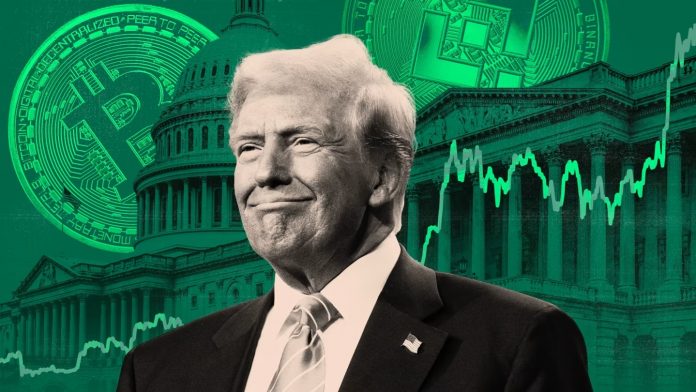
U.S. Presidential Digital Assets Group To Release Reports On July 30th 2025

0

The President’s Working Group on Digital Assets completed its 180-day report, which was due on July 22, 2025, and is set to be released publicly on July 30, 2025, according to multiple sources, including statements from Bo Hines, Executive Director of the President’s Council of Advisors for Digital Assets. The report, commissioned by President Trump’s Executive Order on January 23, 2025, aims to propose a federal regulatory framework for digital assets, including stablecoins, focusing on market structure, oversight, consumer protection, and risk management.

It may also address the potential creation of a national digital asset stockpile and a Strategic Bitcoin Reserve, potentially using cryptocurrencies seized through law enforcement efforts. The release is anticipated to be a significant moment for U.S. digital asset policy, potentially influencing global standards. The report is expected to propose a federal regulatory framework for digital assets, including stablecoins, addressing market structure, oversight, and consumer protection.

A clear, innovation-friendly framework could boost institutional adoption, stabilize crypto markets, and attract investment, potentially driving up asset prices (e.g., Bitcoin, which some X posts suggest could benefit from a Strategic Bitcoin Reserve). Emphasis on mitigating illicit finance risks (e.g., money laundering, fraud) could lead to stricter compliance requirements for crypto exchanges and custodians, increasing operational costs but enhancing market legitimacy.

Specific guidelines for stablecoins could position them as a bridge between traditional finance and crypto, potentially increasing their use in payments and cross-border transactions. The report may endorse a Strategic Bitcoin Reserve, possibly using seized cryptocurrencies. This could signal U.S. government confidence in Bitcoin, potentially driving its price higher. However, it could raise concerns about market manipulation or fiscal risks if the government becomes a major holder.

A national digital asset stockpile could position the U.S. as a leader in the global digital economy, countering moves by countries like China with its digital yuan. This could enhance U.S. financial influence but also escalate geopolitical tensions. Domestically, it could spur innovation in blockchain technology, creating jobs and fostering new financial products.

Stronger consumer protections could increase public trust in digital assets, encouraging retail participation. However, overly stringent regulations might stifle smaller projects or push innovation offshore. The report, influenced by a Trump administration initiative, may face resistance from Democrats or regulators skeptical of crypto’s risks (e.g., Senators Warren and Brown, who have historically criticized crypto for enabling crime). A federal framework might clash with the crypto community’s ethos of decentralization.

Institutional players (e.g., banks, hedge funds) may benefit from regulatory clarity, gaining easier access to crypto markets. Retail investors, however, could face barriers if compliance costs raise fees or limit access to smaller platforms. A Bitcoin price surge from a Strategic Reserve could disproportionately benefit early adopters and wealthy investors, widening wealth gaps. Crypto advocates view the report as a step toward mainstream adoption, while skeptics (including some traditional finance experts) argue it risks financial instability or scams.

The report’s push for U.S. leadership in digital assets could alienate international partners or spur competing frameworks in the EU or Asia, fragmenting global standards. The report could be a pivotal moment for digital assets, potentially fostering innovation and adoption while addressing risks. However, it risks deepening divides between political factions, economic classes, and ideological camps. The crypto community’s reaction—visible on X—ranges from optimism about market growth to wariness of government overreach.

Bitcoin’s Q2 Rally And Tesla’s Stable Holding Align With Growing Institutional Interest In Crypto

0

Tesla’s Q2 2025 earnings report confirms the company did not sell any of its Bitcoin holdings, valued at approximately $1.42 billion. This marks the eighth consecutive quarter with no Bitcoin sales, following a significant sell-off in Q2 2022 where Tesla sold 75% of its holdings for $936 million. The value of Tesla’s Bitcoin has increased due to a 30% price rally in Q2, bolstered by new U.S. accounting rules allowing companies to report crypto assets at fair market value quarterly. Tesla currently holds around 11,509 BTC, making it one of the largest publicly traded companies with Bitcoin on its balance sheet.

Tesla’s decision to hold its 11,509 BTC signals confidence in Bitcoin’s long-term potential, especially amid a 30% price rally in Q2 2025. This aligns with the company’s earlier stance under Elon Musk’s leadership, which has historically viewed Bitcoin as a hedge against inflation and a store of value. The adoption of new U.S. accounting rules (FASB’s fair value accounting for crypto assets) allows Tesla to reflect Bitcoin’s market value gains on its balance sheet, potentially boosting reported assets without needing to liquidate. This could improve Tesla’s financial optics, especially in a volatile market.

Tesla’s continued holding reinforces its position as a major corporate Bitcoin holder, potentially encouraging other publicly traded companies to maintain or increase their crypto investments. This could bolster institutional confidence in Bitcoin, especially as regulatory clarity improves. The lack of sales contrasts with Tesla’s 2022 sell-off, suggesting a shift back to a “hodl” strategy, which may resonate positively with Bitcoin advocates and investors.

By not selling, Tesla avoids realizing taxable gains in a rising market, preserving liquidity for other operational needs (e.g., R&D for autonomous driving or EV production expansion). However, it also exposes the company to Bitcoin’s volatility, which could impact its balance sheet if prices drop significantly. The $1.42 billion valuation represents a notable portion of Tesla’s cash reserves, which could draw scrutiny from investors prioritizing traditional financial stability over crypto exposure.

Elon Musk’s historical comments on Bitcoin have moved markets, and Tesla’s decision to hold could amplify bullish sentiment in the crypto space. Posts on X reflect excitement among Bitcoin enthusiasts, with some speculating Tesla might resume accepting Bitcoin for payments, though no evidence supports this yet. Conversely, Tesla’s inaction (not buying more or selling) may disappoint those expecting bolder moves, given Musk’s vocal crypto advocacy.

Bitcoin supporters, including many on X, see Tesla’s holding as a vote of confidence in cryptocurrency’s mainstream adoption. They argue it validates Bitcoin as a corporate treasury asset, especially with favorable accounting changes and a recovering crypto market. Enthusiastic, with some users on X calling it a “bullish signal” for Bitcoin’s price and adoption. They point to Tesla’s increased Bitcoin valuation (from $184 million at purchase to $1.42 billion) as proof of a successful strategy.

Critics argue Tesla’s Bitcoin holding introduces unnecessary risk to its balance sheet, given crypto’s volatility. They question why a tech company like Tesla, with significant capital needs for innovation, ties up funds in a speculative asset rather than more liquid or stable investments. Concerned, with some analysts suggesting Tesla’s Bitcoin exposure could deter risk-averse investors. Posts on X from skeptics highlight Tesla’s 2022 sale of 75% of its Bitcoin as evidence of past doubts about its reliability as an asset.

Some see Tesla’s holding as a neutral, wait-and-see strategy, balancing Musk’s crypto enthusiasm with pragmatic financial management. The lack of sales or purchases suggests Tesla is monitoring market conditions and regulatory developments. Measured, with X posts noting that Tesla’s Bitcoin stash is a small fraction of its overall market cap, limiting its impact on the company’s financial health. They anticipate Tesla will hold until clearer market or regulatory signals emerge.

Bitcoin’s Q2 rally and Tesla’s stable holding align with growing institutional interest in crypto, supported by events like the introduction of Bitcoin ETFs and clearer U.S. regulations. However, global economic uncertainties (e.g., interest rate hikes, inflation) could amplify the divide between crypto optimists and traditionalists. Tesla’s stock performance and EV market challenges (e.g., competition from Chinese manufacturers) make its Bitcoin strategy a secondary but symbolic issue.

In summary, Tesla’s decision to hold $1.42 billion in Bitcoin underscores its strategic bet on crypto’s future while fueling a divide between those who see it as visionary and those who view it as reckless. The lack of action (buying or selling) keeps Tesla in a balanced but polarizing position, with market watchers and X users split on whether this signals strength or indecision.

Implications of ETH and SOL Staking on Robinhood

0

Robinhood launched Ethereum (ETH) and Solana (SOL) staking for U.S. customers on July 10, 2025, allowing users to earn rewards by locking up their assets with a minimum stake of $1. ETH staking rewards range from 50% to 100% of the protocol rate due to Robinhood’s batch-processing, which pools user funds to meet the 32 ETH validator requirement. Solana staking offers around 7.28% APY, with a bonding period of about two days. A 25% fee on rewards applies starting October 1, 2025, plus third-party staking partner fees.

Staking is unavailable in California, Maryland, New Jersey, New York, and Wisconsin due to regulatory restrictions. The platform simplifies the process, making it accessible for beginners. Robinhood’s low entry barrier ($1 minimum stake) democratizes staking, enabling beginners and small investors to participate in Ethereum and Solana ecosystems without needing technical expertise or large capital (e.g., Ethereum’s 32 ETH validator requirement).

The user-friendly interface simplifies staking, potentially increasing adoption of crypto staking among mainstream audiences. Offering staking on a popular platform like Robinhood could drive broader interest in cryptocurrencies, particularly ETH and SOL, as users seek passive income opportunities. It may encourage users already trading on Robinhood to diversify into staking, deepening engagement with blockchain networks.

More staked assets enhance network security and decentralization for both Ethereum (post-Merge, proof-of-stake) and Solana, as increased participation strengthens their consensus mechanisms. Robinhood’s large user base could contribute significantly to the total staked supply, especially for Solana, given its relatively lower staking threshold.

The 25% fee on staking rewards (starting October 1, 2025) plus third-party partner fees creates a new revenue stream for Robinhood, potentially offsetting operational costs and supporting platform growth. Staking is unavailable in states like California, Maryland, New Jersey, New York, and Wisconsin due to regulatory uncertainty around staking as a potential security. Ongoing SEC scrutiny (e.g., Kraken’s 2023 staking settlement) could lead to further restrictions or compliance costs for Robinhood.

Regulatory clampdowns could limit the feature’s scalability or lead to its suspension in additional jurisdictions. The 25% fee on rewards, combined with third-party fees, significantly cuts into user profits compared to staking directly on-chain or through other platforms with lower or no fees. Ethereum staking rewards are diluted (50-100% of protocol rate) due to Robinhood’s batch-processing, potentially making it less competitive than alternatives like Lido or direct validator nodes.

Robinhood’s pooled staking model (especially for ETH) may concentrate validator control with third-party partners, raising concerns about centralization in Ethereum’s or Solana’s networks. Users lack control over their staked assets (e.g., no direct validator node management), which could deter more advanced crypto users who prioritize decentralization.

Staking locks assets (e.g., Solana’s ~2-day bonding period), exposing users to price volatility without immediate liquidity. A market downturn could lead to losses outweighing staking rewards. If Robinhood faces operational or security issues (e.g., hacks or outages), staked assets could be at risk, as users rely on the platform’s infrastructure.

Robinhood’s simplified staking appeals to casual users who prioritize ease of use and low entry barriers. These users may not have the technical knowledge or resources to stake directly on Ethereum or Solana networks. Experienced crypto users may prefer DeFi platforms (e.g., Lido, Rocket Pool, or Solana’s Marinade) or running their own validators for higher rewards, greater control, and alignment with decentralization principles. Robinhood’s fees and lack of transparency in staking operations may deter this group.

CeFi (Robinhood) offers a centralized, regulated platform with user-friendly features but at the cost of higher fees, reduced rewards, and reliance on third-party infrastructure. It caters to users comfortable with traditional finance-like experiences. DeFi provides higher rewards and control through direct staking or liquid staking protocols but requires technical knowledge, self-custody, and exposure to smart contract risks. DeFi users may view Robinhood’s staking as a compromise on crypto’s ethos of decentralization.

Users in restricted states (e.g., New York) face exclusion from staking, creating a geographic divide in access to crypto opportunities. This reflects broader regulatory inconsistencies in the U.S., where state-level rules fragment the market. Globally, Robinhood’s U.S.-only staking (as of now) contrasts with decentralized platforms available worldwide, highlighting disparities in access based on jurisdiction.

Robinhood’s ETH and SOL staking launch is a significant step toward mainstreaming crypto, offering accessibility and convenience for retail investors. However, it comes with trade-offs: high fees, reduced rewards, and centralization risks may alienate advanced users and DeFi advocates. The divide between CeFi and DeFi, retail and advanced users, and regulatory haves and have-nots underscores the broader tension in crypto’s evolution—balancing user-friendliness with the principles of decentralization and financial sovereignty.

Okomu Oil Delivers 459% Pre-tax Profit in Q2 as Nigeria’s Palm Oil Sector Maintains Growth

0

Okomu Oil Palm Plc has posted a remarkable performance for the second quarter ended June 30, 2025, with pre-tax profit surging 459% year-on-year to N34.841 billion, up from N6.236 billion in Q2 2024.

The result exceeded the company’s forecast by over 238%, reflecting sustained momentum in Nigeria’s expanding palm oil industry.

This stellar showing brings Okomu’s half-year pre-tax profit to N67.053 billion, placing the company among the top-performing agribusinesses on the Nigerian Exchange.

The company’s earnings continue to be driven by strong top-line growth. In Q2 alone, revenue rose 128% to N71.724 billion, powered largely by local sales, which accounted for more than 92% of total revenue. On a year-to-date basis, revenue has hit N129.834 billion, a 73% increase over the same period in 2024.

While the cost of sales also climbed, rising 36% to N27.411 billion, the growth was significantly outpaced by revenue, boosting gross profit by 289% to N44.313 billion and improving gross margin to 62%, one of the strongest in the sector.

Operating expenses rose to N8.946 billion, a 56.7% jump, but were easily absorbed by the wider revenue base. Notably, finance costs dropped sharply to N547 million, down from N2.9 billion in Q2 2024, as foreign exchange revaluation losses that previously dragged earnings eased.

Net profit after tax rose 404% to N25.799 billion, highlighting not just sales momentum, but also improved cost efficiency and financial discipline.

As of the end of June 2025, total assets stood at N159.911 billion, a 36.6% increase from December 2024. Retained earnings also grew to N76.693 billion, reflecting a healthy balance sheet and the company’s capacity for reinvestment and dividend payout.

The strength of Okomu’s numbers is further underlined by its stock market performance. As of July 23, 2025, its share price stood at N930, with a year-to-date return of 109.46%, outperforming many listed industrial and agribusiness peers.

Nigeria’s Palm Oil Sector-wide Growth

Okomu’s stellar performance mirrors a broader boom in Nigeria’s palm oil sector, which has seen accelerated growth in recent years due to increasing domestic demand.

According to data from the National Bureau of Statistics (NBS), palm oil remains one of Nigeria’s fastest-growing agricultural commodities. Nigeria is currently experiencing a significant palm oil deficit, estimated to be around 900,000 metric tons, valued at $800 million. This deficit is largely due to a gap between domestic production and consumption, with imports filling the shortfall. This means the market opportunity remains vast.

Other sector players are also reaping the rewards of this expansion. Presco Plc, another major player in the industry, reported a 114% increase in post-tax profit to N23.39 billion in Q2 2025, driven by a 92% surge in revenue to N56.2 billion. Like Okomu, Presco is also benefiting from a strong uptick in local demand and higher prices for crude palm oil, soap noodles, and related by-products.

These companies have been shielded from the worst effects of forex scarcity by their naira-based operations. Their vertical integration, which includes plantations, mills, and processing plants, has given them a cost advantage and pricing power in a market that is still underserved.

With Nigeria’s growing population and increasing demand for palm oil-based products—including food, cosmetics, and biofuels—the sector is expected to maintain momentum through the second half of 2025.

Okomu Oil is expected to continue leveraging this favorable macroeconomic environment. Analysts project further earnings growth as the company reinvests in expanding plantation capacity and upgrading processing technology to enhance efficiency.

How Mobile-First Design Changed the Way We Gamble Online

0

Mobile phones have transformed nearly every aspect of our lives, reshaping how we communicate, work, learn, and interact with the world. From their humble beginnings as simple communication devices, they have evolved into powerful tools that influence our daily routines, relationships, and even changed industries like entertainment. The mobile-first method gives users smooth experiences on phones and tablets first. People are no longer annoyed by old computer systems, which were often slow and ugly. The mobile-first method helps new gaming systems give players simple, fast, and interesting experiences when playing slots, poker, or live dealer games. This makes it easier for users to access virtual betting, bringing it to more people and attracting a diverse group of users.

The Shift to Mobile-First Design

Mobile-first design revolves around creating websites and apps that function efficiently on phones and tablets. This approach has changed online gambling by addressing the issues of slow and difficult-to-use websites, which were originally designed for computers and frustrated many people. By focusing on mobile-first design, current platforms offer simple interfaces, allowing players to enjoy games from any location.

This aligns with the growing dominance of mobile devices in online gaming.  Most online casino traffic now comes from smartphones and tablets, and in order to meet this demand, Industry expert Marta Cutajar reports that some of the best casinos have simplified their interfaces by providing smooth performance whether players are spinning slots or joining a virtual poker table. This mobile-first focus improves accessibility greatly and also creates a more engaging and enjoyable experience for players. By combining secure, transparent operations with cutting-edge mobile design, the best casinos deliver unmatched value and entertainment for today’s players. (Source: https://gamblingindustrynews.com/online-casinos/)

Key Ways Mobile-First Design Transformed Online Gambling

Mobile-first design has introduced several innovations, and here are the most significant changes:

  • Better Access: Mobile platforms allow players to access games anytime and anywhere. Users can play slots, poker, and live dealer games with a few taps on their phones.
  • Simple User Interface: Mobile design emphasizes clean, user-friendly layouts. Menus are straightforward, buttons are easy to press, and games load quickly even with slower internet connections.
  • Touchscreen Usage: Touch-based controls enhance game engagement. Swiping to spin or tapping to bet feels intuitive and improves user experience.
  • Push Notifications and Customization: Mobile apps send alerts about deals, new games, or live events, maintaining player interest. Game suggestions based on habits enhance the user experience.
  • Better Payment Methods: Mobile platforms use simple payment options like digital wallets and quick deposits, which make transactions quicker and safer.

These changes have improved how people use online casinos and brought in more players, from beginners to experienced gamblers.

The Role of Technology in Mobile Gambling

The move to mobile-first design in online gambling is a reason for its success. Casinos have made great graphics and real-time gameplay possible thanks to fast internet, quality smartphones, and better app creation. Live dealer games, once exclusive to desktops, now stream easily onto mobile devices, so the excitement of gaming is on your screen.

This mobile-first design goes with the growing need for platforms that use technology that is able to work on all devices, making sure the experience is the same whether you’re using an iPhone, Android, or tablet.

Challenges and Solutions

Display space is limited on smaller screens, and some games might not work on all devices. To fix this, developers create adaptable designs that fit different screen sizes without losing quality, that cater to a user’s preference. Plus, HTML5 allows games to be played across different platforms on pretty much any machine.

Another issue is the protection of mobile platforms. Online casinos must emphasize encryption and secure payment options because cyber attacks are becoming more common. This protects user information and transactions. Players can then bet, sure that their information is safe.

The Future of Mobile-First Gambling

The online gambling industry will probably focus more on mobile technology going forward. Researchers are always looking into technology like AR and VR to make mobile gaming better. Just think about playing at an online casino and being able to talk to dealers and other players in 3D. Also, AI could change the way you engage by suggesting new games and deals that you might like. They’ll also give users quick and easy entertainment that they can take with them anywhere.

Conclusion

Mobile-first design has changed online gambling. It gives millions of players around the globe easy-to-use and interesting games using simple designs and new tech. Gaming is the most popular mobile activity, with 68% of users, followed by listening to music 67%, showing how important these devices have become. With new things like AI that change games for each person and AR/VR that make them feel real, mobile gambling is getting ready to give even better and more personal fun. This makes it a key part of the digital gaming world.