DD
MM
YYYY

PAGES

DD
MM
YYYY

spot_img

PAGES

Home Blog Page 946

The Grand Playbook of Business and Four Plays in Markets – Ndubuisi Ekekwe

0

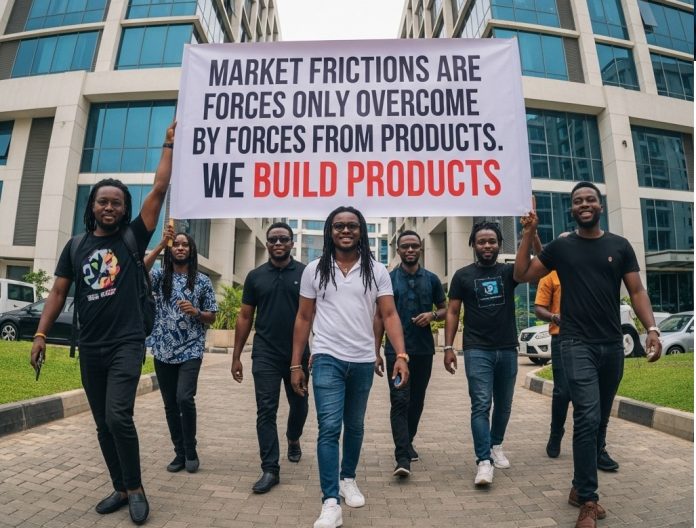
The world is full of market frictions. Only products can overcome those frictional market forces because products generate forces. Until your startup has great products, it will not exert any impact on the market because it will have no force to deal with the frictions customers are facing. Do not just build a company; build a product or service!

Join me tomorrow at Tekedia Mini-MBA.

Sat, July 5 | 7pm-8.30pm WAT | The Grand Playbook of Business and Four Plays in Markets – Ndubuisi Ekekwe | Zoom link

Response to a question: 

Yesterday, we chronicled a company which is tapping into the skills of young Nigerians and providing them opportunities in Europe and America. What All Talentz is doing is part of building communities you noted. With those jobs, the human spirit is strengthened.

On this particular post, my focus is making it clear that if people gather in a company and they fail to build that force (the product) that impacts, that company has no value. We cannot have companies everywhere and yet we cannot find solutions to our market needs… that is the point.  Thanks for the pointers.

Tesla Misses Deadline for Affordable EV Amid Sales Slump and Mounting Global Pressure

0

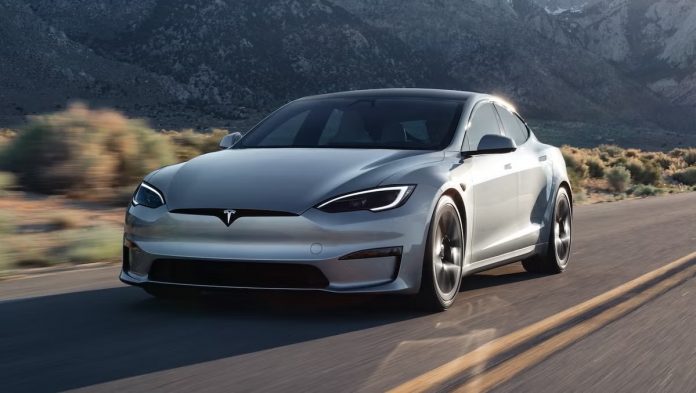
Tesla has once again missed a self-imposed deadline to begin production of its long-promised affordable electric vehicle, intensifying questions about its roadmap just as the company reels from a second consecutive year-over-year drop in vehicle deliveries.

Despite repeatedly assuring investors that the new low-cost model would begin production in the first half of 2025, the June deadline passed this week without an update. Notably, the company made no mention of the project in its latest earnings call, which instead focused on reaffirming earlier claims.

Tesla’s silence comes at a critical moment. After years of dominating the electric vehicle market, the automaker is now grappling with a stark slowdown in global EV adoption, fierce competition from cheaper Chinese models, and the erosion of brand loyalty in key regions. The push for a budget-friendly EV—reportedly a stripped-down version of the Model Y, codenamed “E41″—is not just a delayed product; it’s part of a larger rescue effort to reverse Tesla’s downward spiral trajectory and reclaim its edge in a shifting market.

A Race Against Time and Rivals

The idea of a $25,000 Tesla first surfaced in 2020, when CEO Elon Musk pledged to deliver a fully autonomous, mass-market EV within three years. The announcement, made during the company’s Battery Day presentation, raised expectations that Tesla would finally become a true mass-market automaker. But despite multiple reassurances, the timeline has been pushed back, contradicted, and rebranded—at times dismissed altogether.

By 2022, Musk admitted Tesla had deprioritized the project. In early 2024, he suggested production could begin by the end of 2024 or early 2025. But just months later, in October, he publicly argued that building a $25,000 “non-robotaxi” model would be “pointless” and “completely at odds” with Tesla’s mission—a statement that stunned investors who had been counting on affordable models to expand the company’s reach.

Still, in January 2025, following shareholder disappointment over the lackluster robotaxi debut, Tesla recommitted to the timeline, promising that cheaper models remained on track. April brought another twist. Reuters reported that Tesla had delayed the rollout of the E41 and had shifted focus to retooling factories in preparation for eventual mass production. The company declined to confirm or deny the report but reiterated that the launch was still planned within the first half of the year.

As of July, nothing has materialized.

China’s Subsidized Onslaught and Tesla’s Sliding Market Share

China, once Tesla’s crown jewel market, has become an increasingly hostile battlefield. Local manufacturers such as BYD have flooded the market with ultra-cheap, government-subsidized EVs, selling for nearly half the price of Tesla’s cheapest models. BYD, now the world’s top EV seller by volume, has capitalized on its scale, local supply chain advantages, and generous state support to displace Tesla in China’s mid-range market.

Tesla, lacking the same pricing flexibility and facing rising production costs, has been forced to slash prices aggressively, hurting its margins and brand perception. The new affordable model—reportedly intended to be cheaper to build than even the Model 3—is a key part of Musk’s counteroffensive. With lower-cost vehicles, Tesla hopes to retake ground lost in China and protect its presence as EV sales growth softens globally.

Reclaiming Europe’s Disenchanted Buyers

Europe presents another challenge—one not only rooted in price but in perception. Once Tesla’s second-largest market, the region has grown increasingly cold toward the brand, with critics citing Musk’s political antics, including his vocal support for far-right figures and controversial statements on social media platform X. These moves have alienated large swaths of European consumers, particularly in progressive cities that once embraced Tesla’s clean energy ethos.

Sales in Germany, France, and the UK have slowed, and Musk’s reputation is now seen as a liability in many European circles. The affordable EV project is expected to help offset this damage by returning focus to practical, sustainable transportation—at a price point that is palatable to middle-class Europeans who might otherwise turn to competitors like Renault, Peugeot, or Volkswagen.

A Shifting Narrative With No Clear Endpoint

Internally, Tesla appears to be facing mounting pressure to shift its narrative. The luxury halo once surrounding the brand is fading fast as competitors catch up on software, performance, and battery efficiency. Musk’s insistence on prioritizing robotaxis and full autonomy has also worn thin, especially after repeated delays and underwhelming demonstrations.

The affordable EV was meant to be the antidote to that fatigue—a way to broaden Tesla’s reach and tap into the global demand for economically viable electric vehicles. With the delay, however, the company risks not only missing out on that opportunity but also losing further credibility with investors and consumers alike.

Vehicle engineering VP Lars Moravy insisted in April that Tesla had already retooled factories and was resolving “last-minute issues” related to the new models. But his comments now read like the final thread in a timeline marked by shifting promises and missed milestones.

Tesla’s rivals aren’t waiting. BYD has already entered European markets and is expanding rapidly in Latin America and Southeast Asia. Volkswagen, Hyundai, and General Motors are all moving forward with affordable EV offerings, many with established supply chains and government backing.

Unless Tesla delivers on its promise soon, the company risks being left behind—not just by newcomers, but by the very market it helped pioneer.

Goldman Sachs Says Trump’s Trade Policies Aren’t Hurting the Global Economy—Yet

0

President Donald Trump’s sweeping trade overhaul has shaken the global order and alarmed economists around the world, stoking widespread fears that his hardline stance on tariffs and trade renegotiations would derail economic growth.

Despite the fears which have remained unabated, analysts at Goldman Sachs say the global economy remains largely unscathed—for now.

In a note released Thursday, the investment bank said it sees “very few signs that uncertainty is taking a toll on activity,” even as Trump continues to upend decades of trade policy with aggressive protectionist moves, including steep tariffs, abrupt deal withdrawals, and nationalist rhetoric that has disrupted long-standing global supply chains.

Tariffs, Nationalism, and “Liberation Day”

Since returning to the White House for a second term, Trump has moved swiftly to escalate his “America First” economic agenda. He has introduced new rounds of tariffs on key imports from China, the European Union, and Mexico, while threatening to pull the United States out of long-standing multilateral trade frameworks like the WTO. His administration has also canceled trade benefits to countries he accuses of taking unfair advantage of the U.S. market and has demanded one-on-one trade deals on American terms.

One of the most dramatic moments came in April when Trump declared “Liberation Day,” a policy pivot he framed as a move to “reclaim America’s economic sovereignty.” The announcement rattled financial markets as it came with hints of massive new tariffs and stricter foreign investment rules. Economists warned that it would likely trigger retaliation from other countries, increase business costs, and discourage investment.

Business leaders and analysts braced for a slowdown, especially in trade-exposed sectors such as manufacturing and tech. Some companies, anticipating higher import duties, accelerated shipments to the U.S. in a rush known as “front-loading,” which briefly inflated trade volumes. There were also concerns that this artificial bump was masking an underlying decline in economic momentum.

Goldman Sachs Allays The Fears

Contrary to those fears, Goldman Sachs says the data shows no major economic hit. Since late 2024, factory hiring, private investment, consumer spending, and broader activity have all held steady or even strengthened. Forecasts for both second-quarter and full-year GDP growth have been revised upward in key markets, including the U.S., Germany, India, and Brazil.

The bank attributes this resilience partly to the fact that trade-exposed investment accounts for only a modest slice of GDP in most economies—typically between 0.2 and 0.3 percentage points. So even where factory investment has slowed, particularly in emerging markets, the macroeconomic effect has been minimal.

Moreover, global financial conditions have remained surprisingly loose. Interest rates are stable, credit is flowing, and corporate borrowing costs have dipped slightly, aided by strong liquidity. This has made it easier for businesses to secure financing and maintain capital spending plans, even in uncertain times.

“Uncertainty usually bites hardest when financial conditions tighten,” the analysts wrote. “But this year, the opposite has happened. Liquidity has improved, and that’s helped cushion the fallout.”

Trump’s trade policies have undeniably created an atmosphere of uncertainty. Goldman’s proprietary uncertainty index jumped sharply after his re-election and remained elevated through the first quarter of 2025. But the report noted that uncertainty has begun to ease in recent months, partly due to signs that Trump is willing to negotiate new trade deals with allies and rivals alike.

Some businesses have been adapting. While front-loading distorted short-term trade data, Goldman said even after adjusting for those effects, there is little evidence of a drag on investment or hiring. Analysts found no substantial differences in performance between countries that ramped up exports to the U.S. and those that didn’t, suggesting that the impact of uncertainty has been broadly muted.

“While we continue to expect that tariffs will slow activity later this year, we expect this will be mostly driven by the direct impacts of tariffs rather than uncertainty around trade policy,” the report concluded.

Job Gains and Market Highs

Adding to the picture of economic strength, the U.S. posted stronger-than-expected jobs data in June. The economy added 147,000 jobs, and the unemployment rate dipped from 4.2% to 4.1%. The labor force participation rate also edged higher, suggesting more Americans are returning to the workforce despite fears that trade disruptions would trigger layoffs.

Financial markets have responded with optimism. The S&P 500 and Nasdaq hit record highs this week, buoyed by investor belief that Trump’s protectionism may ultimately boost domestic industry—at least in the short term—and by the perception that the worst-case trade war scenarios have not yet materialized.

Still a Long Road Ahead

While the short-term outlook appears stable, Goldman warns that challenges remain. The full effects of Trump’s second-term tariffs are still unfolding, and economists caution that any prolonged escalation—especially if China or the EU retaliates—could eventually weigh down investment, trigger inflation, and erode global growth.

“The uncertainty drag, therefore, appears smaller than feared,” Goldman wrote.

For now, though, the world economy appears to be weathering the Trump trade storm better than many feared.

How Nigeria Paused A Dynamic Startup Ecosystem [Podcast]

0

The Nigerian startup ecosystem, once a beacon of entrepreneurial spirit and a magnet for foreign investment, has experienced a significant downturn since May 2023. The primary catalyst for this decline was the government’s decision to float Naira without sufficient underlying economic structures to support its value. This led to a drastic currency devaluation, which in turn eroded startup valuations, deterred foreign and local investors, and ultimately froze capital flow.

The consequences have been severe: many promising startups have become “zombie companies” or have shut down, and there has been a significant “brain drain” as talented founders and innovators seek opportunities abroad. The current landscape is dominated by external-facing businesses, particularly in remittances, with little focus on internal economic development. This shift raises critical concerns about Nigeria’s ability to build a sustainable domestic economy and provide opportunities for its growing population if the fundamental issue of currency instability is not addressed.

In this podcast, I discuss this paralysis and the way forward for the Nigerian startup ecosystem.

A summary of the podcast is available here.

From Monday, the videos will move to Blucera.com exclusively.

About Tekedia Daily

To read our short introduction of Tekedia Daily – podcasting revelations on business, click here.

How To Listen to Tekedia Daily

At Blucera, home of Blucera WinGPT (AI personal educator and coach), eVault Legal Custodial services (store vital personal, family and business documents securely), business tools to grow enterprises, and global archives of Tekedia courses and libraries, Ndubuisi Ekekwe podcasts every week day. Some Tekedia Institute programs offer bonus access to Tekedia Daily or one can register at Blucera for the podcast.

On God, The Spirit of the Market and Entrepreneurship Hell

0

One of my most redeeming attributes as a person is my ability to take feedback – this is true, regardless of how harsh it is, I prefer to be plainly told that “what you did makes absolutely no sense”, than for negative feedback to be sugarcoated (or worse still – withheld) to avoid hurting my feelings. The philosophy behind this is pretty straightforward – most decisions in life have an inelastic component to them – you keep doing stupid things and nothing happens until one day all your transgressions compound and you’re in a pit so deep you can’t dig yourself out. To avoid precarious situations of this nature, I prefer to be told the truth so I can adjust effectively, and avoid irredeemable mistakes. You are not kind to me by being nice.

My second most redeeming attribute is my ability to ignore feedback. Everyone’s opinion doesn’t matter, and all counsel (as far as I’m concerned) is context-oriented. Regardless of how smart and knowledgeable they are, swallowing everyone’s counsel hook, line, and sinker is generally a bad idea. You want to objectively listen to everyone, thank them for their counsel, filter out what is irrelevant, identify what is useful, and adjust as may be necessary. Any other approach is counter-productive and will put you in a lot of problems.

My third most redeeming attribute (not necessarily redeeming depending on who you ask) is I prefer to be judged by the market. Not by people (who are mostly subjective), but by the raw authenticity of the market.

Understanding the market

The concept of “The market” is pretty common in entrepreneurship circles – it is generally defined as the audience you’re building for or the opportunity you’re trying to capture, but what really is the market? Well, for one (and depending on the nature of the business you operate), the market is NOT your individual customer. If you’re in B2G (Business to Government) or High-value B2B (Business to Business) where a single customer’s revenue contribution to your bottom line is consequential, then the market is probably your customer. However, if you’re in B2C or small-scale B2B where a single customer cannot necessarily influence the trajectory or sustainability of your business (unless that single customer is VeryDarkMan or some other controversial fellow), then the market is not just your customer; the market is the collective proclivity of the users you’re targeting.

It’s easy to assume they’re one and the same, but they aren’t; if your customer is a large government agency that makes up 40% of your revenues and they want a certain feature, you are obligated to give that to them (regardless of what your personal reservations concerning that feature are) to avoid losing that account. This is common in large-ticket B2B models, where your client is the Alpha and Omega, the beginning and the end, they ask you to jump, and you ask how high.

In more distributed models, the Market is more often than not the collective whims of your users; If a customer wants a certain feature, the real question is how many other users are clamoring for this feature, and how aligned is this feature to the overall direction the spirit of the market (more on this later) is been pulling you in? In other words, you don’t move at a single customer’s insistence, you need a stronger, more compelling and collective signal to move. A relatable example; assuming you run a mobile payments business with one million active users, and you decide to push pop-up ads to your customers every now and then to maximize engagement or draw user attention to certain features within your application, some users may find those pop-ups repulsive and go as far as deleting your application because of them. Now, if 20,000 users (a large number to be clear) delete your application because of that pop-up, 200,000 users engage with those pop-ups actively and contribute to new revenue (that probably covers up for the 20k users you lost), and the other 780k users couldn’t be bothered, you may have lost customers, but the spirit of the market is clearly in support of the direction you have treaded on and is probably imploring you to move on.

There are multiple examples of pockets of users despising a certain feature and being entirely wrong about it in the long run. Designers initially berated Figma (specifically the browser-based collaborative functions), today Figma is the gold standard for creating delightful digital experiences. There was a mini-revolt when Facebook introduced the NewsFeed in 2006, today that is a standard feature on every social media platform and people weren’t too happy when Google decided to display ads in search results, that decision (along with a plethora of other great choices) led to a US$200 billion a year ad business.

Understanding what the market really is, and how to separate signal from noise when trying to identify its pull, is a key requirement for people planning to build products that serve it.

On God

The most important attribute of the Christian faith is the existence of God – the Almighty Being who sits in the Heavens and exhibits Omnipresence, Omniscient, and Omnipotency. The Christian faith also provides additional context about God – he is the creator of the heavens and the earth, he loves his children (those who are “Born Again”) and he provides instructions to his children on the path they should tread on, disobeying those instructions is termed Sin, and disobedience to those instructions is usually linked to hurting other humans; lying, stealing, murder, etc are all neurotic behaviors he strictly advises his children against adopting. Similarly, he also tells his children to give to the needy, forgive offenders, treat everyone they meet with love, and even advises them to pray for their enemies – counsel that creates good outcomes in the world and is generally good for humanity.

If his children obey his instructions, they are promised heaven (streets of gold, mansions, pearly gates etc.), if they don’t, they may end up in hell (fire, brimstones, torment and things of that nature). Because they don’t want hell, they do the right thing (or at least try to), and the world is generally a better place because of that. There is a market version of this.

The Market

For one, who is God in this context? God is the market. Similar to how God is described as an omnipresent, omniscient, and omnipotent being that sits on a throne in the heavens, the market also has certain characteristics:

  1. The Market is a beast: the market is entirely illogical and can act in seemingly unpredictable ways in the short run. This is why certain counter-intuitive ideas and initiatives can enjoy broad-based market adoption, while other seemingly sensible ones flounder.
  2. The Market is unemotional: unfortunately, the market doesn’t care whether the money you invested in it was your house rent, kids’ school fees or your mother’s medical bill; it will always act in whichever way it deems to be right.
  3. The Market only responds to value: The market doesn’t care about how articulate you are, the market doesn’t care about how hard working or consistent you are, the only thing the market cares about is whether you are bringing value to the table or not. You can artificially insulate yourself from the market (by raising venture capital at a lopsided valuation), but the market will always catch up to you, regardless of how long it takes.
  4. The Market provides feedback: The market tells you when you’re going wrong (although it has to work on its communication skills) and when you’re doing the right thing. The sign you’re wrong is usually (but not always) silence, no revenue, and customer churn; the sign you’re doing the right thing is customer pull and revenue.

It is important to note that the market is not your enemy, neither is the market your friend, The market is just what it is – the market. It’s similar to water and fire – water can quench your thirst and also quench your life (by drowning you). The same fire that cooks your food can also burn your house. This is also how the market behaves – helping you or destroying you is not necessarily its objective, your alignment with it, however, is what guarantees which of the two outcomes becomes your fate.

The Spirit of the Market

So, what is the spirit of the market? Similar to how God gives his children instructions, the spirit of the market is the market’s method of transmitting information to builders (its children). The best way to think of the market is as an artist. The market has a clear picture of what it wants a certain industry to look like, and it gives instructions to builders via its spirit to enable them paint that picture. The builder (entrepreneur, intrapreneur, etc.) holds the paint brush, while the spirit of the market guides them on what strokes to make to stay aligned with the market’s picture (this is what we call market feedback).

It is very important that we do not “Fear” the market, we are to embrace the market. Fearing the market and avoiding its feedback doesn’t make you noble; it’s just a subtle way to send yourself to entrepreneurship hell (more on that later).

Similar to how God anoints people and calls them “Chosen”, the spirit of the market also anoints people and calls them chosen. These anointed ones are the entrepreneurs who have a clear vision for an industry and push the world to align with that vision. Unlike others who have to iteratively figure out what picture the market is trying to paint, these ones seem to have that image naturally embedded within them and have an innate ability to push the world to accept that picture. These are the Steve Jobs of this world that ignore all conventional advice and build a closed operating system (iOS) when it made no sense at the time to do so, these are the Elon Musk’s of this world that against all odds (and Harvard professor perspectives) build a successful Electric Vehicle company, the Brian Chesky’s of this world who against rational thinking build a business that allows total strangers stay in the homes of other total strangers.

This is where the concept of founder-market fit comes in, a person the market has anointed and given a vision to build within a certain vertical. Similar to how God anoints Moses, David, and Jesus in the Bible, these men/women are anointed and given a special “grace” that empowers them to build and prosper within certain markets against all odds.

While Christians serve God, Entrepreneurs serve the spirit of the market.

Entrepreneurship Hell

The main difference between the biblical hell and entrepreneurship hell (excluding the fire and all) is that biblical hell is for eternity, entrepreneurship hell is not. Entrepreneurship hell is similar to the “Go to Jail” space in the monopoly board game – you may become docile for a while, but you don’t have to remain there forever.

Similar to how biblical Hell is reserved for those who disobey God’s instructions, entrepreneurship hell is reserved for those who disobey the market. Those who the market via feedback were told to get left, but either due to stubbornness, or an inability to decipher what the market was saying, went right, and kept moving in that direction until they fell into a pit they couldn’t dig themselves out of. Almost all entrepreneurs have spent some time in entrepreneurship hell – Reid Hoffman (SocialNet), Travis Kalanick (Scour Inc), and Stewart Butterfield (Ludicorp), to name a few, spent some time in entrepreneurship hell before bouncing back and starting the ventures (Linkedin, Uber and Slack respectively) that made them household names.

While avoiding entrepreneurship hell is a noble cause, you want to make sure you only end up there once, learn the required lessons and come out on the other side stronger, smarter and a much more pious disciple of the market ready to take another stab at value creation, and more than willing to pay attention to the cues of the market and act accordingly.

The self-regulating nature of the spirit of the market is a good thing; when we obey it, we create value for consumers, the broader industry, and our shareholders. When we disobey it, we eviscerate shareholder value and punish customers with substandard products and experiences. This is why the market punishes dissidents after a while for disobedience by destroying their companies and sending them to entrepreneurship hell, where they get to learn how to be better and come back stronger.

Conclusion

Entrepreneurship and building are, in my honest opinion, the highest calling of mankind. Understanding the nature of the market and orienting yourself to build in line with the spirit of the market plays a key role in birthing successful and consequential businesses that have an indelible impact on the trajectory of humanity.


Inspired By The Holy Spirit