DD
MM
YYYY

PAGES

DD
MM
YYYY

spot_img

PAGES

Home Blog Page 98

BEST & SPY Close In, but Zero Knowledge Proof (ZKP) Auction is Now Live & Buyer Rush For the 200M Daily Pool

0

Activity across crypto presales is rising again as Best Wallet enters its final stretch and SpacePay approaches its closing phase. Both have gained steady interest thanks to practical features, community traction, and clear use-case alignment. But even with their momentum, neither project is commanding attention at the level now converging on Zero Knowledge Proof (ZKP).

That shift is happening because ZKP is not waiting for a future launch. The entire ecosystem is now live. The 200M-token daily auction has opened, contributions are flowing in real time, and Proof Pods are being activated in households across multiple regions.

Where other presales are preparing for what comes next, ZKP has moved straight into active operation, creating the fastest early-participation acceleration anywhere in the market right now.

Best Wallet Approaches Its Last Funding Window

Best Wallet has experienced a rapid surge in activity as its presale enters its final window. Investors have focused heavily on its Fireblocks-grade MPC system, built-in trading tools, and the ecosystem benefits tied to the $BEST token.

Alongside its feature set, timing has played a large role in its traction. Market research cited in the presale emphasizes that the global wallet sector is projected to grow past $52B by 2032, placing infrastructure platforms at the center of future adoption.

Best Wallet aims to position itself directly within that trend by delivering a unified interface that blends self-custody, asset discovery, and on chain earning pathways. With only a limited allocation remaining at $0.025995, the closing phase has created a clear sense of urgency among those tracking the final rounds of major crypto presales.

SpacePay Draws Attention With Its Merchant Utility Model

Interest surrounding SpacePay has continued to climb as users evaluate which presale projects have long term utility beyond speculative cycles. SpacePay’s pitch centers on its ability to act as a payment translator for merchants, allowing them to accept digital currencies without replacing or upgrading existing hardware.

This real world framing has helped the project stand out, particularly as adoption conversations re-emerge within the retail sector.

The SPY token reinforces that ecosystem by offering reduced fees, incentives for both buyers and sellers, and access to transaction based rewards. As the presale nears its conclusion, early participants are keeping close watch on SpacePay’s progress, seeing its merchant focused model as a potential bridge between traditional checkout systems and the growing demand for simpler crypto payments.

Zero Knowledge Proof’s Live Daily Auction Becomes the Fastest-Moving Presale Event

Zero Knowledge Proof presale crypto coins auction is now live, and the 200M-token cycles are already filling so quickly that buyers are entering as soon as the window opens to avoid missing the day’s pricing. That early rush sets the entire pace for each 24-hour cycle, because contributions start shaping the price almost immediately, and anyone watching the live feed can see how quickly the curve begins to rise. As the numbers climb, hesitation becomes costly, pushing more participants to enter earlier rather than waiting for a clearer range that may never come.

This dynamic is amplified by the $50K daily cap, which keeps every wallet on equal footing and prevents oversized bids from slowing the demand curve. Instead of a single whale dominating the board, dozens of buyers create a steady, visible build-up throughout the day, and that real-time movement is exactly what fuels the urgency. Watching the cycle fill isn’t passive; it pressures the next buyer into acting before the window locks, and the next price band begins.

That momentum grows even stronger as Proof Pods continue arriving worldwide. New entrants are joining the auction and ordering their $249 devices from the $17M production run, which reinforces the sense that ZKP is not a “wait and see” presale but a system that is already functioning. The instant utility creates a loop: the auction drives hardware demand, the hardware drives network activity, and the network activity sends buyers back into the auction for more allocation.

Behind it all is the completed $100M infrastructure stack that was built before the public even touched the auction. With the ecosystem already operating, each new cycle forms faster than the one before it, and the earliest allocation window is tightening in ways buyers can see happening minute by minute.

Key Takeaways

Best Wallet and SpacePay remain relevant as their presales near completion, but neither matches the pace now building around Zero Knowledge Proof. The live 200M-token auction is shaping price throughout the day, and buyers are entering earlier each cycle because the contribution feed shows exactly how quickly demand is rising.

That real-time movement gains even more force as Proof Pods continue arriving, giving participants immediate utility and reinforcing that ZKP’s ecosystem is already operating while most presales are still gearing up.

As each 24-hour window closes, the next cycle begins forming faster, making the earliest allocation band increasingly limited. Anyone following the live auction can see the momentum tightening, and this is the stage where waiting becomes the costly decision.

Find Out More At:

https://zkp.com/


Italy Moves to Sanction Meta Following Antitrust Probe of WhatsApp AI Rules

0

Italy’s competition authority has ramped up its investigation into Meta, with potential to slap interim restrictions on the company as concerns grow over whether WhatsApp is being used to choke off rival AI chatbot developers from accessing one of Europe’s most influential messaging platforms.

The escalation comes as regulators across Europe intensify scrutiny of Big Tech’s expansion into generative AI. Messaging apps like WhatsApp — with user bases that dwarf those of any single AI startup — are increasingly becoming the main entry points for next-generation chatbot services. That power has raised alarms among watchdogs who fear incumbents could tilt the playing field long before the market fully forms.

The Italian antitrust regulator said on Wednesday that it has widened its original investigation, opened in July, to cover new terms introduced for WhatsApp’s Business Platform and a fresh set of AI chatbot tools recently added to the app. These tools allow companies to automate responses and manage customer conversations — a highly valuable space for emerging AI players looking to scale.

At the same time, the watchdog launched a separate process to impose possible interim measures. These temporary restrictions could include freezing the new terms, blocking further rollout of Meta AI inside WhatsApp, or limiting how deeply Meta can integrate its assistant while the probe continues.

Meta Pushes Back: “Unfounded Claims”

WhatsApp fired back quickly, dismissing the accusations and insisting it is not shutting competitors out.

“We strongly reject these unfounded claims,” a company spokesperson said. WhatsApp argued that its business API — the interface through which companies build services inside the app — “was never designed to be used for AI chatbots,” saying such use would cause “severe strain” on its systems.

The company is already fighting another dispute with the same regulator, which earlier alleged that Meta inserted its Meta AI assistant into the messaging platform without adequate user consent — a move officials worry could tilt the field against smaller players.

The fresh layer of scrutiny follows Meta’s decision to rewrite the WhatsApp Business Solution terms on October 15. The updated rules prohibit companies whose “main feature” is AI services from using WhatsApp at all, effectively shutting out dedicated chatbot firms. The new terms took immediate effect for new entrants and will extend to existing WhatsApp business users from January 15, 2026.

The Italian authority said the policy shift could severely restrict competition, pointing out that WhatsApp’s user base, more than 37 million people in Italy, gives it extraordinary leverage. Officials fear that once rival chatbots are blocked from the platform, consumers’ reluctance to switch habits could hand Meta an early and decisive lead in the AI assistant space.

WhatsApp disputed that view, insisting that the update “does not affect the tens of thousands of businesses who provide customer support and send relevant updates,” nor does it prevent companies from using “the AI assistant of their choice” to chat with customers.

If Meta is ultimately found to have abused a dominant position under European Union competition law, it could face fines of up to 10% of its global turnover. That puts potential penalties in the tens of billions of dollars.

The probe is expected to run long, with the authority scheduling completion for the end of 2026 — a timeline that reflects the complexity of defining competitive boundaries in a fast-changing AI market.

The episode adds to a growing pattern across Europe, where regulators are testing how existing antitrust tools can be applied to generative AI, particularly when incumbents control the platforms that developers depend on. WhatsApp’s reach and Meta’s ability to alter its terms unilaterally place the company at the center of these early battles.

Italian authorities appear determined to prevent what they see as a pre-emptive gatekeeping move by one of the world’s biggest tech firms. And with the threat of interim sanctions looming, Meta may soon have to defend not just its AI strategy, but the role of WhatsApp as a battleground for the next generation of digital services.

Moonpay Granted Limited Purpose Trust Charter to Allow Crypto Custody and Trading in NYC

0

MoonPay announced that it has received a Limited Purpose Trust Charter from the New York State Department of Financial Services (NYDFS), enabling the company to offer regulated cryptocurrency custody and over-the-counter (OTC) trading services in New York State including New York City.

This approval positions MoonPay as one of the few crypto firms holding both a BitLicense which it obtained in 2023 and this trust charter, joining elite players like Coinbase, PayPal, and Ripple.

The charter authorizes MoonPay Trust Company, LLC, to act as a fiduciary for digital assets, providing secure custody solutions and OTC trading for institutional clients while complying with NYDFS’s stringent standards.

This expands MoonPay’s institutional offerings, bridging traditional finance and crypto by enhancing compliant infrastructure for high-volume trades and asset storage.

MoonPay, a fiat-to-crypto on-ramp provider, has been building its regulatory footprint; this move follows similar approvals for competitors and aims to attract more enterprise users amid growing demand for regulated services.

Implications for Institutional Investors

MoonPay’s acquisition of a Limited Purpose Trust Charter, marks a pivotal advancement in regulated crypto infrastructure, particularly for institutional players navigating the intersection of traditional finance and digital assets.

This charter, combined with MoonPay’s existing BitLicense, empowers the firm to operate as a fiduciary for digital assets, offering secure custody and over-the-counter (OTC) trading services under one of the world’s strictest regulatory regimes.

For institutions—such as hedge funds, banks, and asset managers—this development lowers barriers to entry, enhances risk management, and accelerates crypto integration into portfolios.

The NYDFS charter provides “gold standard” oversight, aligning MoonPay with peers like Coinbase and Fidelity, which reassures risk-averse investors by ensuring adherence to fiduciary duties, anti-money laundering (AML) protocols, and capital requirements.

This dual-licensing status (BitLicense + Trust Charter) positions MoonPay as a “bridge” between legacy finance and crypto, potentially unlocking billions in institutional capital by mitigating compliance risks.

Early adopters could see reduced due diligence costs and faster onboarding for U.S.-based operations.

The charter authorizes MoonPay Trust Company, LLC, to hold and safeguard digital assets as a fiduciary, enabling institutions to store large volumes of crypto (e.g., BTC, ETH, stablecoins) without self-custody complexities or third-party vulnerabilities.

For institutions managing high-net-worth clients or enterprise treasuries, this means access to “institutional-grade” custody that supports segregated accounts, insurance coverage, and real-time reporting—critical for audit trails and portfolio diversification.

Posts on X highlight this as “opening floodgates” for Wall Street, transforming crypto from a speculative play to reliable infrastructure. OTC services allow large trades off public exchanges, minimizing slippage and market impact—essential for institutions avoiding volatility exposure during execution.

This expands MoonPay’s fiat-to-crypto on-ramps into full-suite trading, integrating seamlessly with traditional payment rails like Apple Pay and Mastercard. Institutions can now execute high-volume strategies with lower fees and faster settlement, potentially boosting DeFi yields or hedging activities.

The approval paves the way for stablecoin custody, settlement, and even issuance under frameworks like GENIUS, enabling institutions to deploy yield-bearing stable assets or tokenized treasuries in regulated environments.

It supports Web3 entry for enterprises and brands via NFTs or payments, fostering partnerships that could drive network effects in the BTC/ETH ecosystems. Analysts view this as a “bullish signal” for institutional inflows, with MoonPay’s 30M+ user base and 500+ partners amplifying distribution.

While overwhelmingly positive, institutions should note increased competition in NY’s regulated space, which could pressure fees downward but raise interoperability questions across custodians.

This charter signals maturing infrastructure, potentially accelerating crypto’s allocation in multi-asset portfolios from 1-2% to 5-10% over the next 12-18 months, per industry benchmarks.

J.P. Morgan Upgrades Atmus Filtration to Overweight Following $450m Koch Filter Acquisition Deal

0

Atmus Filtration Technologies (ATMU) surged 7.3% in Wednesday trading, capturing Wall Street’s attention after a pivotal upgrade from J.P. Morgan signaled that the company is shedding its image as a purely cyclical truck parts supplier.

Analyst Tami Zakaria raised the firm’s rating to Overweight from Neutral and hiked the price target to $60 (up from $53), arguing that the proposed $450 million acquisition of Koch Filter is a transformative event that unlocks high-growth industrial exposure, specifically in the booming data center market.

The upgrade is built on the premise that Atmus is fundamentally altering its growth algorithm. While commercial vehicle filtration remains the core business, the addition of Koch Filter introduces a faster-growing industrial vertical that commands higher valuations.

Zakaria highlighted that 8% of Koch Filter’s current revenue is tied to data centers—a vertical projected to grow by double digits for the foreseeable future as AI infrastructure demands escalate.

Based on conversations with management, J.P. Morgan calculated that Koch Filter has achieved a 10-year compound annual growth rate (CAGR) of approximately 9%, significantly outpacing Atmus’ legacy CAGR of mid-single digits since 2019.

The analyst believes this deal could elevate Atmus’ core organic growth rate to a “high single-digit percentage” over the long run, driven by ongoing share gains, the superior growth profile of the new industrial assets, and potential revenue synergies that have not yet been factored into current estimates.

The Koch Filter acquisition, valued at $450 million, reshapes the company’s revenue mix. Post-close, commercial vehicle filtration will account for roughly 88% of revenue, with industrial air filtration making up the remaining 8%. Importantly, 95% of Koch’s revenue is derived from the aftermarket, which boasts a shorter replacement cycle than Atmus’ traditional heavy-duty truck filters. This shift creates a more frequent, recurring revenue stream that is less susceptible to the boom-and-bust cycles of new truck manufacturing.

The bullish sentiment was further reinforced by the company’s third-quarter performance, which marked the completion of its full operational separation from its former parent, Cummins. In the earnings call, CEO Stephanie Disher described this as a “significant milestone” that frees the company to pursue its own destiny.

“Completing the separation enables us to redeploy resources, time and energy to focus on growth,” Disher said. She also emphasized the cultural transformation underway, dubbed the “Atmus Way,” citing a safety milestone of two years without a serious injury as proof of the organization’s discipline.

Q3 Financials

Despite a challenging global freight environment, Atmus delivered strong financial results for the third quarter:

  • Revenue: Sales climbed 10.9% year-over-year to $448 million, driven by a 6% increase in volume and 4% from pricing actions.
  • Profitability: Adjusted EBITDA rose to $92 million, expanding margins to 20.4% compared to 19.6% a year prior.
  • Cash Flow: Adjusted free cash flow hit $72 million, fueling an accelerated capital return strategy. Ideally positioned to return value, the company repurchased $30 million of stock in the quarter (bringing the total to $81 million since launch) and hiked its quarterly dividend by 10%.

The company’s ability to execute was underscored by its decision to raise full-year 2025 guidance, even as it forecasts U.S. medium and heavy-duty truck markets to be down 20-25%.

  • New Revenue Target: $1.72 billion to $1.745 billion (up 3-4.5% year-over-year).
  • Profit Outlook: Adjusted EBITDA margin is now expected between 19.5% and 20%, with adjusted EPS forecast at $2.50 to $2.65.

CFO Jack Kienzler noted that the company’s strong liquidity—$618 million in available funds—provides the flexibility to continue aggressive M&A while weathering market volatility.

“We ended the quarter with $218 million of cash on hand. Combined with the full availability of our $400 million revolving credit facility, we have $618 million of available liquidity. Our strong liquidity provides us with operational flexibility in the current dynamic market to effectively manage our business and execute on our growth opportunities,” he said.

With a net debt-to-adjusted EBITDA ratio of just 1.0x, the balance sheet remains pristine even as the company gears up for the Koch integration.

Investors are betting that the Koch acquisition is the first step in a broader re-rating of Atmus. By successfully layering a high-growth industrial acquisition on top of a cash-generative legacy business, Atmus is signaling that it intends to be a compounder rather than just a cyclical stock. As J.P. Morgan noted, the combination of share gains, M&A, and exposure to the AI infrastructure build-out provides a clear path to a higher valuation multiple.

Yen Slips Despite Rising Expectations of December BOJ Hike

0

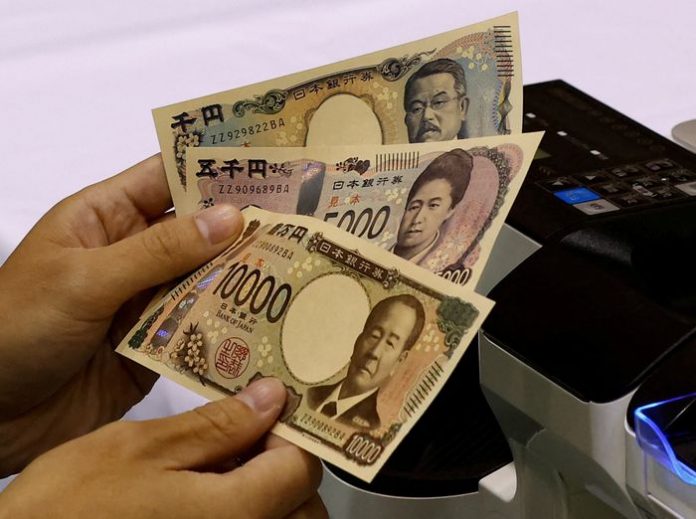
The yen weakened on Wednesday even as expectations firmed that the Bank of Japan could raise interest rates next month, underscoring the unusual volatility gripping global currency markets.

Investors initially pushed the yen higher after Reuters reported that the BOJ is preparing markets for a possible hike as soon as December, but the currency later reversed sharply, becoming the weakest performer against a broadly softer dollar.

According to sources familiar with internal discussions, who spoke to Reuters, the BOJ has revived earlier hawkish language as concerns grow over rapid yen depreciation and as political pressure to keep rates near zero begins to ease. The yen hit an intraday high of 155.66 per dollar before sliding 0.3% to 156.51, a notable move given the dollar’s weakness on the day.

The currency has been under sustained pressure in recent months, weighed down by doubts about Japan’s deteriorating fiscal position. Traders remain acutely sensitive to signals that the Ministry of Finance could step in to defend the yen — especially during periods of thin liquidity.

“There is a possibility of intervention over Thanksgiving, but if the market’s fear of intervention is sufficient to stop dollar/yen from rising, it sort of reduces the possibility,” said Jane Foley, head of FX strategy at Rabobank London.

She added that Tokyo has a history of intervening during exceptionally light trading sessions because such conditions allow authorities to “get more bang for their buck,” a dynamic that explains why markets are on alert for action toward the end of the week.

Dollar Softens as Traders Bet on a Dovish Fed and Potential Policy Shift

Beyond Japan, the dollar struggled across major currencies after benign U.S. economic data strengthened expectations of a Federal Reserve rate cut in December. Markets are also reacting to political developments in Washington, where momentum is building around the selection of a new Fed chair.

Bloomberg News reported that White House economic adviser Kevin Hassett has emerged as the frontrunner to replace Jerome Powell. Hassett has previously argued — like Trump — that U.S. interest rates are too high. U.S. Treasury Secretary Scott Bessent said on Tuesday there was a strong chance the president would announce his pick before Christmas.

“(Hassett) would be on the dovish side definitely, when you compare with some of the other members that were discussed,” said Ales Koutny, head of international rates at Vanguard in London.

But he noted that markets are about to receive a flood of long-delayed U.S. economic data.

“At the end of the day, we have had three months without economic data from the U.S. and we’re going to get a lot … markets will be much more driven by actual fundamental data rather than an appointment for the Fed chair.”

The CME FedWatch tool now shows traders pricing in an 85% chance of a 25-basis-point cut in December, a sharp shift from expectations earlier in the quarter.

The euro, which rose 0.4% against the dollar on Tuesday, held steady at $1.1570.

Sterling Swings Ahead of British Budget After Surprise OBR Forecast Release

The pound also saw sharp intraday moves as investors digested a surprise release of updated forecasts from Britain’s Office for Budget Responsibility (OBR). The figures offered a brighter view of the country’s economic trajectory, prompting an initial rally in sterling before the currency fell back.

The UK budget announcement was made at 1230 GMT, with investors beginning to make fiscal plans for 2025.

Sterling was last down 0.24% at $1.3139 and softer against the euro at 88.06 pence.

Kiwi and Aussie Dollars Firm as Policy Paths Diverge in Asia-Pacific

The New Zealand dollar strengthened after the Reserve Bank of New Zealand cut interest rates to 2.25% — a move widely expected — but signaled that its easing cycle is likely over. Signs of early economic recovery helped lift the kiwi nearly 1% to $0.5669, marking its strongest level in more than two weeks as traders scaled back expectations for additional cuts.

Across the Tasman Sea, the Australian dollar rose 0.4% to $0.6490 following data showing inflation accelerated for a fourth consecutive month in October. The pickup in price pressures has effectively shut the door on further policy easing by the Reserve Bank of Australia.

Rabobank’s Jane Foley said the broader global picture is shifting: “We’re getting to the point where a significant number in G10 countries have already potentially completed their rate cutting cycles, and where their next move could be interest rate hikes.”

A Market on Edge

Taken together, the day’s currency movements paint a picture of markets caught between evolving political signals, shifting inflation trends, and diverging central bank strategies. The yen’s reversal stands out as a pointer that even as the BOJ hints at tightening, doubts linger over Japan’s fiscal trajectory and the potential for official intervention.

And with the U.S. Federal Reserve, the UK Treasury, and Asia-Pacific policymakers all pulling markets in different directions, traders are bracing for a volatile end to the year.