

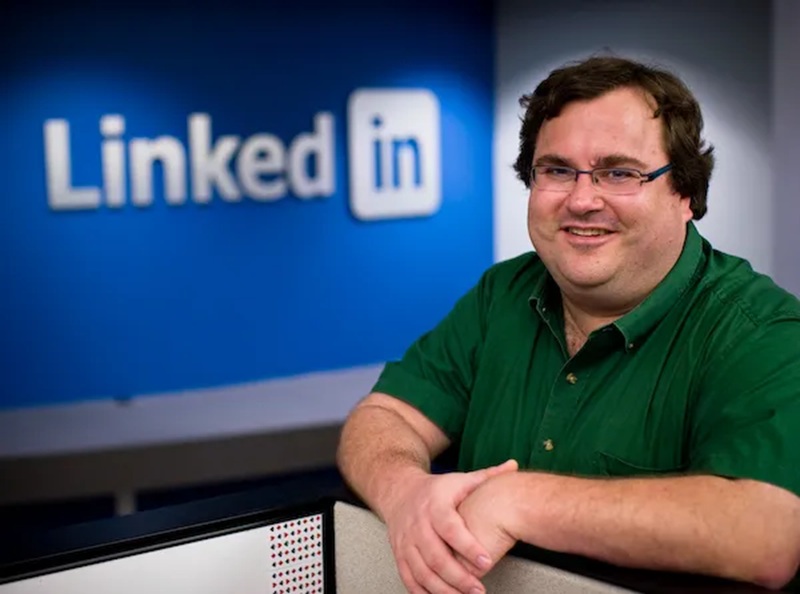
Two of Silicon Valley’s most influential figures — LinkedIn co-founder Reid Hoffman and venture capitalist David Sacks — have reignited their long-running feud, this time over artificial intelligence and its regulation.
The exchange between Hoffman and Sacks, both early members of the original “PayPal Mafia,” spilled into public view on Monday after Hoffman publicly defended Anthropic, a leading AI startup that Sacks had accused of “fear-mongering” and pushing a “regulatory capture strategy.”
“Anthropic, along with some others (incl Microsoft, Google, and OpenAI) are trying to deploy AI the right way, thoughtfully, safely, and enormously beneficial for society,” Hoffman wrote on X. “That’s why I am intensely rooting for their success.”
Register for Tekedia Mini-MBA edition 20 (June 8 – Sept 5, 2026).
Register for Tekedia AI in Business Masterclass.
Join Tekedia Capital Syndicate and co-invest in great global startups.
Register for Tekedia AI Lab.
Hoffman, who has served on Microsoft’s board since 2017 following the company’s acquisition of LinkedIn, revealed that his venture capital firm, Greylock, has invested in Anthropic. He said he typically avoids commenting on individual AI companies but felt compelled to speak because “in all industries, especially in AI, it’s important to back the good guys.”
The comment appeared to be a direct response to Sacks, who last week criticized Anthropic after Jack Clark, the company’s co-founder and head of policy, published an essay titled “Technological Optimism and Appropriate Fear.” Sacks accused the company of orchestrating a “sophisticated regulatory capture strategy based on fear-mongering,” saying Anthropic was “principally responsible for the state regulatory frenzy that is damaging the startup ecosystem.”
Anthropic, founded in 2021 by former OpenAI executives and researchers who left over safety concerns, has been at the center of U.S. debates about AI oversight. The company has resisted federal efforts to block state-level AI regulation — including a Trump-backed provision that would have barred states from passing their own AI rules for ten years.

Sacks, who serves as President Donald Trump’s AI and crypto czar, has argued that such state regulations would stifle innovation and entrench large firms. Anthropic has taken the opposite view, warning that the rapid deployment of generative AI tools without guardrails could pose safety risks and public harm.
The policy divide between the two former PayPal colleagues quickly escalated into a personal and political clash.
“The leading funder of lawfare and dirty tricks against President Trump wants you to know that ‘Anthropic is one of the good guys,’” Sacks wrote on X in response to Hoffman’s post. “Thanks for clarifying that. All we needed to know.”

“Indeed,” Elon Musk replied, amplifying Sacks’ comment. Musk, another PayPal alumnus and founder of xAI, has also become a prominent figure in the Trump administration’s second term.
Hoffman fired back: “Shows you didn’t read the post (not shocked). When you are ready to have a professional conversation about AI’s impact on America, I’m here to chat.”
The exchange marked another chapter in the ideological split between Hoffman and Sacks — one that mirrors Silicon Valley’s broader political realignment. Hoffman, a major Democratic donor, poured millions into Kamala Harris’ unsuccessful presidential bid. Sacks, by contrast, emerged as a key Trump supporter ahead of the 2024 election and hosted a fundraiser for him at his San Francisco mansion.
Hoffman and Sacks were both early employees at PayPal, joining in 1999 and helping shape the online payments firm that later produced some of Silicon Valley’s most powerful entrepreneurs. Alongside Peter Thiel, Elon Musk, and Max Levchin, they became part of the so-called “PayPal Mafia,” a group whose members went on to found or fund major technology companies including Tesla, SpaceX, YouTube, Palantir, and LinkedIn.
The AI argument between the two, however, underscores a deeper policy divide emerging in the post-PayPal generation. AI development has become one of the most politically charged issues in Washington, dividing companies and policymakers over questions of safety, innovation, and control.
Hoffman, who was also an early investor in OpenAI and remains a shareholder, has positioned himself as an advocate for what he calls “responsible progress” in AI. His view aligns with that of major technology firms such as Microsoft and Google, both of which have publicly supported safety frameworks and risk assessments in deploying advanced AI systems.
Sacks, on the other hand, has used his government role to promote a lighter regulatory approach that prioritizes innovation and market freedom. His criticism of Anthropic reflects a broader skepticism among Trump administration officials who argue that AI companies are exaggerating safety risks to secure favorable regulations that would limit competition from smaller firms.
The public exchange between Hoffman and Sacks drew reactions from other Silicon Valley figures, including Jason Calacanis, co-host of the All-In podcast with Sacks. Calacanis invited Hoffman to join the show for another discussion, writing, “Come on the pod.”
Hoffman, who appeared on the podcast at the end of August — roughly two months before the presidential election — replied that he was “open to coming back on” but added, “this week is packed.”
The renewed tension between two of PayPal’s most influential alumni comes against the backdrop of intensifying scrutiny in the AI industry, over how new technologies interact with laws, labor, and democracy itself. For Hoffman, AI’s benefits depend on what he calls “deploying it the right way.” For Sacks, the threat lies in overregulation — and in his view, companies like Anthropic represent precisely that danger.
Their disagreement captures a broader collision between Silicon Valley’s libertarian past and its new era of political entanglement — where the question of who gets to define “the good guys” in AI may ultimately shape the technology’s future.