

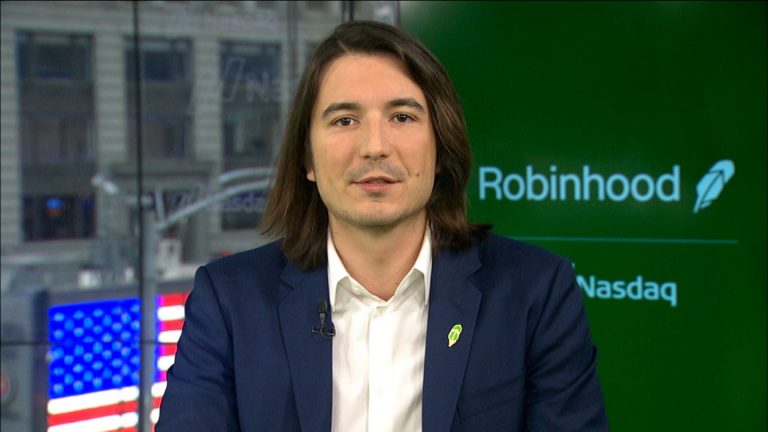
The rapid expansion of onchain finance is increasingly being reflected in the fees generated by emerging blockchain platforms, and the latest figures from Pons and Robinhood Chain highlight just how quickly the market is evolving.
Pons reportedly reached a record $5.95 million in daily fees, placing it fourth overall and allowing it to overtake Robinhood while generating more fees than Hyperliquid, Polymarket and Fomo combined.
At the same time, Robinhood Chain recorded an all-time high of $2.67 billion in 24-hour decentralized exchange volume. The Pons milestone is significant because fees provide a useful indication of economic activity occurring on a network or application.
Register for the next Tekedia Mini-MBA.
Register for Tekedia AI in Business Masterclass.
Join Tekedia Capital Syndicate and co-invest in great global startups.
Reaching $5.95 million in a single day suggests substantial demand for the services being provided and places Pons among a relatively small group of crypto platforms capable of generating millions of dollars in daily economic activity.
Its ranking above several established names also illustrates how quickly competitive positions can change across decentralized finance.
Robinhood Chain’s record DEX volume adds another dimension to the story. A $2.67 billion daily trading volume indicates that tokenized assets and crypto markets are attracting substantial liquidity through Robinhood’s blockchain infrastructure.
The figure demonstrates that decentralized trading is becoming an increasingly important component of the broader brokerage and financial ecosystem. Perhaps the most important development, however, is Robinhood’s position in tokenized stocks.

The company has reportedly become the largest tokenized-stock issuer, with 862,800 holders. That figure represents a major distribution footprint for blockchain-based representations of traditional equities and suggests that tokenization is moving beyond an experimental financial technology into a product category capable of reaching a large user base.
Tokenized stocks attempt to bring traditional securities onto blockchain infrastructure, potentially enabling more flexible settlement, broader accessibility and around-the-clock trading.
For platforms such as Robinhood, combining a large retail customer base with blockchain infrastructure creates the possibility of connecting traditional financial markets with decentralized liquidity.
The combination of record DEX volume and a rapidly expanding holder base therefore matters beyond Robinhood itself. It points toward a broader convergence between traditional brokerage services and onchain markets.

If users can trade tokenized equities alongside crypto assets within blockchain-based environments, the distinction between conventional financial markets and decentralized finance could become increasingly blurred.
Competition will nevertheless remain intense. Pons’ fee performance demonstrates that new platforms can rapidly capture economic activity, while Robinhood’s volume and tokenized-stock distribution show the advantage of combining established brand recognition with blockchain technology.
Other decentralized exchanges and financial protocols are likely to respond by competing for liquidity, users and tokenized assets. The latest figures suggest that the next phase of blockchain adoption may be driven less by speculation alone and more by financial infrastructure.
Record fees, billions of dollars in DEX volume and hundreds of thousands of tokenized-stock holders indicate that users are increasingly interacting with financial products through onchain systems. Pons’ $5.95 million daily-fee milestone and Robinhood Chain’s $2.67 billion DEX volume therefore represent more than isolated records.
They highlight an increasingly competitive onchain economy in which decentralized trading, tokenized securities and traditional financial platforms are converging at unprecedented speed.
Crypto Infrastructure Gains Momentum as OpenSea Backs Arc and Backpack Adds Samani
The crypto industry is entering another phase of infrastructure expansion, with established platforms increasingly positioning themselves around blockchain networks and institutional governance.
Two developments highlight this shift: OpenSea’s decision to support Arc mainnet from its launch day on September 16, and Backpack’s appointment of Multicoin Capital co-founder Kyle Samani to its US board of directors.
The moves demonstrate how exchanges, marketplaces, investors, and blockchain infrastructure are becoming increasingly interconnected.
OpenSea’s backing of Arc from day one is particularly significant because the NFT marketplace remains one of the most recognizable gateways into digital assets.
By supporting the mainnet at launch, OpenSea signals confidence in Arc’s ability to attract users, applications, and liquidity. A major marketplace providing early infrastructure support can help a new blockchain overcome one of the biggest challenges facing emerging networks.
The need to establish meaningful activity immediately after launch. For Arc, having OpenSea involved could provide an important bridge between blockchain infrastructure and consumer-facing digital asset markets.
Mainnet launches are often judged not only by technical performance but also by whether developers and users have practical reasons to participate.
Early support from an established marketplace can strengthen that ecosystem by giving creators, collectors, and traders a familiar environment through which to interact with assets built on the network.
The September 16 launch therefore represents more than another blockchain release. It illustrates the growing competition among networks seeking to capture activity across decentralized applications, digital collectibles, tokenized assets, and broader Web3 use cases.
As the market matures, infrastructure providers are increasingly expected to deliver usable ecosystems rather than simply launch technically sophisticated blockchains.
Meanwhile, Backpack’s appointment of Kyle Samani to its US board introduces a different but equally important dimension: institutional expertise. Samani, co-founder of Multicoin Capital, has been closely associated with investments and strategic development across the crypto ecosystem.
His addition to Backpack’s US board gives the company access to an experienced investor with a deep understanding of blockchain markets, venture capital, and crypto-native business models.
The appointment comes as Backpack continues developing its position in the competitive digital-asset trading sector. Board-level experience from an established crypto investment firm can help the company navigate regulatory considerations, market expansion, institutional relationships, and strategic capital allocation in the United States.
The two developments show that crypto infrastructure is increasingly being built around strategic partnerships rather than isolated products. OpenSea’s early support for Arc strengthens the network’s potential distribution and liquidity, while Samani’s board appointment strengthens Backpack’s strategic leadership as it expands its US presence.
The broader implication is that the next stage of crypto competition may be determined less by individual products and more by ecosystems. Marketplaces need strong networks, networks need applications and users, and trading platforms need institutional credibility and strategic expertise.
With Arc preparing for its September 16 mainnet launch and Backpack strengthening its US leadership, both developments underscore a market that continues to professionalize.
The focus is shifting toward infrastructure, distribution, governance, and long-term ecosystem development—areas that could ultimately determine which crypto platforms and networks remain relevant as adoption expands.