

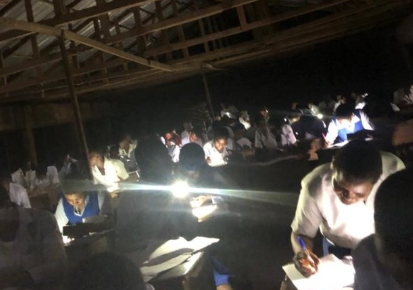
Recently, disturbing images and videos flooded social media showing Nigerian students writing their WAEC examinations late at night. In several parts of the country, they relied on candlelight and phone torches because of extended power outages and severe delays. Many students reportedly waited at their centers from early afternoon until well after 9 p.m. Some began their English language papers as late as 10 p.m., after waiting for hours without invigilators, instructions, or information.
This incident is more than a logistical failure. It is a moral and structural indictment of the current state of Nigeria’s education system. What makes this moment especially powerful is not only what happened but how the story broke. It was not uncovered through official statements or press releases. It was made visible through tweets, photos, and testimonies from parents and students themselves. These citizens, armed with smartphones and the will to speak up, turned what could have been another hidden failure into a public reckoning.
In today’s world, the ability to reveal truth is power. Institutions traditionally shape narratives, control information, and define what counts as “normal.” In Nigeria, where public education has long struggled under the weight of underfunding, poor management, and political neglect, these failures are often quietly endured. But this time, Nigerians decided to make it impossible to look away.
Register for Tekedia Mini-MBA edition 20 (June 8 – Sept 5, 2026).
Register for Tekedia AI in Business Masterclass.
Join Tekedia Capital Syndicate and co-invest in great global startups.
Register for Tekedia AI Lab.
There is something deeply symbolic about students writing exams in darkness. It represents more than just a lack of electricity. It reflects a broader kind of darkness, a lack of accountability, a lack of protection, and a lack of care from those entrusted with young people’s futures. The candlelight became not just a source of illumination, but a symbol of resistance. It showed the determination of students to continue, even in humiliating conditions. But it also raised a painful question. Why should they have to?
In a country where the government often presents itself as working to reform education and improve standards, these images tell a different story. They show children abandoned by systems that are supposed to support them. They reveal institutions that do not even meet the most basic expectations of safety, time management, and communication. Parents standing outside centers in the dark, keeping watch over their children, remind us that in the absence of institutional care, people are forced to create their own forms of protection.
The real crisis here is not just that students wrote in darkness. It is that nobody in charge seemed to consider that unacceptable. There was no apology, no emergency response, no visible consequence. This silence speaks volumes about the nature of power in the country. When those who are supposed to serve the public feel no urgency to explain or correct such a massive failure, it means they do not expect to be held accountable.

But something else is changing. The public is watching, and they are speaking out. This incident reveals a shift in how ordinary people are reclaiming the power to define their own truths. Citizens are using social media to document, to question, and to pressure institutions into acknowledging their failures. Where traditional power structures once had a near monopoly on visibility and control, they are now being challenged by new forms of digital resistance.
It is no longer enough for authorities to dismiss these events as unfortunate or isolated. These incidents are part of a wider pattern, one that reflects a deeper institutional decay. From delayed exams to early morning testing schedules, students are being subjected to increasingly inhumane conditions. Yet it is they who will be judged by their exam results, while those who set these conditions remain unquestioned.
This imbalance must be addressed. We cannot speak of national development or educational reform if we continue to tolerate such disregard for the lives of students. We cannot ask young people to give their best in exams when we are not giving them the most basic tools for success: light, safety, dignity.

What the WAEC candlelight incident ultimately shows is that power is not fixed. It can be challenged, redirected, and exposed. It also shows that truth, when revealed by those who live it, carries a power of its own. Nigerians are no longer willing to suffer in silence. They are watching, recording, and demanding better.