

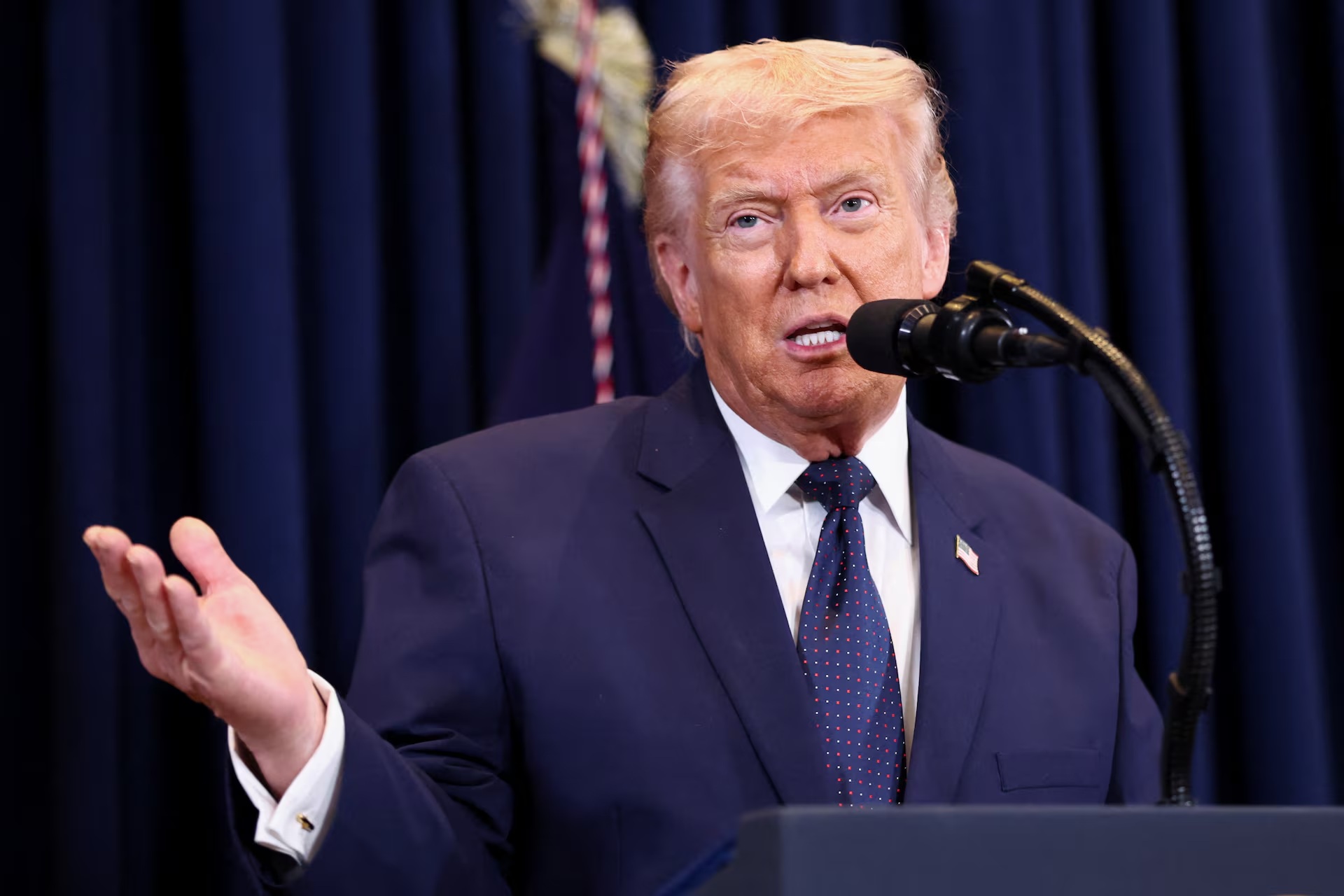
President Donald Trump has repeatedly said Cuba is next in recent days. Trump echoed this statements in Miami speech at the Future Investment Initiative / FII Priority Summit: While touting U.S. military actions in Venezuela and Iran, Trump said: “I built these great Armed Forces. I said, You’ll never have to use them, but sometimes you have to use them. And Cuba is next, by the way.”
But pretend I didn’t say that… media, please disregard that statement. He repeated it to audience laughter. Trump reiterated, Cuba is going to be next… It’s a failing country, and they’re going to be next. Within a short period of time, it’s going to fail, and we will be there to help it out. We’ll be there to help our good Cuban-Americans out.
He also indicated he wouldn’t oppose oil shipments to Cuba including from Russia. Trump has framed Cuba as a mess and a collapsing communist regime, suggesting U.S. involvement could follow successes elsewhere. He has previously used phrases like taking Cuba in some form and noted talks are ongoing but Iran comes first.
Background on U.S.-Cuba Tensions
This fits a pattern of heightened pressure: Earlier in 2026, the administration imposed measures to block Venezuelan oil and money flows to Cuba. Cuba’s economy has long struggled with shortages, protests, and reliance on external support.
Register for Tekedia Mini-MBA edition 20 (June 8 – Sept 5, 2026).
Register for Tekedia AI in Business Masterclass.
Join Tekedia Capital Syndicate and co-invest in great global startups.
Register for Tekedia AI Lab.
Trump’s comments come amid broader foreign policy moves involving military or economic leverage against adversarial regimes. Trump did not explicitly detail military invasion in these quotes. Interpretations vary: Economic/political collapse + U.S. support: Emphasis on Cuba failing soon and helping Cuban-Americans points to regime change via internal pressures, sanctions, or incentives rather than direct war.
Broader pressure campaign: Could include tighter sanctions, oil blockades, diplomacy, or support for opposition—consistent with past Trump-era Cuba policies reversing Obama openings, tightening restrictions.
Media and critics highlight the military references in the Miami speech, while supporters see it as rhetorical tough talk to accelerate Cuba’s transition away from communism. The pretend I didn’t say that line has a characteristic Trump flair—provocative and attention-grabbing—leaving room for interpretation while signaling priority.
Supporters view it as standing up to a dictatorship and aiding freedom for Cubans; critics warn of escalation risks. No concrete policy announcement has followed the latest remarks yet.
U.S.-Cuba relations have been marked by periods of close economic and political ties, followed by deep hostility rooted in ideology, security concerns, and competing visions of governance. The tensions stem primarily from the 1959 Cuban Revolution and the ensuing Cold War dynamics, though they trace back further.

The U.S. intervened in Cuba’s war of independence against Spain. After defeating Spain, the U.S. occupied Cuba (1899–1902) and imposed the Platt Amendment (1901), which gave the U.S. the right to intervene in Cuban affairs and established a naval base at Guantánamo Bay. Cuba gained formal independence in 1902 but remained heavily influenced by American interests.
U.S. companies controlled much of Cuba’s sugar industry, utilities, and other sectors. Cuba became a major exporter of sugar to the U.S., and Havana served as a playground for American tourists and investors in the 1920s–1950s. The U.S. backed dictator Fulgencio Batista viewing him as anti-communist. However, his regime’s corruption and repression fueled opposition.
Fidel Castro’s forces overthrew Batista on January 1, 1959. Initially, the U.S. recognized the new government, but relations soured quickly as Castro implemented radical reforms: land redistribution, nationalization of industries including U.S.-owned properties without compensation, and closer ties with the Soviet Union.

President Eisenhower slashed Cuba’s sugar import quota, froze Cuban assets, and imposed a partial trade embargo. Cuba nationalized remaining U.S. businesses.
1961: The U.S. broke diplomatic relations in January. In April, the CIA-backed Bay of Pigs invasion—involving about 1,400 Cuban exiles—failed disastrously. The invaders were quickly defeated, strengthening Castro’s position domestically and pushing Cuba further toward the Soviets.
Castro declared Cuba a socialist state.
The U.S. discovered Soviet nuclear missiles in Cuba. President Kennedy imposed a naval quarantine. After a tense 13-day standoff, the Soviets withdrew the missiles in exchange for a U.S. pledge not to invade Cuba and the secret removal of U.S. missiles from Turkey. This event brought the world closest to nuclear war and solidified the embargo.
The U.S. pursued Operation Mongoose and supported Cuban exiles. Cuba allied with the Soviets and supported revolutionary movements in Latin America and Africa, which the U.S. saw as exporting communism. Tightened sanctions, penalized foreign companies doing business with Cuba and linked lifting the embargo to democratic reforms, free elections, and the end of Castro family rule.
Events like the 1980 Mariel boatlift and later rafter crises highlighted ongoing instability and human costs. Cuba was designated a state sponsor of terrorism by the U.S. in 1982 due to support for militant groups, a label removed under Obama, reinstated under Trump (2021), briefly adjusted, and reinstated again in the current period.
After the Soviet Union’s collapse (1991), Cuba lost massive subsidies, leading to the “Special Period” of economic hardship. The U.S. maintained pressure but allowed some family visits and remittances. President Obama restored diplomatic relations, eased travel and commerce restrictions, and removed Cuba from the terrorism sponsor list. The goal was engagement to support the Cuban people and gradual reform.
Fidel Castro died in 2016; his brother Raúl stepped down in 2018. First Trump term: Rolled back much of Obama’s easing—tightened travel, banned transactions with Cuban military-linked entities, limited remittances, and activated more of Helms-Burton. Cuba was redesignated a terrorism sponsor in 2021. Sonic attacks on U.S. diplomats in Havana added friction.
Biden adjustments: Some reversals, including efforts to ease certain restrictions and temporarily adjust the terrorism designation.
Trump reinstated hardline measures, including the terrorism sponsor list, restrictions on tourism and military-linked entities, and new pressures. In January 2026, following actions in Venezuela, the administration declared a national emergency regarding Cuba, halted Venezuelan oil flows to the island, and authorized potential tariffs on countries supplying oil to Cuba.
This aims to cut economic lifelines and encourage change. Trump’s recent comments framing Cuba as next in a sequence of pressures fit this pattern of maximum economic leverage. U.S. opposition to Cuba’s one-party communist system, human rights record, and lack of democratic elections vs. Cuba’s view of U.S. policy as imperialist interference.
Concerns over Cuba’s alliances with Russia, China, Iran, and past support for groups seen as destabilizing. Cuba hosts Russian/Chinese intelligence activities according to U.S. claims; Cuba accuses the U.S. of subversion. The embargo’s impact on Cuba’s shortages vs. the regime’s mismanagement and repression. Migration surges; hundreds of thousands of Cubans reaching the U.S. border in recent years strain relations.
Strong Cuban-American lobbying in Florida influences U.S. policy; exiles often favor isolation over engagement. U.S. policymakers; across administrations, with variations in approach argue sanctions target the regime while aiming to support ordinary Cubans and promote democracy. Cuban officials and critics of the embargo call it a cruel blockade that punishes the population and violates sovereignty, arguing it has failed to produce regime change for over 60 years.
The relationship remains adversarial but pragmatic in limited areas. As of early 2026, heightened U.S. pressure—tied to broader regional shifts—continues the historical pattern of using economic tools to influence Cuba’s trajectory, with no full resolution in sight.