

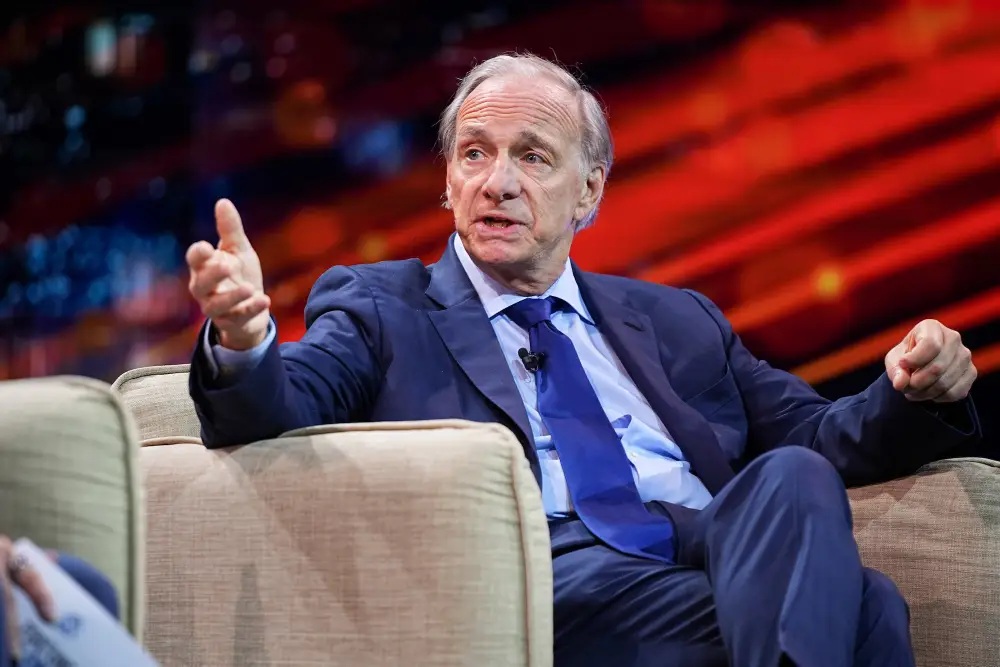
Ray Dalio, the founder of Bridgewater Associates and one of the world’s most influential investors, has long maintained that gold deserves a permanent place in investment portfolios.
While markets often become fixated on short-term price movements and geopolitical headlines, Dalio’s perspective remains rooted in long-term structural trends. His repeated recommendation that investors allocate between 5% and 15% of their portfolios to gold reflects his belief that the precious metal serves as a critical hedge against systemic risks and the gradual weakening of the global financial order.
In recent months, gold has experienced periods of volatility, even declining by more than 10% despite escalating geopolitical tensions and ongoing conflicts in several regions.
For many investors, such price action might seem contradictory. Traditionally, gold is viewed as a safe-haven asset that rises during periods of uncertainty. However, Dalio argues that focusing too heavily on short-term movements misses the larger picture.
Register for the next Tekedia Mini-MBA.
Register for Tekedia AI in Business Masterclass.
Join Tekedia Capital Syndicate and co-invest in great global startups.
According to Dalio, wars and temporary market shocks are merely noise. The more important signal lies in the changing dynamics of the global monetary system. He has repeatedly warned about the increasing levels of government debt, persistent fiscal deficits, and the gradual erosion of confidence in fiat currencies, particularly the U.S. dollar.
While the dollar remains the world’s dominant reserve currency, a growing number of countries are seeking alternatives for trade settlement and reserve management. The rise of cross-border transactions outside the dollar system has become an increasingly significant trend.
Nations are expanding bilateral trade agreements using local currencies, central banks are diversifying their reserves, and emerging economies are actively reducing their dependence on dollar-denominated assets. This gradual process of de-dollarization may take years or even decades to fully materialize, but Dalio believes it represents one of the most important macroeconomic shifts of the modern era.
Gold stands to benefit from this transition because it is a neutral reserve asset. Unlike sovereign currencies, gold is not tied to the fiscal health or political decisions of any single nation.

For thousands of years, it has served as a store of value during periods of economic upheaval, inflation, and monetary restructuring. As central banks continue purchasing gold at elevated levels, many analysts view this trend as evidence that governments themselves are preparing for a more multipolar financial system.
Importantly, Dalio advises investors not to attempt to perfectly time the gold market. Predicting short-term bottoms and tops is notoriously difficult, and waiting for ideal entry points often results in missed opportunities. Instead, he advocates maintaining a strategic allocation to gold as a permanent portfolio component.
This exposure can be achieved through physical holdings, exchange-traded funds (ETFs), or investments in gold mining companies. However, Dalio also cautions against excessive concentration. Gold, while valuable as insurance, does not generate cash flow, dividends, or productive income like stocks or businesses.

Therefore, it should complement rather than dominate an investment strategy. Dalio’s thesis is less about chasing immediate gains and more about preparing for an uncertain future. In a world characterized by mounting debt, geopolitical fragmentation, and evolving monetary systems, gold serves as a form of financial insurance.
Whether markets rise or fall in the near term, Dalio believes that maintaining a measured allocation to gold provides investors with resilience and diversification in an increasingly unpredictable global economy.