

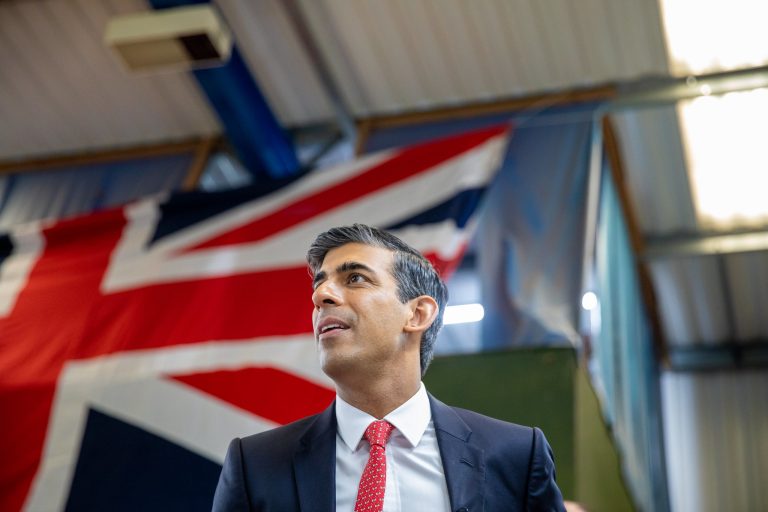
Former UK Prime Minister Rishi Sunak is returning to his financial roots, having accepted a senior advisory role at Goldman Sachs, the investment bank where he began his professional career more than two decades ago.
The move, announced Tuesday, marks Sunak’s first major engagement since stepping down as Conservative Party leader following a landslide election defeat to Labour in July 2024.
Goldman Sachs CEO David Solomon confirmed the appointment, saying, “I am excited to welcome Rishi back to Goldman Sachs in his new capacity as a senior adviser.” Sunak is expected to provide guidance to the bank’s executives and clients on global economic and geopolitical issues and contribute to the development of Goldman’s talent around the world.
Register for Tekedia Mini-MBA edition 20 (June 8 – Sept 5, 2026).
Register for Tekedia AI in Business Masterclass.
Join Tekedia Capital Syndicate and co-invest in great global startups.
Register for Tekedia AI Lab.
The new role comes as Sunak, who still serves as Member of Parliament for Richmond and Northallerton, continues to keep a low profile after the Conservative Party’s historic collapse—its worst election result in a century, plunging from 365 seats in 2019 to just 121. He has so far resisted calls to quit politics altogether but said he would remain on the backbench for the remainder of the current Parliament.
Sunak’s reappointment at Goldman Sachs marks a return to familiar territory. He first joined the firm as a summer intern while studying at Oxford University in 2000 and later worked there as a junior analyst between 2001 and 2004. After leaving the bank, he went on to work with hedge fund The Children’s Investment Fund (TCI), founded by billionaire Chris Hohn, and later its spin-off, Theleme Partners.
While the salary for his new role has not been disclosed, Sunak has committed to donating his Goldman Sachs pay to the Richmond Project, a charity he and his wife, Akshata Murty, established to improve numeracy skills in the UK. The couple’s estimated wealth, primarily drawn from Murty’s stake in the Indian tech firm Infosys, stands at around £640 million.

The appointment was approved by the Advisory Committee on Business Appointments (Acoba), the UK government’s watchdog for post-office employment. However, the committee imposed a number of restrictions to prevent any conflict of interest or unfair access to government. Sunak must avoid lobbying the UK government on Goldman’s behalf, leveraging his past government contacts, or providing advice related to government contracts or bids for another year.
“Your role with The Goldman Sachs Group, Inc, should be limited to providing advice on strategy, macroeconomic and geopolitical matters that do not conflict with your time as Prime Minister,” Acoba said in a letter published Tuesday.
The Contrast: Nigeria Can’t Relate
While the news was largely welcomed in the UK as a positive example of a former head of government transitioning to other sectors of public service and global business, it sparked a markedly different conversation in Nigeria—where it reignited criticism of the country’s political culture.

Across social media and commentary platforms, Nigerians highlighted the rarity of such a move within their own political ecosystem. Many noted that public office holders in Nigeria, regardless of party or performance, rarely exit politics voluntarily, let alone seek relevance through professional reinvention or philanthropy.
“It can never be Nigeria,” wrote one Nigerian commentator on X (formerly Twitter).
Sunak’s decision stands in sharp contrast to Nigerian political norms, where former governors, ministers, and lawmakers often treat public service as a permanent career. Notably, such figures rarely retire from politics, and instead cycle through different government positions, remaining heavily invested in political patronage networks.
The conversation has also revived broader concerns about Nigeria’s lack of institutional safeguards. Unlike the UK’s Acoba system, Nigeria has no credible oversight body with the authority to restrict the post-office activities of former public officials. Many ex-leaders retain access to state resources, influence government contracts, and continue to wield political power long after their formal exit from public roles.
Sunak’s pivot back to the private sector has, intentionally or not, become a case study in leadership transitions—and a mirror for a country like Nigeria, where the idea of exiting politics often seems implausible across the spectrum. For many, the contrast underscores a deeper institutional gap and a lingering reluctance by Nigeria’s elite to separate service from self-interest.