

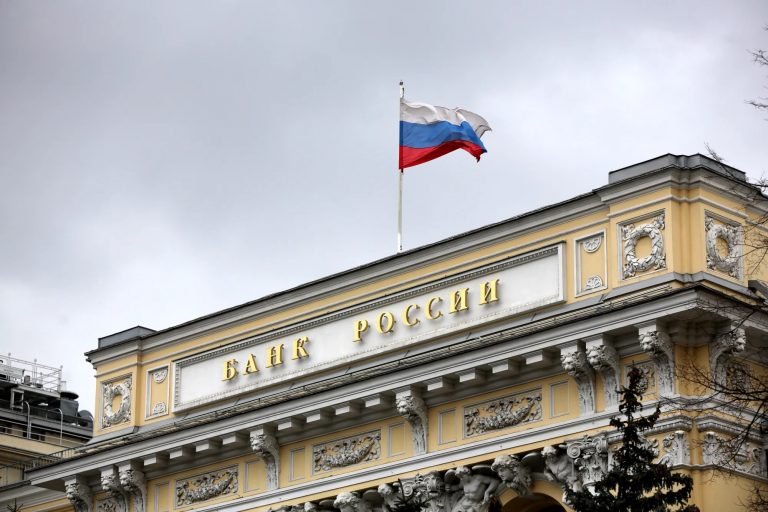
The Russian Finance Ministry is pushing for the development of a national stablecoin to reduce reliance on foreign-controlled digital currencies like USDT, following Tether’s freeze of over $27 million in assets linked to the sanctioned Russian crypto exchange Garantex. Osman Kabaloev, deputy head of the Ministry’s Financial Policy Department, emphasized the need for domestic alternatives, potentially pegged to non-dollar currencies, to enhance financial sovereignty amid Western sanctions.
The move comes as stablecoins gain global traction, with a market cap exceeding $200 billion in 2025. However, the Bank of Russia remains cautious, opposing crypto for domestic payments while allowing experimental use for international trade. No specific timeline or design for the stablecoin has been confirmed. A stablecoin could reduce Russia’s dependence on dollar-based systems like USDT, shielding its economy from Western sanctions and asset freezes, such as Tether’s $27M action against Garantex.
Pegging a stablecoin to non-dollar currencies (e.g., rubles or yuan) could align with Russia’s de-dollarization efforts, strengthening ties with allies like China and challenging USD dominance in global trade. A state-backed stablecoin would give Russia greater oversight of digital transactions, potentially curbing illicit activities but raising concerns about government surveillance and centralized control.
Register for Tekedia Mini-MBA edition 20 (June 8 – Sept 5, 2026).
Register for Tekedia AI in Business Masterclass.
Join Tekedia Capital Syndicate and co-invest in great global startups.
Register for Tekedia AI Lab.
It could facilitate faster, cheaper cross-border payments, especially for trade with sanctioned nations, boosting Russia’s role in alternative financial networks. Stablecoins globally handle over $1T in annual transactions, indicating significant potential. The Bank of Russia’s skepticism about crypto in domestic markets may delay or limit the stablecoin’s adoption. Conflicting policies could create uncertainty for businesses and investors.
Success could inspire other nations to develop sovereign digital currencies, accelerating the fragmentation of global financial systems. However, failure—due to technical issues or lack of trust—could undermine confidence in Russia’s digital economy. Without clear regulation, a stablecoin could face volatility, mismanagement, or cyberattacks. Public trust hinges on transparency and stability, especially if pegged to the ruble, which has faced depreciation pressures. The outcome depends on execution, international acceptance, and Russia’s ability to navigate internal and external challenges.
Russia’s proposed stablecoin, potentially pegged to the ruble or a non-dollar currency like the yuan, aims to bypass dollar-dominated crypto markets. This follows Tether’s freeze of $27M linked to the sanctioned Garantex exchange, highlighting vulnerabilities in relying on USD-based stablecoins. The digital yuan (e-CNY) is used in pilot programs for domestic and cross-border payments, with trials in Hong Kong and Belt and Road countries to reduce dollar use in trade.

The digital rupee, launched in 2023, is being tested for wholesale and retail transactions, with plans to integrate it into trade with non-dollar partners. Digital currencies enhance transaction autonomy, but adoption requires trust, infrastructure, and international acceptance. Russia’s stablecoin could face skepticism due to ruble volatility and sanctions. Countries settle bilateral trade in their own currencies or those of trading partners, avoiding the dollar as an intermediary.
Russia has expanded ruble-yuan trade with China, with over 50% of bilateral trade settled in non-dollar currencies by 2024. It also uses rubles in trade with India and Turkey, though imbalances (e.g., India’s rupee surplus) complicate scalability. Both nations have explored rupee-yuan trade to bypass the dollar, though progress is slow due to geopolitical tensions. Countries like Malaysia and Indonesia are increasing local currency trade to reduce dollar reliance in intra-regional commerce.
Local currency trade reduces exposure to dollar volatility and sanctions but requires swap agreements, stable currencies, and mutual trust. Russia’s sanctioned status limits partners willing to fully abandon the dollar. Central banks reduce USD holdings in favor of other currencies (e.g., yuan, euro), gold, or alternative assets to hedge against dollar-centric risks. Russia slashed USD reserves from 40% in 2014 to under 10% by 2024, boosting gold (25% of reserves) and yuan (30%). This followed U.S. sanctions freezing $300B of Russia’s foreign reserves in 2022.

Holds over $800B in non-dollar assets, including gold and euros, and promotes yuan internationalization. Increased gold reserves by 100 tons since 2020, diversifying from USD amid geopolitical uncertainties. Diversification reduces vulnerability to U.S. financial leverage but faces liquidity risks, as the dollar remains dominant in global markets (58% of foreign exchange reserves in 2025).
Countries develop payment systems and financial networks to bypass dollar-dominated infrastructure like SWIFT. Russia’s SPFS (System for Transfer of Financial Messages) handles 20% of domestic and select cross-border payments. It also joined China’s CIPS (Cross-Border Interbank Payment System) to settle yuan transactions. CIPS processes $15T annually, expanding yuan-based trade with Asia and Africa.
INSTEX (now defunct) was an attempt to facilitate trade with Iran, bypassing U.S. sanctions. Alternative systems enhance autonomy but lack the scale and interoperability of SWIFT (used in 80% of global transactions). Russia’s SPFS struggles with limited international adoption. Countries form alliances to promote non-dollar trade and investment, often through regional organizations. Russia leverages BRICS (Brazil, Russia, India, China, South Africa) to advocate for a common currency or settlement mechanism. In 2024, BRICS discussed a blockchain-based payment platform to reduce dollar use.
Promotes yuan and ruble trade among members like China, Russia, and Central Asian states. Latin American countries explore local currency trade to counter dollar dominance. Trade blocs foster cooperation but face challenges from differing economic priorities and U.S. influence over global finance. Countries price key exports (e.g., oil, gas, metals) in non-dollar currencies to weaken the dollar’s role in global markets.
Russia sells oil to China and India in yuan and rupees, respectively, with 70% of its energy exports non-dollar-based by 2025. It also explores crypto-based commodity trading. Considered yuan-based oil sales to China, though still predominantly dollar-based due to petrodollar agreements. Iran: Trades oil in euros and yuan to evade U.S. sanctions.
Non-dollar pricing disrupts the petrodollar system but risks alienating dollar-reliant buyers. Russia’s shift has gained traction but is limited by global dollar preference in energy markets. U.S. sanctions, like those freezing Russia’s reserves or targeting Iran, push countries to seek alternatives to avoid financial isolation. Reducing dollar reliance counters U.S. influence over global finance, appealing to nations like Russia and China.
Diversifying from the dollar mitigates risks from U.S. monetary policy (e.g., interest rate hikes) and dollar volatility. Local currency or digital currency transactions can lower costs and speed up cross-border payments compared to dollar-based systems. The USD accounts for 58% of global forex reserves, 88% of SWIFT transactions, and 50% of cross-border loans in 2025. Its liquidity and stability are unmatched.
Global reliance on dollar-based systems (e.g., SWIFT, Wall Street) creates inertia, discouraging adoption of alternatives. Non-dollar currencies like the ruble or yuan face volatility or convertibility issues, undermining confidence. For example, the ruble lost 20% of its value in 2022. U.S. retaliation (e.g., secondary sanctions) deters countries from fully embracing de-dollarization. Alternative systems like SPFS or CIPS lack the scale, security, and global reach of dollar-based networks.
State-backed stablecoins or CBDCs may face skepticism due to government control, especially in authoritarian regimes like Russia. Russia’s stablecoin proposal aligns with its broader de-dollarization strategy, driven by sanctions and geopolitical tensions. Key factors shaping its success include: The stablecoin must be secure, scalable, and interoperable with global systems. Russia’s blockchain expertise (e.g., Garantex) could help, but sanctions limit access to advanced tech.
Convincing partners like China or India to accept a ruble-pegged stablecoin is critical. China’s digital yuan may overshadow Russia’s efforts. The Bank of Russia’s cautious stance on crypto could delay implementation or restrict the stablecoin’s domestic use. Rising de-dollarization efforts (e.g., BRICS, SCO) provide momentum, but the dollar’s entrenched role means progress will be gradual.
Widespread de-dollarization could split global finance into competing blocs, increasing transaction costs and economic inefficiencies. While not imminent, sustained efforts could erode the USD’s dominance, impacting U.S. ability to impose sanctions or finance deficits. Stablecoins and CBDCs could accelerate de-dollarization by offering scalable alternatives, but regulatory divergence (e.g., U.S. vs. Russia) complicates global adoption.
De-dollarization strengthens non-Western alliances, potentially reshaping global trade and power dynamics. Russia’s stablecoin initiative is a strategic move within its de-dollarization agenda, complementing efforts like local currency trade, reserve diversification, and alternative financial systems. While promising, it faces significant hurdles due to the dollar’s dominance, Russia’s economic challenges, and global skepticism.