

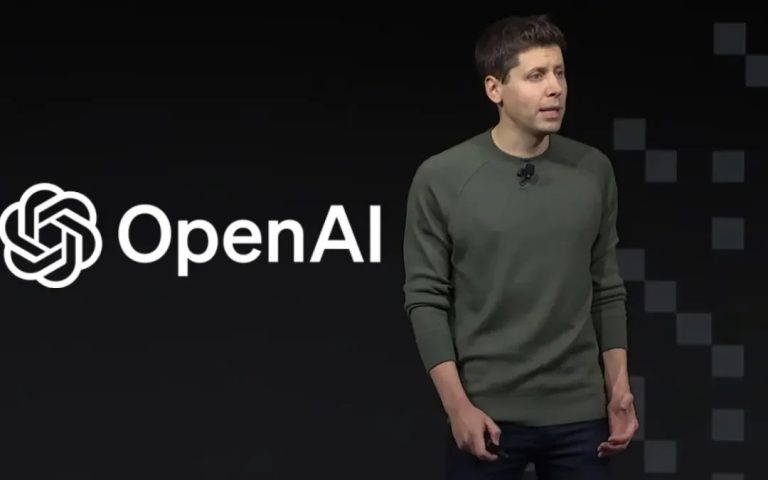
OpenAI CEO Sam Altman has directly addressed one of the most pressing concerns weighing on investors and corporate boardrooms amid the artificial intelligence boom: whether the staggering sums being spent on infrastructure, chips, and software will ultimately deliver meaningful returns.
In a CNBC interview on Monday, Altman described the skepticism as not only valid but perhaps the “most fair criticism right now of AI.” He acknowledged the gap many companies are experiencing between heavy investment and visible business impact.
“You hear companies saying, I am spending a ton of money on AI. And I know some great stuff is happening, but I know there’s a ton of waste,” he said.
Register for the next Tekedia Mini-MBA.
Register for Tekedia AI in Business Masterclass.
Join Tekedia Capital Syndicate and co-invest in great global startups.
Altman went on to summarize the core questions echoing through executive suites. He said: “How long do I have to wait for it to really show up in revenue, and how long do I have to wait to really get the costs under control? I assume that the industry will figure that out pretty quickly, but I think that is a fair, a fair issue.”
The comments come at a critical juncture. The AI sector has seen unprecedented capital expenditure, with hyperscalers like Amazon, Google, Microsoft, and Meta collectively committing sums that rival, and in some cases exceed, major historical projects on a monthly basis. Yet tangible, widespread revenue generation and efficiency gains have been slower to materialize than many had hoped, leading to growing scrutiny from investors and analysts.
According to an April report from The Wall Street Journal, OpenAI itself missed some key internal targets for revenue and user growth last year, underscoring that even the industry’s flagship company is navigating execution hurdles in turning technological capability into sustainable commercial success.

The Utilization Problem and Signs of Inefficiency
Data from cloud optimization platform Cast AI reveals a striking inefficiency at the heart of the AI buildout. In an analysis of 23,000 GPU clusters across thousands of companies, average utilization stood at just 5%, meaning roughly 95% of provisioned graphics-processing capacity was sitting idle.
Cofounder and president Laurent Gil attributed this largely to “FOMO” — companies hoarding scarce AI chips out of competitive anxiety rather than immediate, well-defined needs, resulting in massive stockpiles of underutilized resources.
Longtime AI researcher and critic Gary Marcus, professor emeritus at New York University, has been particularly vocal. In a post on X, he described some companies’ AI capital expenditure plans as potentially the “Greatest capital misallocation in history,” noting that Amazon, Google, Microsoft, and Meta are collectively spending more per month than the entire Manhattan Project.

This critique resonates as investors increasingly demand proof that AI spending is translating into sustainable competitive advantages, productivity gains, or profitability, rather than speculative infrastructure bets.
The transition from experimental pilots to enterprise-wide deployment has proven more complex than anticipated, with persistent challenges around data quality, integration, change management, talent shortages, and measurable return on investment slowing the payoff curve.
Why This Matters for the Industry’s Trajectory
Altman’s willingness to confront these concerns head-on reflects a maturing phase in the AI industry. After years of explosive hype, fundraising, and infrastructure buildout, the sector is entering a period of greater accountability. Companies are under pressure to demonstrate not just raw technological capability but clear, quantifiable business value — whether through cost savings, new revenue streams, or transformative capabilities that justify the enormous upfront investments.
For OpenAI and its peers, the focus is shifting toward practical applications, agentic systems, and efficiency improvements that can deliver quicker returns. Altman’s comments suggest confidence that the industry will solve these issues relatively soon, but they also serve as a reality check for executives and investors who may have expected immediate, sweeping transformation.
The implications are significant and multifaceted. According to analysts, if major companies continue to pour billions into AI without corresponding revenue or productivity gains, it could lead to a pullback in spending, slower innovation cycles, increased investor caution, or even a broader “AI winter” narrative.
Conversely, successfully addressing the utilization and ROI challenges could unlock the next phase of AI-driven growth, with compounding effects across industries as the technology moves from experimental to foundational.
The scrutiny is particularly intense for hyperscalers and large tech firms, which have announced hundreds of billions in AI-related capital expenditure. Their ability to convert these investments into sustainable advantages, through better models, more efficient infrastructure, or new applications, will determine market leadership in the years ahead. Smaller or mid-tier players may struggle if the capital intensity remains high without clear paths to monetization.
Economically, the AI boom’s success or stumbles could have ripple effects because sustained high spending without returns risks crowding out investment in other sectors, inflating asset valuations in tech, and contributing to broader market volatility. On the positive side, meaningful productivity gains could help offset demographic challenges, boost GDP growth, and create new industries — provided the economics align.
While the reality still hurts, Altman’s acknowledgment of the criticism may help temper some of the more extreme expectations while reinforcing the long-term thesis. The coming quarters, marked by earnings reports from hyperscalers and AI infrastructure players, will provide crucial data points on whether the massive bet on AI is beginning to pay off or if the “waste” concerns require more urgent, industry-wide attention.
Currently, the AI industry is believed to be standing at an inflection point because the enormous promise remains intact, but the path from hype to efficient, value-creating deployment is proving more arduous than many anticipated.