

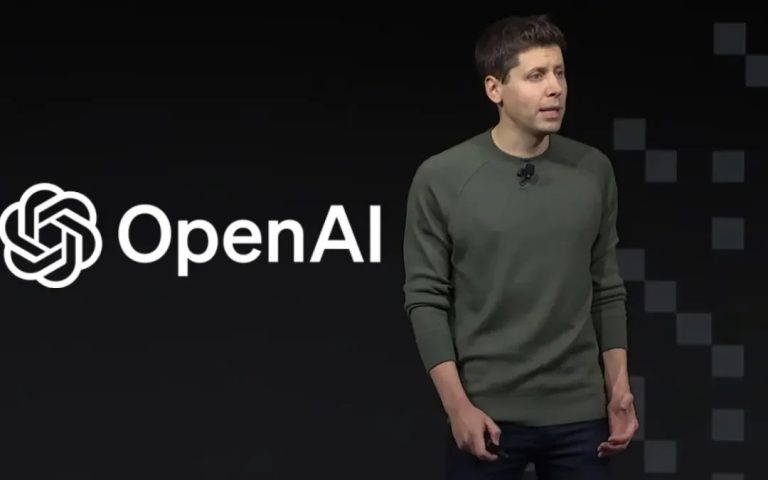
In a wide-ranging discussion about the rapid approach of AI superintelligence, Sam Altman outlined the need for a major new U.S. social contract — akin to the Progressive Era or New Deal — to handle massive economic disruption, job shifts, and risks from advanced AI. He highlighted cyberattacks and biological threats as the most immediate dangers, not distant hypotheticals.
Altman explicitly agreed with concerns from tech, business, and government leaders that soon-to-be-released AI models could enable a world-shaking cyberattack as early as this year: “I think that’s totally possible. I suspect in the next year, we will see significant threats we have to mitigate from cyber.”
He tied this to broader worries: AI lowering barriers for sophisticated attacks e.g., autonomous agents discovering and chaining vulnerabilities at scale, or enabling novel offensive capabilities that outpace current defenses. He also flagged risks in biosecurity, where AI could accelerate harmful biological research. This isn’t Altman’s first warning on AI risks — he’s previously discussed safety, misuse, and the need for preparedness including OpenAI hiring for head of preparedness roles.
Register for Tekedia Mini-MBA edition 20 (June 8 – Sept 5, 2026).
Register for Tekedia AI in Business Masterclass.
Join Tekedia Capital Syndicate and co-invest in great global startups.
Register for Tekedia AI Lab.
But framing a potentially transformative cyber event as possible within months is stark, especially as he pushes for urgent government-tech coordination on regulation, safety standards, taxes, and wealth redistribution from AI gains. Recent models including from OpenAI, Anthropic, and others show growing prowess in coding, reasoning, and tool use.
Offensive cyber tools could evolve similarly — think AI agents that autonomously scan for zero-days, generate exploits, or orchestrate large-scale operations far beyond what human teams achieve today. Cybersecurity has long struggled with asymmetry; attackers need one success; defenders need to cover everything. AI could widen that gap if offensive uses outpace defensive ones or if models are open-sourced and misused by state or non-state actors.
Dual-Use Reality
The same AI that could supercharge defense e.g., automated patching, threat detection can be flipped for offense. Altman notes this isn’t theoretical anymore. That said, world-shaking is subjective — it could mean disrupting critical infrastructure, financial systems, or supply chains on a massive scale, rather than necessarily apocalyptic. No specific attack vector was detailed publicly, and these warnings often serve dual purposes: genuine caution plus calls for policy and sometimes positioning companies like OpenAI as key partners in solutions.
Altman and OpenAI are racing to build ever-more-powerful models while raising alarms and funds. That’s a fair tension in the industry — progress and risk are intertwined. History shows tech warnings can sometimes align with business incentives, but the underlying technical trends; AI finding vulnerabilities, agentic systems, scaling laws are observable and concerning to many experts beyond OpenAI.

Cyber risks from AI aren’t unique to Altman or OpenAI. Governments, firms like CrowdStrike or Palo Alto Networks, and researchers have been tracking AI-assisted phishing, deepfakes, automated exploits, and agent-based attacks for years. The leap to world-shaking depends on how quickly frontier models gain reliable autonomy, planning, and real-world access — areas where progress is real but still uneven.
Mitigation is possible and already underway: better red-teaming, secure-by-design AI, international norms, hardened infrastructure, and defensive AI tools. Altman’s broader pitch emphasizes proactive policy to capture AI’s upsides while addressing downsides. This is a reminder that AI development isn’t just about capabilities — it’s about stewardship. Expect more scrutiny, investment in cyber defenses, and debate over regulation in the coming months.